
Importo totale (1 articolo articoli):
Destinazione ordine:

autonomous robots di fahimi farbod (25 risultati)
Vai alla pagina principale dei risultati di ricerca
Filtri di ricerca
Tipo di articolo
- Tutti i tipi di prodotto
- Libri (25)
- Riviste e Giornali (Nessun altro risultato corrispondente a questo perfezionamento)
- Fumetti (Nessun altro risultato corrispondente a questo perfezionamento)
- Spartiti (Nessun altro risultato corrispondente a questo perfezionamento)
- Arte, Stampe e Poster (Nessun altro risultato corrispondente a questo perfezionamento)
- Fotografie (Nessun altro risultato corrispondente a questo perfezionamento)
- Mappe (Nessun altro risultato corrispondente a questo perfezionamento)
- Manoscritti e Collezionismo cartaceo (Nessun altro risultato corrispondente a questo perfezionamento)
Condizioni Maggiori informazioni
- Nuovo (22)
- Come nuovo, Ottimo o Quasi ottimo (2)
- Molto buono o Buono (1)
- Discreto o Mediocre (Nessun altro risultato corrispondente a questo perfezionamento)
- Come descritto (Nessun altro risultato corrispondente a questo perfezionamento)
Legatura
Ulteriori caratteristiche
- Prima ed. (Nessun altro risultato corrispondente a questo perfezionamento)
- Copia autograf. (Nessun altro risultato corrispondente a questo perfezionamento)
- Sovracoperta (Nessun altro risultato corrispondente a questo perfezionamento)
- Con foto (8)
- Non Print on Demand (20)
Lingua (1)
Prezzo
- Qualsiasi prezzo
- Inferiore a EUR 20 (Nessun altro risultato corrispondente a questo perfezionamento)
- EUR 20 a EUR 45 (Nessun altro risultato corrispondente a questo perfezionamento)
- Superiore a EUR 45
Spedizione gratuita
Paese del venditore
Valutazione venditore
-

Autonomous Robots: Modeling, Path Planning, and Control
Da: Books From California, Simi Valley, CA, U.S.A.
Valutazione del venditore 5 su 5 stelle

paperback. Condizione: Very Good.
-

Condizione: New. pp. 362.
-
Autonomous Robots: Modeling Path Planning and Control
Da: Romtrade Corp., STERLING HEIGHTS, MI, U.S.A.
Valutazione del venditore 5 su 5 stelle
Condizione: New. This is a Brand-new US Edition. This Item may be shipped from US or any other country as we have multiple locations worldwide.
-
Condizione: New. pp. 360.
-
Autonomous Robots
Da: Biblios, Frankfurt am main, HESSE, Germania
Valutazione del venditore 4 su 5 stelle

EUR 90,11
EUR 9,95 per la spedizione da Germania a U.S.A.Quantità: 1 disponibili
Aggiungi al carrelloCondizione: New. pp. 362.
-
Condizione: New. Brand New Original US Edition. Customer service! Satisfaction Guaranteed.
-
EUR 98,49
EUR 7,39 per la spedizione da Regno Unito a U.S.A.Quantità: 1 disponibili
Aggiungi al carrelloCondizione: New. pp. 362 52:B&W 6.14 x 9.21in or 234 x 156mm (Royal 8vo) Case Laminate on White w/Gloss Lam.
-
EUR 101,92
EUR 7,39 per la spedizione da Regno Unito a U.S.A.Quantità: 1 disponibili
Aggiungi al carrelloCondizione: New. pp. 360 49:B&W 6.14 x 9.21 in or 234 x 156 mm (Royal 8vo) Perfect Bound on White w/Gloss Lam.
-
Autonomous Robots
Da: Biblios, Frankfurt am main, HESSE, Germania
Valutazione del venditore 4 su 5 stelle
EUR 103,17
EUR 9,95 per la spedizione da Germania a U.S.A.Quantità: 1 disponibili
Aggiungi al carrelloCondizione: New. pp. 360.
-
Autonomous Robots: Modeling, Path Planning, and Control
Da: Lucky's Textbooks, Dallas, TX, U.S.A.
Valutazione del venditore 5 su 5 stelle
EUR 121,46
EUR 3,43 per la spedizione in U.S.A.Quantità: Più di 20 disponibili
Aggiungi al carrelloCondizione: New.
-
Autonomous Robots: Modeling, Path Planning, and Control
Da: Ria Christie Collections, Uxbridge, Regno Unito
Valutazione del venditore 5 su 5 stelle
EUR 122,13
EUR 13,62 per la spedizione da Regno Unito a U.S.A.Quantità: Più di 20 disponibili
Aggiungi al carrelloCondizione: New. In.
-
Autonomous Robots: Modeling, Path Planning, and Control
Da: California Books, Miami, FL, U.S.A.
Valutazione del venditore 5 su 5 stelle
Condizione: New.
-
Autonomous Robots: Modeling, Path Planning, and Control
Da: Ria Christie Collections, Uxbridge, Regno Unito
Valutazione del venditore 5 su 5 stelle
EUR 168,97
EUR 13,62 per la spedizione da Regno Unito a U.S.A.Quantità: Più di 20 disponibili
Aggiungi al carrelloCondizione: New. In.
-
EUR 111,80
EUR 70,00 per la spedizione da Germania a U.S.A.Quantità: 5 disponibili
Aggiungi al carrelloTaschenbuch. Condizione: Neu. Autonomous Robots | Modeling, Path Planning, and Control | Farbod Fahimi | Taschenbuch | xviii | Englisch | 2010 | Springer US | EAN 9781441934901 | Verantwortliche Person für die EU: Springer Verlag GmbH, Tiergartenstr. 17, 69121 Heidelberg, juergen[dot]hartmann[at]springer[dot]com | Anbieter: preigu.
-
Autonomous Robots: Modeling, Path Planning, and Control
Da: Lucky's Textbooks, Dallas, TX, U.S.A.
Valutazione del venditore 5 su 5 stelle
EUR 186,01
EUR 3,43 per la spedizione in U.S.A.Quantità: Più di 20 disponibili
Aggiungi al carrelloCondizione: New.
-

EUR 132,72
EUR 62,73 per la spedizione da Germania a U.S.A.Quantità: 1 disponibili
Aggiungi al carrelloTaschenbuch. Condizione: Neu. Druck auf Anfrage Neuware - Printed after ordering - It is at least two decades since the conventional robotic manipulators have become a common manufacturing tool for different industries, from automotive to pharmaceutical. The proven benefits of utilizing robotic manipulators for manufacturing in different industries motivated scientists and researchers to try to extend the applications of robots to many other areas by inventing several new types of robots other than conventional manipulators. The new types of robots can be categorized in two groups; redundant (and hyper-redundant) manipulators, and mobile (ground, marine, and aerial) robots. These groups of robots, known as advanced robots, have more freedom for their mobility, which allows them to do tasks that the conventional manipulators cannot do.Engineers have taken advantage of the extra mobility of the advanced robots to make them work in constrained environments, ranging from limited joint motions for redundant (or hyper-redundant) manipulators to obstacles in the way of mobile (ground, marine, and aerial) robots.Since these constraints usually depend on the work environment, they are variable. Engineers have had to invent methods to allow the robots todeal with a variety of constraints automatically. A robot that is equipped with those methods is called an Autonomous Robot.Autonomous Robots: Kinematics, Path Planning, and Control covers the kinematics and dynamic modeling/analysis of Autonomous Robots, as well as the methods suitable for their control. The text is suitable for mechanical and electrical engineers who want to familiarize themselves with methods of modeling/analysis/control that have been proven efficient through research.
-
Autonomous Robots: Modeling, Path Planning, and Control
Da: Mispah books, Redhill, SURRE, Regno Unito
Valutazione del venditore 4 su 5 stelle
EUR 173,30
EUR 28,42 per la spedizione da Regno Unito a U.S.A.Quantità: 1 disponibili
Aggiungi al carrelloPaperback. Condizione: Like New. Like New. book.
-
Autonomous Robots: Modeling, Path Planning, and Control
Da: Mispah books, Redhill, SURRE, Regno Unito
Valutazione del venditore 4 su 5 stelle
EUR 188,52
EUR 28,42 per la spedizione da Regno Unito a U.S.A.Quantità: 1 disponibili
Aggiungi al carrelloHardcover. Condizione: Like New. LIKE NEW. SHIPS FROM MULTIPLE LOCATIONS. book.
-

EUR 191,34
EUR 48,99 per la spedizione da Germania a U.S.A.Quantità: Più di 20 disponibili
Aggiungi al carrelloGebunden. Condizione: New. Discusses the application of Advanced Robots (redundant and hyper-redundant manipulators, and ground, marine, and aerial robots) with examples such as robotic helicopters for surveillance, aerial photography, farm spraying, high-end cars that park themse.
-
EUR 188,08
EUR 63,18 per la spedizione da Germania a U.S.A.Quantità: 2 disponibili
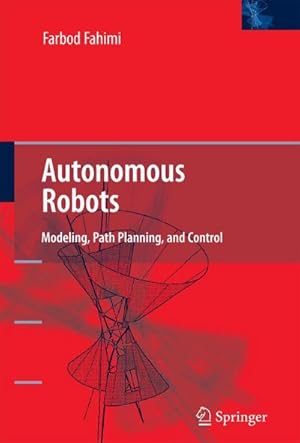
Aggiungi al carrelloBuch. Condizione: Neu. Druck auf Anfrage Neuware - Printed after ordering - It is at least two decades since the conventional robotic manipulators have become a common manufacturing tool for different industries, from automotive to pharmaceutical. The proven benefits of utilizing robotic manipulators for manufacturing in different industries motivated scientists and researchers to try to extend the applications of robots to many other areas by inventing several new types of robots other than conventional manipulators. The new types of robots can be categorized in two groups; redundant (and hyper-redundant) manipulators, and mobile (ground, marine, and aerial) robots. These groups of robots, known as advanced robots, have more freedom for their mobility, which allows them to do tasks that the conventional manipulators cannot do.Engineers have taken advantage of the extra mobility of the advanced robots to make them work in constrained environments, ranging from limited joint motions for redundant (or hyper-redundant) manipulators to obstacles in the way of mobile (ground, marine, and aerial) robots.Since these constraints usually depend on the work environment, they are variable. Engineers have had to invent methods to allow the robots todeal with a variety of constraints automatically. A robot that is equipped with those methods is called an Autonomous Robot.Autonomous Robots: Kinematics, Path Planning, and Control covers the kinematics and dynamic modeling/analysis of Autonomous Robots, as well as the methods suitable for their control. The text is suitable for mechanical and electrical engineers who want to familiarize themselves with methods of modeling/analysis/control that have been proven efficient through research.
-

Autonomous Robots
Da: BuchWeltWeit Ludwig Meier e.K., Bergisch Gladbach, Germania
Valutazione del venditore 5 su 5 stelle
EUR 128,39
EUR 23,00 per la spedizione da Germania a U.S.A.Quantità: 2 disponibili
Aggiungi al carrelloTaschenbuch. Condizione: Neu. This item is printed on demand - it takes 3-4 days longer - Neuware -It is at least two decades since the conventional robotic manipulators have become a common manufacturing tool for different industries, from automotive to pharmaceutical. The proven benefits of utilizing robotic manipulators for manufacturing in different industries motivated scientists and researchers to try to extend the applications of robots to many other areas by inventing several new types of robots other than conventional manipulators. The new types of robots can be categorized in two groups; redundant (and hyper-redundant) manipulators, and mobile (ground, marine, and aerial) robots. These groups of robots, known as advanced robots, have more freedom for their mobility, which allows them to do tasks that the conventional manipulators cannot do.Engineers have taken advantage of the extra mobility of the advanced robots to make them work in constrained environments, ranging from limited joint motions for redundant (or hyper-redundant) manipulators to obstacles in the way of mobile (ground, marine, and aerial) robots.Since these constraints usually depend on the work environment, they are variable. Engineers have had to invent methods to allow the robots todeal with a variety of constraints automatically. A robot that is equipped with those methods is called an Autonomous Robot.Autonomous Robots: Kinematics, Path Planning, and Control covers the kinematics and dynamic modeling/analysis of Autonomous Robots, as well as the methods suitable for their control. The text is suitable for mechanical and electrical engineers who want to familiarize themselves with methods of modeling/analysis/control that have been proven efficient through research. 360 pp. Englisch.
-

EUR 107,09
EUR 48,99 per la spedizione da Germania a U.S.A.Quantità: Più di 20 disponibili
Aggiungi al carrelloCondizione: New. Dieser Artikel ist ein Print on Demand Artikel und wird nach Ihrer Bestellung fuer Sie gedruckt. Discusses the application of Advanced Robots (redundant and hyper-redundant manipulators, and ground, marine, and aerial robots) with examples such as robotic helicopters for surveillance, aerial photography, farm spraying, high-end cars that park themse.
-
Autonomous Robots: Modeling, Path Planning, and Control
Editore: Springer-Verlag New York Inc., 2010
ISBN 10: 1441934901 ISBN 13: 9781441934901
Lingua: Inglese
Da: THE SAINT BOOKSTORE, Southport, Regno Unito
Valutazione del venditore 5 su 5 stelle
EUR 148,39
EUR 18,55 per la spedizione da Regno Unito a U.S.A.Quantità: Più di 20 disponibili
Aggiungi al carrelloPaperback / softback. Condizione: New. This item is printed on demand. New copy - Usually dispatched within 5-9 working days 557.
-

Autonomous Robots
Editore: Springer US, Springer US Okt 2010, 2010
ISBN 10: 1441934901 ISBN 13: 9781441934901
Lingua: Inglese
Da: buchversandmimpf2000, Emtmannsberg, BAYE, Germania
Valutazione del venditore 5 su 5 stelle
EUR 128,39
EUR 60,00 per la spedizione da Germania a U.S.A.Quantità: 1 disponibili
Aggiungi al carrelloTaschenbuch. Condizione: Neu. This item is printed on demand - Print on Demand Titel. Neuware -It is at least two decades since the conventional robotic manipulators have become a common manufacturing tool for different industries, from automotive to pharmaceutical. The proven benefits of utilizing robotic manipulators for manufacturing in different industries motivated scientists and researchers to try to extend the applications of robots to many other areas by inventing several new types of robots other than conventional manipulators. The new types of robots can be categorized in two groups; redundant (and hyper-redundant) manipulators, and mobile (ground, marine, and aerial) robots. These groups of robots, known as advanced robots, have more freedom for their mobility, which allows them to do tasks that the conventional manipulators cannot do. Engineers have taken advantage of the extra mobility of the advanced robots to make them work in constrained environments, ranging from limited joint motions for redundant (or hyper-redundant) manipulators to obstacles in the way of mobile (ground, marine, and aerial) robots. Since these constraints usually depend on the work environment, they are variable. Engineers have had to invent methods to allow the robots to deal with a variety of constraints automatically. A robot that is equipped with those methods is called an Autonomous Robot. Autonomous Robots: Kinematics, Path Planning, and Control covers the kinematics and dynamic modeling/analysis of Autonomous Robots, as well as the methods suitable for their control. The text is suitable for mechanical and electrical engineers who want to familiarize themselves with methods of modeling/analysis/control that have been proven efficient through research.Springer Verlag GmbH, Tiergartenstr. 17, 69121 Heidelberg 360 pp. Englisch.
-
Autonomous Robots
Editore: Springer Nature Singapore Dez 2008, 2008
ISBN 10: 0387095373 ISBN 13: 9780387095370
Lingua: Inglese
Da: BuchWeltWeit Ludwig Meier e.K., Bergisch Gladbach, Germania
Valutazione del venditore 5 su 5 stelle
EUR 181,89
EUR 23,00 per la spedizione da Germania a U.S.A.Quantità: 2 disponibili
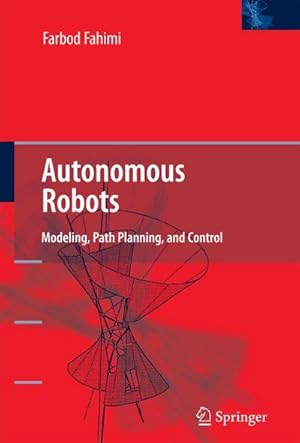
Aggiungi al carrelloBuch. Condizione: Neu. This item is printed on demand - it takes 3-4 days longer - Neuware -It is at least two decades since the conventional robotic manipulators have become a common manufacturing tool for different industries, from automotive to pharmaceutical. The proven benefits of utilizing robotic manipulators for manufacturing in different industries motivated scientists and researchers to try to extend the applications of robots to many other areas by inventing several new types of robots other than conventional manipulators. The new types of robots can be categorized in two groups; redundant (and hyper-redundant) manipulators, and mobile (ground, marine, and aerial) robots. These groups of robots, known as advanced robots, have more freedom for their mobility, which allows them to do tasks that the conventional manipulators cannot do.Engineers have taken advantage of the extra mobility of the advanced robots to make them work in constrained environments, ranging from limited joint motions for redundant (or hyper-redundant) manipulators to obstacles in the way of mobile (ground, marine, and aerial) robots.Since these constraints usually depend on the work environment, they are variable. Engineers have had to invent methods to allow the robots todeal with a variety of constraints automatically. A robot that is equipped with those methods is called an Autonomous Robot.Autonomous Robots: Kinematics, Path Planning, and Control covers the kinematics and dynamic modeling/analysis of Autonomous Robots, as well as the methods suitable for their control. The text is suitable for mechanical and electrical engineers who want to familiarize themselves with methods of modeling/analysis/control that have been proven efficient through research. 340 pp. Englisch.


