

Importo totale (1 articolo articoli):
Destinazione ordine:

exploring contemporary classification practices (20 risultati)
Vai alla pagina principale dei risultati di ricerca
Filtri di ricerca
Tipo di articolo
- Tutti i tipi di prodotto
- Libri (20)
- Riviste e Giornali (Nessun altro risultato corrispondente a questo perfezionamento)
- Fumetti (Nessun altro risultato corrispondente a questo perfezionamento)
- Spartiti (Nessun altro risultato corrispondente a questo perfezionamento)
- Arte, Stampe e Poster (Nessun altro risultato corrispondente a questo perfezionamento)
- Fotografie (Nessun altro risultato corrispondente a questo perfezionamento)
- Mappe (Nessun altro risultato corrispondente a questo perfezionamento)
- Manoscritti e Collezionismo cartaceo (Nessun altro risultato corrispondente a questo perfezionamento)
Condizioni Maggiori informazioni
- Nuovo (18)
- Come nuovo, Ottimo o Quasi ottimo (2)
- Molto buono o Buono (Nessun altro risultato corrispondente a questo perfezionamento)
- Discreto o Mediocre (Nessun altro risultato corrispondente a questo perfezionamento)
- Come descritto (Nessun altro risultato corrispondente a questo perfezionamento)
Legatura
- Tutte
- Rilegato (20)
- Brossura (Nessun altro risultato corrispondente a questo perfezionamento)
Ulteriori caratteristiche
- Prima ed. (2)
- Copia autograf. (Nessun altro risultato corrispondente a questo perfezionamento)
- Sovracoperta (Nessun altro risultato corrispondente a questo perfezionamento)
- Con foto (5)
- Non Print on Demand (14)
Lingua (1)
Prezzo
- Qualsiasi prezzo
- Inferiore a EUR 20 (Nessun altro risultato corrispondente a questo perfezionamento)
- EUR 20 a EUR 45 (Nessun altro risultato corrispondente a questo perfezionamento)
- Superiore a EUR 45
Spedizione gratuita
Paese del venditore
Valutazione venditore
-

Exploring Contemporary Classification Practices : Organizing Information, Technological Change and Ideological Contestation
Da: GreatBookPrices, Columbia, MD, U.S.A.
Valutazione del venditore 5 su 5 stelle

Condizione: New.
-
Exploring Contemporary Classification Practices : Organizing Information, Technological Change and Ideological Contestation
Da: GreatBookPrices, Columbia, MD, U.S.A.
Valutazione del venditore 5 su 5 stelle
Condizione: As New. Unread book in perfect condition.
-
Exploring Contemporary Classification Practices : Organizing Information, Technological Change and Ideological Contestation
Da: GreatBookPricesUK, Woodford Green, Regno Unito
Valutazione del venditore 5 su 5 stelle
EUR 187,69
Spedizione EUR 17,24
Spedito da Regno Unito a U.S.A.Quantità: 10 disponibili
Aggiungi al carrelloCondizione: As New. Unread book in perfect condition.
-
Exploring Contemporary Classification Practices: Organizing Information, Technological Change and Ideological Contestation
Da: Majestic Books, Hounslow, Regno Unito
Valutazione del venditore 4 su 5 stelle

EUR 198,37
Spedizione EUR 7,47
Spedito da Regno Unito a U.S.A.Quantità: 3 disponibili
Aggiungi al carrelloCondizione: New.
-
Exploring Contemporary Classification Practices
Da: California Books, Miami, FL, U.S.A.
Valutazione del venditore 5 su 5 stelle
EUR 209,81
Spedizione gratuita
Spedito in U.S.A.Quantità: Più di 20 disponibili
Aggiungi al carrelloCondizione: New.
-
Exploring Contemporary Classification Practices
Da: Ria Christie Collections, Uxbridge, Regno Unito
Valutazione del venditore 5 su 5 stelle
EUR 198,16
Spedizione EUR 13,77
Spedito da Regno Unito a U.S.A.Quantità: Più di 20 disponibili
Aggiungi al carrelloCondizione: New. In.
-
Exploring Contemporary Classification Practices: Organizing Information, Technological Change and Ideological Contestation
Da: Books Puddle, New York, NY, U.S.A.
Valutazione del venditore 4 su 5 stelle
Condizione: New.
-
Exploring Contemporary Classification Practices : Organizing Information, Technological Change and Ideological Contestation
Da: GreatBookPricesUK, Woodford Green, Regno Unito
Valutazione del venditore 5 su 5 stelle
EUR 198,15
Spedizione EUR 17,24
Spedito da Regno Unito a U.S.A.Quantità: 10 disponibili
Aggiungi al carrelloCondizione: New.
-
Exploring Contemporary Classification Practices
Da: PBShop.store US, Wood Dale, IL, U.S.A.
Valutazione del venditore 5 su 5 stelle
EUR 228,47
Spedizione gratuita
Spedito in U.S.A.Quantità: Più di 20 disponibili
Aggiungi al carrelloHRD. Condizione: New. New Book. Shipped from UK. Established seller since 2000.
-
Exploring Contemporary Classification Practices
Da: PBShop.store UK, Fairford, GLOS, Regno Unito
Valutazione del venditore 4 su 5 stelle
EUR 220,21
Spedizione EUR 4,78
Spedito da Regno Unito a U.S.A.Quantità: Più di 20 disponibili
Aggiungi al carrelloHRD. Condizione: New. New Book. Shipped from UK. Established seller since 2000.
-
Exploring Contemporary Classification Practices: Organizing Information, Technological Change and Ideological Contestation
Da: Biblios, Frankfurt am main, HESSE, Germania
Valutazione del venditore 4 su 5 stelle
EUR 219,74
Spedizione EUR 9,95
Spedito da Germania a U.S.A.Quantità: 3 disponibili
Aggiungi al carrelloCondizione: New.
-

Exploring Contemporary Classification Practices
Lingua: Inglese
Editore: Taylor and Francis Ltd, GB, 2025
ISBN 10: 1032997230 ISBN 13: 9781032997230
Da: Rarewaves.com USA, London, LONDO, Regno Unito
Valutazione del venditore 5 su 5 stelle
Prima edizione
EUR 261,50
Spedizione gratuita
Spedito da Regno Unito a U.S.A.Quantità: Più di 20 disponibili
Aggiungi al carrelloHardback. Condizione: New. 1st. The contributions in Exploring Contemporary Classification Practices analyse various aspects of classification and their importance to contemporary debates surrounding cultural heritage and information access.Specific focus is on systems of classification, media technologies, and cultural institutions (such as libraries, archives, and museums) and how they respond to challenges, including classificatory bias, truth, neutrality, institutional tradition, and technological innovation. Raising awareness of classification practices in modern culture serves to emphasize how sorting things into categories is both an everyday accomplishment and a highly cultural and political activity with consequences for those who are classified and for those who classify. Throughout this book, 'classification' is defined as the practice and activity of systematically ordering and categorizing entities to bring structure and understanding to diverse contexts. This book addresses several timely issues both in terms of theoretical advancement and empirical diversity. The scholarly discussion on the classification and organization of knowledge has developed with digital technologies from a bibliographic paradigm into something much wider, as the need for metadata and classification has become critical for usability and legitimacy. This development has also led research on classification and knowledge organization to confront a new, post-humanist reality with not only emerging varieties of information currents in society, but also the development of new theoretical and methodological strands, such as post-colonial and intersectional perspectives, and digital humanities methodologies. In doing so, this book seeks to address critical questions for the archives, library, and museum sectors concerning the organization of information.Exploring Contemporary Classification Practices will, therefore be of interest to academics, researchers, and practitioners with interests in library and information science, archives, cultural heritage, and digital heritage.
-
Exploring Contemporary Classification Practices: Organizing Information, Technological Change and Ideological Contestation
Da: Revaluation Books, Exeter, Regno Unito
Valutazione del venditore 5 su 5 stelle
EUR 273,48
Spedizione EUR 14,36
Spedito da Regno Unito a U.S.A.Quantità: 2 disponibili
Aggiungi al carrelloHardcover. Condizione: Brand New. 248 pages. 9.18x6.12x9.45 inches. In Stock.
-
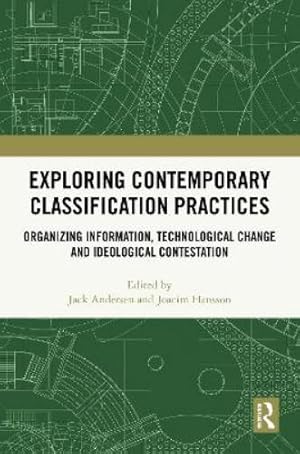
Exploring Contemporary Classification Practices
Lingua: Inglese
Editore: Taylor and Francis Ltd, GB, 2025
ISBN 10: 1032997230 ISBN 13: 9781032997230
Da: Rarewaves.com UK, London, Regno Unito
Valutazione del venditore 5 su 5 stelle
Prima edizione
EUR 248,16
Spedizione EUR 74,69
Spedito da Regno Unito a U.S.A.Quantità: Più di 20 disponibili
Aggiungi al carrelloHardback. Condizione: New. 1st. The contributions in Exploring Contemporary Classification Practices analyse various aspects of classification and their importance to contemporary debates surrounding cultural heritage and information access.Specific focus is on systems of classification, media technologies, and cultural institutions (such as libraries, archives, and museums) and how they respond to challenges, including classificatory bias, truth, neutrality, institutional tradition, and technological innovation. Raising awareness of classification practices in modern culture serves to emphasize how sorting things into categories is both an everyday accomplishment and a highly cultural and political activity with consequences for those who are classified and for those who classify. Throughout this book, 'classification' is defined as the practice and activity of systematically ordering and categorizing entities to bring structure and understanding to diverse contexts. This book addresses several timely issues both in terms of theoretical advancement and empirical diversity. The scholarly discussion on the classification and organization of knowledge has developed with digital technologies from a bibliographic paradigm into something much wider, as the need for metadata and classification has become critical for usability and legitimacy. This development has also led research on classification and knowledge organization to confront a new, post-humanist reality with not only emerging varieties of information currents in society, but also the development of new theoretical and methodological strands, such as post-colonial and intersectional perspectives, and digital humanities methodologies. In doing so, this book seeks to address critical questions for the archives, library, and museum sectors concerning the organization of information.Exploring Contemporary Classification Practices will, therefore be of interest to academics, researchers, and practitioners with interests in library and information science, archives, cultural heritage, and digital heritage.
-
Exploring Contemporary Classification Practices (Hardcover)
Lingua: Inglese
Editore: Taylor & Francis Ltd, London, 2025
ISBN 10: 1032997230 ISBN 13: 9781032997230
Da: Grand Eagle Retail, Bensenville, IL, U.S.A.
Valutazione del venditore 5 su 5 stelle
Hardcover. Condizione: new. Hardcover. The contributions in Exploring Contemporary Classification Practices analyse various aspects of classification and their importance to contemporary debates surrounding cultural heritage and information access.Specific focus is on systems of classification, media technologies, and cultural institutions (such as libraries, archives, and museums) and how they respond to challenges, including classificatory bias, truth, neutrality, institutional tradition, and technological innovation. Raising awareness of classification practices in modern culture serves to emphasize how sorting things into categories is both an everyday accomplishment and a highly cultural and political activity with consequences for those who are classified and for those who classify. Throughout this book, classification is defined as the practice and activity of systematically ordering and categorizing entities to bring structure and understanding to diverse contexts. This book addresses several timely issues both in terms of theoretical advancement and empirical diversity. The scholarly discussion on the classification and organization of knowledge has developed with digital technologies from a bibliographic paradigm into something much wider, as the need for metadata and classification has become critical for usability and legitimacy. This development has also led research on classification and knowledge organization to confront a new, post-humanist reality with not only emerging varieties of information currents in society, but also the development of new theoretical and methodological strands, such as post-colonial and intersectional perspectives, and digital humanities methodologies. In doing so, this book seeks to address critical questions for the archives, library, and museum sectors concerning the organization of information.Exploring Contemporary Classification Practices will, therefore be of interest to academics, researchers, and practitioners with interests in library and information science, archives, cultural heritage, and digital heritage. The contributions in Exploring Contemporary Classification Practices analyse various aspects of classification and their importance to contemporary debates surrounding cultural heritage and information access. This item is printed on demand. Shipping may be from multiple locations in the US or from the UK, depending on stock availability.
-
Exploring Contemporary Classification Practices (Hardcover)
Lingua: Inglese
Editore: Taylor & Francis Ltd, London, 2025
ISBN 10: 1032997230 ISBN 13: 9781032997230
Da: CitiRetail, Stevenage, Regno Unito
Valutazione del venditore 5 su 5 stelle
EUR 156,21
Spedizione EUR 42,51
Spedito da Regno Unito a U.S.A.Quantità: 1 disponibili
Aggiungi al carrelloHardcover. Condizione: new. Hardcover. The contributions in Exploring Contemporary Classification Practices analyse various aspects of classification and their importance to contemporary debates surrounding cultural heritage and information access.Specific focus is on systems of classification, media technologies, and cultural institutions (such as libraries, archives, and museums) and how they respond to challenges, including classificatory bias, truth, neutrality, institutional tradition, and technological innovation. Raising awareness of classification practices in modern culture serves to emphasize how sorting things into categories is both an everyday accomplishment and a highly cultural and political activity with consequences for those who are classified and for those who classify. Throughout this book, classification is defined as the practice and activity of systematically ordering and categorizing entities to bring structure and understanding to diverse contexts. This book addresses several timely issues both in terms of theoretical advancement and empirical diversity. The scholarly discussion on the classification and organization of knowledge has developed with digital technologies from a bibliographic paradigm into something much wider, as the need for metadata and classification has become critical for usability and legitimacy. This development has also led research on classification and knowledge organization to confront a new, post-humanist reality with not only emerging varieties of information currents in society, but also the development of new theoretical and methodological strands, such as post-colonial and intersectional perspectives, and digital humanities methodologies. In doing so, this book seeks to address critical questions for the archives, library, and museum sectors concerning the organization of information.Exploring Contemporary Classification Practices will, therefore be of interest to academics, researchers, and practitioners with interests in library and information science, archives, cultural heritage, and digital heritage. The contributions in Exploring Contemporary Classification Practices analyse various aspects of classification and their importance to contemporary debates surrounding cultural heritage and information access. This item is printed on demand. Shipping may be from our UK warehouse or from our Australian or US warehouses, depending on stock availability.
-

Exploring Contemporary Classification Practices
Da: BuchWeltWeit Ludwig Meier e.K., Bergisch Gladbach, Germania
Valutazione del venditore 5 su 5 stelle
EUR 180,00
Spedizione EUR 23,00
Spedito da Germania a U.S.A.Quantità: 2 disponibili
Aggiungi al carrelloBuch. Condizione: Neu. This item is printed on demand - it takes 3-4 days longer - Neuware -The contributions in Exploring Contemporary Classification Practices analyse various aspects of classification and their importance to contemporary debates surrounding cultural heritage and information access.Specific focus is on systems of classification, media technologies, and cultural institutions (such as libraries, archives, and museums) and how they respond to challenges, including classificatory bias, truth, neutrality, institutional tradition, and technological innovation. Raising awareness of classification practices in modern culture serves to emphasize how sorting things into categories is both an everyday accomplishment and a highly cultural and political activity with consequences for those who are classified and for those who classify. Throughout this book, 'classification' is defined as the practice and activity of systematically ordering and categorizing entities to bring structure and understanding to diverse contexts. This book addresses several timely issues both in terms of theoretical advancement and empirical diversity. The scholarly discussion on the classification and organization of knowledge has developed with digital technologies from a bibliographic paradigm into something much wider, as the need for metadata and classification has become critical for usability and legitimacy. This development has also led research on classification and knowledge organization to confront a new, post-humanist reality with not only emerging varieties of information currents in society, but also the development of new theoretical and methodological strands, such as post-colonial and intersectional perspectives, and digital humanities methodologies. In doing so, this book seeks to address critical questions for the archives, library, and museum sectors concerning the organization of information.Exploring Contemporary Classification Practices will, therefore be of interest to academics, researchers, and practitioners with interests in library and information science, archives, cultural heritage, and digital heritage. 220 pp. Englisch.
-

EUR 198,07
Spedizione EUR 62,50
Spedito da Germania a U.S.A.Quantità: 1 disponibili
Aggiungi al carrelloBuch. Condizione: Neu. nach der Bestellung gedruckt Neuware - Printed after ordering - The contributions in Exploring Contemporary Classification Practices analyse various aspects of classification and their importance to contemporary debates surrounding cultural heritage and information access.Specific focus is on systems of classification, media technologies, and cultural institutions (such as libraries, archives, and museums) and how they respond to challenges, including classificatory bias, truth, neutrality, institutional tradition, and technological innovation. Raising awareness of classification practices in modern culture serves to emphasize how sorting things into categories is both an everyday accomplishment and a highly cultural and political activity with consequences for those who are classified and for those who classify. Throughout this book, 'classification' is defined as the practice and activity of systematically ordering and categorizing entities to bring structure and understanding to diverse contexts. This book addresses several timely issues both in terms of theoretical advancement and empirical diversity. The scholarly discussion on the classification and organization of knowledge has developed with digital technologies from a bibliographic paradigm into something much wider, as the need for metadata and classification has become critical for usability and legitimacy. This development has also led research on classification and knowledge organization to confront a new, post-humanist reality with not only emerging varieties of information currents in society, but also the development of new theoretical and methodological strands, such as post-colonial and intersectional perspectives, and digital humanities methodologies. In doing so, this book seeks to address critical questions for the archives, library, and museum sectors concerning the organization of information.Exploring Contemporary Classification Practices will, therefore be of interest to academics, researchers, and practitioners with interests in library and information science, archives, cultural heritage, and digital heritage.
-

EUR 222,40
Spedizione EUR 70,00
Spedito da Germania a U.S.A.Quantità: 5 disponibili
Aggiungi al carrelloBuch. Condizione: Neu. Exploring Contemporary Classification Practices | Organizing Information, Technological Change and Ideological Contestation | Jack Andersen (u. a.) | Buch | Einband - fest (Hardcover) | Englisch | 2025 | Routledge | EAN 9781032997230 | Verantwortliche Person für die EU: Taylor & Francis Verlag GmbH, Kaufingerstr. 24, 80331 München, gpsr[at]taylorandfrancis[dot]com | Anbieter: preigu Print on Demand.
-
Exploring Contemporary Classification Practices (Hardcover)
Lingua: Inglese
Editore: Taylor & Francis Ltd, London, 2025
ISBN 10: 1032997230 ISBN 13: 9781032997230
Da: AussieBookSeller, Truganina, VIC, Australia
Valutazione del venditore 5 su 5 stelle
EUR 315,79
Spedizione EUR 31,80
Spedito da Australia a U.S.A.Quantità: 1 disponibili
Aggiungi al carrelloHardcover. Condizione: new. Hardcover. The contributions in Exploring Contemporary Classification Practices analyse various aspects of classification and their importance to contemporary debates surrounding cultural heritage and information access.Specific focus is on systems of classification, media technologies, and cultural institutions (such as libraries, archives, and museums) and how they respond to challenges, including classificatory bias, truth, neutrality, institutional tradition, and technological innovation. Raising awareness of classification practices in modern culture serves to emphasize how sorting things into categories is both an everyday accomplishment and a highly cultural and political activity with consequences for those who are classified and for those who classify. Throughout this book, classification is defined as the practice and activity of systematically ordering and categorizing entities to bring structure and understanding to diverse contexts. This book addresses several timely issues both in terms of theoretical advancement and empirical diversity. The scholarly discussion on the classification and organization of knowledge has developed with digital technologies from a bibliographic paradigm into something much wider, as the need for metadata and classification has become critical for usability and legitimacy. This development has also led research on classification and knowledge organization to confront a new, post-humanist reality with not only emerging varieties of information currents in society, but also the development of new theoretical and methodological strands, such as post-colonial and intersectional perspectives, and digital humanities methodologies. In doing so, this book seeks to address critical questions for the archives, library, and museum sectors concerning the organization of information.Exploring Contemporary Classification Practices will, therefore be of interest to academics, researchers, and practitioners with interests in library and information science, archives, cultural heritage, and digital heritage. The contributions in Exploring Contemporary Classification Practices analyse various aspects of classification and their importance to contemporary debates surrounding cultural heritage and information access. This item is printed on demand. Shipping may be from our Sydney, NSW warehouse or from our UK or US warehouse, depending on stock availability.

