
Neuroprocessor (31 risultati)
- Rilegato
Da: Open Books, Chicago, IL, U.S.A.Open Books
Contatta il venditoreVenditore con 5 stelleCondizione: Usato - Ottimo
EUR 63,14
EUR 3,49 spedizioneSpedito in U.S.A.Quantità: 1 disponibili
Hardcover. Condizione: Fine. Open Books is a nonprofit social venture that provides literacy experiences for thousands of readers each year through inspiring programs and creative capitalization of books.
- Rilegato
Da: Romtrade Corp., STERLING HEIGHTS, MI, U.S.A.Romtrade Corp.
Contatta il venditoreVenditore con 5 stelleCondizione: Nuovo
EUR 70,11
Spedizione gratuitaSpedito in U.S.A.Quantità: 1 disponibili
Condizione: New. This is a Brand-new US Edition. This Item may be shipped from US or any other country as we have multiple locations worldwide.
- Rilegato
Da: Basi6 International, Irving, TX, U.S.A.Basi6 International
Contatta il venditoreVenditore con 5 stelleCondizione: Nuovo
EUR 70,68
Spedizione gratuitaSpedito in U.S.A.Quantità: 3 disponibili
Condizione: Brand New. New. US edition. Expediting shipping for all USA and Europe orders excluding PO Box. Excellent Customer Service.
- Rilegato
Da: SMASS Sellers, IRVING, TX, U.S.A.SMASS Sellers
Contatta il venditoreVenditore con 4 stelleCondizione: Nuovo
EUR 72,58
Spedizione gratuitaSpedito in U.S.A.Quantità: 1 disponibili
Condizione: New. Brand New Original US Edition. Customer service! Satisfaction Guaranteed.
- Rilegato
Da: Books Puddle, New York, NY, U.S.A.Books Puddle
Contatta il venditoreVenditore con 4 stelleCondizione: Nuovo
EUR 74,01
EUR 3,49 spedizioneSpedito in U.S.A.Quantità: 1 disponibili
Condizione: New. pp. 132.
- Rilegato
Da: Majestic Books, Hounslow, Regno UnitoMajestic Books
Contatta il venditoreVenditore con 4 stelleCondizione: Nuovo
EUR 73,11
EUR 7,63 spedizioneSpedito da Regno Unito a U.S.A.Quantità: 1 disponibili
Condizione: New. pp. 132 52:B&W 6.14 x 9.21in or 234 x 156mm (Royal 8vo) Case Laminate on White w/Gloss Lam.
- Rilegato
Da: Basi6 International, Irving, TX, U.S.A.Basi6 International
Contatta il venditoreVenditore con 5 stelleCondizione: Nuovo
EUR 92,06
Spedizione gratuitaSpedito in U.S.A.Quantità: 1 disponibili
Condizione: Brand New. New. US edition. Expediting shipping for all USA and Europe orders excluding PO Box. Excellent Customer Service.
- Rilegato
Da: GreatBookPrices, Columbia, MD, U.S.A.GreatBookPrices
Contatta il venditoreVenditore con 5 stelleCondizione: Nuovo
EUR 116,53
EUR 2,31 spedizioneSpedito in U.S.A.Quantità: Più di 20 disponibili
Condizione: New.
- Rilegato
Da: California Books, Miami, FL, U.S.A.California Books
Contatta il venditoreVenditore con 4 stelleCondizione: Nuovo
EUR 118,92
Spedizione gratuitaSpedito in U.S.A.Quantità: Più di 20 disponibili
Condizione: New.
- Rilegato
Da: GreatBookPrices, Columbia, MD, U.S.A.GreatBookPrices
Contatta il venditoreVenditore con 5 stelleCondizione: Usato - Come nuovo
EUR 121,11
EUR 2,31 spedizioneSpedito in U.S.A.Quantità: Più di 20 disponibili
Condizione: As New. Unread book in perfect condition.
- Brossura
Da: GreatBookPrices, Columbia, MD, U.S.A.GreatBookPrices
Contatta il venditoreVenditore con 5 stelleCondizione: Usato - Come nuovo
EUR 124,02
EUR 2,31 spedizioneSpedito in U.S.A.Quantità: 15 disponibili
Condizione: As New. Unread book in perfect condition.
- Rilegato
Da: Ria Christie Collections, Uxbridge, Regno UnitoRia Christie Collections
Contatta il venditoreVenditore con 5 stelleCondizione: Nuovo
EUR 117,07
EUR 14,05 spedizioneSpedito da Regno Unito a U.S.A.Quantità: Più di 20 disponibili
Condizione: New. In.

- Rilegato
Da: GreatBookPricesUK, Woodford Green, Regno UnitoGreatBookPricesUK
Contatta il venditoreVenditore con 5 stelleCondizione: Nuovo
EUR 117,06
EUR 17,60 spedizioneSpedito da Regno Unito a U.S.A.Quantità: Più di 20 disponibili
Condizione: New.
- Brossura
Da: GreatBookPrices, Columbia, MD, U.S.A.GreatBookPrices
Contatta il venditoreVenditore con 5 stelleCondizione: Nuovo
EUR 134,43
EUR 2,31 spedizioneSpedito in U.S.A.Quantità: 15 disponibili
Condizione: New.
- Brossura
Da: Ria Christie Collections, Uxbridge, Regno UnitoRia Christie Collections
Contatta il venditoreVenditore con 5 stelleCondizione: Nuovo
EUR 127,68
EUR 14,05 spedizioneSpedito da Regno Unito a U.S.A.Quantità: Più di 20 disponibili
Condizione: New. In.

- Rilegato
Da: GreatBookPricesUK, Woodford Green, Regno UnitoGreatBookPricesUK
Contatta il venditoreVenditore con 5 stelleCondizione: Usato - Come nuovo
EUR 126,94
EUR 17,60 spedizioneSpedito da Regno Unito a U.S.A.Quantità: Più di 20 disponibili
Condizione: As New. Unread book in perfect condition.
 Altre immagini
- Brossura
Da: preigu, Osnabrück, Germaniapreigu
Contatta il venditoreVenditore con 5 stelleCondizione: Nuovo
EUR 95,25
EUR 70,00 spedizioneSpedito da Germania a U.S.A.Quantità: 5 disponibili
Taschenbuch. Condizione: Neu. The NeuroProcessor | An Integrated Interface to Biological Neural Networks | Yevgeny Perelman (u. a.) | Taschenbuch | viii | Englisch | 2010 | Springer | EAN 9789048179701 | Verantwortliche Person für die EU: Springer Verlag GmbH, Tiergartenstr. 17, 69121 Heidelberg, juergen[dot]hartmann[at]springer…[dot]com | Anbieter: preigu.
- Rilegato
Da: Buchpark, Trebbin, GermaniaBuchpark
Contatta il venditoreVenditore con 5 stelleCondizione: Usato - Ottimo
EUR 60,96
EUR 105,00 spedizioneSpedito da Germania a U.S.A.Quantità: 1 disponibili
Condizione: Sehr gut. Zustand: Sehr gut | Sprache: Englisch | Produktart: Bücher | Understanding brain structure and principles of operation is one of the major challengesofmodernscience.SincetheexperimentsbyGalvanionfrogmuscle contraction in 1792, it is known that electrical impulses lie at the core of the brain activity. The t…echnology of neuro-electronic interfacing, besides its importance for neurophysiological research, has also clinical potential, so called neuropr- thetics. Sensory prostheses are intended to feed sensory data into patient¿s brain by means of neurostimulation. Cochlear prostheses [1] are one example of sensory prostheses that are already used in patients. Retinal prostheses are currently under research [2]. Recent neurophysiological experiments [3, 4] show that brain signals recorded from motor cortex carry information regarding the movement of subject¿s limbs (Fig. 1.1). These signals can be further used to control ext- nal machines [4] that will replace missing limbs, opening the ?eld of motor prosthetics, devices that will restore lost limbs or limb control. Fig. 1.1. Robotic arm controlled by monkey motor cortex signals. MotorLab, U- versity of Pittsburgh. Prof Andy Schwartz, U. Pitt 2 1 Introduction Another group of prostheses would provide treatment for brain diseases, such as prevention of epileptic seizure or the control of tremor associated with Parkinson disease [5]. Brain implants for treatment of Epilepsy and Parkinson symptoms (Fig. 1.2) are already available commercially [6, 7]. Fig. 1.2. Implantable device for Epilepsy seizures treatment [7]. Cyberonics, Inc.
- Brossura
Da: AHA-BUCH GmbH, Einbeck, GermaniaAHA-BUCH GmbH
Contatta il venditoreVenditore con 5 stelleCondizione: Nuovo
EUR 112,77
EUR 61,07 spedizioneSpedito da Germania a U.S.A.Quantità: 1 disponibili
Taschenbuch. Condizione: Neu. Druck auf Anfrage Neuware - Printed after ordering - Understanding brain structure and principles of operation is one of the major challengesofmodernscience.SincetheexperimentsbyGalvanionfrogmuscle contraction in 1792, it is known that electrical impulses lie at the core of the brain activity. The t…echnology of neuro-electronic interfacing, besides its importance for neurophysiological research, has also clinical potential, so called neuropr- thetics. Sensory prostheses are intended to feed sensory data into patient's brain by means of neurostimulation. Cochlear prostheses [1] are one example of sensory prostheses that are already used in patients. Retinal prostheses are currently under research [2]. Recent neurophysiological experiments [3, 4] show that brain signals recorded from motor cortex carry information regarding the movement of subject's limbs (Fig. 1.1). These signals can be further used to control ext- nal machines [4] that will replace missing limbs, opening the eld of motor prosthetics, devices that will restore lost limbs or limb control. Fig. 1.1. Robotic arm controlled by monkey motor cortex signals. MotorLab, U- versity of Pittsburgh. Prof Andy Schwartz, U. Pitt 2 1 Introduction Another group of prostheses would provide treatment for brain diseases, such as prevention of epileptic seizure or the control of tremor associated with Parkinson disease [5]. Brain implants for treatment of Epilepsy and Parkinson symptoms (Fig. 1.2) are already available commercially [6, 7]. Fig. 1.2. Implantable device for Epilepsy seizures treatment [7]. Cyberonics, Inc.
- Rilegato
Da: AHA-BUCH GmbH, Einbeck, GermaniaAHA-BUCH GmbH
Contatta il venditoreVenditore con 5 stelleCondizione: Nuovo
EUR 112,77
EUR 61,87 spedizioneSpedito da Germania a U.S.A.Quantità: 1 disponibili
Buch. Condizione: Neu. Druck auf Anfrage Neuware - Printed after ordering - Understanding brain structure and principles of operation is one of the major challengesofmodernscience.SincetheexperimentsbyGalvanionfrogmuscle contraction in 1792, it is known that electrical impulses lie at the core of the brain activity. The technolo…gy of neuro-electronic interfacing, besides its importance for neurophysiological research, has also clinical potential, so called neuropr- thetics. Sensory prostheses are intended to feed sensory data into patient's brain by means of neurostimulation. Cochlear prostheses [1] are one example of sensory prostheses that are already used in patients. Retinal prostheses are currently under research [2]. Recent neurophysiological experiments [3, 4] show that brain signals recorded from motor cortex carry information regarding the movement of subject's limbs (Fig. 1.1). These signals can be further used to control ext- nal machines [4] that will replace missing limbs, opening the eld of motor prosthetics, devices that will restore lost limbs or limb control. Fig. 1.1. Robotic arm controlled by monkey motor cortex signals. MotorLab, U- versity of Pittsburgh. Prof Andy Schwartz, U. Pitt 2 1 Introduction Another group of prostheses would provide treatment for brain diseases, such as prevention of epileptic seizure or the control of tremor associated with Parkinson disease [5]. Brain implants for treatment of Epilepsy and Parkinson symptoms (Fig. 1.2) are already available commercially [6, 7]. Fig. 1.2. Implantable device for Epilepsy seizures treatment [7]. Cyberonics, Inc.
- Rilegato
Da: Mispah books, Redhill, SURRE, Regno UnitoMispah books
Contatta il venditoreVenditore con 4 stelleCondizione: Usato - Come nuovo
EUR 176,42
EUR 29,33 spedizioneSpedito da Regno Unito a U.S.A.Quantità: 1 disponibili
Hardcover. Condizione: Like New. LIKE NEW. SHIPS FROM MULTIPLE LOCATIONS. book.
- Brossura
- Print on Demand
Da: Brook Bookstore On Demand, Napoli, NA, ItaliaBrook Bookstore On Demand
Contatta il venditoreVenditore con 5 stelleCondizione: Nuovo
EUR 86,24
EUR 4,00 spedizioneSpedito da Italia a U.S.A.Quantità: Più di 20 disponibili
Condizione: new. Questo è un articolo print on demand.
- Rilegato
- Print on Demand
Da: Brook Bookstore On Demand, Napoli, NA, ItaliaBrook Bookstore On Demand
Contatta il venditoreVenditore con 5 stelleCondizione: Nuovo
EUR 86,24
EUR 5,50 spedizioneSpedito da Italia a U.S.A.Quantità: Più di 20 disponibili
Condizione: new. Questo è un articolo print on demand.

- Rilegato
- Print on Demand
Da: BuchWeltWeit Ludwig Meier e.K., Bergisch Gladbach, GermaniaBuchWeltWeit Ludwig Meier e.K.
Contatta il venditoreVenditore con 5 stelleCondizione: Nuovo
EUR 106,99
EUR 23,00 spedizioneSpedito da Germania a U.S.A.Quantità: 2 disponibili
Buch. Condizione: Neu. This item is printed on demand - it takes 3-4 days longer - Neuware -Understanding brain structure and principles of operation is one of the major challengesofmodernscience.SincetheexperimentsbyGalvanionfrogmuscle contraction in 1792, it is known that electrical impulses lie at the core of the brain activi…ty. The technology of neuro-electronic interfacing, besides its importance for neurophysiological research, has also clinical potential, so called neuropr- thetics. Sensory prostheses are intended to feed sensory data into patient's brain by means of neurostimulation. Cochlear prostheses [1] are one example of sensory prostheses that are already used in patients. Retinal prostheses are currently under research [2]. Recent neurophysiological experiments [3, 4] show that brain signals recorded from motor cortex carry information regarding the movement of subject's limbs (Fig. 1.1). These signals can be further used to control ext- nal machines [4] that will replace missing limbs, opening the eld of motor prosthetics, devices that will restore lost limbs or limb control. Fig. 1.1. Robotic arm controlled by monkey motor cortex signals. MotorLab, U- versity of Pittsburgh. Prof Andy Schwartz, U. Pitt 2 1 Introduction Another group of prostheses would provide treatment for brain diseases, such as prevention of epileptic seizure or the control of tremor associated with Parkinson disease [5]. Brain implants for treatment of Epilepsy and Parkinson symptoms (Fig. 1.2) are already available commercially [6, 7]. Fig. 1.2. Implantable device for Epilepsy seizures treatment [7]. Cyberonics, Inc. 132 pp. Englisch.
- Brossura
- Print on Demand
Da: BuchWeltWeit Ludwig Meier e.K., Bergisch Gladbach, GermaniaBuchWeltWeit Ludwig Meier e.K.
Contatta il venditoreVenditore con 5 stelleCondizione: Nuovo
EUR 106,99
EUR 23,00 spedizioneSpedito da Germania a U.S.A.Quantità: 2 disponibili
Taschenbuch. Condizione: Neu. This item is printed on demand - it takes 3-4 days longer - Neuware -Understanding brain structure and principles of operation is one of the major challengesofmodernscience.SincetheexperimentsbyGalvanionfrogmuscle contraction in 1792, it is known that electrical impulses lie at the core of the brain… activity. The technology of neuro-electronic interfacing, besides its importance for neurophysiological research, has also clinical potential, so called neuropr- thetics. Sensory prostheses are intended to feed sensory data into patient's brain by means of neurostimulation. Cochlear prostheses [1] are one example of sensory prostheses that are already used in patients. Retinal prostheses are currently under research [2]. Recent neurophysiological experiments [3, 4] show that brain signals recorded from motor cortex carry information regarding the movement of subject's limbs (Fig. 1.1). These signals can be further used to control ext- nal machines [4] that will replace missing limbs, opening the eld of motor prosthetics, devices that will restore lost limbs or limb control. Fig. 1.1. Robotic arm controlled by monkey motor cortex signals. MotorLab, U- versity of Pittsburgh. Prof Andy Schwartz, U. Pitt 2 1 Introduction Another group of prostheses would provide treatment for brain diseases, such as prevention of epileptic seizure or the control of tremor associated with Parkinson disease [5]. Brain implants for treatment of Epilepsy and Parkinson symptoms (Fig. 1.2) are already available commercially [6, 7]. Fig. 1.2. Implantable device for Epilepsy seizures treatment [7]. Cyberonics, Inc. 132 pp. Englisch.
- Brossura
- Print on Demand
Da: moluna, Greven, Germaniamoluna
Contatta il venditoreVenditore con 5 stelleCondizione: Nuovo
EUR 92,27
EUR 48,99 spedizioneSpedito da Germania a U.S.A.Quantità: Più di 20 disponibili
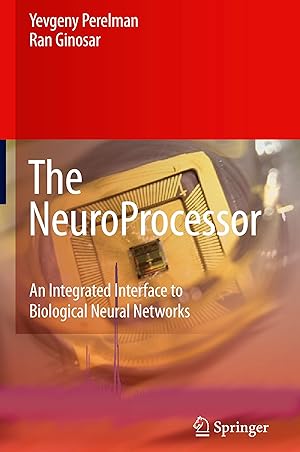
Condizione: New. Dieser Artikel ist ein Print on Demand Artikel und wird nach Ihrer Bestellung fuer Sie gedruckt. Explains the complete design of a brain-computer interface chipWritten by and oriented to electronic engineersFocuses on implanted devicesUnderstanding brain structure and principles of operation is one of the major…challengesofmode.
- Rilegato
- Print on Demand
Da: moluna, Greven, Germaniamoluna
Contatta il venditoreVenditore con 5 stelleCondizione: Nuovo
EUR 92,27
EUR 48,99 spedizioneSpedito da Germania a U.S.A.Quantità: Più di 20 disponibili
Condizione: New. Dieser Artikel ist ein Print on Demand Artikel und wird nach Ihrer Bestellung fuer Sie gedruckt. Explains the complete design of a brain-computer interface chipWritten by and oriented to electronic engineersFocuses on implanted devicesUnderstanding brain structure and principles of operation is one of the major…challengesofmode.
- Rilegato
- Print on Demand
Da: Biblios, frankfurt am main, HESSE, GermaniaBiblios
Contatta il venditoreVenditore con 4 stelleCondizione: Nuovo
EUR 152,01
EUR 9,95 spedizioneSpedito da Germania a U.S.A.Quantità: 4 disponibili
Condizione: New. PRINT ON DEMAND pp. 132.

- Rilegato
- Print on Demand
Da: preigu, Osnabrück, Germaniapreigu
Contatta il venditoreVenditore con 5 stelleCondizione: Nuovo
EUR 95,70
EUR 70,00 spedizioneSpedito da Germania a U.S.A.Quantità: 5 disponibili
Buch. Condizione: Neu. The NeuroProcessor | An Integrated Interface to Biological Neural Networks | Yevgeny Perelman (u. a.) | Buch | viii | Englisch | 2008 | Springer | EAN 9781402087257 | Verantwortliche Person für die EU: Springer Verlag GmbH, Tiergartenstr. 17, 69121 Heidelberg, juergen[dot]hartmann[at]springer[dot]com | Anb…ieter: preigu Print on Demand.

- Brossura
- Print on Demand
Da: buchversandmimpf2000, Emtmannsberg, BAYE, Germaniabuchversandmimpf2000
Contatta il venditoreVenditore con 5 stelleCondizione: Nuovo
EUR 106,99
EUR 60,00 spedizioneSpedito da Germania a U.S.A.Quantità: 1 disponibili
Taschenbuch. Condizione: Neu. This item is printed on demand - Print on Demand Titel. Neuware -Understanding brain structure and principles of operation is one of the major challengesofmodernscience.SincetheexperimentsbyGalvanionfrogmuscle contraction in 1792, it is known that electrical impulses lie at the core of the brain act…ivity. The technology of neuro-electronic interfacing, besides its importance for neurophysiological research, has also clinical potential, so called neuropr- thetics. Sensory prostheses are intended to feed sensory data into patient¿s brain by means of neurostimulation. Cochlear prostheses [1] are one example of sensory prostheses that are already used in patients. Retinal prostheses are currently under research [2]. Recent neurophysiological experiments [3, 4] show that brain signals recorded from motor cortex carry information regarding the movement of subject¿s limbs (Fig. 1.1). These signals can be further used to control ext- nal machines [4] that will replace missing limbs, opening the eld of motor prosthetics, devices that will restore lost limbs or limb control. Fig. 1.1. Robotic arm controlled by monkey motor cortex signals. MotorLab, U- versity of Pittsburgh. Prof Andy Schwartz, U. Pitt 2 1 Introduction Another group of prostheses would provide treatment for brain diseases, such as prevention of epileptic seizure or the control of tremor associated with Parkinson disease [5]. Brain implants for treatment of Epilepsy and Parkinson symptoms (Fig. 1.2) are already available commercially [6, 7]. Fig. 1.2. Implantable device for Epilepsy seizures treatment [7]. Cyberonics, Inc.Springer-Verlag GmbH, Tiergartenstr. 17, 69121 Heidelberg 132 pp. Englisch.


