
Articoli correlati a Exploring the Invisible: Art, Science, and the Spiritual:...
Exploring the Invisible: Art, Science, and the Spiritual: Art, Science, and the Spiritual - Second Edition - Rilegato
Sinossi
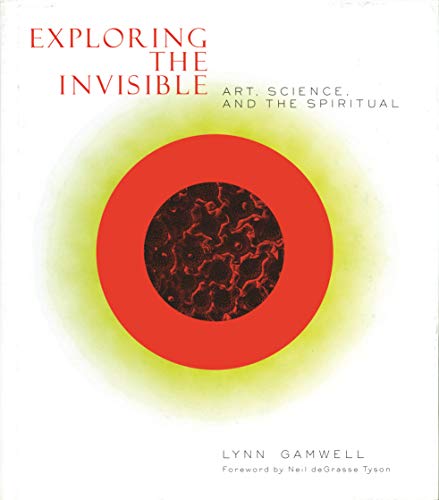
This sumptuous and stunningly illustrated book shows through words and images how directly, profoundly, and indisputably modern science has transformed modern art. Bginning in the mid-nineteenth century, a strange and exciting new world came into focus--a world of microorganisms in myriad shapes and colors, prehistoric fossils, bizarre undersea creatures, spectrums of light and sound, molecules of water, and atomic particles. Exploring the Invisible reveals that the world beyond the naked eye--made visible by advances in science--has been a major inspiration for artists ever since, influencing the subjects they choose as well as their techniques and modes of representation.Lynn Gamwell traces the evolution of abstract art through several waves, beginning with Romanticism. She shows how new windows into telescopic and microscopic realms--combined with the growing explanatory importance of mathematics and new definitions of beauty derived from science--broadly and profoundly influenced Western art. Art increasingly reflected our more complex understanding of reality through increasing abstraction. For example, a German physiologist's famous demonstration that color is not in the world but in the mind influenced Monet's revolutionary painting with light. As the first wave of enthusiasm for science crested, abstract art emerged in Brussels and Munich. By 1914, it could be found from Moscow to Paris.Throughout the book are beautiful images from both science and art--some well known, others rare--that reveal the scientific sources mined by Impressionist and Symbolist painters, Art Nouveau sculptors and architects, Cubists, and other nineteenth- and twentieth-century artists.With a foreword by astronomer Neil deGrasse Tyson, Exploring the Invisible appears in an age when both artists and scientists are exploring the deepest meanings of life, consciousness, and the universe.
Le informazioni nella sezione "Riassunto" possono far riferimento a edizioni diverse di questo titolo.
Recensione
One of Choice's Outstanding Academic Titles for 2003
"Sumptuously illustrated--the illustrations being an active part of the argument--Lynn Gamwell's Exploring the Invisible is a major
contribution."--George Steiner, Times Literary Supplement
"This beautifully illustrated volume is a surprising synthesis of two seemingly disparate cultures: a revealing look at more than a century of science and the art it has influenced. Gamwell . . . brings her rare and expansive view of creativity to bear on the impulses common to both pursuits. . . . Ultimately, Gamwell argues for the direct relationship between scientific knowledge and abstract art, and after such an eloquent and visually exciting journey, the link is perfectly clear."--Publishers Weekly
"Exploring the Invisible: Art, Science, and the Spiritual is an extremely handsome and well-produced volume. . . . When all is said and done, Gamwell succeeds in making her case that the science, the culture, and the art move and change together."--Ezra Shahn, Science
"Gamwell deals deftly with both the art and the science. With 364 illustrations and an unusual linkage of art and science, her book stimulates both the eye and the mind."--Scientific American
"Text and images flow nicely from epoch to epoch, as Gamwell illustrates the zeitgeists that created some of the world's great ideas."--Library Journal
"Rich in detail, and sumptuously illustrated and produced; it displays a lifetime of knowledge."--Philip J. Davis, SIAM News
"Gamwell, a very well-informed author, offers an innovative and stimulating work. . . . Exceptionally well written, eminently readable, and lavishly illustrated with color and black-and-white plates that significantly illuminate the points made in the text."--Choice
"The phrase 'lavishly illustrated' is bandied around too freely, but here it is more than justified. Ms. Gamwell and her picture editor have come up with a combination of classic works of art along with ones a bit more off the beaten track that makes up for a very appealing mixture. . . . A book that would be an ideal present for anyone whose interests traverse the arts and sciences."--Tom Cobbe, The Art Newspaper
"Exploring the Invisible is not just a coherent history of two centuries of scientific discoveries of the invisible world (although maybe visible through microscope or telescope). It is also a history of ideas expressed either through philosophy or articulated by artists. . . . [After reading it] the scope of one's imagination has taken a sudden leap, able to embrace the plethora of structures in the natural and cosmic worlds because a coherent picture has been painted, theories of science made understandable and integrated into an artistic search for the reality of a beautiful and ordered universe."--Patricia Railing, The Art Book
Dalla quarta di copertina
"Modern science since Darwin and Einstein has revolutionized our understanding of mind and cosmos, presenting a world as strange and paradoxical as it is wonderful, and challenging deeply held beliefs and values. That visual artists would be influenced by this still-continuing transformation is not surprising. Lynn Gamwell traces this response through the twists and turns of modern and postmodern art and aesthetics, providing fresh and interesting interpretations, and a treasury of visual images, to stimulate the thinking of both scientist and artist."--Torsten N. Wiesel, neuroscientist and Nobel Laureate
"This pathbreaking study is daring, innovative, and above all, clearly written. I suspect it will be the one book students will be able to consult in order to correlate what are usually considered the almost antagonistic fields of science and art; and I suspect, too, that thanks to its amazingly readable, lucid style, it will find its way into the libraries of post-collegiate readers. Nobody before has dared to tackle this huge topic. Art historians don't know enough about science; scientists don't know enough about art. Miraculously, probably uniquely, Lynn Gamwell seems equally at home in both areas."--Robert Rosenblum, New York University
"Exploring the Invisible is very stimulating and accessible to the nonexpert (in science or art). As a scientist, I found it enjoyable and highly informative. It provides many new and exciting insights. Dr. Gamwell receives my admiration for this fine connection between art and science."--Arthur Greenberg, University of New Hampshire
Le informazioni nella sezione "Su questo libro" possono far riferimento a edizioni diverse di questo titolo.
Risultati della ricerca per Exploring the Invisible: Art, Science, and the Spiritual:...

Immagini fornite dal venditore
Exploring the Invisible: Art, Science, and the Spiritual - Second Edition
Editore:
Princeton University Press, 2002
ISBN 10: 0691089728
ISBN 13: 9780691089720
Antico o usato
Rilegato
Da: -OnTimeBooks-, Phoenix, AZ, U.S.A.
Valutazione del venditore 5 su 5 stelle

Condizione: good. A copy that has been read, remains in good condition. All pages are intact, and the cover is intact. The spine and cover show signs of wear. Pages can include notes and highlighting and show signs of wear, and the copy can include "From the library of" labels or previous owner inscriptions. 100% GUARANTEE! Shipped with delivery confirmation, if you're not satisfied with purchase please return item! Ships via media mail. Codice articolo OTV.0691089728.G
Compra usato
EUR 6,23
Spedizione gratuita
Spedito in U.S.A.
Spedito in U.S.A.
Quantità: 1 disponibili
Foto dell'editore
Exploring the Invisible : Art, Science, and the Spiritual - Second Edition
Editore:
Princeton University Press, 2002
ISBN 10: 0691089728
ISBN 13: 9780691089720
Antico o usato
Rilegato
Da: Better World Books, Mishawaka, IN, U.S.A.
Valutazione del venditore 5 su 5 stelle
Condizione: Very Good. Pages intact with possible writing/highlighting. Binding strong with minor wear. Dust jackets/supplements may not be included. Stock photo provided. Product includes identifying sticker. Better World Books: Buy Books. Do Good. Codice articolo 6105506-75
Compra usato
EUR 13,35
Spedizione gratuita
Spedito in U.S.A.
Spedito in U.S.A.
Quantità: 1 disponibili
Foto dell'editore
Exploring the Invisible: Art, Science, and the Spiritual - Second Edition
Editore:
Princeton University Press, Princeton, 2002
ISBN 10: 0691089728
ISBN 13: 9780691089720
Antico o usato
Rilegato
Da: Magers and Quinn Booksellers, Minneapolis, MN, U.S.A.
Valutazione del venditore 5 su 5 stelle
hardcover. Condizione: Acceptable. May have underlining, highlighting, margin notes, remainder marks, inscriptions, book plates, tears, significant wear, and/or a missing dust jacket, box, or discs. Damaged item. Codice articolo 1526146
Compra usato
EUR 10,09
Spedizione EUR 3,48
Spedito in U.S.A.
Spedito in U.S.A.
Quantità: 1 disponibili
Foto dell'editore
Exploring the Invisible: Art, Science, and the Spiritual - Second Edition Gamwell, Lynn and Tyson, Neil deGrasse
Editore:
Princeton University Press, 2002
ISBN 10: 0691089728
ISBN 13: 9780691089720
Antico o usato
Rilegato
Da: Bibliomonster Books, Rancho Cucamonga, CA, U.S.A.
Valutazione del venditore 4 su 5 stelle

hardcover. Condizione: As New. Used, hardcover like new with original dust jacket. Sharp, square, clean, fresh & serviceable copy. No highlighting, marginalia or tears. Codice articolo PG-O5QG-HOZV
Compra usato
EUR 26,00
Spedizione EUR 4,36
Spedito in U.S.A.
Spedito in U.S.A.
Quantità: 1 disponibili
Foto dell'editore
Exploring the Invisible: Art, Science, and the Spiritual - Second Edition
Editore:
Princeton University Press, 2002
ISBN 10: 0691089728
ISBN 13: 9780691089720
Antico o usato
Rilegato
Da: G.J. Askins Bookseller, New Lebanon, NY, U.S.A.
Valutazione del venditore 5 su 5 stelle
Hardcover. Condizione: Very Good. Condizione sovraccoperta: Very Good. 344 page hardcover with many illustrations (156 color, 208 b/w). Foreword by Neil deGrasse Tyson. Text with illustrations, Chronology, Suggestions for Further Reading, Index. Book and dust jacket in very good condition - unmarked, tight and clean. Codice articolo 542891
Compra usato
EUR 26,92
Spedizione EUR 5,23
Spedito in U.S.A.
Spedito in U.S.A.
Quantità: 1 disponibili
Foto dell'editore
Exploring the Invisible: Art, Science, and the Spiritual - Second Edition
Editore:
Princeton University Press, 2002
ISBN 10: 0691089728
ISBN 13: 9780691089720
Antico o usato
Rilegato
Da: WorldofBooks, Goring-By-Sea, WS, Regno Unito
Valutazione del venditore 5 su 5 stelle
Hardback. Condizione: Very Good. The book has been read, but is in excellent condition. Pages are intact and not marred by notes or highlighting. The spine remains undamaged. Codice articolo GOR001936227
Compra usato
EUR 32,35
Spedizione EUR 6,53
Spedito da Regno Unito a U.S.A.
Spedito da Regno Unito a U.S.A.
Quantità: 1 disponibili
Foto dell'editore
Exploring the Invisible: Art, Science, and the Spiritual
Editore:
Princeton University Press, 2002
ISBN 10: 0691089728
ISBN 13: 9780691089720
Antico o usato
Rilegato
Da: Artless Missals, DENVER, CO, U.S.A.
Valutazione del venditore 5 su 5 stelle
HARDCOVER. Condizione: Good. No dust jacket. Binding solid, pages crisp and clean, no markings found. Maroon and black illustrated covers bright and shiny with very light scuffs and dents. Extremities lightly bumped with minimal tip wear. No expedited or international shipping, oversize. Codice articolo SKU1014528
Compra usato
EUR 55,63
Spedizione EUR 5,23
Spedito in U.S.A.
Spedito in U.S.A.
Quantità: 1 disponibili
Foto dell'editore
Exploring the Invisible : Art, Science, & the Spiritual : Art, Science, and the Spiritual
Editore:
Princeton University Press, Princeton & Oxford, 2002
ISBN 10: 0691089728
ISBN 13: 9780691089720
Antico o usato
Rilegato
Da: Barnaby, Oxford, Regno Unito
Valutazione del venditore 3 su 5 stelle

Hardcover. Condizione: Good. Dust jacket is complete but rubbed and worn at edges and corners. Contents mostly clean and unmarked, with uncreased pages. A good used copy with no significant flaws. Publisher's note: This sumptuous and stunningly illustrated book reveals that the world beyond the naked eye-made visible by advances in science-has been a major inspiration for artists ever since, influencing the subjects they choose as well as their techniques and modes of representation. 135 color illustrations. 217 halftones. "Modern science since Darwin and Einstein has revolutionized our understanding of mind and cosmos, presenting a world as strange and paradoxical as it is wonderful, and challenging deeply held beliefs and values. That visual artists would be influenced by this still-continuing transformation is not surprising. Lynn Gamwell traces this response through the twists and turns of modern and postmodern art and aesthetics, providing fresh and interesting interpretations, and a treasury of visual images, to stimulate the thinking of both scientist and artist."--Torsten N. Wiesel, neuroscientist and Nobel Laureate. "This pathbreaking study is daring, innovative, and above all, clearly written. I suspect it will be the one book students will be able to consult in order to correlate what are usually considered the almost antagonistic fields of science and art; and I suspect, too, that thanks to its amazingly readable, lucid style, it will find its way into the libraries of post-collegiate readers. Nobody before has dared to tackle this huge topic. Art historians don't know enough about science; scientists don't know enough about art. Miraculously, probably uniquely, Lynn Gamwell seems equally at home in both areas."-Robert Rosenblum, New York University. "Exploring the Invisible is very stimulating and accessible to the nonexpert (in science or art). As a scientist, I found it enjoyable and highly informative. It provides many new and exciting insights. Dr. Gamwell receives my admiration for this fine connection between art and science."-Arthur Greenberg, University of New Hampshire. This sumptuous and stunningly illustrated book shows through words and images how directly, profoundly, and indisputably modern science has transformed modern art. Beginning in the mid-nineteenth century, a strange and exciting new world came into focus-a world of microorganisms in myriad shapes and colors, prehistoric fossils, bizarre undersea creatures, spectrums of light and sound, molecules of water, and atomic particles. Exploring the Invisible reveals that the world beyond the naked eye-made visible by advances in science-has been a major inspiration for artists ever since, influencing the subjects they choose as well as their techniques and modes of representation. Lynn Gamwell traces the evolution of abstract art through several waves, beginning with Romanticism. She shows how new windows into telescopic and microscopic realms-combined with the growing explanatory importance of mathematics and new definitions of beauty derived from science-broadly and profoundly influenced Western art. Art increasingly reflected our more complex understanding of reality through increasing abstraction. For example, a German physiologist's famous demonstration that color is not in the world but in the mind influenced Monet's revolutionary painting with light. As the first wave of enthusiasm for science crested, abstract art emerged in Brussels and Munich. By 1914, it could be found from Moscow to Paris. Throughout the book are beautiful images from both science and art-some well known, others rare-that reveal the scientific sources mined by Impressionist and Symbolist painters, Art Nouveau sculptors and architects, Cubists, and other nineteenth-and twentieth-century artists. With a foreword by astronomer Neil deGrasse Tyson, Exploring the Invisible appears in an age when both artists and scientists are exploring the deepest meanings of life, consciousness, and the universe. Size: 28.6 x 24.8 x 2.5 cm. 344 pp. Shipped Weight: 1-2 kilos. Category: Art & Design; Art and science; Spirituality in art; Art, Abstract; ISBN/EAN: 9780691089720. Add. Inventory No: 260215GTH012460. Codice articolo 260215GTH012460
Compra usato
EUR 32,93
Spedizione EUR 34,99
Spedito da Regno Unito a U.S.A.
Spedito da Regno Unito a U.S.A.
Quantità: 1 disponibili
Foto dell'editore
Exploring the Invisible: Art, Science, and the Spiritual - Second Edition
Da: SHIMEDIA, Brooklyn, NY, U.S.A.
Valutazione del venditore 4 su 5 stelle
Condizione: New. Satisfaction Guaranteed or your money back. Codice articolo 0691089728
Compra nuovo
EUR 134,59
Spedizione gratuita
Spedito in U.S.A.
Spedito in U.S.A.
Quantità: 1 disponibili