
Articoli correlati a Increasing Seismic Safety by Combining Engineering...
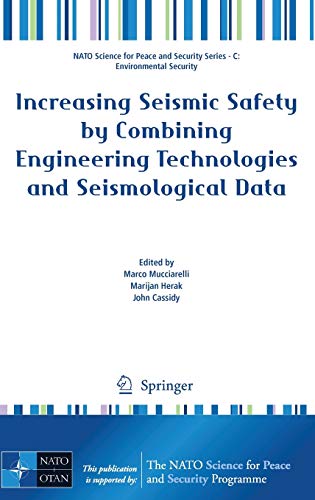
Sinossi
The current state-of-the-art allows seismologists to give statistical estimates of the probability of a large earthquake striking a given region, identifying the areas in which the seismic hazard is the highest. However, the usefulness of these estimates is limited, without information about local subsoil conditions and the vulnerability of buildings. Identifying the sites where a local ampli?cation of seismic shaking will occur, and identifying the buildings that will be the weakest under the seismic shaking is the only strategy that allows effective defence against earthquake damage at an affordable cost, by applying selective reinforcement only to the structures that need it. Unfortunately, too often the Earth s surface acted as a divide between seism- ogists and engineers. Now it is becoming clear that the building behaviour largely depends on the seismic input and the buildings on their turn act as seismic sources, in an intricate interplay that non-linear phenomena make even more complex. These phenomena are often the cause of observed damage enhancement during past ear- quakes. While research may pursue complex models to fully understand soil dyn- ics under seismic loading, we need, at the same time, simple models valid on average, whose results can be easily transferred to end users without prohibitive expenditure. Very complex models require a large amount of data that can only be obtained at a very high cost or may be impossible to get at all.
Le informazioni nella sezione "Riassunto" possono far riferimento a edizioni diverse di questo titolo.
Contenuti
Introduction. Group picture, Participants sketches and names. 1. The Use of Ambient Noise for Building and Soil Characterisation; M. Herak.- The Need for Standardized Approach for Estimating the local Site Effects Based on Ambient Noise Recordings; K Atakan.- Are Transients Carrying Useful Information for Estimating H/V Spectral Ratios? S. Parolai et al.- Basic Structure of QTS (HVSR) and Examples of Applications; Y. Nakamura.- Ambient Noise and Site Response: from Estimation of Site Effects to determination of the Subsoil Structure; F.J. Chavez-Garci.- In-Situ Estimates of Material Damping from Environmental Noise Measurements; D. Albarello and F. Baliva.- Estimates of Vs30 Based on Constrained H/V Ratio Measurements Alone; S. Castellaro, F. Mulargia.- Comparison of Recorded Dynamic Characteristics of Structures and Ground During Strong and Weak Shaking; M. Çelebi.- HVSR Technique Improvement Using Redundant Wavelet Transform; F. Vallianatos, G. Hioupis.- 2. Effect of Buildings on Free-Field Ground Motion; M. Mucciarelli.- Effect of Building-Building Interaction on 'Free-Field' Ground Motion; M. Mucciarelli et al.- 3. Role of Dynamic Properties on Building Vulnerability; A. Masi.- How Far Ambient Noise Measurement may help to Assess Building Vulnerability?C. Boutin, S. Hans.- Assessment of Seismic Capacity of Existing Buildings ― Effects of Uncertainties; D. Baros et al.- Estimation of the period of Vibration of Existing RC Building Types Based on Experimental Data and Numerical Results; A. Masi, M. Vona.- Retrofitting and Strengthening Evaluation from Stiffness Variations of a Damaged Building from Ambient Vibration Recordings; M.N. Farsi et al.- 4. State-of-the-Art ― Recent Advances and Applications; J.F. Cassidy.- Microtremor Soil-Structure Resonance Study in the Bovec Basin (NW Slovenia) Related to 1998 and 2004 Damaging Earthquakes; A. Gosar.- Recent Earthquake Site Response Studies in Canada; J.F. Cassidy, S. Molnar.-Recent Applications of Ambient Vibration Measurements in Croatia; M. Herak.- Applications to World Heritage Sites; J. Saita.- Two Applications of the HVSR Technique to Cultural Heritage and Historical Masonry; D. Liberatore et al.- Overview of Seismic Hazard Studies in Tunis City; N. Bouden-Romdhane et al.- An Empericial Geotechnical Seismic Site Response Procedure; A. Rodriguez-Marek et al.- Conclusions.
Product Description
Book by None
Le informazioni nella sezione "Su questo libro" possono far riferimento a edizioni diverse di questo titolo.
Risultati della ricerca per Increasing Seismic Safety by Combining Engineering...

Foto dell'editore
Increasing Seismic Safety by Combining Engineering Technologies and Seismological Data (eng)
Print on DemandDa: Brook Bookstore On Demand, Napoli, NA, Italia
Valutazione del venditore 5 su 5 stelle

Condizione: new. Questo è un articolo print on demand. Codice articolo cfaf6b3b3d49f8b89b827439390d45b2
Compra nuovo
EUR 166,29
Spedizione EUR 6,80
Spedito da Italia a U.S.A.
Spedito da Italia a U.S.A.
Quantità: Più di 20 disponibili
Immagini fornite dal venditore
Increasing Seismic Safety by Combining Engineering Technologies and Seismological Data
Print on DemandDa: moluna, Greven, Germania
Valutazione del venditore 5 su 5 stelle
Gebunden. Condizione: New. Dieser Artikel ist ein Print on Demand Artikel und wird nach Ihrer Bestellung fuer Sie gedruckt. Proceedings of the NATO Advanced Research Workshop on Increasing Seismic Safety by Combining Engineering Technologies and Seismological DataDubrovnik,Croatia19-21 September 2007|Joint discussion and conclusions between seismologists and engineersC. Codice articolo 4095830
Compra nuovo
EUR 180,07
Spedizione EUR 48,99
Spedito da Germania a U.S.A.
Spedito da Germania a U.S.A.
Quantità: Più di 20 disponibili
Immagini fornite dal venditore
Increasing Seismic Safety by Combining Engineering Technologies and Seismological Data
Editore:
Springer Netherlands Nov 2008, 2008
ISBN 10: 1402091931
ISBN 13: 9781402091933
Nuovo
Rilegato
Da: BuchWeltWeit Ludwig Meier e.K., Bergisch Gladbach, Germania
Valutazione del venditore 5 su 5 stelle
Buch. Condizione: Neu. This item is printed on demand - it takes 3-4 days longer - Neuware -The current state-of-the-art allows seismologists to give statistical estimates of the probability of a large earthquake striking a given region, identifying the areas in which the seismic hazard is the highest. However, the usefulness of these estimates is limited, without information about local subsoil conditions and the vulnerability of buildings. Identifying the sites where a local ampli cation of seismic shaking will occur, and identifying the buildings that will be the weakest under the seismic shaking is the only strategy that allows effective defence against earthquake damage at an affordable cost, by applying selective reinforcement only to the structures that need it. Unfortunately, too often the Earth's surface acted as a divide between seism- ogists and engineers. Now it is becoming clear that the building behaviour largely depends on the seismic input and the buildings on their turn act as seismic sources, in an intricate interplay that non-linear phenomena make even more complex. These phenomena are often the cause of observed damage enhancement during past ear- quakes. While research may pursue complex models to fully understand soil dyn- ics under seismic loading, we need, at the same time, simple models valid on average, whose results can be easily transferred to end users without prohibitive expenditure. Very complex models require a large amount of data that can only be obtained at a very high cost or may be impossible to get at all. 404 pp. Englisch. Codice articolo 9781402091933
Compra nuovo
EUR 213,99
Spedizione EUR 23,00
Spedito da Germania a U.S.A.
Spedito da Germania a U.S.A.
Quantità: 2 disponibili
Foto dell'editore
Increasing Seismic Safety by Combining Engineering Technologies and Seismological Data
Da: GreatBookPrices, Columbia, MD, U.S.A.
Valutazione del venditore 5 su 5 stelle
Condizione: New. Codice articolo 5844193-n
Compra nuovo
EUR 239,73
Spedizione EUR 2,36
Spedito in U.S.A.
Spedito in U.S.A.
Quantità: 15 disponibili
Foto dell'editore
Increasing Seismic Safety by Combining Engineering Technologies and Seismological Data
Da: GreatBookPrices, Columbia, MD, U.S.A.
Valutazione del venditore 5 su 5 stelle
Condizione: As New. Unread book in perfect condition. Codice articolo 5844193
Compra usato
EUR 251,28
Spedizione EUR 2,36
Spedito in U.S.A.
Spedito in U.S.A.
Quantità: 15 disponibili
Foto dell'editore
Increasing Seismic Safety by Combining Engineering Technologies and Seismological Data (NATO Science for Peace and Security Series C: Environmental Security)
Da: Ria Christie Collections, Uxbridge, Regno Unito
Valutazione del venditore 5 su 5 stelle
Condizione: New. In English. Codice articolo ria9781402091933_new
Compra nuovo
EUR 256,09
Spedizione EUR 13,48
Spedito da Regno Unito a U.S.A.
Spedito da Regno Unito a U.S.A.
Quantità: Più di 20 disponibili
Immagini fornite dal venditore
Increasing Seismic Safety by Combining Engineering Technologies and Seismological Data
Editore:
Springer, Springer Nov 2008, 2008
ISBN 10: 1402091931
ISBN 13: 9781402091933
Nuovo
Rilegato
Da: buchversandmimpf2000, Emtmannsberg, BAYE, Germania
Valutazione del venditore 5 su 5 stelle
Buch. Condizione: Neu. This item is printed on demand - Print on Demand Titel. Neuware -The current state-of-the-art allows seismologists to give statistical estimates of the probability of a large earthquake striking a given region, identifying the areas in which the seismic hazard is the highest. However, the usefulness of these estimates is limited, without information about local subsoil conditions and the vulnerability of buildings. Identifying the sites where a local ampli cation of seismic shaking will occur, and identifying the buildings that will be the weakest under the seismic shaking is the only strategy that allows effective defence against earthquake damage at an affordable cost, by applying selective reinforcement only to the structures that need it. Unfortunately, too often the Earth¿s surface acted as a divide between seism- ogists and engineers. Now it is becoming clear that the building behaviour largely depends on the seismic input and the buildings on their turn act as seismic sources, in an intricate interplay that non-linear phenomena make even more complex. These phenomena are often the cause of observed damage enhancement during past ear- quakes. While research may pursue complex models to fully understand soil dyn- ics under seismic loading, we need, at the same time, simple models valid on average, whose results can be easily transferred to end users without prohibitive expenditure. Very complex models require a large amount of data that can only be obtained at a very high cost or may be impossible to get at all.Springer-Verlag KG, Sachsenplatz 4-6, 1201 Wien 404 pp. Englisch. Codice articolo 9781402091933
Compra nuovo
EUR 213,99
Spedizione EUR 60,00
Spedito da Germania a U.S.A.
Spedito da Germania a U.S.A.
Quantità: 1 disponibili
Immagini fornite dal venditore
Increasing Seismic Safety by Combining Engineering Technologies and Seismological Data
Da: AHA-BUCH GmbH, Einbeck, Germania
Valutazione del venditore 5 su 5 stelle
Buch. Condizione: Neu. Druck auf Anfrage Neuware - Printed after ordering - The current state-of-the-art allows seismologists to give statistical estimates of the probability of a large earthquake striking a given region, identifying the areas in which the seismic hazard is the highest. However, the usefulness of these estimates is limited, without information about local subsoil conditions and the vulnerability of buildings. Identifying the sites where a local ampli cation of seismic shaking will occur, and identifying the buildings that will be the weakest under the seismic shaking is the only strategy that allows effective defence against earthquake damage at an affordable cost, by applying selective reinforcement only to the structures that need it. Unfortunately, too often the Earth's surface acted as a divide between seism- ogists and engineers. Now it is becoming clear that the building behaviour largely depends on the seismic input and the buildings on their turn act as seismic sources, in an intricate interplay that non-linear phenomena make even more complex. These phenomena are often the cause of observed damage enhancement during past ear- quakes. While research may pursue complex models to fully understand soil dyn- ics under seismic loading, we need, at the same time, simple models valid on average, whose results can be easily transferred to end users without prohibitive expenditure. Very complex models require a large amount of data that can only be obtained at a very high cost or may be impossible to get at all. Codice articolo 9781402091933
Compra nuovo
EUR 241,76
Spedizione EUR 35,00
Spedito da Germania a U.S.A.
Spedito da Germania a U.S.A.
Quantità: 1 disponibili