
Articoli correlati a Practical Project Risk Management: The ATOM Methodology
Sinossi
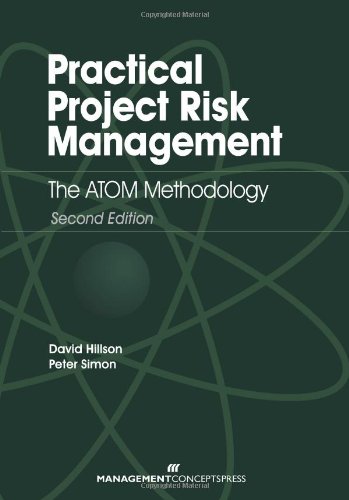
This second edition of the book reflects the authors’ work to continually improve upon the model and to apply the methodology to a broader range of issues. The book includes: • An entirely new chapter on managing risk in programs, which is an important dimension in today’s world of ever more complex initiatives • Updated material and methodology more closely aligned with relevant international standards • Emphasis on minimizing the threats and maximizing the opportunities to optimize achievement of your project goals Based on sound principles and best practices, this book guides any member of the project management team in conducting risk management in a real-world environment.
Le informazioni nella sezione "Riassunto" possono far riferimento a edizioni diverse di questo titolo.
Informazioni sull'autore
Dr. David Hillson, PMI Fellow, FRSA, HonFAPM, FIRM, FCMI, widely known as The Risk Doctor, is an international risk management consultant and the Director of Risk Doctor & Partners. He is a PMI Fellow and the recipient of the 2011 PMI Eric Jenett Project Management Excellence Award.
Peter Simon, BSc, PMP, FAPM, is a Director of Lucidus Consulting Ltd. He has more than 30 years of experience as a project and program management consultant and practitioner across all industries and business sectors. He is a Visiting Fellow at Cranfield School of Management and an Adjunct Professor at ESCP Business School – London.
Estratto. © Ristampato con autorizzazione. Tutti i diritti riservati.
Practical Project Risk Management
The ATOM Methodology
By David Hillson, Peter SimonManagement Concepts Press
Copyright © 2012 Management Concepts, Inc.
All rights reserved.
ISBN: 978-1-56726-366-4All rights reserved.
Contents
Foreword to the Second Edition,
Foreword to the First Edition,
Authors' Preface,
Acknowledgments,
PART I: The Problem,
Chapter 1: The Challenge of Managing Risk,
Chapter 2: Making It Work,
Chapter 3: Active Threat and Opportunity Management — The ATOM Risk Process,
PART II: Applying ATOM to a Typical Project,
Chapter 4: Start at the Beginning (Initiation),
Chapter 5: Exposing the Challenge (Identification),
Chapter 6: Understand the Exposure (Assessment),
Chapter 7: Options and Actions (Response Planning),
Chapter 8: Spread the Word (Reporting),
Chapter 9: Just Do It (Implementation),
Chapter 10: Keep It Alive (Major Reviews),
Chapter 11: Ongoing Updates (Minor Reviews),
Chapter 12: Learn from Experience (Post-Project Review),
PART III: Variations on a Theme,
Chapter 13: ATOM for Small Projects,
Chapter 14: ATOM for Large Projects,
Chapter 15: Simulating Possible Futures (Quantitative Analysis),
Chapter 16: Managing Risk in Programs,
Epilogue: Next Steps,
Appendix A: Templates and Examples,
Appendix B: Further Templates and Examples,
Glossary of Terms and Abbreviations,
References and Further Reading,
Index,
CHAPTER 1
The Challenge of Managing Risk
Few would disagree that life is risky. Indeed, for many people it is precisely the element of risk that makes life interesting. However, unmanaged risk is dangerous because it can lead to unforeseen outcomes. This fact has led to the recognition that risk management is essential, whether in business, projects, or everyday life. But somehow risks just keep happening. Risk management apparently does not work, at least not in the way it should. This book addresses this problem by providing a simple method for effective risk management. The target is management of risks on projects, although many of the techniques outlined here are equally applicable to managing other forms of risk, including business risk, strategic risk, and even personal risk.
The book is divided into three parts, starting with defining the problem in an effort to understand the underlying reasons for the apparent failure of project risk management to deliver the promised or expected benefits. The main body of the book describes a generic risk management process applicable to most projects, focusing on simple guidelines to make risk management work in practice. Finally, the book considers implementation issues, applying the risk management process to different types of projects, and addressing the steps necessary to use risk management effectively.
But before considering the details of the risk management process, there are some essential ideas that must be understood and clarified. For example, what exactly is meant by the word risk?
Risk — The Definition Debate
Some may be surprised that there is any question to be answered here. After all, the word risk can be found in any English dictionary, and surely everyone knows what it means. But in recent years risk practitioners and professionals have been engaged in an active and controversial debate about the precise scope of the word.
Everyone agrees that risk arises from uncertainty, and that risk is about the impact that uncertain events or circumstances could have on the achievement o
Le informazioni nella sezione "Su questo libro" possono far riferimento a edizioni diverse di questo titolo.
Risultati della ricerca per Practical Project Risk Management: The ATOM Methodology

Foto dell'editore
Practical Project Risk Management: The ATOM Methodology
Editore:
Berrett-Koehler Publishers, 2012
ISBN 10: 1567263666
ISBN 13: 9781567263664
Antico o usato
Brossura
Da: World of Books (was SecondSale), Montgomery, IL, U.S.A.
Valutazione del venditore 5 su 5 stelle

Condizione: Good. Item in good condition. Textbooks may not include supplemental items i.e. CDs, access codes etc. Codice articolo 00109317707
Compra usato
EUR 5,38
Spedizione gratuita
Spedito in U.S.A.
Spedito in U.S.A.
Quantità: 1 disponibili
Foto dell'editore
Practical Project Risk Management: The Atom Methodology
Editore:
Berrett-Koehler Publishers, 2012
ISBN 10: 1567263666
ISBN 13: 9781567263664
Antico o usato
Paperback
Da: ThriftBooks-Atlanta, AUSTELL, GA, U.S.A.
Valutazione del venditore 5 su 5 stelle
Paperback. Condizione: Good. No Jacket. Pages can have notes/highlighting. Spine may show signs of wear. ~ ThriftBooks: Read More, Spend Less. Codice articolo G1567263666I3N00
Compra usato
EUR 5,99
Spedizione gratuita
Spedito in U.S.A.
Spedito in U.S.A.
Quantità: 1 disponibili
Foto dell'editore
Practical Project Risk Management: The Atom Methodology
Editore:
Berrett-Koehler Publishers, 2012
ISBN 10: 1567263666
ISBN 13: 9781567263664
Antico o usato
Paperback
Da: ThriftBooks-Dallas, Dallas, TX, U.S.A.
Valutazione del venditore 5 su 5 stelle
Paperback. Condizione: Very Good. No Jacket. May have limited writing in cover pages. Pages are unmarked. ~ ThriftBooks: Read More, Spend Less. Codice articolo G1567263666I4N00
Compra usato
EUR 5,99
Spedizione gratuita
Spedito in U.S.A.
Spedito in U.S.A.
Quantità: 1 disponibili
Foto dell'editore
Practical Project Risk Management: The Atom Methodology
Editore:
Berrett-Koehler Publishers, 2012
ISBN 10: 1567263666
ISBN 13: 9781567263664
Antico o usato
Paperback
Da: ThriftBooks-Dallas, Dallas, TX, U.S.A.
Valutazione del venditore 5 su 5 stelle
Paperback. Condizione: Fair. No Jacket. Readable copy. Pages may have considerable notes/highlighting. ~ ThriftBooks: Read More, Spend Less. Codice articolo G1567263666I5N00
Compra usato
EUR 5,99
Spedizione gratuita
Spedito in U.S.A.
Spedito in U.S.A.
Quantità: 1 disponibili
Foto dell'editore
Practical Project Risk Management: The ATOM Methodology
Editore:
Berrett-Koehler Publishers, 2012
ISBN 10: 1567263666
ISBN 13: 9781567263664
Antico o usato
Paperback
Da: HPB-Red, Dallas, TX, U.S.A.
Valutazione del venditore 5 su 5 stelle
Paperback. Condizione: Good. Connecting readers with great books since 1972! Used textbooks may not include companion materials such as access codes, etc. May have some wear or writing/highlighting. We ship orders daily and Customer Service is our top priority! Codice articolo S_449860903
Compra usato
EUR 4,49
Spedizione EUR 3,27
Spedito in U.S.A.
Spedito in U.S.A.
Quantità: 1 disponibili
Foto dell'editore
Practical Project Risk Management: The ATOM Methodology
Editore:
Berrett-Koehler Publishers, 2012
ISBN 10: 1567263666
ISBN 13: 9781567263664
Antico o usato
Paperback
Da: Half Price Books Inc., Dallas, TX, U.S.A.
Valutazione del venditore 5 su 5 stelle
Paperback. Condizione: Very Good. Connecting readers with great books since 1972! Used books may not include companion materials, and may have some shelf wear or limited writing. We ship orders daily and Customer Service is our top priority! Codice articolo S_455250073
Compra usato
EUR 5,61
Spedizione EUR 3,27
Spedito in U.S.A.
Spedito in U.S.A.
Quantità: 1 disponibili
Foto dell'editore
Practical Project Risk Management: The ATOM Methodology
Editore:
Berrett-Koehler Publishers, 2012
ISBN 10: 1567263666
ISBN 13: 9781567263664
Antico o usato
Paperback
Da: WorldofBooks, Goring-By-Sea, WS, Regno Unito
Valutazione del venditore 5 su 5 stelle
Paperback. Condizione: Fine. Codice articolo GOR011772971
Compra usato
EUR 2,90
Spedizione EUR 6,53
Spedito da Regno Unito a U.S.A.
Spedito da Regno Unito a U.S.A.
Quantità: 1 disponibili
Foto dell'editore
Practical Project Risk Management: The ATOM Methodology
Editore:
Berrett-Koehler Publishers, 2012
ISBN 10: 1567263666
ISBN 13: 9781567263664
Antico o usato
Paperback
Da: WorldofBooks, Goring-By-Sea, WS, Regno Unito
Valutazione del venditore 5 su 5 stelle
Paperback. Condizione: Very Good. The book has been read, but is in excellent condition. Pages are intact and not marred by notes or highlighting. The spine remains undamaged. Codice articolo GOR008158317
Compra usato
EUR 2,90
Spedizione EUR 6,53
Spedito da Regno Unito a U.S.A.
Spedito da Regno Unito a U.S.A.
Quantità: 3 disponibili
Foto dell'editore
Practical Project Risk Management : The Atom Methodology
Editore:
Berrett-Koehler Publishers, Incorporated, 2012
ISBN 10: 1567263666
ISBN 13: 9781567263664
Antico o usato
Brossura
Da: Better World Books Ltd, Dunfermline, Regno Unito
Valutazione del venditore 5 su 5 stelle
Condizione: Good. Former library copy. Pages intact with minimal writing/highlighting. The binding may be loose and creased. Dust jackets/supplements are not included. Includes library markings. Stock photo provided. Product includes identifying sticker. Better World Books: Buy Books. Do Good. Codice articolo 15805258-20
Compra usato
EUR 5,62
Spedizione EUR 5,83
Spedito da Regno Unito a U.S.A.
Spedito da Regno Unito a U.S.A.
Quantità: 1 disponibili
Immagini fornite dal venditore
Practical Project Risk Management: The ATOM Methodology
Editore:
Management Concepts, Inc, 2012
ISBN 10: 1567263666
ISBN 13: 9781567263664
Antico o usato
paperback
Da: WeBuyBooks, Rossendale, LANCS, Regno Unito
Valutazione del venditore 5 su 5 stelle
paperback. Condizione: Like New. Most items will be dispatched the same or the next working day. An apparently unread copy in perfect condition. Dust cover is intact with no nicks or tears. Spine has no signs of creasing. Pages are clean and not marred by notes or folds of any kind. Codice articolo rev4837850203
Compra usato
EUR 3,32
Spedizione EUR 8,80
Spedito da Regno Unito a U.S.A.
Spedito da Regno Unito a U.S.A.
Quantità: 1 disponibili