
Articoli correlati a Tropospheric Ozone and Food Security: Interactions...
Tropospheric Ozone and Food Security: Interactions of Ozone With Other Major Abiotic Stresses and Its Impact on Food Security - Rilegato
Sinossi
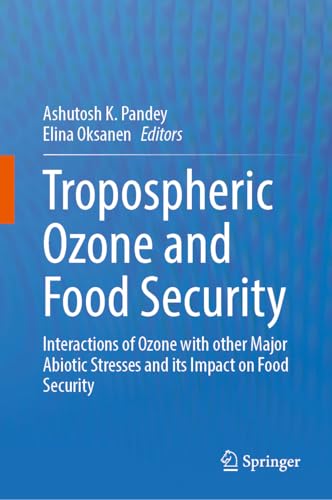
This book discusses the impact of high-tropospheric ozone pollution and its interactions with other major abiotic stress factors, such as elevated carbon dioxide, nitric oxide, volatile organic carbon, UV radiation, heavy metal stress, drought, salinity on the crop production and the crop quality. Climate change is a serious concern affecting both vegetation and humans adversely. Tropospheric ozone is considered to be one of the major drivers for climate change and is also a phytotoxic gaseous air pollutant causing a serious threat to crop productions and global food security. Crop production is an ultimate consequence of several environmental challenges which the crop has undergone during its growth and development. Under different stresses plants tend to alter their carbon and nitrogen metabolism resulting in changes in chemical composition of vegetative plant parts and also grain yield and its quality. Therefore, in order to understand the yield, it is inevitable to take into account effects of different stress factors and their interactions to understand how they can alter crop yield and its quality.
Meanwhile, many studies exist indicating the detrimental effects of tropospheric ozone, but knowledge related to the interactions with other major abiotic stresses with ozone and the understanding of crop quality deterioration is scattered till date. Therefore, this book highlights the challenges associated with the lacuna of information and includes chapters covering research, reviews and case studies to address this issues. It discusses altered strategies in term of biomass allocations, nutrient mobilization, food grain quality deterioration and chapters addressing multiple abiotic stress interactions under high-ozone condition.
Le informazioni nella sezione "Riassunto" possono far riferimento a edizioni diverse di questo titolo.
Dalla quarta di copertina
This book discusses the impact of high-tropospheric ozone pollution and its interactions with other major abiotic stress factors, such as elevated carbon dioxide, nitric oxide, volatile organic carbon, UV radiation, heavy metal stress, drought, salinity on the crop production and the crop quality. Climate change is a serious concern affecting both vegetation and humans adversely. Tropospheric ozone is considered to be one of the major drivers for climate change and is also a phytotoxic gaseous air pollutant causing a serious threat to crop productions and global food security. Crop production is an ultimate consequence of several environmental challenges which the crop has undergone during its growth and development. Under different stresses plants tend to alter their carbon and nitrogen metabolism resulting in changes in chemical composition of vegetative plant parts and also grain yield and its quality. Therefore, in order to understand the yield, it is inevitable to take into account effects of different stress factors and their interactions to understand how they can alter crop yield and its quality.
Meanwhile, many studies exist indicating the detrimental effects of tropospheric ozone, but knowledge related to the interactions with other major abiotic stresses with ozone and the understanding of crop quality deterioration is scattered till date. Therefore, this book highlights the challenges associated with the lacuna of information and includes chapters covering research, reviews and case studies to address this issues. It discusses altered strategies in term of biomass allocations, nutrient mobilization, food grain quality deterioration and chapters addressing multiple abiotic stress interactions under high-ozone condition.
Le informazioni nella sezione "Su questo libro" possono far riferimento a edizioni diverse di questo titolo.
Risultati della ricerca per Tropospheric Ozone and Food Security: Interactions...

Foto dell'editore
Tropospheric Ozone and Food Security : Interactions of Ozone With Other Major Abiotic Stresses and Its Impact on Food Security
Da: GreatBookPrices, Columbia, MD, U.S.A.
Valutazione del venditore 5 su 5 stelle

Condizione: New. Codice articolo 52770488-n
Compra nuovo
EUR 139,78
Spedizione EUR 2,35
Spedito in U.S.A.
Spedito in U.S.A.
Quantità: Più di 20 disponibili
Foto dell'editore
Tropospheric Ozone and Food Security: Interactions of Ozone with Other Major Abiotic Stresses and its Impact on Food Security
Da: California Books, Miami, FL, U.S.A.
Valutazione del venditore 5 su 5 stelle
Condizione: New. Codice articolo I-9783032036070
Compra nuovo
EUR 142,21
Spedizione gratuita
Spedito in U.S.A.
Spedito in U.S.A.
Quantità: Più di 20 disponibili
Immagini fornite dal venditore
Tropospheric Ozone and Food Security
Editore:
Springer-Verlag Gmbh Jan 2026, 2026
ISBN 10: 3032036070
ISBN 13: 9783032036070
Nuovo
Rilegato
Da: BuchWeltWeit Ludwig Meier e.K., Bergisch Gladbach, Germania
Valutazione del venditore 5 su 5 stelle
Buch. Condizione: Neu. This item is printed on demand - it takes 3-4 days longer - Neuware -This book discusses the impact of high-tropospheric ozone pollution and its interactions with other major abiotic stress factors, such as elevated carbon dioxide, nitric oxide, volatile organic carbon, UV radiation, heavy metal stress, drought, salinity on the crop production and the crop quality. Climate change is a serious concern affecting both vegetation and humans adversely. Tropospheric ozone is considered to be one of the major drivers for climate change and is also a phytotoxic gaseous air pollutant causing a serious threat to crop productions and global food security. Crop production is an ultimate consequence of several environmental challenges which the crop has undergone during its growth and development. Under different stresses plants tend to alter their carbon and nitrogen metabolism resulting in changes in chemical composition of vegetative plant parts and also grain yield and its quality. Therefore, in order to understand the yield, it is inevitable to take into account effects of different stress factors and their interactions to understand how they can alter crop yield and its quality.Meanwhile, many studies exist indicating the detrimental effects of tropospheric ozone, but knowledge related to the interactions with other major abiotic stresses with ozone and the understanding of crop quality deterioration is scattered till date. Therefore, this book highlights the challenges associated with the lacuna of information and includes chapters covering research, reviews and case studies to address this issues. It discusses altered strategies in term of biomass allocations, nutrient mobilization, food grain quality deterioration and chapters addressing multiple abiotic stress interactions under high-ozone condition. 280 pp. Englisch. Codice articolo 9783032036070
Compra nuovo
EUR 128,39
Spedizione EUR 23,00
Spedito da Germania a U.S.A.
Spedito da Germania a U.S.A.
Quantità: 2 disponibili
Foto dell'editore
Tropospheric Ozone and Food Security : Interactions of Ozone With Other Major Abiotic Stresses and Its Impact on Food Security
Da: GreatBookPrices, Columbia, MD, U.S.A.
Valutazione del venditore 5 su 5 stelle
Condizione: As New. Unread book in perfect condition. Codice articolo 52770488
Compra usato
EUR 149,06
Spedizione EUR 2,35
Spedito in U.S.A.
Spedito in U.S.A.
Quantità: Più di 20 disponibili
Immagini fornite dal venditore
Tropospheric Ozone and Food Security
Print on DemandDa: moluna, Greven, Germania
Valutazione del venditore 5 su 5 stelle
Condizione: New. Dieser Artikel ist ein Print on Demand Artikel und wird nach Ihrer Bestellung fuer Sie gedruckt. Codice articolo 2528503001
Compra nuovo
EUR 109,83
Spedizione EUR 48,99
Spedito da Germania a U.S.A.
Spedito da Germania a U.S.A.
Quantità: Più di 20 disponibili
Foto dell'editore
Tropospheric Ozone and Food Security : Interactions of Ozone With Other Major Abiotic Stresses and Its Impact on Food Security
Da: GreatBookPricesUK, Woodford Green, Regno Unito
Valutazione del venditore 5 su 5 stelle
Condizione: New. Codice articolo 52770488-n
Compra nuovo
EUR 142,75
Spedizione EUR 17,87
Spedito da Regno Unito a U.S.A.
Spedito da Regno Unito a U.S.A.
Quantità: Più di 20 disponibili
Foto dell'editore
Tropospheric Ozone and Food Security : Interactions of Ozone With Other Major Abiotic Stresses and Its Impact on Food Security
Da: GreatBookPricesUK, Woodford Green, Regno Unito
Valutazione del venditore 5 su 5 stelle
Condizione: As New. Unread book in perfect condition. Codice articolo 52770488
Compra usato
EUR 157,97
Spedizione EUR 17,87
Spedito da Regno Unito a U.S.A.
Spedito da Regno Unito a U.S.A.
Quantità: Più di 20 disponibili
Immagini fornite dal venditore
Tropospheric Ozone and Food Security : Interactions of Ozone with Other Major Abiotic Stresses and its Impact on Food Security
Da: AHA-BUCH GmbH, Einbeck, Germania
Valutazione del venditore 5 su 5 stelle
Buch. Condizione: Neu. Druck auf Anfrage Neuware - Printed after ordering - This book discusses the impact of high-tropospheric ozone pollution and its interactions with other major abiotic stress factors, such as elevated carbon dioxide, nitric oxide, volatile organic carbon, UV radiation, heavy metal stress, drought, salinity on the crop production and the crop quality. Climate change is a serious concern affecting both vegetation and humans adversely. Tropospheric ozone is considered to be one of the major drivers for climate change and is also a phytotoxic gaseous air pollutant causing a serious threat to crop productions and global food security. Crop production is an ultimate consequence of several environmental challenges which the crop has undergone during its growth and development. Under different stresses plants tend to alter their carbon and nitrogen metabolism resulting in changes in chemical composition of vegetative plant parts and also grain yield and its quality. Therefore, in order to understand the yield, it is inevitable to take into account effects of different stress factors and their interactions to understand how they can alter crop yield and its quality.Meanwhile, many studies exist indicating the detrimental effects of tropospheric ozone, but knowledge related to the interactions with other major abiotic stresses with ozone and the understanding of crop quality deterioration is scattered till date. Therefore, this book highlights the challenges associated with the lacuna of information and includes chapters covering research, reviews and case studies to address this issues. It discusses altered strategies in term of biomass allocations, nutrient mobilization, food grain quality deterioration and chapters addressing multiple abiotic stress interactions under high-ozone condition. Codice articolo 9783032036070
Compra nuovo
EUR 148,23
Spedizione EUR 35,00
Spedito da Germania a U.S.A.
Spedito da Germania a U.S.A.
Quantità: 1 disponibili
Immagini fornite dal venditore
Tropospheric Ozone and Food Security
Editore:
Springer, Springer Nature Switzerland Jan 2026, 2026
ISBN 10: 3032036070
ISBN 13: 9783032036070
Nuovo
Rilegato
Da: buchversandmimpf2000, Emtmannsberg, BAYE, Germania
Valutazione del venditore 5 su 5 stelle
Buch. Condizione: Neu. This item is printed on demand - Print on Demand Titel. Neuware -This book discusses the impact of high-tropospheric ozone pollution and its interactions with other major abiotic stress factors, such as elevated carbon dioxide, nitric oxide, volatile organic carbon, UV radiation, heavy metal stress, drought, salinity on the crop production and the crop quality. Climate change is a serious concern affecting both vegetation and humans adversely. Tropospheric ozone is considered to be one of the major drivers for climate change and is also a phytotoxic gaseous air pollutant causing a serious threat to crop productions and global food security. Crop production is an ultimate consequence of several environmental challenges which the crop has undergone during its growth and development. Under different stresses plants tend to alter their carbon and nitrogen metabolism resulting in changes in chemical composition of vegetative plant parts and also grain yield and its quality. Therefore, in order to understand the yield, it is inevitable to take into account effects of different stress factors and their interactions to understand how they can alter crop yield and its quality.Meanwhile, many studies exist indicating the detrimental effects of tropospheric ozone, but knowledge related to the interactions with other major abiotic stresses with ozone and the understanding of crop quality deterioration is scattered till date. Therefore, this book highlights the challenges associated with the lacuna of information and includes chapters covering research, reviews and case studies to address this issues. It discusses altered strategies in term of biomass allocations, nutrient mobilization, food grain quality deterioration and chapters addressing multiple abiotic stress interactions under high-ozone condition.Springer-Verlag KG, Sachsenplatz 4-6, 1201 Wien 288 pp. Englisch. Codice articolo 9783032036070
Compra nuovo
EUR 128,39
Spedizione EUR 60,00
Spedito da Germania a U.S.A.
Spedito da Germania a U.S.A.
Quantità: 1 disponibili
Foto dell'editore
Tropospheric Ozone and Food Security: Interactions of Ozone with other Major Abiotic Stresses and its Impact on Food Security
Da: Books Puddle, Woodside, NY, U.S.A.
Valutazione del venditore 4 su 5 stelle

Condizione: New. Codice articolo 26404658088
Compra nuovo
EUR 193,19
Spedizione EUR 3,55
Spedito in U.S.A.
Spedito in U.S.A.
Quantità: 4 disponibili