
Articoli correlati a The Current State of Capital Movement Freedom for India:...
Sinossi
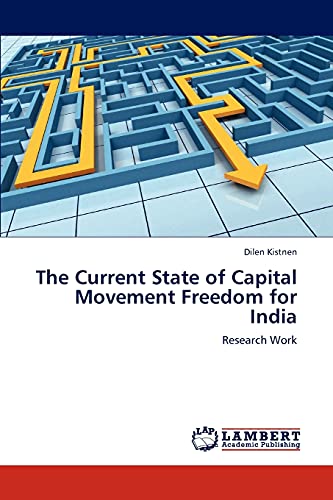
Indian economy’s progress in the world has been largely significant during the last decade. After having been characterized by extensive regulation, protectionism, public ownership, pervasive corruption and slow growth from 1947-1990, India observed a drastic improvement in its economy as from 1991 with the help of Manmohan Singh, the then Minister of Finance, revived economic reforms and better economic policies to liberalize business regulations and attract foreign capital. The different measures applied up to now have been undertaken in three different periods- 1991, 1995 and 2005 to better tackle worldwide challenges. Today, India is the second fastest growing major economy and the largest FDI attracting economy behind China. The recent overtaking of inward FDI by outward FDI is a major point illustrating the fact that India is growing into a developed economy. All this has been due to the policies aimed at liberalizing and facilitating businesses in India.Such liberalization extended to securities transactions in India has resulted in huge inflows of FII and NRI investments in stock market.
Le informazioni nella sezione "Riassunto" possono far riferimento a edizioni diverse di questo titolo.
L'autore
Dilen Kistnen holds a Bachelor of Science in Finance (Minor: Law) from the Department of Accounting and Finance ,Faculty of Law and Management,University of Mauritius
Le informazioni nella sezione "Su questo libro" possono far riferimento a edizioni diverse di questo titolo.
Risultati della ricerca per The Current State of Capital Movement Freedom for India:...

Immagini fornite dal venditore
The Current State of Capital Movement Freedom for India
Editore:
LAP LAMBERT Academic Publishing Okt 2011, 2011
ISBN 10: 3846524948
ISBN 13: 9783846524947
Nuovo
Taschenbuch
Da: BuchWeltWeit Ludwig Meier e.K., Bergisch Gladbach, Germania
Valutazione del venditore 5 su 5 stelle

Taschenbuch. Condizione: Neu. This item is printed on demand - it takes 3-4 days longer - Neuware -Indian economy s progress in the world has been largely significant during the last decade. After having been characterized by extensive regulation, protectionism, public ownership, pervasive corruption and slow growth from 1947-1990, India observed a drastic improvement in its economy as from 1991 with the help of Manmohan Singh, the then Minister of Finance, revived economic reforms and better economic policies to liberalize business regulations and attract foreign capital. The different measures applied up to now have been undertaken in three different periods- 1991, 1995 and 2005 to better tackle worldwide challenges. Today, India is the second fastest growing major economy and the largest FDI attracting economy behind China. The recent overtaking of inward FDI by outward FDI is a major point illustrating the fact that India is growing into a developed economy. All this has been due to the policies aimed at liberalizing and facilitating businesses in India.Such liberalization extended to securities transactions in India has resulted in huge inflows of FII and NRI investments in stock market. 56 pp. Englisch. Codice articolo 9783846524947
Compra nuovo
EUR 49,00
Spedizione EUR 23,00
Spedito da Germania a U.S.A.
Spedito da Germania a U.S.A.
Quantità: 2 disponibili
Immagini fornite dal venditore
The Current State of Capital Movement Freedom for India
Editore:
LAP LAMBERT Academic Publishing, 2011
ISBN 10: 3846524948
ISBN 13: 9783846524947
Nuovo
Brossura
Da: moluna, Greven, Germania
Valutazione del venditore 5 su 5 stelle
Condizione: New. Codice articolo 5496631
Compra nuovo
EUR 41,05
Spedizione EUR 48,99
Spedito da Germania a U.S.A.
Spedito da Germania a U.S.A.
Quantità: Più di 20 disponibili
Immagini fornite dal venditore
The Current State of Capital Movement Freedom for India
Editore:
LAP LAMBERT Academic Publishing Okt 2011, 2011
ISBN 10: 3846524948
ISBN 13: 9783846524947
Nuovo
Taschenbuch
Da: buchversandmimpf2000, Emtmannsberg, BAYE, Germania
Valutazione del venditore 5 su 5 stelle
Taschenbuch. Condizione: Neu. This item is printed on demand - Print on Demand Titel. Neuware -Indian economy's progress in the world has been largely significant during the last decade. After having been characterized by extensive regulation, protectionism, public ownership, pervasive corruption and slow growth from 1947-1990, India observed a drastic improvement in its economy as from 1991 with the help of Manmohan Singh, the then Minister of Finance, revived economic reforms and better economic policies to liberalize business regulations and attract foreign capital. The different measures applied up to now have been undertaken in three different periods- 1991, 1995 and 2005 to better tackle worldwide challenges. Today, India is the second fastest growing major economy and the largest FDI attracting economy behind China. The recent overtaking of inward FDI by outward FDI is a major point illustrating the fact that India is growing into a developed economy. All this has been due to the policies aimed at liberalizing and facilitating businesses in India.Such liberalization extended to securities transactions in India has resulted in huge inflows of FII and NRI investments in stock market.VDM Verlag, Dudweiler Landstraße 99, 66123 Saarbrücken 56 pp. Englisch. Codice articolo 9783846524947
Compra nuovo
EUR 49,00
Spedizione EUR 60,00
Spedito da Germania a U.S.A.
Spedito da Germania a U.S.A.
Quantità: 1 disponibili
Immagini fornite dal venditore
The Current State of Capital Movement Freedom for India : Research Work
Editore:
LAP LAMBERT Academic Publishing, 2012
ISBN 10: 3846524948
ISBN 13: 9783846524947
Nuovo
Taschenbuch
Da: AHA-BUCH GmbH, Einbeck, Germania
Valutazione del venditore 5 su 5 stelle
Taschenbuch. Condizione: Neu. nach der Bestellung gedruckt Neuware - Printed after ordering - Indian economy s progress in the world has been largely significant during the last decade. After having been characterized by extensive regulation, protectionism, public ownership, pervasive corruption and slow growth from 1947-1990, India observed a drastic improvement in its economy as from 1991 with the help of Manmohan Singh, the then Minister of Finance, revived economic reforms and better economic policies to liberalize business regulations and attract foreign capital. The different measures applied up to now have been undertaken in three different periods- 1991, 1995 and 2005 to better tackle worldwide challenges. Today, India is the second fastest growing major economy and the largest FDI attracting economy behind China. The recent overtaking of inward FDI by outward FDI is a major point illustrating the fact that India is growing into a developed economy. All this has been due to the policies aimed at liberalizing and facilitating businesses in India.Such liberalization extended to securities transactions in India has resulted in huge inflows of FII and NRI investments in stock market. Codice articolo 9783846524947
Compra nuovo
EUR 49,59
Spedizione EUR 60,51
Spedito da Germania a U.S.A.
Spedito da Germania a U.S.A.
Quantità: 1 disponibili
Immagini fornite dal venditore
The Current State of Capital Movement Freedom for India | Research Work
Editore:
LAP LAMBERT Academic Publishing, 2012
ISBN 10: 3846524948
ISBN 13: 9783846524947
Nuovo
Taschenbuch
Da: preigu, Osnabrück, Germania
Valutazione del venditore 5 su 5 stelle
Taschenbuch. Condizione: Neu. The Current State of Capital Movement Freedom for India | Research Work | Dilen Kistnen | Taschenbuch | 56 S. | Englisch | 2012 | LAP LAMBERT Academic Publishing | EAN 9783846524947 | Verantwortliche Person für die EU: BoD - Books on Demand, In de Tarpen 42, 22848 Norderstedt, info[at]bod[dot]de | Anbieter: preigu. Codice articolo 106637512
Compra nuovo
EUR 43,35
Spedizione EUR 70,00
Spedito da Germania a U.S.A.
Spedito da Germania a U.S.A.
Quantità: 5 disponibili