
Articoli correlati a Generation, Conversion, Transmission and Storing of...
Sinossi
In physics, energy is the quantitative property that must be transferred to an object in order to perform work on, or to heat, the object. Energy is a conserved quantity; the law of conservation of energy states that energy can be converted in form, but not created or destroyed. The SI unit of energy is the joule, which is the energy transferred to an object by the work of moving it a distance of 1.0 metre against a force of 1.0 newton. Common forms of energy include the kinetic energy of a moving object, the potential energy stored by an object's position in a force field (gravitational, electric or magnetic), the elastic energy stored by stretching solid objects, the chemical energy released when a fuel burns, the radiant energy carried by light, and the thermal energy due to an object's temperature.Living organisms require energy to stay alive, such as the energy humans get from food. Human civilization requires energy to function, which it gets from energy resources such as fossil fuels, nuclear fuel, or renewable energy.
Le informazioni nella sezione "Riassunto" possono far riferimento a edizioni diverse di questo titolo.
Risultati della ricerca per Generation, Conversion, Transmission and Storing of...

Immagini fornite dal venditore
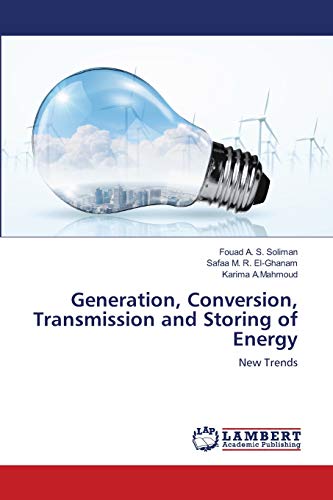
Generation, Conversion, Transmission and Storing of Energy
Editore:
LAP LAMBERT Academic Publishing Sep 2020, 2020
ISBN 10: 6202808780
ISBN 13: 9786202808781
Nuovo
Taschenbuch
Da: BuchWeltWeit Ludwig Meier e.K., Bergisch Gladbach, Germania
Valutazione del venditore 5 su 5 stelle

Taschenbuch. Condizione: Neu. This item is printed on demand - it takes 3-4 days longer - Neuware -In physics, energy is the quantitative property that must be transferred to an object in order to perform work on, or to heat, the object. Energy is a conserved quantity; the law of conservation of energy states that energy can be converted in form, but not created or destroyed. The SI unit of energy is the joule, which is the energy transferred to an object by the work of moving it a distance of 1.0 metre against a force of 1.0 newton. Common forms of energy include the kinetic energy of a moving object, the potential energy stored by an object's position in a force field (gravitational, electric or magnetic), the elastic energy stored by stretching solid objects, the chemical energy released when a fuel burns, the radiant energy carried by light, and the thermal energy due to an object's temperature.Living organisms require energy to stay alive, such as the energy humans get from food. Human civilization requires energy to function, which it gets from energy resources such as fossil fuels, nuclear fuel, or renewable energy. 104 pp. Englisch. Codice articolo 9786202808781
Compra nuovo
EUR 54,90
Spedizione EUR 23,00
Spedito da Germania a U.S.A.
Spedito da Germania a U.S.A.
Quantità: 2 disponibili
Foto dell'editore
Generation, Conversion, Transmission and Storing of Energy: New Trends
Editore:
LAP LAMBERT Academic Publishing, 2020
ISBN 10: 6202808780
ISBN 13: 9786202808781
Nuovo
Brossura
Da: Books Puddle, Woodside, NY, U.S.A.
Valutazione del venditore 4 su 5 stelle

Condizione: New. Codice articolo 26386920854
Compra nuovo
EUR 88,13
Spedizione EUR 3,56
Spedito in U.S.A.
Spedito in U.S.A.
Quantità: 4 disponibili
Immagini fornite dal venditore
Generation, Conversion, Transmission and Storing of Energy
Editore:
LAP LAMBERT Academic Publishing, 2020
ISBN 10: 6202808780
ISBN 13: 9786202808781
Nuovo
Brossura
Da: moluna, Greven, Germania
Valutazione del venditore 5 su 5 stelle
Condizione: New. Codice articolo 408603489
Compra nuovo
EUR 45,45
Spedizione EUR 48,99
Spedito da Germania a U.S.A.
Spedito da Germania a U.S.A.
Quantità: Più di 20 disponibili
Immagini fornite dal venditore
Generation, Conversion, Transmission and Storing of Energy : New Trends
Editore:
LAP LAMBERT Academic Publishing, 2020
ISBN 10: 6202808780
ISBN 13: 9786202808781
Nuovo
Taschenbuch
Da: AHA-BUCH GmbH, Einbeck, Germania
Valutazione del venditore 5 su 5 stelle
Taschenbuch. Condizione: Neu. nach der Bestellung gedruckt Neuware - Printed after ordering - In physics, energy is the quantitative property that must be transferred to an object in order to perform work on, or to heat, the object. Energy is a conserved quantity; the law of conservation of energy states that energy can be converted in form, but not created or destroyed. The SI unit of energy is the joule, which is the energy transferred to an object by the work of moving it a distance of 1.0 metre against a force of 1.0 newton. Common forms of energy include the kinetic energy of a moving object, the potential energy stored by an object's position in a force field (gravitational, electric or magnetic), the elastic energy stored by stretching solid objects, the chemical energy released when a fuel burns, the radiant energy carried by light, and the thermal energy due to an object's temperature.Living organisms require energy to stay alive, such as the energy humans get from food. Human civilization requires energy to function, which it gets from energy resources such as fossil fuels, nuclear fuel, or renewable energy. Codice articolo 9786202808781
Compra nuovo
EUR 60,57
Spedizione EUR 35,00
Spedito da Germania a U.S.A.
Spedito da Germania a U.S.A.
Quantità: 1 disponibili
Foto dell'editore
Generation, Conversion, Transmission and Storing of Energy: New Trends
Editore:
LAP LAMBERT Academic Publishing, 2020
ISBN 10: 6202808780
ISBN 13: 9786202808781
Nuovo
Brossura
Da: Majestic Books, Hounslow, Regno Unito
Valutazione del venditore 4 su 5 stelle
Condizione: New. Print on Demand. Codice articolo 393760329
Compra nuovo
EUR 89,88
Spedizione EUR 7,68
Spedito da Regno Unito a U.S.A.
Spedito da Regno Unito a U.S.A.
Quantità: 4 disponibili
Foto dell'editore
Generation, Conversion, Transmission and Storing of Energy: New Trends
Editore:
LAP LAMBERT Academic Publishing, 2020
ISBN 10: 6202808780
ISBN 13: 9786202808781
Nuovo
Brossura
Da: Biblios, Frankfurt am main, HESSE, Germania
Valutazione del venditore 4 su 5 stelle
Condizione: New. PRINT ON DEMAND. Codice articolo 18386920860
Compra nuovo
EUR 90,25
Spedizione EUR 9,95
Spedito da Germania a U.S.A.
Spedito da Germania a U.S.A.
Quantità: 4 disponibili
Immagini fornite dal venditore
Generation, Conversion, Transmission and Storing of Energy
Editore:
LAP LAMBERT Academic Publishing Sep 2020, 2020
ISBN 10: 6202808780
ISBN 13: 9786202808781
Nuovo
Taschenbuch
Da: buchversandmimpf2000, Emtmannsberg, BAYE, Germania
Valutazione del venditore 5 su 5 stelle
Taschenbuch. Condizione: Neu. This item is printed on demand - Print on Demand Titel. Neuware -In physics, energy is the quantitative property that must be transferred to an object in order to perform work on, or to heat, the object. Energy is a conserved quantity; the law of conservation of energy states that energy can be converted in form, but not created or destroyed. The SI unit of energy is the joule, which is the energy transferred to an object by the work of moving it a distance of 1.0 metre against a force of 1.0 newton. Common forms of energy include the kinetic energy of a moving object, the potential energy stored by an object's position in a force field (gravitational, electric or magnetic), the elastic energy stored by stretching solid objects, the chemical energy released when a fuel burns, the radiant energy carried by light, and the thermal energy due to an object's temperature.Living organisms require energy to stay alive, such as the energy humans get from food. Human civilization requires energy to function, which it gets from energy resources such as fossil fuels, nuclear fuel, or renewable energy.VDM Verlag, Dudweiler Landstraße 99, 66123 Saarbrücken 104 pp. Englisch. Codice articolo 9786202808781
Compra nuovo
EUR 54,90
Spedizione EUR 60,00
Spedito da Germania a U.S.A.
Spedito da Germania a U.S.A.
Quantità: 1 disponibili
Immagini fornite dal venditore
Generation, Conversion, Transmission and Storing of Energy | New Trends
Editore:
LAP LAMBERT Academic Publishing, 2020
ISBN 10: 6202808780
ISBN 13: 9786202808781
Nuovo
Taschenbuch
Da: preigu, Osnabrück, Germania
Valutazione del venditore 5 su 5 stelle
Taschenbuch. Condizione: Neu. Generation, Conversion, Transmission and Storing of Energy | New Trends | Fouad A. S. Soliman (u. a.) | Taschenbuch | Englisch | 2020 | LAP LAMBERT Academic Publishing | EAN 9786202808781 | Verantwortliche Person für die EU: preigu GmbH & Co. KG, Lengericher Landstr. 19, 49078 Osnabrück, mail[at]preigu[dot]de | Anbieter: preigu. Codice articolo 119110132
Compra nuovo
EUR 47,95
Spedizione EUR 70,00
Spedito da Germania a U.S.A.
Spedito da Germania a U.S.A.
Quantità: 5 disponibili
Foto dell'editore
Generation, Conversion, Transmission and Storing of Energy: New Trends
Editore:
LAP LAMBERT Academic Publishing, 2020
ISBN 10: 6202808780
ISBN 13: 9786202808781
Nuovo
paperback
Da: Mispah books, Redhill, SURRE, Regno Unito
Valutazione del venditore 4 su 5 stelle
paperback. Condizione: New. NEW. SHIPS FROM MULTIPLE LOCATIONS. book. Codice articolo ERICA82962028087806
Compra nuovo
EUR 177,66
Spedizione EUR 29,54
Spedito da Regno Unito a U.S.A.
Spedito da Regno Unito a U.S.A.
Quantità: 1 disponibili