
Articoli correlati a Insect Populations In Theory and in Practice: 19th...
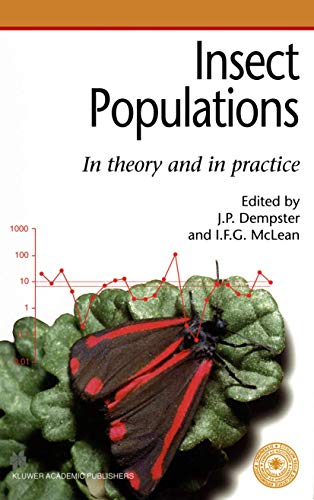
Insect Populations In Theory and in Practice: 19th Symposium of the Royal Entomological Society 10-11 September 1997 at the University of Newcastle - Brossura
Sinossi
Insects are by far the largest group of animals on Earth, with over a million described species, and they occupy a wide range of ecological niches - they may be herbivores, predators, parasites or decomposers. Some are of particular economic importance as pests of agriculture and forestry, as vectors of animal and human disease, or as species of interest to wildlife conservation. Thus an understanding of the processes determining their numbers is of considerable practical value.
Entomologists have played a leading role in developing a theoretical basis to Population Ecology, but we still do not have adequate experimental and observational proof for many of the theoretical ideas that have been proposed. As a result, the subject has been beset with arguments for more than 50 years. This volume attempts to reconcile some of these controversies, while also reviewing the current state of our knowledge. The editors have drawn together an international list of contributors whose views reflect a range of opinions on how natural populations are stabilised. They have succeeded in producing a book that both covers the main alternative views in population theory and contains some of the best recent field studies of insect populations.
This Royal Entomological Society Symposium volume will be of great interest to all entomologists and ecologists, particularly those who wish to know more about Population Dynamics.
Le informazioni nella sezione "Riassunto" possono far riferimento a edizioni diverse di questo titolo.
Recensione
`...I would recommend the book not only for all the researchers in insect population ecology, but also as excellent reading for graduate seminars in (insect) population ecology, and as an excellent basis for discussion groups.'
European Journal of Entomology, 97 (2000)
`This uge package of knowledge must surely be read throughly more than once in order to digest everything. On the other hand, every reader can pick the articles that they find most interesting. I can warmly recommend the book as a basic textbook for university students as well as to professors and other lectures and all scientists dealing with these topics.'
Entomologica Fennica, Vol.12
Contenuti
Preface. Contributors. Introduction. Definition of terms. Part 1: 1. Spatial structure and dynamics of insect populations; I. Hanski. 2. The regulation of populations by density-dependent processes; M.P. Hassell. 3. The role of density-independent processes in the stabilization of insect populations; P.J. den Boer. 4. Resource limitation of populations and ceiling models; J.P. Dempster. 5. The problems associated with the identification of density dependence in population data; P. Rothery. 6. Host-parasitoid dynamics; H.C.J. Godfray, C.B. Müller. 7. Biological control of insects: implications for theory in population ecology; W.W. Murdoch, C.J. Briggs, T.R. Collier. 8. The effects of qualitative changes of individuals in the population dynamics of insects; S.R. Leather, C.S. Awmack. Part 2: 9. Population dynamics of aphids; A.F.G. Dixon, P. Kindlmann. 10. The population dynamics of Tephritidae that inhabit flower-heads; N.A. Straw. 11. Population dynamics of the genus Maculinea (Lepidoptera: Lycaenidae); J.A. Thomas, R.T. Clarke, G.W. Elmes, M.E. Hochberg. 12. The dynamics of a herbivore-plant interaction, the cinnabar moth and ragwort; E. van der Meijden, R.M. Nisbet, M.J. Crawley. 13. The population dynamics of Operophthera brumata (Lepidoptera: Geometridae); J. Roland. 14. Population ecology of a gall-inducing sawfly, Euura lasiolepis, and relatives; P.W. Price, T.P. Craig, M.D. Hunter. 15. The population ecology of Trichochermes walkeri; I.F.G.McLean. 16. Bottom-up population regulation of a herbivorous lady beetle: an evolutionary perspective; T. Ohgushi. 17. The population ecology of Megaloprepus coerulatus and its effect on species assemblages in water-filled tree holes; O.M. Fincke. Concluding remarks. References. Species Index. Subject Index.
Le informazioni nella sezione "Su questo libro" possono far riferimento a edizioni diverse di questo titolo.
Risultati della ricerca per Insect Populations In Theory and in Practice: 19th...

Foto dell'editore
Insect Populations In theory and in pra (eng)
Print on DemandDa: Brook Bookstore On Demand, Napoli, NA, Italia
Valutazione del venditore 5 su 5 stelle

Condizione: new. Questo è un articolo print on demand. Codice articolo EVM4YUOTSI
Compra nuovo
EUR 46,22
Spedizione EUR 8,00
Spedito da Italia a U.S.A.
Spedito da Italia a U.S.A.
Quantità: Più di 20 disponibili
Immagini fornite dal venditore
Insect Populations in Theory and in Practice : 19th Symposium of the Royal Entomological Society 10?11 September 1997 at the University of Newcastle
Da: GreatBookPrices, Columbia, MD, U.S.A.
Valutazione del venditore 5 su 5 stelle
Condizione: New. Codice articolo 19490635-n
Compra nuovo
EUR 55,05
Spedizione EUR 2,37
Spedito in U.S.A.
Spedito in U.S.A.
Quantità: Più di 20 disponibili
Foto dell'editore
Insect Populations In theory and in practice: 19th Symposium of the Royal Entomological Society 10-11 September 1997 at the University of Newcastle
Da: California Books, Miami, FL, U.S.A.
Valutazione del venditore 5 su 5 stelle
Condizione: New. Codice articolo I-9789401060608
Compra nuovo
EUR 62,76
Spedizione gratuita
Spedito in U.S.A.
Spedito in U.S.A.
Quantità: Più di 20 disponibili
Immagini fornite dal venditore
Insect Populations in Theory and in Practice : 19th Symposium of the Royal Entomological Society 10?11 September 1997 at the University of Newcastle
Da: GreatBookPrices, Columbia, MD, U.S.A.
Valutazione del venditore 5 su 5 stelle
Condizione: As New. Unread book in perfect condition. Codice articolo 19490635
Compra usato
EUR 64,64
Spedizione EUR 2,37
Spedito in U.S.A.
Spedito in U.S.A.
Quantità: Più di 20 disponibili
Immagini fornite dal venditore
Insect Populations In theory and in practice
Editore:
Springer Netherlands Nov 2012, 2012
ISBN 10: 9401060606
ISBN 13: 9789401060608
Nuovo
Taschenbuch
Da: BuchWeltWeit Ludwig Meier e.K., Bergisch Gladbach, Germania
Valutazione del venditore 5 su 5 stelle
Taschenbuch. Condizione: Neu. This item is printed on demand - it takes 3-4 days longer - Neuware -Insects are by far the largest group of animals on Earth, with over a million described species, and they occupy a wide range of ecological niches - they may be herbivores, predators, parasites or decomposers. Some are of particular economic importance as pests of agriculture and forestry, as vectors of animal and human disease, or as species of interest to wildlife conservation. Thus an understanding of the processes determining their numbers is of considerable practical value. Entomologists have played a leading role in developing a theoretical basis to Population Ecology, but we still do not have adequate experimental and observational proof for many of the theoretical ideas that have been proposed. As a result, the subject has been beset with arguments for more than 50 years. This volume attempts to reconcile some of these controversies, while also reviewing the current state of our knowledge. The editors have drawn together an international list of contributors whose views reflect a range of opinions on how natural populations are stabilised. They have succeeded in producing a book that both covers the main alternative views in population theory and contains some of the best recent field studies of insect populations. This Royal Entomological Society Symposium volume will be of great interest to all entomologists and ecologists, particularly those who wish to know more about Population Dynamics. 512 pp. Englisch. Codice articolo 9789401060608
Compra nuovo
EUR 53,49
Spedizione EUR 23,00
Spedito da Germania a U.S.A.
Spedito da Germania a U.S.A.
Quantità: 2 disponibili
Foto dell'editore
Insect Populations In Theory and in Practice
Da: Chiron Media, Wallingford, Regno Unito
Valutazione del venditore 5 su 5 stelle
Paperback. Condizione: New. Codice articolo 6666-IUK-9789401060608
Compra nuovo
EUR 58,44
Spedizione EUR 18,34
Spedito da Regno Unito a U.S.A.
Spedito da Regno Unito a U.S.A.
Quantità: 10 disponibili
Immagini fornite dal venditore
Insect Populations in Theory and in Practice : 19th Symposium of the Royal Entomological Society 10?11 September 1997 at the University of Newcastle
Da: GreatBookPricesUK, Woodford Green, Regno Unito
Valutazione del venditore 5 su 5 stelle
Condizione: New. Codice articolo 19490635-n
Compra nuovo
EUR 61,46
Spedizione EUR 17,76
Spedito da Regno Unito a U.S.A.
Spedito da Regno Unito a U.S.A.
Quantità: Più di 20 disponibili
Foto dell'editore
Insect Populations In theory and in practice: 19th Symposium of the Royal Entomological Society 10-11 September 1997 at the University of Newcastle
Da: Ria Christie Collections, Uxbridge, Regno Unito
Valutazione del venditore 5 su 5 stelle
Condizione: New. In English. Codice articolo ria9789401060608_new
Compra nuovo
EUR 68,16
Spedizione EUR 13,36
Spedito da Regno Unito a U.S.A.
Spedito da Regno Unito a U.S.A.
Quantità: Più di 20 disponibili
Immagini fornite dal venditore
Insect Populations in Theory and in Practice : 19th Symposium of the Royal Entomological Society 10?11 September 1997 at the University of Newcastle
Da: GreatBookPricesUK, Woodford Green, Regno Unito
Valutazione del venditore 5 su 5 stelle
Condizione: As New. Unread book in perfect condition. Codice articolo 19490635
Compra usato
EUR 68,23
Spedizione EUR 17,76
Spedito da Regno Unito a U.S.A.
Spedito da Regno Unito a U.S.A.
Quantità: Più di 20 disponibili
Immagini fornite dal venditore
Insect Populations In theory and in practice
Print on DemandDa: moluna, Greven, Germania
Valutazione del venditore 5 su 5 stelle
Condizione: New. Dieser Artikel ist ein Print on Demand Artikel und wird nach Ihrer Bestellung fuer Sie gedruckt. Insects are by far the largest group of animals on Earth, with over a million described species, and they occupy a wide range of ecological niches - they may be herbivores, predators, parasites or decomposers. Some are of particular economic importance . Codice articolo 5832692
Compra nuovo
EUR 48,37
Spedizione EUR 48,99
Spedito da Germania a U.S.A.
Spedito da Germania a U.S.A.
Quantità: Più di 20 disponibili