

Importo totale (1 articolo articoli):
Destinazione ordine:

agricola daniel (14 risultati)
Vai alla pagina principale dei risultati di ricerca
Filtri di ricerca
Tipo di articolo
- Tutti i tipi di prodotto
- Libri (14)
- Riviste e Giornali (Nessun altro risultato corrispondente a questo perfezionamento)
- Fumetti (Nessun altro risultato corrispondente a questo perfezionamento)
- Spartiti (Nessun altro risultato corrispondente a questo perfezionamento)
- Arte, Stampe e Poster (Nessun altro risultato corrispondente a questo perfezionamento)
- Fotografie (Nessun altro risultato corrispondente a questo perfezionamento)
- Mappe (Nessun altro risultato corrispondente a questo perfezionamento)
- Manoscritti e Collezionismo cartaceo (Nessun altro risultato corrispondente a questo perfezionamento)
Condizioni Maggiori informazioni
- Nuovo (8)
- Come nuovo, Ottimo o Quasi ottimo (Nessun altro risultato corrispondente a questo perfezionamento)
- Molto buono o Buono (3)
- Discreto o Mediocre (Nessun altro risultato corrispondente a questo perfezionamento)
- Come descritto (3)
Legatura
Ulteriori caratteristiche
- Prima ed. (1)
- Copia autograf. (Nessun altro risultato corrispondente a questo perfezionamento)
- Sovracoperta (Nessun altro risultato corrispondente a questo perfezionamento)
- Con foto (13)
- Non Print on Demand (6)
Lingua (3)
Prezzo
- Qualsiasi prezzo
- Inferiore a EUR 20 (Nessun altro risultato corrispondente a questo perfezionamento)
- EUR 20 a EUR 45
- Superiore a EUR 45
Spedizione gratuita
Paese del venditore
Valutazione venditore
-
Postille maiores in epistolas & evangelia: tam dominicalium feriatorumque dierum. [with] Directorium in Dominice Passionis articulos. [with] Passio domini nostri Jesu Christi
Editore: Basel, Adam Petri, [1514, 1513 and [1514], 1514
Da: Sokol Books Ltd. ABA ILAB, London, Regno Unito
Membro dell'associazione: ABA ILAB
Valutazione del venditore 5 su 5 stelle

EUR 6.643,02
Spedizione EUR 49,25
Spedito da Regno Unito a U.S.A.Quantità: 1 disponibili
Aggiungi al carrelloHardcover. Condizione: Very Good. [URS GRAF, CONTEMPORARY COLOURING AND ANNOTATIONS] Large 8vo. 3 parts in 1, separate t-ps, continuous signatures. ff. (iv) 352 (viii), (iv), 40. Gothic letter, in two sizes. First t-p in red and black framed within woodcut border in fresh period colouring with putti and tendrils, second t-p with identical border, uncoloured; full-page woodcut, in fresh period-colouring, with Daniel, St Peter and the Evangelists on verso of first [*] 4 and second 2A 1 (serving as third t-p); 176 small woodcuts, all in period colouring but a handful, with scenes from the Gospel; decorated initials and ornaments, some in fresh period colouring. Mainly upper edges trimmed, slight shaving to few marginalia, light water stain to lower outer blank corner towards end, couple of small woodcuts minimally smudged, first and second gathering bit thumbed, t-p dusty, couple of ll. slightly browned or a trifle spotted at margins, small hole to outer blank margin of Y 8 , 3: colophon leaf trimmed and mounted with light stain. Very good copies in C16 Swiss pigskin, two clasps, single blind ruled to a panel design, outer border with roll of tendrils, second border with half-figure of Christ, Sts Paul and John separated by blank heraldic shields, centre panel with grille de St Laurent of tendrils, raised bands, spine painted white with inked title and shelfmark, a.e.r., upper joint and spine a bit cracked, corners worn. Stamps of New York religious institutions to front pastedown, fep and first t-p, early ex-libris of Jacobus Arbestele Thursson(?) Rethius and unidentified monastery of the Capuchins (C17) to first t-p, C16 annotations throughout, occasional small drawings. Contemporary hand-coloured copies, in fine C16 Swiss binding, of these successful works addressed to priests, to improve their understanding of 'lessons' from the Gospels, read at liturgy. These didactic manuals, intended to be bound together, are illustrated with superb full-page or smaller woodcuts by the Swiss artist Urs Graf, added to decorate and facilitate memorisation, even more striking, as here, in fresh period colouring. The first work is William of Auvergne's (or Guillelmus Parisiensis, c.1180-1249) major commentary ('postilla'), first published in Lyon in 1471. Appointed bishop of Paris in 1228, he was a Scholastic theologian and the first medieval philosopher who sought to reconcile Christian doctrines with Aristotelianism. Addressed to 'less experienced clerics and preachers in their early stages', 'Postille' presents on each page a small excerpt ('lesson') from the Epistles or Gospels to be read on Sundays or weekdays of specific parts of the liturgical year, surrounded by a commentary based on authorities like Nicolaus de Lyra, Rabanus and the Glossa Ordinaria. 'More than one hundred editions of the "Postilla" [] were printed during the C15. Surely this esteemed compilation must be regarded as one of the earliest "best sellers" []. This compilation of the 'Postilla' was written down in 1437 expressly for members of the clergy and for those desirous of understanding the excerpts from the Epistles and the Evangelists, more commonly called lessons, which are read at appropriate services throughout the church year. It obviously filled a most pressing need' (Goff, 'Postilla', 73). The 'Passio' shares a similar structure and purpose. First published in 1511 by the Swiss Franciscan preacher Daniel Agricola (or Meyer, 1490-1540), it presents excerptsalmost a concordancefrom the Gospels' narration of Christ's passion, surrounded by glosses, as an instrument to facilitate the composition of Lenten homilies. It is prefixed by an index entitled 'Directorium in Dominice Passionis articulos' with the imprint 1513. The early annotator (and perhaps painter) of these copies, probably the Swiss Jacob Thursson, was a preacher. He was interested in the proper behaviour that becomes ministers of the church, who should pursue 'what honours God and is helpful to people'.
-

Passio domini nostri Jesu christi secundum seriem quattuor evangelistarum: per fratrem Danielem agricolam ordinis minorum de observantia: accuratissima opera devotissimaque expositione illustrata: magnorumque virorum sententiis compte adornata
Editore: Adam Petri de Langendorff, Basel, 1514
Da: Moroccobound Fine Books, IOBA, Lewis Center, OH, U.S.A.
Membro dell'associazione: IOBA
Valutazione del venditore 5 su 5 stelle
Hardcover. Condizione: Very Good. Bound with: Directorium in dominice passionis articulos. [Basel] [Adam Petri] 1513. 39; 5 leaves. With large woodcut vignette on the title page, woodcut frame on the title of Directorium, and 20 small woodcut vignettes by Urs Graf. Hardcover, bound in contemporary vellum, recased with new endpapers. Minor marginal discoloration, a small tab on the first leaf of text. An early reprint of the Passio, first appearing in 1509, and the first edition of the index, i. e. Directorium.
-
De Architectura Libri Decem. Cum Notis, Castigationibus & Observationibus Guilielmi Philandri Integris; Danielis Barbari Excerptis, & Claudii Salmasii Passim Insertis.omnia in Unum Collecta, Digesta & Illustrata
Editore: Amsterdam: Ludovicum Elzevirium (Elzevir), 1649
Da: Sequitur Books, Boonsboro, MD, U.S.A.
Membro dell'associazione: IOBA
Valutazione del venditore 5 su 5 stelle
Hardcover. Condizione: Very Good. 1649. Folio, old gilt-paneled calf, rebacked & repaired with new corners in the 19th century; spine scuffed. With additional engraved vignette title. Illus & figures in text. Scattered light foxing. Complete. 30, [2], 272, [27], 164, 93, [3]pp.Folio. 31 cm. Bound in contemporary full speckled calf leather. Rebacked spine and corners in 19th century leather. Gilt spine. 6 raised bands. Page ends washed red. Marbled end pages. Tight binding and good cover. Owners small bookplate on inside board. Collated and found complete. [6], 30, [2], 272, [28], 164, 69, [3]p : frontis, illustrations. Clean, unmarked pages. BMC XXVI, 301.818; Willems 1097; Fowler 417; Berlin Katalog 1817, Brunet V, 1328. This composite work, a variorum edition, published in 1649 by Johannes de Laet, a professor at the University of Leyden and director of the Dutch East India Company (1581-1649), combines Vitruvius' De architectura with various texts more or less linked to Vitruvius and to architecture. After the dedication to Queen Christina of Sweden, de Laet printed his own Latin translation of the Henry Wotton's 1624 edition of Elements of Architecture. He continued with the edition of Vitruvius published in the enlarged version of 1552 by Jean de Tournes with the Annotationes by Guillaume Philandrier which makes up the majority of the abundant commentary of footnotes. Following that is Georg Bauer's (Agricola) The Epitome from the treatise on weights (De mensuris et ponderibus Romanorum atque Graecorum), written by the same Philandrier. He also relied and used Barbaro's commentary, the Plinianae exercitationes in Caii Julii Solini Polyhistoria (1629) by Claude Saumaise, and the works of the Hellenist and historian Gerardus Joannes Vossius. The book continues with unpublished notes by the mathematician and music historian Marcus Meibom on Vitruvius and his music theory, with an essay, also unpublished, by the mathematician Nicolaus Goldmann on the Ionic volute and with the Greek and Latin indices on De architectura and the Annotationes taken from Philandrier. After that is the 1612 publication, De verborum Vitruvianorum significatione and the Scamilli impares Vitruviani by Bernardino Baldi. At the end there is a passage from chapter 8 of Scamozzi's book VI (L'idea della architettura universale, 1615). And also, added to all these texts presented as the "must read list" of Vitruvian and architectural literature, are Alberti's De pictura, extracts of the De sculptura by Pomponius Gauricus, the commentary by Louis de Montjosieu on the sculpture and painting of the Ancients (Commentarius de sculptura, caelatura, scalptura, et pictura antiquorum, 1602), and finally a brief commentary by Claude Saumaise on two passages by Solin and a general index. Though de Laet, takes up the text of the 1552 edition of De architectura, and split up the books and chapters followed by Philandrier's Annotationes in their enlarged version, de Laet, nevertheless, didn't hesitate to delete a good number of Philandrier's illustrations in his commentary. On the other hand he reproduced with all its woodcuts the Digression on the orders (Digressio utilissima.), consecrating it in that way as a Vitruvian reference par excellence. De Laet's landmark work on Vitruvius, was daunting and slightly haphazard, as noted by Brunet, but the amount of scholarship he produced in one edition, is a measure of the effects of Vitruvius on the Enlightment and Renaissance. F. Lemerle, Les Annotations de Guillaume Philandrier sur le De architectura de Vitruve, 2000, 2011; K. A. Ottenheym, "The Vitruvius edition, 1649, of Johannes de Laet (1581-1649)", LIAS, 25, 1998-2, pp. 217-229.
-
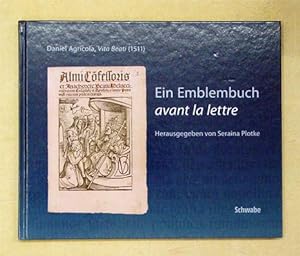
Daniel Agricola, Vita Beati (1511). Ein Emblembuch avant la lettre.
Lingua: Tedesco
Editore: Basel, Schwabe, 2012
Da: antiquariat peter petrej - Bibliopolium AG, Zürich, ZH, Svizzera
Membro dell'associazione: ILAB VEBUKU
Valutazione del venditore 5 su 5 stelle
EUR 53,48
Spedizione EUR 72,50
Spedito da Svizzera a U.S.A.Quantità: 1 disponibili
Aggiungi al carrelloQuer-8°, 67 S., zahlt. Textabb., Kart., Min. bestossen, sonst tadellos. Fotografischer Nachdruck des lateinischen Werks mit synoptischer Beigabe einer neuhochdeutschen Übersetzung sowie der Transkription des frühneuhochdeutschen Drucks 1100 gr. Schlagworte: Alte Drucke - Faksimile, Helvetica - Allgemein.
-

Passio domini nostri jesu christi secondum seriem quattuor evangelistarum. Colophon Leaf and XXVI. Single Leaf. Very Rare.
Editore: Michaelis Furter, February, 1513., Basilee [Basel]:, 1513
Da: Dark Parks Books & Collectibles, Fallon, NV, U.S.A.
Valutazione del venditore 5 su 5 stelle
First edition. Extremely rare. Pagination: Single leaf. Leaf XXVI, recto, colophon page with title, publisher and date on verso. Mounted right side corners, remnants from previous corner mounts. Suitable for framing, or perhaps mating with another copy. This is a very rare leaf from a very rare book. Text in double columns, Gospel narrative in larger print in center, commentary on outer columns. Agricolas classic work on the Passion of Christ. Citations: VD16: B4703. OCLC lists only 3 copies.
-
![Immagine del venditore per Passio domini nostri Jesu christi s[ecundu]m serie[m] q[ua]ttuor euangelistar[u]m : p[er] quenda[m] Fratre[m] ordinis Minor[um] de obserua[n]tia, accuratissima opera deuotissmaq[ue] expositio[n]e illustrata, magnoru[m]q[ue] viro[um] sente[n]tijs copte adornata 1511 [Leather Bound] venduto da True World of Books](https://pictures.abebooks.com/inventory/md/md31619198096.jpg)
EUR 27,04
Spedizione gratuita
Spedito da India a U.S.A.Quantità: 18 disponibili
Aggiungi al carrelloLeatherBound. Condizione: NEW. LeatherBound edition. Condition: New. Reprinted from 1511 edition. Leather Binding on Spine and Corners with Golden leaf printing on spine. Bound in genuine leather with Satin ribbon page markers and Spine with raised gilt bands. A perfect gift for your loved ones. NO changes have been made to the original text. This is NOT a retyped or an ocr'd reprint. Illustrations, Index, if any, are included in black and white. Each page is checked manually before printing. As this print on demand book is reprinted from a very old book, there could be some missing or flawed pages, but we always try to make the book as complete as possible. Fold-outs, if any, are not part of the book. If the original book was published in multiple volumes then this reprint is of only one volume, not the whole set. Sewing binding for longer life, where the book block is actually sewn (smythe sewn/section sewn) with thread before binding which results in a more durable type of binding. Pages: 58.
-
![Immagine del venditore per Davidis in Deo Gaudium! : Aus dem 73. Psalm, v. 28. Das ist meine Freude, das ich mich zu Gott halte, und meine Zuversicht setze auf den Herrn Herrn! Als der WolEdle, Veste, Fursichtig- und Wolweise Herr, Andreas Wilhelm Agricola, Des Innern Rahts, und E. Ehrlobl. Allmosen-Ambts allhie in Regenspurg, wolverdient-gewester Herr Con-Director seel. . beygesetzt worden; An statt eines Leichen-Texts abgehandelt und vorgetragen [1684] [Leather Bound] venduto da True World of Books](https://pictures.abebooks.com/inventory/md/md31619195241.jpg)
EUR 27,04
Spedizione gratuita
Spedito da India a U.S.A.Quantità: 18 disponibili
Aggiungi al carrelloLeatherBound. Condizione: NEW. LeatherBound edition. Condition: New. Reprinted from [1684] edition. Leather Binding on Spine and Corners with Golden leaf printing on spine. Bound in genuine leather with Satin ribbon page markers and Spine with raised gilt bands. A perfect gift for your loved ones. NO changes have been made to the original text. This is NOT a retyped or an ocr'd reprint. Illustrations, Index, if any, are included in black and white. Each page is checked manually before printing. As this print on demand book is reprinted from a very old book, there could be some missing or flawed pages, but we always try to make the book as complete as possible. Fold-outs, if any, are not part of the book. If the original book was published in multiple volumes then this reprint is of only one volume, not the whole set. Sewing binding for longer life, where the book block is actually sewn (smythe sewn/section sewn) with thread before binding which results in a more durable type of binding. Pages: 52.
-
![Immagine del venditore per Passio domini nostri Iesu Christi secundum seriem quattuor eva[n]gelistarum 1511 [Leather Bound] venduto da True World of Books](https://pictures.abebooks.com/inventory/md/md31619181619.jpg)
Passio domini nostri Iesu Christi secundum seriem quattuor eva[n]gelistarum 1511 [Leather Bound]
Data di pubblicazione: 2025
EUR 27,04
Spedizione gratuita
Spedito da India a U.S.A.Quantità: 18 disponibili
Aggiungi al carrelloLeatherBound. Condizione: NEW. LeatherBound edition. Condition: New. Reprinted from 1511 edition. Leather Binding on Spine and Corners with Golden leaf printing on spine. Bound in genuine leather with Satin ribbon page markers and Spine with raised gilt bands. A perfect gift for your loved ones. NO changes have been made to the original text. This is NOT a retyped or an ocr'd reprint. Illustrations, Index, if any, are included in black and white. Each page is checked manually before printing. As this print on demand book is reprinted from a very old book, there could be some missing or flawed pages, but we always try to make the book as complete as possible. Fold-outs, if any, are not part of the book. If the original book was published in multiple volumes then this reprint is of only one volume, not the whole set. Sewing binding for longer life, where the book block is actually sewn (smythe sewn/section sewn) with thread before binding which results in a more durable type of binding. Pages: 32.
-
[FRANCISCAN ICONOGRAPHY BY THE DÜRER CIRCLE - THE PREACHERS OF POVERTY AND SILVER MINING BY THE HABSBURGS AND THE FUGGERS] Die Legend des heyligen vatters Francisci [The Legend of Saint Francis]
Da: Penka Rare Books and Archives, ILAB, Berlin, Germania
Membro dell'associazione: ILAB VDA
Valutazione del venditore 5 su 5 stelle
Prima edizione
EUR 9.500,00
Spedizione EUR 35,00
Spedito da Germania a U.S.A.Quantità: 1 disponibili
Aggiungi al carrelloNuremberg and Schwaz: Hieronymus Höltzel printed for Caspar Rosenthaler, 1512. Octavo (20 × 15.3 cm). Modern crushed morocco over five raised bands and with gold-embossed title to spine; [212] pp. with 57 woodcuts from 51 blocks by Wolf Traut. Front pastedown with exlibris of collector and cultural patron Renate König; front board very lighly rubbed; spine lightly faded; edges gilt by binder; leaves very carefully cleaned and with discrete, barely perceptible restorations in places; occasionally very faintly fox-stained; else very good. First edition of these woodcuts by Wolf Traut, a painter and graphic artist from the Dürer circle, and the first German-language print edition of the hagiography of St. Francis, which Bonaventure completed in 1262. He produced a more extensive version (Legenda maior) and a popular, shorter version (Legenda minor). Bonaventure - considered the "second founder" of the Franciscan order and canonized in 1482 by the Rovere Pope Sixtus IV (himself a Franciscan and the commissioner of the Sistine Chapel) - wrote the Vita at a time when the dispute over the ideal of poverty was increasingly coming to a head - a conflict that was fought not only within the order, but also in the European power struggles. The goal was to reconcile both factions, the Spirituales and the Conventuales - that is, the advocates of the strictest poverty and the adherents of a milder interpretation - through this biography. The life description was thus meant to present, pars pro toto, a successful reconciliation of both positions. Only a few years after its completion, in 1266, the General Chapter declared all previous Francis legends obsolete and ordered their destruction. From then on, together with the Rule of 1223, the Vita formed the Franciscan canon. But the work not only set standards in the handling of the material. The text was written in almost classical Latin and had a formative influence on later humanism. The manuscript was also translated into vernacular languages. In Germany, the manuscript of the Poor Clare Sibilla von Bondorf is regarded as a linguistic monument. (Cf. Joachim Schickel, Bonaventure, Legenda Sancti Francisci, in: KLL.) The translator of the present edition is unknown, but the literature mentions the Basel Franciscan Agricola, born as Daniel Meyer, as a potential candidate. He was the author of the Vita of the Swiss local saint Beatus, which appeared in 1511 both in Latin and in German; both editions were illustrated by the glass painter and graphic artist Urs Graf. Agricola is also thought to be the translator of the "Meditationes vitae Christi", written by a Tuscan Franciscan. This edition, printed in Nuremberg in 1514, was illustrated with woodcuts by Wolf Traut. The financial backer of this edition, as well as of the present one of the Vita of Francis, was a merchant originating from Nuremberg and a partner in a mining enterprise named Caspar Rosenthaler. He had lived in the Tyrolean mining metropolis of Schwaz since 1505, where, in addition to a smelting works, he also operated the city's first bookshop. At that time, Schwaz was the second-largest city after Vienna in the Habsburg Archduchy. Above all, an abundance of silver and copper formed the basis for the power and wealth of the Habsburg ruling house and the Augsburg patrician Fugger family. Rosenthaler had no small share in this with his smelting works. At the end of the fifteenth century, a smelting process was practiced in Schwaz that allowed more silver to be extracted from the mined ores. Rosenthaler was the decisive patron in the establishment of the Franciscans in Schwaz, whose monastery foundation in 1507 he supported as a donor, and in whose church he was buried in 1542. (Cf. Werner Williams-Krapp, Die volkssprachliche Literatur der reformorientierten Franziskaner und Klarissen, in: Die Literatur des 15. und frühen 16. Jahrhunderts: Part 1: Modelle literarischer Interessenbildung, Berlin 2020, pp. 363-404.) The vernacular translation, with its numerous woodcuts, thus stood in a direct connection with the foundation of the monastery in the rapidly growing Alpine town, which was expanding quickly due to mining and was also located near the central trade route between Augsburg and Venice. Even before the construction of the monastery, the Franciscans had taken on preaching and other pastoral duties in Schwaz. In order to advance the monastery foundation - desired by the mine operators - under canon law, particularly in relation to the bishop, Emperor Maximilian I personally intervened in 1507, demanding that the project "not be hindered nor obstructed", since, after all, the "highly valued gift of God in the mines" had led to "so many Christian people settling in the town of Schwaz". However, there were clear reservations, which even led to threats of interdict against anyone who participated in the construction of the new monastery. The representatives of Schwaz - among them Caspar Rosenthaler - responded by having the emperor's letter read aloud after mass in front of the open church doors, announcing their decision to continue work on the monastery despite the threats of interdict, as long as the emperor maintained his position. Caspar Rosenthaler, among others, was also involved in the financial administration of the construction work. Complex negotiations followed between the town's representatives, the episcopal authority, and the Benedictines in Schwaz, which ultimately led to approval. Moreover, Maximilian I placed the monastery under his special protection and also supported it financially. The monastery cloister was completed in 1509 and the church in 1515. (Pax Leitner, Die Anfänge des Franziskanerklosters Schwaz, in: Heimat-Blätter: Schwazer Kulturzeitschrift, no. 61, 2007, pp. 4-11.) Parallel to the printing of the present edition and the completion of the monastery, the bitter dispute over the interpretation of the vow of poverty - fought among the Franciscans for centuries - w.
-
Passio domini nostri Jesu christi s[ecundu]m serie[m] q[ua]ttuor euangelistar[u]m: p[er] quenda[m] Fratre[m] ordinis Minor[um] de obserua[n]tia, accuratissima opera deuotissmaq[ue] expositio[n]e illustrata, magnoru[m]q[ue] viro[um] sente[n]tijs cõpte ador 1511 [Leather Bound]
Data di pubblicazione: 2025
Da: Gyan Books Pvt. Ltd., Delhi, India
Valutazione del venditore 5 su 5 stelle
EUR 29,50
Spedizione gratuita
Spedito da India a U.S.A.Quantità: Più di 20 disponibili
Aggiungi al carrelloLeather Bound. Condizione: New. Language: Latin. Language: Latin. Presenting an Exquisite Leather-Bound Edition, expertly crafted with Original Natural Leather that gracefully adorns the spine and corners. The allure continues with Golden Leaf Printing that adds a touch of elegance, while Hand Embossing on the rounded spine lends an artistic flair. This masterpiece has been meticulously reprinted in 2025, utilizing the invaluable guidance of the original edition published many years ago in 1511. The contents of this book are presented in classic black and white. Its durability is ensured through a meticulous sewing binding technique, enhancing its longevity. Imprinted on top-tier quality paper. A team of professionals has expertly processed each page, delicately preserving its content without alteration. Due to the vintage nature of these books, every page has been manually restored for legibility. However, in certain instances, occasional blurriness, missing segments, or faint black spots might persist. We sincerely hope for your understanding of the challenges we faced with these books. Recognizing their significance for readers seeking insight into our historical treasure, we've diligently restored and reissued them. Our intention is to offer this valuable resource once again. We eagerly await your feedback, hoping that you'll find it appealing and will generously share your thoughts and recommendations. Lang: - Latin, Pages:- 58, Print on Demand. If it is a multi-volume set, then it is only a single volume. We are specialised in Customisation of books, if you wish to opt different color leather binding, you may contact us. This service is chargeable. Product Disclaimer: Kindly be informed that, owing to the inherent nature of leather as a natural material, minor discolorations or textural variations may be perceptible. Explore the FOLIO EDITION (12x19 Inches): Available Upon Request. 58 58.
-
Passio domini nostri Jesu christi s[ecundu]m serie[m] q[ua]ttuor euangelistar[u]m: p[er] quenda[m] Fratre[m] ordinis Minor[um] de obserua[n]tia, accuratissima opera deuotissmaq[ue] expositio[n]e illustrata, magnoru[m]q[ue] viro[um] sente[n]tijs cõpte adornata 1511 [Leather Bound]
Data di pubblicazione: 2025
Da: Gyan Books Pvt. Ltd., Delhi, India
Valutazione del venditore 5 su 5 stelle
EUR 29,50
Spedizione gratuita
Spedito da India a U.S.A.Quantità: Più di 20 disponibili
Aggiungi al carrelloLeather Bound. Condizione: New. Language: Latin. Language: Latin. Presenting an Exquisite Leather-Bound Edition, expertly crafted with Original Natural Leather that gracefully adorns the spine and corners. The allure continues with Golden Leaf Printing that adds a touch of elegance, while Hand Embossing on the rounded spine lends an artistic flair. This masterpiece has been meticulously reprinted in 2025, utilizing the invaluable guidance of the original edition published many years ago in 1511. The contents of this book are presented in classic black and white. Its durability is ensured through a meticulous sewing binding technique, enhancing its longevity. Imprinted on top-tier quality paper. A team of professionals has expertly processed each page, delicately preserving its content without alteration. Due to the vintage nature of these books, every page has been manually restored for legibility. However, in certain instances, occasional blurriness, missing segments, or faint black spots might persist. We sincerely hope for your understanding of the challenges we faced with these books. Recognizing their significance for readers seeking insight into our historical treasure, we've diligently restored and reissued them. Our intention is to offer this valuable resource once again. We eagerly await your feedback, hoping that you'll find it appealing and will generously share your thoughts and recommendations. Lang: - Latin, Pages:- 58, Print on Demand. If it is a multi-volume set, then it is only a single volume. We are specialised in Customisation of books, if you wish to opt different color leather binding, you may contact us. This service is chargeable. Product Disclaimer: Kindly be informed that, owing to the inherent nature of leather as a natural material, minor discolorations or textural variations may be perceptible. Explore the FOLIO EDITION (12x19 Inches): Available Upon Request. 58 58.
-
Passio domini nostri Jesu christi s[ecundu]m serie[m] q[ua]ttuor eua[n]gelistaru[m] 1514 [Leather Bound]
Data di pubblicazione: 2025
Da: Gyan Books Pvt. Ltd., Delhi, India
Valutazione del venditore 5 su 5 stelle
EUR 34,28
Spedizione gratuita
Spedito da India a U.S.A.Quantità: Più di 20 disponibili
Aggiungi al carrelloLeather Bound. Condizione: New. Presenting an Exquisite Leather-Bound Edition, expertly crafted with Original Natural Leather that gracefully adorns the spine and corners. The allure continues with Golden Leaf Printing that adds a touch of elegance, while Hand Embossing on the rounded spine lends an artistic flair. This masterpiece has been meticulously reprinted in 2025, utilizing the invaluable guidance of the original edition published many years ago in 1514. The contents of this book are presented in classic black and white. Its durability is ensured through a meticulous sewing binding technique, enhancing its longevity. Imprinted on top-tier quality paper. A team of professionals has expertly processed each page, delicately preserving its content without alteration. Due to the vintage nature of these books, every page has been manually restored for legibility. However, in certain instances, occasional blurriness, missing segments, or faint black spots might persist. We sincerely hope for your understanding of the challenges we faced with these books. Recognizing their significance for readers seeking insight into our historical treasure, we've diligently restored and reissued them. Our intention is to offer this valuable resource once again. We eagerly await your feedback, hoping that you'll find it appealing and will generously share your thoughts and recommendations. Pages:- 80, Print on Demand. If it is a multi-volume set, then it is only a single volume. We are specialised in Customisation of books, if you wish to opt different color leather binding, you may contact us. This service is chargeable. Product Disclaimer: Kindly be informed that, owing to the inherent nature of leather as a natural material, minor discolorations or textural variations may be perceptible. Explore the FOLIO EDITION (12x19 Inches): Available Upon Request. 80 80.
-
![Immagine del venditore per Galerazeya siue Reuelator secretorum, I. De lapide philosophorum, II. De arabico elyzir, III. De auro potabili, & pomis paradisi / authore Agricola Philopistio Germano 1631 [LeatherBound] venduto da S N Books World](https://pictures.abebooks.com/inventory/md/md30638215073.jpg)
Galerazeya siue Reuelator secretorum, I. De lapide philosophorum, II. De arabico elyzir, III. De auro potabili, & pomis paradisi / authore Agricola Philopistio Germano 1631 [LeatherBound]
Lingua: Latino
Data di pubblicazione: 2025
EUR 31,55
Spedizione gratuita
Spedito da India a U.S.A.Quantità: 18 disponibili
Aggiungi al carrelloLeatherbound. Condizione: NEW. BOOKS ARE EXEMPT FROM IMPORT DUTIES AND TARIFFS; NO EXTRA CHARGES APPLY. Leatherbound edition. Condition: New. Leather Binding on Spine and Corners with Golden leaf printing on spine. Bound in genuine leather with Satin ribbon page markers and Spine with raised gilt bands. Pages: 298. A perfect gift for your loved ones. Reprinted from 1631 edition. NO changes have been made to the original text. This is NOT a retyped or an ocr'd reprint. Illustrations, Index, if any, are included in black and white. Each page is checked manually before printing. As this print on demand book is reprinted from a very old book, there could be some missing or flawed pages, but we always try to make the book as complete as possible. Fold-outs, if any, are not part of the book. If the original book was published in multiple volumes then this reprint is of only one volume, not the whole set. IF YOU WISH TO ORDER PARTICULAR VOLUME OR ALL THE VOLUMES YOU CAN CONTACT US. Resized as per current standards. Sewing binding for longer life, where the book block is actually sewn (smythe sewn/section sewn) with thread before binding which results in a more durable type of binding. Language: Latin Pages: 298.
-
M. Vitruvii Pollionis De architectura libri decem 1649 [Leather Bound]
Data di pubblicazione: 2024
Da: Gyan Books Pvt. Ltd., Delhi, India
Valutazione del venditore 5 su 5 stelle
EUR 45,79
Spedizione gratuita
Spedito da India a U.S.A.Quantità: Più di 20 disponibili
Aggiungi al carrelloLeather Bound. Condizione: New. Language: Latin. Language: Latin. Presenting an Exquisite Leather-Bound Edition, expertly crafted with Original Natural Leather that gracefully adorns the spine and corners. The allure continues with Golden Leaf Printing that adds a touch of elegance, while Hand Embossing on the rounded spine lends an artistic flair. This masterpiece has been meticulously reprinted in 2024, utilizing the invaluable guidance of the original edition published many years ago in 1649. The contents of this book are presented in classic black and white. Its durability is ensured through a meticulous sewing binding technique, enhancing its longevity. Imprinted on top-tier quality paper. A team of professionals has expertly processed each page, delicately preserving its content without alteration. Due to the vintage nature of these books, every page has been manually restored for legibility. However, in certain instances, occasional blurriness, missing segments, or faint black spots might persist. We sincerely hope for your understanding of the challenges we faced with these books. Recognizing their significance for readers seeking insight into our historical treasure, we've diligently restored and reissued them. Our intention is to offer this valuable resource once again. We eagerly await your feedback, hoping that you'll find it appealing and will generously share your thoughts and recommendations. Lang: - Latin, Pages: : - 594, Print on Demand. If it is a multi-volume set, then it is only a single volume. We are specialised in Customisation of books, if you wish to opt different color leather binding, you may contact us. This service is chargeable. Product Disclaimer: Kindly be informed that, owing to the inherent nature of leather as a natural material, minor discolorations or textural variations may be perceptible. Explore the FOLIO EDITION (12x19 Inches): Available Upon Request. 594 594.
![Immagine del venditore per Postille maiores in epistolas & evangelia: tam dominicalium feriatorumque dierum. [with] Directorium in Dominice Passionis articulos. [with] Passio domini nostri Jesu Christi venduto da Sokol Books Ltd. ABA ILAB](https://pictures.abebooks.com/inventory/md/md30786125091.jpg)



![Immagine del venditore per [FRANCISCAN ICONOGRAPHY BY THE DÜRER CIRCLE - THE PREACHERS OF POVERTY AND SILVER MINING BY THE HABSBURGS AND THE FUGGERS] Die Legend des heyligen vatters Francisci [The Legend of Saint Francis] venduto da Penka Rare Books and Archives, ILAB](https://pictures.abebooks.com/inventory/md/md32441800915.jpg)
![Immagine del venditore per Passio domini nostri Jesu christi s[ecundu]m serie[m] q[ua]ttuor euangelistar[u]m: p[er] quenda[m] Fratre[m] ordinis Minor[um] de obserua[n]tia, accuratissima opera deuotissmaq[ue] expositio[n]e illustrata, magnoru[m]q[ue] viro[um] sente[n]tijs cõpte ador 1511 [Leather Bound] venduto da Gyan Books Pvt. Ltd.](https://pictures.abebooks.com/inventory/md/md31965289171.jpg)
![Immagine del venditore per Passio domini nostri Jesu christi s[ecundu]m serie[m] q[ua]ttuor euangelistar[u]m: p[er] quenda[m] Fratre[m] ordinis Minor[um] de obserua[n]tia, accuratissima opera deuotissmaq[ue] expositio[n]e illustrata, magnoru[m]q[ue] viro[um] sente[n]tijs cõpte adornata 1511 [Leather Bound] venduto da Gyan Books Pvt. Ltd.](https://pictures.abebooks.com/inventory/md/md31600220050.jpg)
![Immagine del venditore per Passio domini nostri Jesu christi s[ecundu]m serie[m] q[ua]ttuor eua[n]gelistaru[m] 1514 [Leather Bound] venduto da Gyan Books Pvt. Ltd.](https://pictures.abebooks.com/inventory/md/md31969955057.jpg)
![Immagine del venditore per M. Vitruvii Pollionis De architectura libri decem 1649 [Leather Bound] venduto da Gyan Books Pvt. Ltd.](https://pictures.abebooks.com/inventory/md/md31424625559.jpg)