

Importo totale (1 articolo articoli):
Destinazione ordine:

amstad esther (8 risultati)
Vai alla pagina principale dei risultati di ricerca
Filtri di ricerca
Tipo di articolo
- Tutti i tipi di prodotto
- Libri (8)
- Riviste e Giornali (Nessun altro risultato corrispondente a questo perfezionamento)
- Fumetti (Nessun altro risultato corrispondente a questo perfezionamento)
- Spartiti (Nessun altro risultato corrispondente a questo perfezionamento)
- Arte, Stampe e Poster (Nessun altro risultato corrispondente a questo perfezionamento)
- Fotografie (Nessun altro risultato corrispondente a questo perfezionamento)
- Mappe (Nessun altro risultato corrispondente a questo perfezionamento)
- Manoscritti e Collezionismo cartaceo (Nessun altro risultato corrispondente a questo perfezionamento)
Condizioni Maggiori informazioni
- Nuovo (6)
- Come nuovo, Ottimo o Quasi ottimo (2)
- Molto buono o Buono (Nessun altro risultato corrispondente a questo perfezionamento)
- Discreto o Mediocre (Nessun altro risultato corrispondente a questo perfezionamento)
- Come descritto (Nessun altro risultato corrispondente a questo perfezionamento)
Legatura
Ulteriori caratteristiche
- Prima ed. (Nessun altro risultato corrispondente a questo perfezionamento)
- Copia autograf. (Nessun altro risultato corrispondente a questo perfezionamento)
- Sovracoperta (Nessun altro risultato corrispondente a questo perfezionamento)
- Con foto (4)
- Non Print on Demand (5)
Lingua (1)
Prezzo
- Qualsiasi prezzo
- Inferiore a EUR 20 (Nessun altro risultato corrispondente a questo perfezionamento)
- EUR 20 a EUR 45 (Nessun altro risultato corrispondente a questo perfezionamento)
- Superiore a EUR 45
Spedizione gratuita
- Spedizione gratuita in U.S.A. (Nessun altro risultato corrispondente a questo perfezionamento)
Paese del venditore
Valutazione venditore
-

Surface modification of superparamagnetic iron oxide nanoparticles | Surface functionalizing superparamagnetic iron oxide nanoparticles using nitrocatechol anchors
Lingua: Inglese
Editore: Südwestdeutscher Verlag für Hochschulschriften, 2015
ISBN 10: 3838117212 ISBN 13: 9783838117218
EUR 94,90
Spedizione EUR 70,00
Spedito da Germania a U.S.A.Quantità: 5 disponibili
Aggiungi al carrelloTaschenbuch. Condizione: Neu. Surface modification of superparamagnetic iron oxide nanoparticles | Surface functionalizing superparamagnetic iron oxide nanoparticles using nitrocatechol anchors | Esther Amstad | Taschenbuch | 388 S. | Englisch | 2015 | Südwestdeutscher Verlag für Hochschulschriften | EAN 9783838117218 | Verantwortliche Person für die EU: preigu GmbH & Co. KG, Lengericher Landstr. 19, 49078 Osnabrück, mail[at]preigu[dot]de | Anbieter: preigu.
-
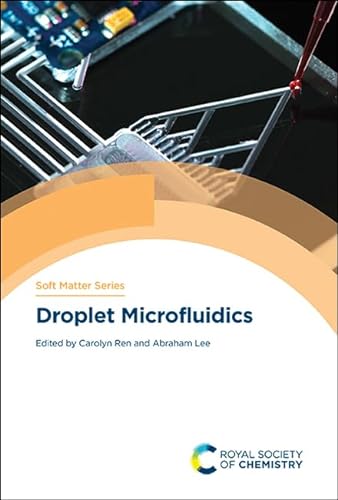
Droplet Microfluidics
Lingua: Inglese
Editore: Royal Society of Chemistry, 2020
ISBN 10: 1788017692 ISBN 13: 9781788017695
Da: GreatBookPrices, Columbia, MD, U.S.A.
Valutazione del venditore 5 su 5 stelle

EUR 210,26
Spedizione EUR 2,33
Spedito in U.S.A.Quantità: Più di 20 disponibili
Aggiungi al carrelloCondizione: New.
-
Droplet Microfluidics
Lingua: Inglese
Editore: Royal Society of Chemistry, 2020
ISBN 10: 1788017692 ISBN 13: 9781788017695
Da: GreatBookPricesUK, Woodford Green, Regno Unito
Valutazione del venditore 5 su 5 stelle
EUR 202,86
Spedizione EUR 17,39
Spedito da Regno Unito a U.S.A.Quantità: Più di 20 disponibili
Aggiungi al carrelloCondizione: New.
-
Droplet Microfluidics
Lingua: Inglese
Editore: Royal Society of Chemistry, 2020
ISBN 10: 1788017692 ISBN 13: 9781788017695
Da: GreatBookPrices, Columbia, MD, U.S.A.
Valutazione del venditore 5 su 5 stelle
EUR 224,45
Spedizione EUR 2,33
Spedito in U.S.A.Quantità: Più di 20 disponibili
Aggiungi al carrelloCondizione: As New. Unread book in perfect condition.
-
Droplet Microfluidics
Lingua: Inglese
Editore: Royal Society of Chemistry, 2020
ISBN 10: 1788017692 ISBN 13: 9781788017695
Da: GreatBookPricesUK, Woodford Green, Regno Unito
Valutazione del venditore 5 su 5 stelle
EUR 223,56
Spedizione EUR 17,39
Spedito da Regno Unito a U.S.A.Quantità: Più di 20 disponibili
Aggiungi al carrelloCondizione: As New. Unread book in perfect condition.
-

Surface modification of superparamagnetic iron oxide nanoparticles
Lingua: Inglese
Editore: Südwestdeutscher Verlag Für Hochschulschriften AG Co. KG Jul 2015, 2015
ISBN 10: 3838117212 ISBN 13: 9783838117218
Da: BuchWeltWeit Ludwig Meier e.K., Bergisch Gladbach, Germania
Valutazione del venditore 5 su 5 stelle
EUR 115,90
Spedizione EUR 23,00
Spedito da Germania a U.S.A.Quantità: 2 disponibili
Aggiungi al carrelloTaschenbuch. Condizione: Neu. This item is printed on demand - it takes 3-4 days longer - Neuware -Biomedical applications of superparamagnetic iron oxide nanoparticles (NPs) for therapeutic and diagnostic purposes require NPs to be stable under physiologic conditions. This can only be achieved if NPs are sterically stabilized with appropriate dispersants that bind irreversibly to the iron oxide surface. Tight control over the dispersant layer not only prevents NP agglomeration but additionally paves the way to tailor NP size, charge, the type and density of functionalities presented at the NP surface. These factors are especially important for the in vivo performance of NPs. One possibility to sterically stabilize NPs is to graft low molecular weight dispersants to these surfaces. Stabilization of NPs with low molecular weight dispersants relies on high affinity anchors that firmly bind spacers and functionalities to the NP surface at high density. This thesis compares the ability of different anchors to firmly bind low molecular weight dispersants to Fe3O4 NP surfaces and investigates the stability of NPs sterically stabilized with different dispersants. Furthermore, the performance of these sterically stabilized iron oxide NPs in selected biomedical applications is addressed. 388 pp. Englisch.
-

Surface modification of superparamagnetic iron oxide nanoparticles
Lingua: Inglese
Editore: Südwestdeutscher Verlag Für Hochschulschriften Jan 2012, 2012
ISBN 10: 3838117212 ISBN 13: 9783838117218
Da: buchversandmimpf2000, Emtmannsberg, BAYE, Germania
Valutazione del venditore 5 su 5 stelle
EUR 115,90
Spedizione EUR 60,00
Spedito da Germania a U.S.A.Quantità: 1 disponibili
Aggiungi al carrelloTaschenbuch. Condizione: Neu. This item is printed on demand - Print on Demand Titel. Neuware -Biomedical applications of superparamagnetic iron oxide nanoparticles (NPs) for therapeutic and diagnostic purposes require NPs to be stable under physiologic conditions. This can only be achieved if NPs are sterically stabilized with appropriate dispersants that bind irreversibly to the iron oxide surface. Tight control over the dispersant layer not only prevents NP agglomeration but additionally paves the way to tailor NP size, charge, the type and density of functionalities presented at the NP surface. These factors are especially important for the in vivo performance of NPs. One possibility to sterically stabilize NPs is to graft low molecular weight dispersants to these surfaces. Stabilization of NPs with low molecular weight dispersants relies on high affinity anchors that firmly bind spacers and functionalities to the NP surface at high density. This thesis compares the ability of different anchors to firmly bind low molecular weight dispersants to Fe3O4 NP surfaces and investigates the stability of NPs sterically stabilized with different dispersants. Furthermore, the performance of these sterically stabilized iron oxide NPs in selected biomedical applications is addressed.VDM Verlag, Dudweiler Landstraße 99, 66123 Saarbrücken 388 pp. Englisch.
-

Surface modification of superparamagnetic iron oxide nanoparticles : Surface functionalizing superparamagnetic iron oxide nanoparticles using nitrocatechol anchors
Lingua: Inglese
Editore: Südwestdeutscher Verlag Für Hochschulschriften AG Co. KG, 2012
ISBN 10: 3838117212 ISBN 13: 9783838117218
EUR 115,90
Spedizione EUR 62,98
Spedito da Germania a U.S.A.Quantità: 1 disponibili
Aggiungi al carrelloTaschenbuch. Condizione: Neu. nach der Bestellung gedruckt Neuware - Printed after ordering - Biomedical applications of superparamagnetic iron oxide nanoparticles (NPs) for therapeutic and diagnostic purposes require NPs to be stable under physiologic conditions. This can only be achieved if NPs are sterically stabilized with appropriate dispersants that bind irreversibly to the iron oxide surface. Tight control over the dispersant layer not only prevents NP agglomeration but additionally paves the way to tailor NP size, charge, the type and density of functionalities presented at the NP surface. These factors are especially important for the in vivo performance of NPs. One possibility to sterically stabilize NPs is to graft low molecular weight dispersants to these surfaces. Stabilization of NPs with low molecular weight dispersants relies on high affinity anchors that firmly bind spacers and functionalities to the NP surface at high density. This thesis compares the ability of different anchors to firmly bind low molecular weight dispersants to Fe3O4 NP surfaces and investigates the stability of NPs sterically stabilized with different dispersants. Furthermore, the performance of these sterically stabilized iron oxide NPs in selected biomedical applications is addressed.
