

Importo totale (1 articolo articoli):
Destinazione ordine:

bach peter baker (27 risultati)
Vai alla pagina principale dei risultati di ricerca
Filtri di ricerca
Tipo di articolo
- Tutti i tipi di prodotto
- Libri (27)
- Riviste e Giornali (Nessun altro risultato corrispondente a questo perfezionamento)
- Fumetti (Nessun altro risultato corrispondente a questo perfezionamento)
- Spartiti (Nessun altro risultato corrispondente a questo perfezionamento)
- Arte, Stampe e Poster (Nessun altro risultato corrispondente a questo perfezionamento)
- Fotografie (Nessun altro risultato corrispondente a questo perfezionamento)
- Mappe (Nessun altro risultato corrispondente a questo perfezionamento)
- Manoscritti e Collezionismo cartaceo (Nessun altro risultato corrispondente a questo perfezionamento)
Condizioni Maggiori informazioni
- Nuovo (22)
- Come nuovo, Ottimo o Quasi ottimo (4)
- Molto buono o Buono (1)
- Discreto o Mediocre (Nessun altro risultato corrispondente a questo perfezionamento)
- Come descritto (Nessun altro risultato corrispondente a questo perfezionamento)
Legatura
Ulteriori caratteristiche
- Prima ed. (Nessun altro risultato corrispondente a questo perfezionamento)
- Copia autograf. (Nessun altro risultato corrispondente a questo perfezionamento)
- Sovracoperta (Nessun altro risultato corrispondente a questo perfezionamento)
- Con foto (14)
- Non Print on Demand (21)
Lingua (1)
Prezzo
- Qualsiasi prezzo
- Inferiore a EUR 20 (Nessun altro risultato corrispondente a questo perfezionamento)
- EUR 20 a EUR 45
- Superiore a EUR 45
Spedizione gratuita
Paese del venditore
Valutazione venditore
-
EUR 29,85
Spedizione EUR 15,96
Spedito da Regno Unito a U.S.A.Quantità: 1 disponibili
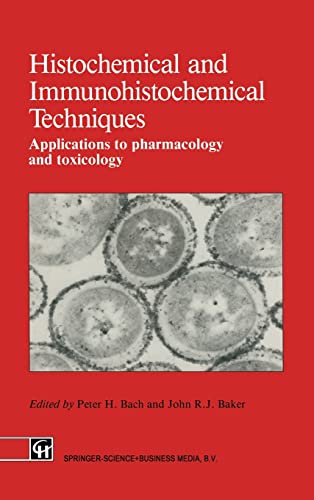
Aggiungi al carrelloCondizione: Good. This is an ex-library book and may have the usual library/used-book markings inside.This book has hardback covers. Clean from markings. In good all round condition. No dust jacket. Please note the Image in this listing is a stock photo and may not match the covers of the actual item,800grams, ISBN:9780412351006.
-
Histochemical and Immunohistochemical Techniques : Applications to Pharmacology and Toxicology
Da: GreatBookPrices, Columbia, MD, U.S.A.
Valutazione del venditore 5 su 5 stelle

EUR 52,39
Spedizione EUR 2,31
Spedito in U.S.A.Quantità: Più di 20 disponibili
Aggiungi al carrelloCondizione: New.
-

Histochemical and Immunohistochemical Techniques: Applications to Pharmacology and Toxicology (Paperback or Softback)
Da: BargainBookStores, Grand Rapids, MI, U.S.A.
Valutazione del venditore 5 su 5 stelle
Paperback or Softback. Condizione: New. Histochemical and Immunohistochemical Techniques: Applications to Pharmacology and Toxicology. Book.
-
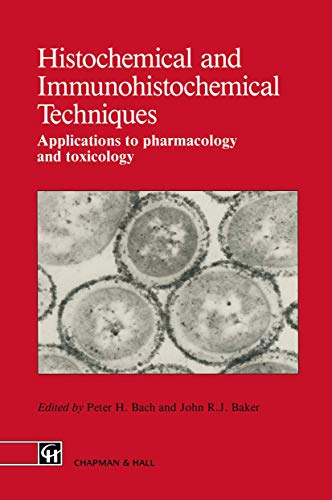
Histochemical and Immunohistochemical Techniques: Applications to pharmacology and toxicology
Da: California Books, Miami, FL, U.S.A.
Valutazione del venditore 4 su 5 stelle

EUR 61,35
Spedizione gratuita
Spedito in U.S.A.Quantità: Più di 20 disponibili
Aggiungi al carrelloCondizione: New.
-

Histochemical and Immunohistochemical Techniques : Applications to Pharmacology and Toxicology
Da: GreatBookPrices, Columbia, MD, U.S.A.
Valutazione del venditore 5 su 5 stelle
EUR 61,84
Spedizione EUR 2,31
Spedito in U.S.A.Quantità: Più di 20 disponibili
Aggiungi al carrelloCondizione: As New. Unread book in perfect condition.
-
Histochemical and Immunohistochemical Techniques: Applications to pharmacology and toxicology
Da: Ria Christie Collections, Uxbridge, Regno Unito
Valutazione del venditore 5 su 5 stelle
EUR 61,41
Spedizione EUR 14,06
Spedito da Regno Unito a U.S.A.Quantità: Più di 20 disponibili
Aggiungi al carrelloCondizione: New. In.
-

Histochemical and Immunohistochemical Techniques : Applications to Pharmacology and Toxicology
Da: GreatBookPricesUK, Woodford Green, Regno Unito
Valutazione del venditore 5 su 5 stelle
EUR 61,40
Spedizione EUR 17,61
Spedito da Regno Unito a U.S.A.Quantità: Più di 20 disponibili
Aggiungi al carrelloCondizione: New.
-

Histochemical and Immunohistochemical Techniques : Applications to Pharmacology and Toxicology
Da: GreatBookPricesUK, Woodford Green, Regno Unito
Valutazione del venditore 5 su 5 stelle
EUR 67,62
Spedizione EUR 17,61
Spedito da Regno Unito a U.S.A.Quantità: Più di 20 disponibili
Aggiungi al carrelloCondizione: As New. Unread book in perfect condition.
-
Histochemical and Immunohistochemical Techniques
Da: Books Puddle, New York, NY, U.S.A.
Valutazione del venditore 4 su 5 stelle
Condizione: New. pp. 304.
-
Histochemical and Immunohistochemical Techniques: Applications to Pharmacology and Toxicology
Da: Revaluation Books, Exeter, Regno Unito
Valutazione del venditore 5 su 5 stelle
EUR 79,87
Spedizione EUR 11,74
Spedito da Regno Unito a U.S.A.Quantità: 2 disponibili
Aggiungi al carrelloPaperback. Condizione: Brand New. 304 pages. 9.02x5.98x0.72 inches. In Stock.
-
Histochemical and Immunohistochemical Techniques: Applications to pharmacology and toxicology
Da: Ria Christie Collections, Uxbridge, Regno Unito
Valutazione del venditore 5 su 5 stelle
EUR 94,85
Spedizione EUR 14,06
Spedito da Regno Unito a U.S.A.Quantità: Più di 20 disponibili
Aggiungi al carrelloCondizione: New. In.
-
Histochemical and Immunohistochemical Techniques : Applications to Pharmacology and Toxicology
Da: GreatBookPrices, Columbia, MD, U.S.A.
Valutazione del venditore 5 su 5 stelle
EUR 105,78
Spedizione EUR 2,31
Spedito in U.S.A.Quantità: Più di 20 disponibili
Aggiungi al carrelloCondizione: As New. Unread book in perfect condition.
-
Histochemical and Immunohistochemical Techniques : Applications to Pharmacology and Toxicology
Da: GreatBookPrices, Columbia, MD, U.S.A.
Valutazione del venditore 5 su 5 stelle
EUR 109,89
Spedizione EUR 2,31
Spedito in U.S.A.Quantità: Più di 20 disponibili
Aggiungi al carrelloCondizione: New.
-
Histochemical and Immunohistochemical Techniques : Applications to Pharmacology and Toxicology
Da: GreatBookPricesUK, Woodford Green, Regno Unito
Valutazione del venditore 5 su 5 stelle
EUR 94,83
Spedizione EUR 17,61
Spedito da Regno Unito a U.S.A.Quantità: Più di 20 disponibili
Aggiungi al carrelloCondizione: New.
-

Histochemical and Immunohistochemical Techniques
Da: Rarewaves.com USA, London, LONDO, Regno Unito
Valutazione del venditore 5 su 5 stelle
EUR 120,44
Spedizione gratuita
Spedito da Regno Unito a U.S.A.Quantità: Più di 20 disponibili
Aggiungi al carrelloHardback. Condizione: New. Toxicological and pharmacological effects arise when chemicals interact with biophysical functions in discrete cell types. Researchers have a continuing need to screen novel compounds for their potential therapeutic needs and, once these have been discovered, to understand their molecular actions. Histochemistry can be used to facilitate the development of the knowledge on the distribution of a compound, the receptors to which it binds and the modulation of the physiological functions that are being investigated. The aim of this book is to draw conventional mechanistic biochemistry, pharmacology and toxicology closer to an appreciation of the molecular interactions between cells and chemicals. Different techniques and examples of their application are discussed, in order to show how they can provide an understanding of the mechanistic basis of chemically induced biological responses, their consequences and significance.
-
EUR 58,39
Spedizione EUR 62,22
Spedito da Germania a U.S.A.Quantità: 1 disponibili
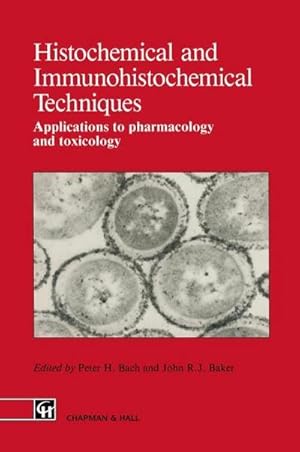
Aggiungi al carrelloTaschenbuch. Condizione: Neu. Druck auf Anfrage Neuware - Printed after ordering - Toxicological and pharmacological effects arise when chemicals interact with biophysiological functions in discrete cell types. There is a continuing need to screen novel compounds for their potential therapeutic effects, and once these have been 'discovered' to understand their molecular actions, as the basis of using such compounds safely and for rational drug design. Pharmacology now uses all of the sophisticated molecular research techniques that are available for the development of safer and more efficacious drugs. Histochemistry has been usefully applied to developing new drugs (and assessing chemical safley) and is potentially cost effective. The need to test novel substances for their potential adverse effects has raised many questions. Toxicological pathology has moved away from the cataloging of lesions towards understanding the basis of the events that underly cell injury, especially for those secondary consequences of chemical injury that lead to malignancy and chronic disease. The focal nature of toxicologic lesions de mands the use of microtechniques to provide data to help understand these questions. Histochemistry is under-utilized, but offers one of the key ap proaches necessary to address the problem of understanding interactions between a cell population and a chemical, the modulation of cellular biochem istryor the presence of a lesion in a test animal can be rationalised in terms of species differences that have no relevance to man as opposed to those that are of clinical significance or represent a warning of dire consequences to man.
-
EUR 50,40
Spedizione EUR 70,00
Spedito da Germania a U.S.A.Quantità: 5 disponibili
Aggiungi al carrelloTaschenbuch. Condizione: Neu. Histochemical and Immunohistochemical Techniques | Applications to pharmacology and toxicology | Peter H. Bach (u. a.) | Taschenbuch | xii | Englisch | 2012 | Springer | EAN 9789401053709 | Verantwortliche Person für die EU: Springer Verlag GmbH, Tiergartenstr. 17, 69121 Heidelberg, juergen[dot]hartmann[at]springer[dot]com | Anbieter: preigu.
-
Histochemical and Immunohistochemical Techniques : Applications to Pharmacology and Toxicology
Da: GreatBookPricesUK, Woodford Green, Regno Unito
Valutazione del venditore 5 su 5 stelle
EUR 106,34
Spedizione EUR 17,61
Spedito da Regno Unito a U.S.A.Quantità: Più di 20 disponibili
Aggiungi al carrelloCondizione: As New. Unread book in perfect condition.
-

EUR 104,46
Spedizione EUR 48,99
Spedito da Germania a U.S.A.Quantità: Più di 20 disponibili
Aggiungi al carrelloGebunden. Condizione: New.
-

Histochemical and Immunohistochemical Techniques
Da: Rarewaves.com UK, London, Regno Unito
Valutazione del venditore 5 su 5 stelle
EUR 113,25
Spedizione EUR 76,29
Spedito da Regno Unito a U.S.A.Quantità: Più di 20 disponibili
Aggiungi al carrelloHardback. Condizione: New. Toxicological and pharmacological effects arise when chemicals interact with biophysical functions in discrete cell types. Researchers have a continuing need to screen novel compounds for their potential therapeutic needs and, once these have been discovered, to understand their molecular actions. Histochemistry can be used to facilitate the development of the knowledge on the distribution of a compound, the receptors to which it binds and the modulation of the physiological functions that are being investigated. The aim of this book is to draw conventional mechanistic biochemistry, pharmacology and toxicology closer to an appreciation of the molecular interactions between cells and chemicals. Different techniques and examples of their application are discussed, in order to show how they can provide an understanding of the mechanistic basis of chemically induced biological responses, their consequences and significance.
-

EUR 128,71
Spedizione EUR 62,98
Spedito da Germania a U.S.A.Quantità: 2 disponibili
Aggiungi al carrelloBuch. Condizione: Neu. Neuware - 1 Why use histochemistry for a better understanding of pharmacology and toxicology .- 2 Whole-body autoradiography of pharmaceuticals and chemicals.- 3 Image analysis, fluorescence and laser microscopy.- 4 The measurement of free calcium to assess cellular function and injury using digital imaging fluorescence microscopy.- 5 Flow cytometry to characterize normal and abnormal cell function.- 6 Quantitative histochemical and cytochemical assays.- 7 Fixation of tissue for histochemistry.- 8 Immunochemical methods to assess cellular malfunction.- 9 Cell markers and processes related to chemically induced carcinogenesis.- 10 The mechanistic basis of chemical- and drug-induced nephrotoxicity.- 11 Pollutant-induced toxicity in the marine environment.
-
Histochemical and Immunohistochemical Techniques (eng)
Da: Brook Bookstore On Demand, Napoli, NA, Italia
Valutazione del venditore 5 su 5 stelle
EUR 46,22
Spedizione EUR 5,50
Spedito da Italia a U.S.A.Quantità: Più di 20 disponibili
Aggiungi al carrelloCondizione: new. Questo è un articolo print on demand.
-
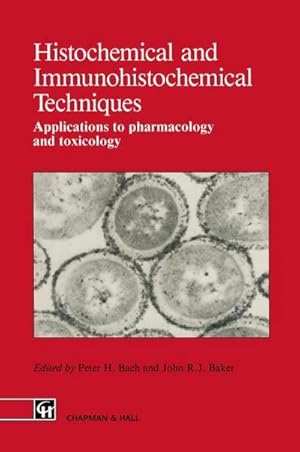
Histochemical and Immunohistochemical Techniques
Lingua: Inglese
Editore: Springer Netherlands Nov 2012, 2012
ISBN 10: 9401053707 ISBN 13: 9789401053709
Da: BuchWeltWeit Ludwig Meier e.K., Bergisch Gladbach, Germania
Valutazione del venditore 5 su 5 stelle
EUR 53,49
Spedizione EUR 23,00
Spedito da Germania a U.S.A.Quantità: 2 disponibili
Aggiungi al carrelloTaschenbuch. Condizione: Neu. This item is printed on demand - it takes 3-4 days longer - Neuware -Toxicological and pharmacological effects arise when chemicals interact with biophysiological functions in discrete cell types. There is a continuing need to screen novel compounds for their potential therapeutic effects, and once these have been 'discovered' to understand their molecular actions, as the basis of using such compounds safely and for rational drug design. Pharmacology now uses all of the sophisticated molecular research techniques that are available for the development of safer and more efficacious drugs. Histochemistry has been usefully applied to developing new drugs (and assessing chemical safley) and is potentially cost effective. The need to test novel substances for their potential adverse effects has raised many questions. Toxicological pathology has moved away from the cataloging of lesions towards understanding the basis of the events that underly cell injury, especially for those secondary consequences of chemical injury that lead to malignancy and chronic disease. The focal nature of toxicologic lesions de mands the use of microtechniques to provide data to help understand these questions. Histochemistry is under-utilized, but offers one of the key ap proaches necessary to address the problem of understanding interactions between a cell population and a chemical, the modulation of cellular biochem istryor the presence of a lesion in a test animal can be rationalised in terms of species differences that have no relevance to man as opposed to those that are of clinical significance or represent a warning of dire consequences to man. 304 pp. Englisch.
-
Histochemical and Immunohistochemical Techniques
Da: Majestic Books, Hounslow, Regno Unito
Valutazione del venditore 4 su 5 stelle
EUR 88,59
Spedizione EUR 7,63
Spedito da Regno Unito a U.S.A.Quantità: 4 disponibili
Aggiungi al carrelloCondizione: New. Print on Demand pp. 304.
-
EUR 48,37
Spedizione EUR 48,99
Spedito da Germania a U.S.A.Quantità: Più di 20 disponibili
Aggiungi al carrelloCondizione: New. Dieser Artikel ist ein Print on Demand Artikel und wird nach Ihrer Bestellung fuer Sie gedruckt. Toxicological and pharmacological effects arise when chemicals interact with biophysiological functions in discrete cell types. There is a continuing need to screen novel compounds for their potential therapeutic effects, and once these have been discovere.
-
Histochemical and Immunohistochemical Techniques
Da: Biblios, Frankfurt am main, HESSE, Germania
Valutazione del venditore 4 su 5 stelle
EUR 88,71
Spedizione EUR 9,95
Spedito da Germania a U.S.A.Quantità: 4 disponibili
Aggiungi al carrelloCondizione: New. PRINT ON DEMAND pp. 304.
-

Histochemical and Immunohistochemical Techniques
Lingua: Inglese
Editore: Springer, Springer Nov 2012, 2012
ISBN 10: 9401053707 ISBN 13: 9789401053709
Da: buchversandmimpf2000, Emtmannsberg, BAYE, Germania
Valutazione del venditore 5 su 5 stelle
EUR 53,49
Spedizione EUR 60,00
Spedito da Germania a U.S.A.Quantità: 1 disponibili
Aggiungi al carrelloTaschenbuch. Condizione: Neu. This item is printed on demand - Print on Demand Titel. Neuware -Toxicological and pharmacological effects arise when chemicals interact with biophysiological functions in discrete cell types. There is a continuing need to screen novel compounds for their potential therapeutic effects, and once these have been 'discovered' to understand their molecular actions, as the basis of using such compounds safely and for rational drug design. Pharmacology now uses all of the sophisticated molecular research techniques that are available for the development of safer and more efficacious drugs. Histochemistry has been usefully applied to developing new drugs (and assessing chemical safley) and is potentially cost effective. The need to test novel substances for their potential adverse effects has raised many questions. Toxicological pathology has moved away from the cataloging of lesions towards understanding the basis of the events that underly cell injury, especially for those secondary consequences of chemical injury that lead to malignancy and chronic disease. The focal nature of toxicologic lesions de mands the use of microtechniques to provide data to help understand these questions. Histochemistry is under-utilized, but offers one of the key ap proaches necessary to address the problem of understanding interactions between a cell population and a chemical, the modulation of cellular biochem istryor the presence of a lesion in a test animal can be rationalised in terms of species differences that have no relevance to man as opposed to those that are of clinical significance or represent a warning of dire consequences to man.Springer-Verlag KG, Sachsenplatz 4-6, 1201 Wien 304 pp. Englisch.


