

Importo totale (1 articolo articoli):
Destinazione ordine:

baweja pooja (17 risultati)
Vai alla pagina principale dei risultati di ricerca
Filtri di ricerca
Tipo di articolo
- Tutti i tipi di prodotto
- Libri (17)
- Riviste e Giornali (Nessun altro risultato corrispondente a questo perfezionamento)
- Fumetti (Nessun altro risultato corrispondente a questo perfezionamento)
- Spartiti (Nessun altro risultato corrispondente a questo perfezionamento)
- Arte, Stampe e Poster (Nessun altro risultato corrispondente a questo perfezionamento)
- Fotografie (Nessun altro risultato corrispondente a questo perfezionamento)
- Mappe (Nessun altro risultato corrispondente a questo perfezionamento)
- Manoscritti e Collezionismo cartaceo (Nessun altro risultato corrispondente a questo perfezionamento)
Condizioni Maggiori informazioni
- Nuovo (15)
- Come nuovo, Ottimo o Quasi ottimo (2)
- Molto buono o Buono (Nessun altro risultato corrispondente a questo perfezionamento)
- Discreto o Mediocre (Nessun altro risultato corrispondente a questo perfezionamento)
- Come descritto (Nessun altro risultato corrispondente a questo perfezionamento)
Legatura
- Tutte
- Rilegato (17)
- Brossura (Nessun altro risultato corrispondente a questo perfezionamento)
Ulteriori caratteristiche
- Prima ed. (1)
- Copia autograf. (Nessun altro risultato corrispondente a questo perfezionamento)
- Sovracoperta (Nessun altro risultato corrispondente a questo perfezionamento)
- Con foto (5)
- Non Print on Demand (16)
Lingua (1)
Prezzo
- Qualsiasi prezzo
- Inferiore a EUR 20 (Nessun altro risultato corrispondente a questo perfezionamento)
- EUR 20 a EUR 45 (Nessun altro risultato corrispondente a questo perfezionamento)
- Superiore a EUR 45
Spedizione gratuita
Paese del venditore
Valutazione venditore
-

Energy : Crises, Challenges and Solutions
Da: GreatBookPrices, Columbia, MD, U.S.A.
Valutazione del venditore 5 su 5 stelle

EUR 182,27
Spedizione EUR 2,27
Spedito in U.S.A.Quantità: Più di 20 disponibili
Aggiungi al carrelloCondizione: As New. Unread book in perfect condition.
-

Energy: Crises, Challenges and Solutions (eng)
Da: Brook Bookstore On Demand, Napoli, NA, Italia
Valutazione del venditore 3 su 5 stelle

EUR 173,47
Spedizione EUR 8,00
Spedito da Italia a U.S.A.Quantità: 3 disponibili
Aggiungi al carrelloCondizione: new.
-
EUR 180,06
Spedizione EUR 6,78
Spedito da Regno Unito a U.S.A.Quantità: 3 disponibili
Aggiungi al carrelloHRD. Condizione: New. New Book. Shipped from UK. Established seller since 2000.
-
Energy : Crises, Challenges and Solutions
Da: GreatBookPrices, Columbia, MD, U.S.A.
Valutazione del venditore 5 su 5 stelle
EUR 190,10
Spedizione EUR 2,27
Spedito in U.S.A.Quantità: Più di 20 disponibili
Aggiungi al carrelloCondizione: New.
-
Energy: Crises, Challenges and Solutions
Da: Ria Christie Collections, Uxbridge, Regno Unito
Valutazione del venditore 5 su 5 stelle
EUR 178,22
Spedizione EUR 13,83
Spedito da Regno Unito a U.S.A.Quantità: Più di 20 disponibili
Aggiungi al carrelloCondizione: New. In.
-
Energy : Crises, Challenges and Solutions
Da: GreatBookPricesUK, Woodford Green, Regno Unito
Valutazione del venditore 5 su 5 stelle
EUR 178,20
Spedizione EUR 17,32
Spedito da Regno Unito a U.S.A.Quantità: Più di 20 disponibili
Aggiungi al carrelloCondizione: New.
-
Energy : Crises, Challenges and Solutions
Da: GreatBookPricesUK, Woodford Green, Regno Unito
Valutazione del venditore 5 su 5 stelle
EUR 189,32
Spedizione EUR 17,32
Spedito da Regno Unito a U.S.A.Quantità: Più di 20 disponibili
Aggiungi al carrelloCondizione: As New. Unread book in perfect condition.
-

Energy
Lingua: Inglese
Editore: John Wiley and Sons Ltd, GB, 2021
ISBN 10: 1119741440 ISBN 13: 9781119741442
Da: Rarewaves.com USA, London, LONDO, Regno Unito
Valutazione del venditore 5 su 5 stelle
EUR 215,19
Spedizione gratuita
Spedito da Regno Unito a U.S.A.Quantità: 2 disponibili
Aggiungi al carrelloHardback. Condizione: New. Energy Global energy demand has more than doubled since 1970. The use of energy is strongly related to almost every conceivable aspect of development: wealth, health, nutrition, water, infrastructure, education and even life expectancy itself are strongly and significantly related to the consumption of energy per capita. Many development indicators are strongly related to per-capita energy consumption. Fossil fuel is the most conventional source of energy but also increases greenhouse gas emissions. The economic development of many countries has come at the cost of the environment. However, it should not be presumed that a reconciliation of the two is not possible. The nexus concept is the interconnection between the resource energy, water, food, land, and climate. Such interconnections enable us to address trade-offs and seek synergies among them. Energy, water, food, land, and climate are essential resources of our natural environment and support our quality of life. Competition between these resources is increasing globally and is exacerbated by climate change. Improving resilience and securing resource availability would require improving resource efficiency. Many policies and programs are announced nationally and internationally for replacing the conventional mode and also emphasizing on conservation of fossil fuels and reuse of exhausted energy, so a gap in implications and outcomes can be broadly traced by comparing the data. This book aims to highlight problems and solutions related to conventional energy utilization, formation, and multitudes of ecological impacts and tools for the conservation of fossil fuels. The book also discusses modern energy services as one of the sustainable development goals and how the pressure on resource energy disturbs the natural flows. The recent advances in alternative energy sources and their possible future growth are discussed and on how conventional energy leads to greenhouse gas formation, which reduces energy use efficiency. The different policies and models operating is also addressed, and the gaps that remained between them. Climate change poses a challenge for renewable energy, and thus it is essential to identify the factors that would reduce the possibility of relying on sustainable energy sources. This book will be of interest to researchers and stakeholders, students, industries, NGOs, and governmental agencies directly or indirectly associated with energy research.
-
Energy: Crises, Challenges and Solutions
Da: Majestic Books, Hounslow, Regno Unito
Valutazione del venditore 4 su 5 stelle

EUR 229,51
Spedizione EUR 7,51
Spedito da Regno Unito a U.S.A.Quantità: 3 disponibili
Aggiungi al carrelloCondizione: New.
-
Energy: Crises, Challenges and Solutions
Da: Kennys Bookshop and Art Galleries Ltd., Galway, GY, Irlanda
Valutazione del venditore 5 su 5 stelle
Prima edizione
EUR 225,25
Spedizione EUR 10,50
Spedito da Irlanda a U.S.A.Quantità: 1 disponibili
Aggiungi al carrelloCondizione: New. 2021. 1st Edition. Hardcover. . . . . .
-
Energy Crises, Challenges and Solutions
Da: Revaluation Books, Exeter, Regno Unito
Valutazione del venditore 5 su 5 stelle
EUR 232,80
Spedizione EUR 14,43
Spedito da Regno Unito a U.S.A.Quantità: 2 disponibili
Aggiungi al carrelloHardcover. Condizione: Brand New. 320 pages. 9.75x7.00x1.00 inches. In Stock.
-
EUR 195,47
Spedizione EUR 48,99
Spedito da Germania a U.S.A.Quantità: Più di 20 disponibili
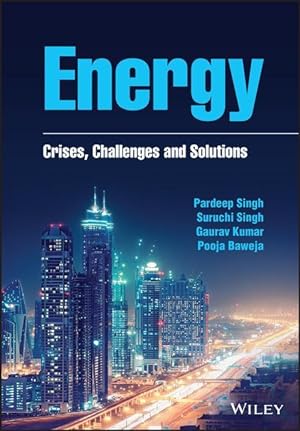
Aggiungi al carrelloGebunden. Condizione: New. Über den AutorAbout the EditorsDr Pardeep Singh is Assistant Professor in the Department of Environmental Studies, PGDAV College, University of Delhi, New Delhi, India.Dr Suruchi Singh is Assist.
-
Energy: Crises, Challenges and Solutions
Da: Books Puddle, New York, NY, U.S.A.
Valutazione del venditore 4 su 5 stelle
Condizione: New.
-

Energy
Lingua: Inglese
Editore: John Wiley and Sons Ltd, GB, 2021
ISBN 10: 1119741440 ISBN 13: 9781119741442
Da: Rarewaves.com UK, London, Regno Unito
Valutazione del venditore 5 su 5 stelle
EUR 204,44
Spedizione EUR 75,06
Spedito da Regno Unito a U.S.A.Quantità: 2 disponibili
Aggiungi al carrelloHardback. Condizione: New. Energy Global energy demand has more than doubled since 1970. The use of energy is strongly related to almost every conceivable aspect of development: wealth, health, nutrition, water, infrastructure, education and even life expectancy itself are strongly and significantly related to the consumption of energy per capita. Many development indicators are strongly related to per-capita energy consumption. Fossil fuel is the most conventional source of energy but also increases greenhouse gas emissions. The economic development of many countries has come at the cost of the environment. However, it should not be presumed that a reconciliation of the two is not possible. The nexus concept is the interconnection between the resource energy, water, food, land, and climate. Such interconnections enable us to address trade-offs and seek synergies among them. Energy, water, food, land, and climate are essential resources of our natural environment and support our quality of life. Competition between these resources is increasing globally and is exacerbated by climate change. Improving resilience and securing resource availability would require improving resource efficiency. Many policies and programs are announced nationally and internationally for replacing the conventional mode and also emphasizing on conservation of fossil fuels and reuse of exhausted energy, so a gap in implications and outcomes can be broadly traced by comparing the data. This book aims to highlight problems and solutions related to conventional energy utilization, formation, and multitudes of ecological impacts and tools for the conservation of fossil fuels. The book also discusses modern energy services as one of the sustainable development goals and how the pressure on resource energy disturbs the natural flows. The recent advances in alternative energy sources and their possible future growth are discussed and on how conventional energy leads to greenhouse gas formation, which reduces energy use efficiency. The different policies and models operating is also addressed, and the gaps that remained between them. Climate change poses a challenge for renewable energy, and thus it is essential to identify the factors that would reduce the possibility of relying on sustainable energy sources. This book will be of interest to researchers and stakeholders, students, industries, NGOs, and governmental agencies directly or indirectly associated with energy research.
-
Energy: Crises, Challenges and Solutions
Da: Kennys Bookstore, Olney, MD, U.S.A.
Valutazione del venditore 5 su 5 stelle
Condizione: New. 2021. 1st Edition. Hardcover. . . . . . Books ship from the US and Ireland.
-

EUR 241,15
Spedizione EUR 63,77
Spedito da Germania a U.S.A.Quantità: 2 disponibili
Aggiungi al carrelloBuch. Condizione: Neu. Neuware - Energy Global energy demand has more than doubled since 1970. The use of energy is strongly related to almost every conceivable aspect of development: wealth, health, nutrition, water, infrastructure, education and even life expectancy itself are strongly and significantly related to the consumption of energy per capita. Many development indicators are strongly related to per-capita energy consumption. Fossil fuel is the most conventional source of energy but also increases greenhouse gas emissions. The economic development of many countries has come at the cost of the environment. However, it should not be presumed that a reconciliation of the two is not possible. The nexus concept is the interconnection between the resource energy, water, food, land, and climate. Such interconnections enable us to address trade-offs and seek synergies among them. Energy, water, food, land, and climate are essential resources of our natural environment and support our quality of life. Competition between these resources is increasing globally and is exacerbated by climate change. Improving resilience and securing resource availability would require improving resource efficiency. Many policies and programs are announced nationally and internationally for replacing the conventional mode and also emphasizing on conservation of fossil fuels and reuse of exhausted energy, so a gap in implications and outcomes can be broadly traced by comparing the data. This book aims to highlight problems and solutions related to conventional energy utilization, formation, and multitudes of ecological impacts and tools for the conservation of fossil fuels. The book also discusses modern energy services as one of the sustainable development goals and how the pressure on resource energy disturbs the natural flows. The recent advances in alternative energy sources and their possible future growth are discussed and on how conventional energy leads to greenhouse gas formation, which reduces energy use efficiency. The different policies and models operating is also addressed, and the gaps that remained between them. Climate change poses a challenge for renewable energy, and thus it is essential to identify the factors that would reduce the possibility of relying on sustainable energy sources. This book will be of interest to researchers and stakeholders, students, industries, NGOs, and governmental agencies directly or indirectly associated with energy research.
-
Energy (Hardcover)
Lingua: Inglese
Editore: John Wiley and Sons Ltd, Hoboken, 2021
ISBN 10: 1119741440 ISBN 13: 9781119741442
Da: CitiRetail, Stevenage, Regno Unito
Valutazione del venditore 5 su 5 stelle
EUR 190,29
Spedizione EUR 42,73
Spedito da Regno Unito a U.S.A.Quantità: 1 disponibili
Aggiungi al carrelloHardcover. Condizione: new. Hardcover. Energy Global energy demand has more than doubled since 1970. The use of energy is strongly related to almost every conceivable aspect of development: wealth, health, nutrition, water, infrastructure, education and even life expectancy itself are strongly and significantly related to the consumption of energy per capita. Many development indicators are strongly related to per-capita energy consumption. Fossil fuel is the most conventional source of energy but also increases greenhouse gas emissions. The economic development of many countries has come at the cost of the environment. However, it should not be presumed that a reconciliation of the two is not possible. The nexus concept is the interconnection between the resource energy, water, food, land, and climate. Such interconnections enable us to address trade-offs and seek synergies among them. Energy, water, food, land, and climate are essential resources of our natural environment and support our quality of life. Competition between these resources is increasing globally and is exacerbated by climate change. Improving resilience and securing resource availability would require improving resource efficiency. Many policies and programs are announced nationally and internationally for replacing the conventional mode and also emphasizing on conservation of fossil fuels and reuse of exhausted energy, so a gap in implications and outcomes can be broadly traced by comparing the data. This book aims to highlight problems and solutions related to conventional energy utilization, formation, and multitudes of ecological impacts and tools for the conservation of fossil fuels. The book also discusses modern energy services as one of the sustainable development goals and how the pressure on resource energy disturbs the natural flows. The recent advances in alternative energy sources and their possible future growth are discussed and on how conventional energy leads to greenhouse gas formation, which reduces energy use efficiency. The different policies and models operating is also addressed, and the gaps that remained between them. Climate change poses a challenge for renewable energy, and thus it is essential to identify the factors that would reduce the possibility of relying on sustainable energy sources. This book will be of interest to researchers and stakeholders, students, industries, NGOs, and governmental agencies directly or indirectly associated with energy research. This item is printed on demand. Shipping may be from our UK warehouse or from our Australian or US warehouses, depending on stock availability.


