

Importo totale (1 articolo articoli):
Destinazione ordine:

bella galil (35 risultati)
Vai alla pagina principale dei risultati di ricerca
Filtri di ricerca
Tipo di articolo
- Tutti i tipi di prodotto
- Libri (35)
- Riviste e Giornali (Nessun altro risultato corrispondente a questo perfezionamento)
- Fumetti (Nessun altro risultato corrispondente a questo perfezionamento)
- Spartiti (Nessun altro risultato corrispondente a questo perfezionamento)
- Arte, Stampe e Poster (Nessun altro risultato corrispondente a questo perfezionamento)
- Fotografie (Nessun altro risultato corrispondente a questo perfezionamento)
- Mappe (Nessun altro risultato corrispondente a questo perfezionamento)
- Manoscritti e Collezionismo cartaceo (Nessun altro risultato corrispondente a questo perfezionamento)
Condizioni Maggiori informazioni
- Nuovo (31)
- Come nuovo, Ottimo o Quasi ottimo (2)
- Molto buono o Buono (Nessun altro risultato corrispondente a questo perfezionamento)
- Discreto o Mediocre (Nessun altro risultato corrispondente a questo perfezionamento)
- Come descritto (2)
Legatura
Ulteriori caratteristiche
- Prima ed. (Nessun altro risultato corrispondente a questo perfezionamento)
- Copia autograf. (Nessun altro risultato corrispondente a questo perfezionamento)
- Sovracoperta (Nessun altro risultato corrispondente a questo perfezionamento)
- Con foto (19)
- Non Print on Demand (20)
Lingua (1)
Spedizione gratuita
Paese del venditore
Valutazione venditore
-

Bridging Divides
Da: Romtrade Corp., STERLING HEIGHTS, MI, U.S.A.
Valutazione del venditore 5 su 5 stelle

Condizione: New. This is a Brand-new US Edition. This Item may be shipped from US or any other country as we have multiple locations worldwide.
-
Bridging Divides
Da: Basi6 International, Irving, TX, U.S.A.
Valutazione del venditore 5 su 5 stelle
Condizione: Brand New. New. US edition. Expediting shipping for all USA and Europe orders excluding PO Box. Excellent Customer Service.
-
Bridging Divides
Da: Biblios, Frankfurt am main, HESSE, Germania
Valutazione del venditore 4 su 5 stelle

EUR 125,00
Spedizione EUR 9,95
Spedito da Germania a U.S.A.Quantità: 1 disponibili
Aggiungi al carrelloCondizione: New. pp. 336.
-
Condizione: Used. pp. 336, Maps.
-
EUR 142,76
Spedizione EUR 7,53
Spedito da Regno Unito a U.S.A.Quantità: 1 disponibili
Aggiungi al carrelloCondizione: Used. pp. 336 Illus., Maps.
-
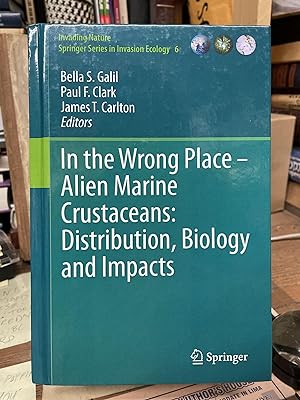
In the Wrong Place- Alien Marine Crustaceans: Distribution, Biology and Impacts
Libro 5 di 12: Invading Nature - Springer Series in Invasion EcologyDa: Chamblin Bookmine, Jacksonville, FL, U.S.A.
Valutazione del venditore 5 su 5 stelle
Hardcover. 8vo. Condizione: Near fine. 716p. Crisp, white pages unmarked. Binding square and tight. Boards clean and pointed.
-
Bridging Divides: Maritime Canals as Invasion Corridors (Monographiae Biologicae, 83)
Da: Ria Christie Collections, Uxbridge, Regno Unito
Valutazione del venditore 5 su 5 stelle
EUR 164,50
Spedizione EUR 13,88
Spedito da Regno Unito a U.S.A.Quantità: Più di 20 disponibili
Aggiungi al carrelloCondizione: New. In.
-

EUR 136,16
Spedizione EUR 48,99
Spedito da Germania a U.S.A.Quantità: Più di 20 disponibili
Aggiungi al carrelloGebunden. Condizione: New.
-

EUR 136,16
Spedizione EUR 48,99
Spedito da Germania a U.S.A.Quantità: Più di 20 disponibili
Aggiungi al carrelloCondizione: New.
-

Condizione: New. pp. 332.
-
EUR 140,00
Spedizione EUR 70,00
Spedito da Germania a U.S.A.Quantità: 5 disponibili
Aggiungi al carrelloTaschenbuch. Condizione: Neu. Bridging Divides | Maritime Canals as Invasion Corridors | Stephan Gollasch (u. a.) | Taschenbuch | xiv | Englisch | 2010 | Springer | EAN 9789048172658 | Verantwortliche Person für die EU: Springer Verlag GmbH, Tiergartenstr. 17, 69121 Heidelberg, juergen[dot]hartmann[at]springer[dot]com | Anbieter: preigu.
-

EUR 168,73
Spedizione EUR 62,53
Spedito da Germania a U.S.A.Quantità: 1 disponibili
Aggiungi al carrelloTaschenbuch. Condizione: Neu. Druck auf Anfrage Neuware - Printed after ordering - Maritime canals dissolve natural barriers to the dispersal of marine organisms, thus providing novel opportunities for natural dispersal, as well as for shipping-mediated transport. The introduction of alien species has proved to be one of the most profound and damaging of anthropogenic deeds - with both ecological and economic costs. This book is the first to assess the impacts of the world's three principal maritime canals - the Kiel, the Panama, the Suez - as invasion corridors for alien biota. These three canals differ in their hydrological regimes, the types of biotas they connect, and in their permeability to invasions. Dr. Stephan Gollasch was involved in the first European ship sampling programme on ballast water, tank sediments and ship hull fouling (1992-1996). His PhD is world-wide the first thesis based on ballast water sampling. In addition to laboratory and desk studies he spent more than 125 days at sea during several biological surveys and joint ships on their voyages through the Kiel and Suez Canals. Due to the international aspect of biological invasions Dr. Gollasch became a member of several international working groups: International Council for the Exploration of the Sea (ICES); International Maritime Organization (IMO), and the Baltic Marine Biologists (BMB). As an independent consultant he is today involved projects related to biological invasions (e.g. ballast water treatment, ship sampling, risk assessment). Recently he was involved in the development of risk assessments and ballast water management scenarios for the European Atlantic coast, North, Baltic, Caspian and Mediterranean Seas.Dr. Bella Galil is a Senior Research Scientist at the National Institute of Oceanography, Israel. Her main research interests are the anthropogenic changes occurring in the Levantine marine biota, and the impact of alien species on the Mediterraneanecosystem. She has conducted numerous studies and surveys off the Israeli coast monitoring the benthic biota from the intertidal to the bathyal. She co-chairs the scientific committee of marine ecosystems of the International Commission for Scientific Exploration of the Mediterranean (CIESM), and is a member of the Invasive Species Scientific Committee, IUCN. Galil published over 130 papers in scientific journals and co-edited a volume of the 'CIESM Atlas of Exotic species in the Mediterranean'. Recently she coordinated the drafting of Guidelines for controlling the vectors of introduction into the Mediterranean of non-indigenous species and invasive marine species for the UNEP Mediterranean Action Plan Regional Activity Centre for Specially Protected Areas RAC/SPA.Dr. Andrew Cohen is the Director of the Biological Invasions Program at the San Francisco Estuary Institute in Oakland, California. His research has focused on the extent, impacts and vectors of aquatic invasions. He has organized and led rapid assessment surveys for exotic marine species in various localities including one at both ends of the Panama Canal. He helped write California's first ballast water law in 1999, and recently helped develop ballast water discharge standards for the state that seem likely to be enacted this year. He also drafted a petition from the research community that led to a U.S. ban on importing the 'Killer Seaweed' Caulerpa taxifolia, and provided technical assistance to a recently successful lawsuit that will force ballast water discharges into U.S. waters to be regulated as biological pollutants under the U.S. Clean Water Act. For his work he has received a Pew Marine Conservation Fellowship and the San Francisco BayKeeper's Environmental Achievement Award.
-

EUR 168,73
Spedizione EUR 63,35
Spedito da Germania a U.S.A.Quantità: 1 disponibili
Aggiungi al carrelloBuch. Condizione: Neu. Druck auf Anfrage Neuware - Printed after ordering - Maritime canals dissolve natural barriers to the dispersal of marine organisms, thus providing novel opportunities for natural dispersal, as well as for shipping-mediated transport. The introduction of alien species has proved to be one of the most profound and damaging of anthropogenic deeds - with both ecological and economic costs. This book is the first to assess the impacts of the world's three principal maritime canals - the Kiel, the Panama, the Suez - as invasion corridors for alien biota. These three canals differ in their hydrological regimes, the types of biotas they connect, and in their permeability to invasions. Dr. Stephan Gollasch was involved in the first European ship sampling programme on ballast water, tank sediments and ship hull fouling (1992-1996). His PhD is world-wide the first thesis based on ballast water sampling. In addition to laboratory and desk studies he spent more than 125 days at sea during several biological surveys and joint ships on their voyages through the Kiel and Suez Canals. Due to the international aspect of biological invasions Dr. Gollasch became a member of several international working groups: International Council for the Exploration of the Sea (ICES); International Maritime Organization (IMO), and the Baltic Marine Biologists (BMB). As an independent consultant he is today involved projects related to biological invasions (e.g. ballast water treatment, ship sampling, risk assessment). Recently he was involved in the development of risk assessments and ballast water management scenarios for the European Atlantic coast, North, Baltic, Caspian and Mediterranean Seas.Dr. Bella Galil is a Senior Research Scientist at the National Institute of Oceanography, Israel. Her main research interests are the anthropogenic changes occurring in the Levantine marine biota, and the impact of alien species on the Mediterraneanecosystem. She has conducted numerous studies and surveys off the Israeli coast monitoring the benthic biota from the intertidal to the bathyal. She co-chairs the scientific committee of marine ecosystems of the International Commission for Scientific Exploration of the Mediterranean (CIESM), and is a member of the Invasive Species Scientific Committee, IUCN. Galil published over 130 papers in scientific journals and co-edited a volume of the 'CIESM Atlas of Exotic species in the Mediterranean'. Recently she coordinated the drafting of Guidelines for controlling the vectors of introduction into the Mediterranean of non-indigenous species and invasive marine species for the UNEP Mediterranean Action Plan Regional Activity Centre for Specially Protected Areas RAC/SPA.Dr. Andrew Cohen is the Director of the Biological Invasions Program at the San Francisco Estuary Institute in Oakland, California. His research has focused on the extent, impacts and vectors of aquatic invasions. He has organized and led rapid assessment surveys for exotic marine species in various localities including one at both ends of the Panama Canal. He helped write California's first ballast water law in 1999, and recently helped develop ballast water discharge standards for the state that seem likely to be enacted this year. He also drafted a petition from the research community that led to a U.S. ban on importing the 'Killer Seaweed' Caulerpa taxifolia, and provided technical assistance to a recently successful lawsuit that will force ballast water discharges into U.S. waters to be regulated as biological pollutants under the U.S. Clean Water Act. For his work he has received a Pew Marine Conservation Fellowship and the San Francisco BayKeeper's Environmental Achievement Award.
-
Bridging Divides: Maritime Canals as Invasion Corridors (Monographiae Biologicae, 83)
Da: Ria Christie Collections, Uxbridge, Regno Unito
Valutazione del venditore 5 su 5 stelle
EUR 229,88
Spedizione EUR 13,88
Spedito da Regno Unito a U.S.A.Quantità: Più di 20 disponibili
Aggiungi al carrelloCondizione: New. In.
-
Bridging Divides: Maritime Canals As Invasion Corridors
Da: Revaluation Books, Exeter, Regno Unito
Valutazione del venditore 5 su 5 stelle
EUR 235,66
Spedizione EUR 14,48
Spedito da Regno Unito a U.S.A.Quantità: 2 disponibili
Aggiungi al carrelloPaperback. Condizione: Brand New. 316 pages. 9.25x6.25x0.75 inches. In Stock.
-

In the Wrong Place: Alien Marine Crustaceans : Distribution, Biology and Impacts
Libro 5 di 12: Invading Nature - Springer Series in Invasion EcologyEUR 225,78
Spedizione EUR 105,00
Spedito da Germania a U.S.A.Quantità: 1 disponibili
Aggiungi al carrelloCondizione: Sehr gut. Zustand: Sehr gut | Seiten: 716 | Sprache: Englisch | Produktart: Bücher | In The Wrong Place: Alien Marine Crustaceans - Distribution, Biology And Impacts provides a unique view into the remarkable story of how shrimps, crabs, and lobsters - and their many relatives - have been distributed around the world by human activity, and the profound implications of this global reorganization of biodiversity for marine conservation biology. Many crustaceans form the base of marine food chains, and are often prominent predators and competitors acting as ecological engineers in marine ecosystems. Commencing in the 1800s global commerce began to move hundreds - perhaps thousands - of species of marine crustaceans across oceans and between continents, both intentionally and unintentionally. This book tells the story of these invasions from Arctic waters to tropical shores, highlighting not only the importance and impact of all prominent crustacean invasions in the world's oceans, but also the commercial exploitation of invasive crabs and shrimps. Topics explored for the first time in one volume include the historical roots of man's impact on crustacean biogeography, the global dispersal of crabs, barnacle invasions, insights into the potential scale of tropical invasions, the history of the world's most widely cultured shrimp, the invasive history and management of red king crabs in Norway, Chinese mitten crabs in England, and American blue crabs in Europe, the evolutionary ecology of green crabs, and many other subjects as well, touching upon all ocean shores.
-

In the Wrong Place - Alien Marine Crustaceans: Distribution, Biology and Impacts
Libro 5 di 12: Invading Nature - Springer Series in Invasion EcologyEUR 274,55
Spedizione EUR 70,00
Spedito da Germania a U.S.A.Quantità: 5 disponibili
Aggiungi al carrelloTaschenbuch. Condizione: Neu. In the Wrong Place - Alien Marine Crustaceans: Distribution, Biology and Impacts | Bella S. Galil (u. a.) | Taschenbuch | xv | Englisch | 2016 | Springer | EAN 9789401777667 | Verantwortliche Person für die EU: Springer Verlag GmbH, Tiergartenstr. 17, 69121 Heidelberg, juergen[dot]hartmann[at]springer[dot]com | Anbieter: preigu.
-
In the Wrong Place - Alien Marine Crustaceans: Distribution, Biology and Impacts
Libro 5 di 12: Invading Nature - Springer Series in Invasion EcologyLingua: Inglese
Editore: Springer Netherlands, Springer Netherlands, 2016
ISBN 10: 9401777667 ISBN 13: 9789401777667
EUR 325,30
Spedizione EUR 66,11
Spedito da Germania a U.S.A.Quantità: 1 disponibili
Aggiungi al carrelloTaschenbuch. Condizione: Neu. Druck auf Anfrage Neuware - Printed after ordering - In The Wrong Place: Alien Marine Crustaceans - Distribution, Biology And Impacts provides a unique view into the remarkable story of how shrimps, crabs, and lobsters - and their many relatives - have been distributed around the world by human activity, and the profound implications of this global reorganization of biodiversity for marine conservation biology. Many crustaceans form the base of marine food chains, and are often prominent predators and competitors acting as ecological engineers in marine ecosystems. Commencing in the 1800s global commerce began to move hundreds - perhaps thousands - of species of marine crustaceans across oceans and between continents, both intentionally and unintentionally. This book tells the story of these invasions from Arctic waters to tropical shores, highlighting not only the importance and impact of all prominent crustacean invasions in the world's oceans, but also the commercial exploitation of invasive crabs and shrimps. Topics explored for the first time in one volume include the historical roots of man's impact on crustacean biogeography, the global dispersal of crabs, barnacle invasions, insights into the potential scale of tropical invasions, the history of the world's most widely cultured shrimp, the invasive history and management of red king crabs in Norway, Chinese mitten crabs in England, and American blue crabs in Europe, the evolutionary ecology of green crabs, and many other subjects as well, touching upon all ocean shores.
-
In the Wrong Place: Alien Marine Crustaceans : Distribution, Biology and Impacts
Libro 5 di 12: Invading Nature - Springer Series in Invasion EcologyEUR 326,28
Spedizione EUR 66,08
Spedito da Germania a U.S.A.Quantità: 2 disponibili
Aggiungi al carrelloBuch. Condizione: Neu. Druck auf Anfrage Neuware - Printed after ordering - In The Wrong Place: Alien Marine Crustaceans - Distribution, Biology And Impacts provides a unique view into the remarkable story of how shrimps, crabs, and lobsters - and their many relatives - have been distributed around the world by human activity, and the profound implications of this global reorganization of biodiversity for marine conservation biology. Many crustaceans form the base of marine food chains, and are often prominent predators and competitors acting as ecological engineers in marine ecosystems. Commencing in the 1800s global commerce began to move hundreds - perhaps thousands - of species of marine crustaceans across oceans and between continents, both intentionally and unintentionally. This book tells the story of these invasions from Arctic waters to tropical shores, highlighting not only the importance and impact of all prominent crustacean invasions in the world's oceans, but also the commercial exploitation of invasive crabs and shrimps. Topics explored for the first time in one volume include the historical roots of man's impact on crustacean biogeography, the global dispersal of crabs, barnacle invasions, insights into the potential scale of tropical invasions, the history of the world's most widely cultured shrimp, the invasive history and management of red king crabs in Norway, Chinese mitten crabs in England, and American blue crabs in Europe, the evolutionary ecology of green crabs, and many other subjects as well, touching upon all ocean shores.
-
In the Wrong Place: Alien Marine Crustaceans: Distribution, Biology and Impacts
Libro 5 di 12: Invading Nature - Springer Series in Invasion EcologyDa: Revaluation Books, Exeter, Regno Unito
Valutazione del venditore 5 su 5 stelle
EUR 403,53
Spedizione EUR 17,38
Spedito da Regno Unito a U.S.A.Quantità: 1 disponibili
Aggiungi al carrelloHardcover. Condizione: Brand New. 716 pages. 9.75x6.50x1.50 inches. In Stock.
-
Bridging Divides (eng)
Da: Brook Bookstore On Demand, Napoli, NA, Italia
Valutazione del venditore 3 su 5 stelle

EUR 126,26
Spedizione EUR 6,80
Spedito da Italia a U.S.A.Quantità: Più di 20 disponibili
Aggiungi al carrelloCondizione: new. Questo è un articolo print on demand.
-

Bridging Divides
Lingua: Inglese
Editore: Springer Netherlands Nov 2010, 2010
ISBN 10: 9048172659 ISBN 13: 9789048172658
Da: BuchWeltWeit Ludwig Meier e.K., Bergisch Gladbach, Germania
Valutazione del venditore 5 su 5 stelle
EUR 160,49
Spedizione EUR 23,00
Spedito da Germania a U.S.A.Quantità: 2 disponibili
Aggiungi al carrelloTaschenbuch. Condizione: Neu. This item is printed on demand - it takes 3-4 days longer - Neuware -Maritime canals dissolve natural barriers to the dispersal of marine organisms, providing novel opportunities for natural dispersal, as well as for shipping-mediated transport. This book is the first to assess the impacts of the world's three principal maritime canals - the Kiel, the Panama, the Suez - as invasion corridors for alien biota. These three canals differ in their hydrological regimes, the types of biotas they connect, and in their permeability to invasions. 332 pp. Englisch.
-

Bridging Divides
Lingua: Inglese
Editore: Springer Netherlands Sep 2006, 2006
ISBN 10: 1402050461 ISBN 13: 9781402050466
Da: BuchWeltWeit Ludwig Meier e.K., Bergisch Gladbach, Germania
Valutazione del venditore 5 su 5 stelle
EUR 160,49
Spedizione EUR 23,00
Spedito da Germania a U.S.A.Quantità: 2 disponibili
Aggiungi al carrelloBuch. Condizione: Neu. This item is printed on demand - it takes 3-4 days longer - Neuware -Maritime canals dissolve natural barriers to the dispersal of marine organisms, providing novel opportunities for natural dispersal, as well as for shipping-mediated transport. This book is the first to assess the impacts of the world's three principal maritime canals - the Kiel, the Panama, the Suez - as invasion corridors for alien biota. These three canals differ in their hydrological regimes, the types of biotas they connect, and in their permeability to invasions. 336 pp. Englisch.
-
EUR 141,20
Spedizione EUR 70,00
Spedito da Germania a U.S.A.Quantità: 5 disponibili
Aggiungi al carrelloBuch. Condizione: Neu. Bridging Divides | Maritime Canals as Invasion Corridors | Stephan Gollasch (u. a.) | Buch | xiv | Englisch | 2006 | Springer | EAN 9781402050466 | Verantwortliche Person für die EU: Springer Verlag GmbH, Tiergartenstr. 17, 69121 Heidelberg, juergen[dot]hartmann[at]springer[dot]com | Anbieter: preigu Print on Demand.
-
Bridging Divides
Da: Majestic Books, Hounslow, Regno Unito
Valutazione del venditore 4 su 5 stelle
EUR 219,81
Spedizione EUR 7,53
Spedito da Regno Unito a U.S.A.Quantità: 4 disponibili
Aggiungi al carrelloCondizione: New. Print on Demand pp. 332 79 Illus.
-

Bridging Divides
Lingua: Inglese
Editore: Springer, Springer Nov 2010, 2010
ISBN 10: 9048172659 ISBN 13: 9789048172658
Da: buchversandmimpf2000, Emtmannsberg, BAYE, Germania
Valutazione del venditore 5 su 5 stelle
EUR 160,49
Spedizione EUR 60,00
Spedito da Germania a U.S.A.Quantità: 1 disponibili
Aggiungi al carrelloTaschenbuch. Condizione: Neu. This item is printed on demand - Print on Demand Titel. Neuware -Maritime canals dissolve natural barriers to the dispersal of marine organisms, providing novel opportunities for natural dispersal, as well as for shipping-mediated transport. This book is the first to assess the impacts of the world¿s three principal maritime canals ¿ the Kiel, the Panama, the Suez ¿ as invasion corridors for alien biota. These three canals differ in their hydrological regimes, the types of biotas they connect, and in their permeability to invasions.Springer-Verlag KG, Sachsenplatz 4-6, 1201 Wien 332 pp. Englisch.
-

Bridging Divides
Lingua: Inglese
Editore: Springer, Springer Sep 2006, 2006
ISBN 10: 1402050461 ISBN 13: 9781402050466
Da: buchversandmimpf2000, Emtmannsberg, BAYE, Germania
Valutazione del venditore 5 su 5 stelle
EUR 160,49
Spedizione EUR 60,00
Spedito da Germania a U.S.A.Quantità: 1 disponibili
Aggiungi al carrelloBuch. Condizione: Neu. This item is printed on demand - Print on Demand Titel. Neuware -Maritime canals dissolve natural barriers to the dispersal of marine organisms, providing novel opportunities for natural dispersal, as well as for shipping-mediated transport. This book is the first to assess the impacts of the world¿s three principal maritime canals ¿ the Kiel, the Panama, the Suez ¿ as invasion corridors for alien biota. These three canals differ in their hydrological regimes, the types of biotas they connect, and in their permeability to invasions.Springer-Verlag KG, Sachsenplatz 4-6, 1201 Wien 336 pp. Englisch.
-
Bridging Divides
Da: Biblios, Frankfurt am main, HESSE, Germania
Valutazione del venditore 4 su 5 stelle
EUR 220,86
Spedizione EUR 9,95
Spedito da Germania a U.S.A.Quantità: 4 disponibili
Aggiungi al carrelloCondizione: New. PRINT ON DEMAND pp. 332.
-
In the Wrong Place - Alien Marine Crust (eng)
Libro 5 di 12: Invading Nature - Springer Series in Invasion EcologyDa: Brook Bookstore On Demand, Napoli, NA, Italia
Valutazione del venditore 3 su 5 stelle
EUR 246,33
Spedizione EUR 11,00
Spedito da Italia a U.S.A.Quantità: Più di 20 disponibili
Aggiungi al carrelloCondizione: new. Questo è un articolo print on demand.
-

In the Wrong Place - Alien Marine Crust (eng)
Libro 5 di 12: Invading Nature - Springer Series in Invasion EcologyDa: Brook Bookstore On Demand, Napoli, NA, Italia
Valutazione del venditore 3 su 5 stelle
EUR 246,33
Spedizione EUR 11,00
Spedito da Italia a U.S.A.Quantità: Più di 20 disponibili
Aggiungi al carrelloCondizione: new. Questo è un articolo print on demand.


