

Importo totale (1 articolo articoli):
Destinazione ordine:

blake stimson gregory sholette (25 risultati)
Vai alla pagina principale dei risultati di ricerca
Filtri di ricerca
Tipo di articolo
- Tutti i tipi di prodotto
- Libri (25)
- Riviste e Giornali (Nessun altro risultato corrispondente a questo perfezionamento)
- Fumetti (Nessun altro risultato corrispondente a questo perfezionamento)
- Spartiti (Nessun altro risultato corrispondente a questo perfezionamento)
- Arte, Stampe e Poster (Nessun altro risultato corrispondente a questo perfezionamento)
- Fotografie (Nessun altro risultato corrispondente a questo perfezionamento)
- Mappe (Nessun altro risultato corrispondente a questo perfezionamento)
- Manoscritti e Collezionismo cartaceo (Nessun altro risultato corrispondente a questo perfezionamento)
Condizioni Maggiori informazioni
- Nuovo (14)
- Come nuovo, Ottimo o Quasi ottimo (3)
- Molto buono o Buono (6)
- Discreto o Mediocre (Nessun altro risultato corrispondente a questo perfezionamento)
- Come descritto (2)
Legatura
- Tutte
- Rilegato (Nessun altro risultato corrispondente a questo perfezionamento)
- Brossura (24)
Ulteriori caratteristiche
- Prima ed. (5)
- Copia autograf. (Nessun altro risultato corrispondente a questo perfezionamento)
- Sovracoperta (Nessun altro risultato corrispondente a questo perfezionamento)
- Con foto (7)
- Non Print on Demand (25)
Lingua (1)
Spedizione gratuita
Paese del venditore
Valutazione venditore
-
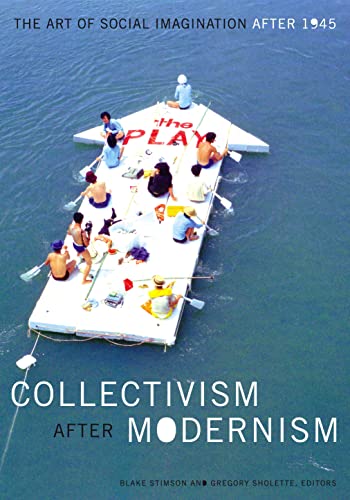
Collectivism after Modernism: The Art of Social Imagination after 1945
Da: Midtown Scholar Bookstore, Harrisburg, PA, U.S.A.
Valutazione del venditore 5 su 5 stelle

Paperback. Condizione: Good. Good - Bumped and creased book with tears to the extremities, but not affecting the text block, may have remainder mark or previous owner's name - GOOD Oversized.
-
Collectivism after Modernism: The Art of Social Imagination after 1945
Da: WorldofBooks, Goring-By-Sea, WS, Regno Unito
Valutazione del venditore 5 su 5 stelle
EUR 4,75
Spedizione EUR 6,43
Spedito da Regno Unito a U.S.A.Quantità: 1 disponibili
Aggiungi al carrelloPaperback. Condizione: Very Good. The book has been read, but is in excellent condition. Pages are intact and not marred by notes or highlighting. The spine remains undamaged.
-
Collectivism after Modernism: The Art of Social Imagination after 1945
Da: Half Price Books Inc., Dallas, TX, U.S.A.
Valutazione del venditore 5 su 5 stelle
Paperback. Condizione: Very Good. Connecting readers with great books since 1972! Used books may not include companion materials, and may have some shelf wear or limited writing. We ship orders daily and Customer Service is our top priority!
-
Collectivism after Modernism : The Art of Social Imagination After 1945
Lingua: Inglese
Editore: University of Minnesota Press, 2007
ISBN 10: 0816644624 ISBN 13: 9780816644629
Softcover, 312 pages, as new condition, clean and crisp; no internal marks. Foreign shipping may be extra.
-
Collectivism after Modernism: The Art of Social Imagination after 1945
Lingua: Inglese
Editore: University Of Minnesota Press 20 F, 2007
ISBN 10: 0816644624 ISBN 13: 9780816644629
Da: AwesomeBooks, Wallingford, Regno Unito
Valutazione del venditore 5 su 5 stelle
EUR 16,40
Spedizione EUR 5,73
Spedito da Regno Unito a U.S.A.Quantità: 1 disponibili
Aggiungi al carrelloPaperback. Condizione: Very Good. Collectivism after Modernism: The Art of Social Imagination after 1945 This book is in very good condition and will be shipped within 24 hours of ordering. The cover may have some limited signs of wear but the pages are clean, intact and the spine remains undamaged. This book has clearly been well maintained and looked after thus far. Money back guarantee if you are not satisfied. See all our books here, order more than 1 book and get discounted shipping. .
-
Collectivism after Modernism: The Art of Social Imagination after 1945
Da: Dimendberg Consulting LLC, Los Angeles, CA, U.S.A.
Valutazione del venditore 5 su 5 stelle
Prima edizione
Soft cover. Condizione: Very Good. No Jacket. 1st Edition. Paperback in very good condition. Photos and foreign shipping rates available on request.
-
Collectivism after Modernism: The Art of Social Imagination after 1945
Lingua: Inglese
Editore: University Of Minnesota Press 00/b /20 F, 2007
ISBN 10: 0816644624 ISBN 13: 9780816644629
Da: Bahamut Media, Reading, Regno Unito
Valutazione del venditore 5 su 5 stelle
EUR 16,40
Spedizione EUR 8,01
Spedito da Regno Unito a U.S.A.Quantità: 1 disponibili
Aggiungi al carrelloPaperback. Condizione: Very Good. Shipped within 24 hours from our UK warehouse. Clean, undamaged book with no damage to pages and minimal wear to the cover. Spine still tight, in very good condition. Remember if you are not happy, you are covered by our 100% money back guarantee.
-

Collectivism After Modernism : The Art of Social Imagination After 1945
Da: GreatBookPrices, Columbia, MD, U.S.A.
Valutazione del venditore 5 su 5 stelle
Condizione: As New. Unread book in perfect condition.
-
Collectivism After Modernism
Lingua: Inglese
Editore: MP - University Of Minnesota Press, 2007
ISBN 10: 0816644624 ISBN 13: 9780816644629
Da: PBShop.store UK, Fairford, GLOS, Regno Unito
Valutazione del venditore 5 su 5 stelle
EUR 30,52
Spedizione EUR 5,76
Spedito da Regno Unito a U.S.A.Quantità: 5 disponibili
Aggiungi al carrelloPAP. Condizione: New. New Book. Shipped from UK. Established seller since 2000.
-

Collectivism After Modernism
Lingua: Inglese
Editore: University of Minnesota Press, US, 2007
ISBN 10: 0816644624 ISBN 13: 9780816644629
Da: Rarewaves.com USA, London, LONDO, Regno Unito
Valutazione del venditore 5 su 5 stelle
EUR 36,30
Spedizione gratuita
Spedito da Regno Unito a U.S.A.Quantità: 3 disponibili
Aggiungi al carrelloPaperback. Condizione: New. "Don't start an art collective until you read this book." -Guerrilla Girls "Ever since Web 2.0 with its wikis, blogs and social networks the art of collaboration is back on the agenda. Collectivism after Modernism convincingly proves that art collectives did not stop after the proclaimed death of the historical avant-gardes. Like never before technology reinvents the social and artists claim the steering wheel!" -Geert Lovink, Institute of Network Cultures, Amsterdam "This examination of the succession of post-war avant-gardes and collectives is new, important, and engaged." - Stephen F. Eisenman, author of The Abu Ghraib Effect "Collectivism after Modernism crucially helps us understand what artists and others can do in mushy, stinky times like ours. What can the seemingly powerless do in the face of mighty forces that seem to have their act really together? Here, Stimson and Sholette put forth many good answers." -Yes Men Spanning the globe from Europe, Japan, and the United States to Africa, Cuba, and Mexico, Collectivism after Modernism explores the ways in which collectives function within cultural norms, social conventions, and corporate or state-sanctioned art. Together, these essays demonstrate that collectivism survives as an influential artistic practice despite the art world's star system of individuality. Collectivism after Modernism provides the historical understanding necessary for thinking through postmodern collective practice, now and into the future. Contributors: Irina Aristarkhova, Jesse Drew, Okwui Enwezor, RubÉn Gallo, Chris Gilbert, Brian Holmes, Alan Moore, Jelena Stojanovi´c, Reiko Tomii, Rachel Weiss. Blake Stimson is associate professor of art history at the University of California Davis, the author of The Pivot of the World: Photography and Its Nation, and coeditor of Visual Worlds and Conceptual Art: A Critical Anthology. Gregory Sholette is an artist, writer, and cofounder of collectives Political Art Documentation/Distribution and REPOhistory. He is coeditor of The Interventionists: Users' Manual for the Creative Disruption of Everyday Life. "To understand the various forms of postwar collectivism as historically determined phenomena and to articulate the possibilities for contemporary collectivist art production is the aim of Collectivism after Modernism. The essays assembled in this anthology argue that to make truly collective art means to reconsider the relation between art and public; examples from the Situationist International and Group Material to Paper Tiger Television and the Congolese collective Le Groupe Amos make the point. To construct an art of shared experience means to go beyond projecting what Blake Stimson and Gregory Sholette call the "imagined community": a collective has to be more than an ideal, and more than communal craft; it has to be a truly social enterprise. Not only does it use unconventional forms and media to communicate the issues and experiences usually excluded from artistic re.
-

Collectivism After Modernism : The Art of Social Imagination After 1945
Da: GreatBookPrices, Columbia, MD, U.S.A.
Valutazione del venditore 5 su 5 stelle
Condizione: New.
-
Collectivism After Modernism (Paperback)
Lingua: Inglese
Editore: University of Minnesota Press, Minnesota, 2007
ISBN 10: 0816644624 ISBN 13: 9780816644629
Da: Grand Eagle Retail, Bensenville, IL, U.S.A.
Valutazione del venditore 5 su 5 stelle
Prima edizione
Paperback. Condizione: new. Paperback. The desire to speak in a collective voice has long fueled social imagination and artistic production. Organized around a series of case studies spanning the globe from Europe, Japan, and the United States to Africa, Cuba, and Mexico, this book covers such renowned collectives as the Guerrilla Girls and the Yes Men, as well as lesser-known groups. Contributors explore the ways in which collectives function within cultural norms, social conventions, and corporate or state-sanctioned art. They examine the impact of new technologies on artistic practice, the emergence of networked group identity, and the common characteristic of collective production to blur the typical separations between artists, activists, service workers, and communities in need. "Don't start an art collective until you read this book." —Guerrilla Girls "Ever since Web 2.0 with its wikis, blogs and social networks the art of collaboration is back on the agenda. "Collectivism after Modernism" convincingly proves that art collectives did not stop after the proclaimed death of the historical avant-gardes. Like never before technology reinvents the social and artists claim the steering wheel!" —Geert Lovink, Institute of Network Cultures, Amsterdam "This examination of the succession of post-war avant-gardes and collectives is new, important, and engaged." — Stephen F. Eisenman, author of" The Abu Ghraib Effect" ""Collectivism after Modernism" crucially helps us understand what artists and others can do in mushy, stinky times like ours. What can the seemingly powerless do in the face of mighty forces that seem to have their act really together? Here, Stimson and Sholette put forth many good answers." —Yes Men Spanning the globe from Europe, Japan, and the United States to Africa, Cuba, and Mexico, "Collectivism after Modernism" explores the ways in which collectives function within cultural norms, social conventions, and corporate or state-sanctioned art. Together, these essays demonstrate that collectivism survives as an influential artistic practice despite the art world's star system of individuality. "Collectivism after Modernism" provides the historical understanding necessary for thinking through postmodern collective practice, now and into the future. Contributors: Irina Aristarkhova, Jesse Drew, Okwui Enwezor, Ruben Gallo, Chris Gilbert, Brian Holmes, Alan Moore, Jelena Stojanovic, Reiko Tomii, RachelWeiss. Blake Stimson is associate professor of art history at the University of California Davis, the author of "The Pivot of the World: Photography and Its Nation," and coeditor of "Visual Worlds and Conceptual Art: A Critical Anthology. "Gregory Sholette is an artist, writer, and cofounder of collectives Political Art Documentation/Distribution and REPOhistory. He is coeditor of "The Interventionists: Users' Manual for the Creative Disruption of Everyday Life." " " "To understand the various forms of postwar collectivism as historically determined phenomena and to articulate the possibilities for contemporary collectivist art production is the aim of Collectivism after Modernism." The essays assembled in this anthology argue that to make truly collective art means to reconsider the relation between art and public; examples from the Situationist International and Group Material to Paper Tiger Television and the Congolese collective Le Groupe Amos make the point. To construct an art of shared experience means to go beyond projecting what Blake Stimson and Gregory Sholette call the "imagined community": a collective has to be more than an ideal, and more than communal craft; it has to be a truly social enterprise. Not only does it use unconventional forms and me Shipping may be from multiple locations in the US or from the UK, depending on stock availability.
-

Collectivism After Modernism The Art of Social Imagination After 1945.
Lingua: Inglese
Editore: University of Minnesota Press., 2007
ISBN 10: 0816644624 ISBN 13: 9780816644629
Da: Universitätsbuchhandlung Herta Hold GmbH, Berlin, Germania
Membro dell'associazione: GIAQ ILAB VDA
Valutazione del venditore 4 su 5 stelle

Prima edizione
EUR 7,00
Spedizione EUR 30,00
Spedito da Germania a U.S.A.Quantità: 1 disponibili
Aggiungi al carrelloFirst Edition. 18 x 25 cm. 312 pages. Paperback. Versand aus Deutschland / We dispatch from Germany via Air Mail. Einband bestoßen, daher Mängelexemplar gestempelt, sonst sehr guter Zustand. Imperfect copy due to slightly bumped cover, apart from this in very good condition. Stamped. Sprache: Englisch.
-
Collectivism After Modernism - The Art of Social Imagination After 1945 (eng)
Da: Brook Bookstore On Demand, Napoli, NA, Italia
Valutazione del venditore 4 su 5 stelle
EUR 30,82
Spedizione EUR 6,80
Spedito da Italia a U.S.A.Quantità: 5 disponibili
Aggiungi al carrelloCondizione: new.
-

Collectivism after Modernism: The Art of Social Imagination after 1945.
Lingua: Inglese
Editore: Minneapolis, London: University of Minnesota Press, 2007
Da: Antiquariat Thomas Haker GmbH & Co. KG, Berlin, Germania
Membro dell'associazione: GIAQ
Valutazione del venditore 5 su 5 stelle
EUR 9,40
Spedizione EUR 20,00
Spedito da Germania a U.S.A.Quantità: 1 disponibili
Aggiungi al carrelloSoftcover/Paperback. Condizione: Sehr gut. 312 pages. Sehr guter Zustand. Minimale Lager- bzw. Gebrauchsspuren. / Very good. Minimal wear. Sprache: Englisch Gewicht in Gramm: 699.
-
Collectivism after Modernism: The Art of Social Imagination after 1945
Lingua: Inglese
Editore: University of Minnesota Press, 2007
ISBN 10: 0816644624 ISBN 13: 9780816644629
Da: Kennys Bookshop and Art Galleries Ltd., Galway, GY, Irlanda
Valutazione del venditore 5 su 5 stelle
Prima edizione
EUR 33,64
Spedizione EUR 10,50
Spedito da Irlanda a U.S.A.Quantità: 1 disponibili
Aggiungi al carrelloCondizione: New. Editor(s): Stimson, Blake; Sholette, Gregory. Num Pages: 304 pages, 80 halftones. BIC Classification: ABA; ACX. Category: (P) Professional & Vocational. Dimension: 254 x 178 x 17. Weight in Grams: 576. . 2007. First edition. Paperback. . . . .
-
Collectivism after Modernism The Art of Social Imagination after 1945
Da: Revaluation Books, Exeter, Regno Unito
Valutazione del venditore 5 su 5 stelle
EUR 30,72
Spedizione EUR 14,34
Spedito da Regno Unito a U.S.A.Quantità: 1 disponibili
Aggiungi al carrelloPaperback. Condizione: Brand New. 1st edition. 312 pages. 10.00x7.25x0.50 inches. In Stock.
-

Collectivism After Modernism : The Art of Social Imagination After 1945
Da: GreatBookPricesUK, Woodford Green, Regno Unito
Valutazione del venditore 5 su 5 stelle
EUR 30,00
Spedizione EUR 17,21
Spedito da Regno Unito a U.S.A.Quantità: 2 disponibili
Aggiungi al carrelloCondizione: New.
-

Collectivism After Modernism : The Art of Social Imagination After 1945
Da: GreatBookPricesUK, Woodford Green, Regno Unito
Valutazione del venditore 5 su 5 stelle
EUR 32,26
Spedizione EUR 17,21
Spedito da Regno Unito a U.S.A.Quantità: 2 disponibili
Aggiungi al carrelloCondizione: As New. Unread book in perfect condition.
-
Collectivism after Modernism: The Art of Social Imagination after 1945
Lingua: Inglese
Editore: University of Minnesota Press, 2007
ISBN 10: 0816644624 ISBN 13: 9780816644629
Da: Kennys Bookstore, Olney, MD, U.S.A.
Valutazione del venditore 5 su 5 stelle
Condizione: New. Editor(s): Stimson, Blake; Sholette, Gregory. Num Pages: 304 pages, 80 halftones. BIC Classification: ABA; ACX. Category: (P) Professional & Vocational. Dimension: 254 x 178 x 17. Weight in Grams: 576. . 2007. First edition. Paperback. . . . . Books ship from the US and Ireland.
-
Collectivism after Modernism: The Art of Social Imagination after 1945
Lingua: Inglese
Editore: University of Minnesota Press, 2007
ISBN 10: 0816644624 ISBN 13: 9780816644629
Da: THE SAINT BOOKSTORE, Southport, Regno Unito
Valutazione del venditore 5 su 5 stelle
EUR 30,02
Spedizione EUR 20,31
Spedito da Regno Unito a U.S.A.Quantità: 5 disponibili
Aggiungi al carrelloPaperback / softback. Condizione: New. New copy - Usually dispatched within 4 working days.
-
Collectivism after Modernism
Lingua: Inglese
Editore: University of Minnesota Press, 2007
ISBN 10: 0816644624 ISBN 13: 9780816644629
Da: Books Puddle, New York, NY, U.S.A.
Valutazione del venditore 4 su 5 stelle
Condizione: New. pp. 304.
-
Collectivism after Modernism: The Art of Social Imagination after 1945
Da: BennettBooksLtd, Los Angeles, CA, U.S.A.
Valutazione del venditore 5 su 5 stelle
paperback. Condizione: New. In shrink wrap. Looks like an interesting title!
-
Collectivism After Modernism (Paperback)
Lingua: Inglese
Editore: University of Minnesota Press, Minnesota, 2007
ISBN 10: 0816644624 ISBN 13: 9780816644629
Da: AussieBookSeller, Truganina, VIC, Australia
Valutazione del venditore 5 su 5 stelle
Prima edizione
EUR 60,43
Spedizione EUR 31,56
Spedito da Australia a U.S.A.Quantità: 1 disponibili
Aggiungi al carrelloPaperback. Condizione: new. Paperback. The desire to speak in a collective voice has long fueled social imagination and artistic production. Organized around a series of case studies spanning the globe from Europe, Japan, and the United States to Africa, Cuba, and Mexico, this book covers such renowned collectives as the Guerrilla Girls and the Yes Men, as well as lesser-known groups. Contributors explore the ways in which collectives function within cultural norms, social conventions, and corporate or state-sanctioned art. They examine the impact of new technologies on artistic practice, the emergence of networked group identity, and the common characteristic of collective production to blur the typical separations between artists, activists, service workers, and communities in need. "Don't start an art collective until you read this book." —Guerrilla Girls "Ever since Web 2.0 with its wikis, blogs and social networks the art of collaboration is back on the agenda. "Collectivism after Modernism" convincingly proves that art collectives did not stop after the proclaimed death of the historical avant-gardes. Like never before technology reinvents the social and artists claim the steering wheel!" —Geert Lovink, Institute of Network Cultures, Amsterdam "This examination of the succession of post-war avant-gardes and collectives is new, important, and engaged." — Stephen F. Eisenman, author of" The Abu Ghraib Effect" ""Collectivism after Modernism" crucially helps us understand what artists and others can do in mushy, stinky times like ours. What can the seemingly powerless do in the face of mighty forces that seem to have their act really together? Here, Stimson and Sholette put forth many good answers." —Yes Men Spanning the globe from Europe, Japan, and the United States to Africa, Cuba, and Mexico, "Collectivism after Modernism" explores the ways in which collectives function within cultural norms, social conventions, and corporate or state-sanctioned art. Together, these essays demonstrate that collectivism survives as an influential artistic practice despite the art world's star system of individuality. "Collectivism after Modernism" provides the historical understanding necessary for thinking through postmodern collective practice, now and into the future. Contributors: Irina Aristarkhova, Jesse Drew, Okwui Enwezor, Ruben Gallo, Chris Gilbert, Brian Holmes, Alan Moore, Jelena Stojanovic, Reiko Tomii, RachelWeiss. Blake Stimson is associate professor of art history at the University of California Davis, the author of "The Pivot of the World: Photography and Its Nation," and coeditor of "Visual Worlds and Conceptual Art: A Critical Anthology. "Gregory Sholette is an artist, writer, and cofounder of collectives Political Art Documentation/Distribution and REPOhistory. He is coeditor of "The Interventionists: Users' Manual for the Creative Disruption of Everyday Life." " " "To understand the various forms of postwar collectivism as historically determined phenomena and to articulate the possibilities for contemporary collectivist art production is the aim of Collectivism after Modernism." The essays assembled in this anthology argue that to make truly collective art means to reconsider the relation between art and public; examples from the Situationist International and Group Material to Paper Tiger Television and the Congolese collective Le Groupe Amos make the point. To construct an art of shared experience means to go beyond projecting what Blake Stimson and Gregory Sholette call the "imagined community": a collective has to be more than an ideal, and more than communal craft; it has to be a truly social enterprise. Not only does it use unconventional Shipping may be from our Sydney, NSW warehouse or from our UK or US warehouse, depending on stock availability.
-

Collectivism After Modernism
Lingua: Inglese
Editore: University of Minnesota Press, US, 2007
ISBN 10: 0816644624 ISBN 13: 9780816644629
Da: Rarewaves.com UK, London, Regno Unito
Valutazione del venditore 5 su 5 stelle
EUR 29,99
Spedizione EUR 74,59
Spedito da Regno Unito a U.S.A.Quantità: 3 disponibili
Aggiungi al carrelloPaperback. Condizione: New. "Don't start an art collective until you read this book." -Guerrilla Girls "Ever since Web 2.0 with its wikis, blogs and social networks the art of collaboration is back on the agenda. Collectivism after Modernism convincingly proves that art collectives did not stop after the proclaimed death of the historical avant-gardes. Like never before technology reinvents the social and artists claim the steering wheel!" -Geert Lovink, Institute of Network Cultures, Amsterdam "This examination of the succession of post-war avant-gardes and collectives is new, important, and engaged." - Stephen F. Eisenman, author of The Abu Ghraib Effect "Collectivism after Modernism crucially helps us understand what artists and others can do in mushy, stinky times like ours. What can the seemingly powerless do in the face of mighty forces that seem to have their act really together? Here, Stimson and Sholette put forth many good answers." -Yes Men Spanning the globe from Europe, Japan, and the United States to Africa, Cuba, and Mexico, Collectivism after Modernism explores the ways in which collectives function within cultural norms, social conventions, and corporate or state-sanctioned art. Together, these essays demonstrate that collectivism survives as an influential artistic practice despite the art world's star system of individuality. Collectivism after Modernism provides the historical understanding necessary for thinking through postmodern collective practice, now and into the future. Contributors: Irina Aristarkhova, Jesse Drew, Okwui Enwezor, RubÉn Gallo, Chris Gilbert, Brian Holmes, Alan Moore, Jelena Stojanovi´c, Reiko Tomii, Rachel Weiss. Blake Stimson is associate professor of art history at the University of California Davis, the author of The Pivot of the World: Photography and Its Nation, and coeditor of Visual Worlds and Conceptual Art: A Critical Anthology. Gregory Sholette is an artist, writer, and cofounder of collectives Political Art Documentation/Distribution and REPOhistory. He is coeditor of The Interventionists: Users' Manual for the Creative Disruption of Everyday Life. "To understand the various forms of postwar collectivism as historically determined phenomena and to articulate the possibilities for contemporary collectivist art production is the aim of Collectivism after Modernism. The essays assembled in this anthology argue that to make truly collective art means to reconsider the relation between art and public; examples from the Situationist International and Group Material to Paper Tiger Television and the Congolese collective Le Groupe Amos make the point. To construct an art of shared experience means to go beyond projecting what Blake Stimson and Gregory Sholette call the "imagined community": a collective has to be more than an ideal, and more than communal craft; it has to be a truly social enterprise. Not only does it use unconventional forms and media to communicate the issues and experiences usually excluded from artistic re.


