

Importo totale (1 articolo articoli):
Destinazione ordine:

christian moevs (54 risultati)
Vai alla pagina principale dei risultati di ricerca
Filtri di ricerca
Tipo di articolo
- Tutti i tipi di prodotto
- Libri (54)
- Riviste e Giornali (Nessun altro risultato corrispondente a questo perfezionamento)
- Fumetti (Nessun altro risultato corrispondente a questo perfezionamento)
- Spartiti (Nessun altro risultato corrispondente a questo perfezionamento)
- Arte, Stampe e Poster (Nessun altro risultato corrispondente a questo perfezionamento)
- Fotografie (Nessun altro risultato corrispondente a questo perfezionamento)
- Mappe (Nessun altro risultato corrispondente a questo perfezionamento)
- Manoscritti e Collezionismo cartaceo (Nessun altro risultato corrispondente a questo perfezionamento)
Condizioni Maggiori informazioni
- Nuovo (38)
- Come nuovo, Ottimo o Quasi ottimo (5)
- Molto buono o Buono (10)
- Discreto o Mediocre (Nessun altro risultato corrispondente a questo perfezionamento)
- Come descritto (1)
Legatura
Ulteriori caratteristiche
Lingua (2)
Spedizione gratuita
Paese del venditore
Valutazione venditore
-
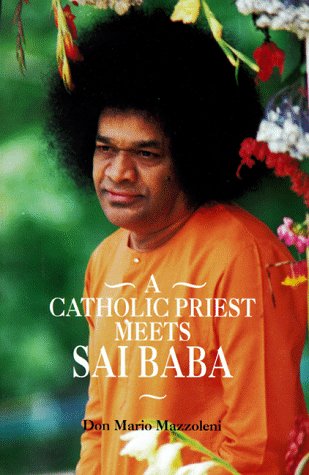
A Catholic Priest Meets Sai Baba
Da: Basement Seller 101, Cincinnati, OH, U.S.A.
Valutazione del venditore 5 su 5 stelle

Paperback. Condizione: Very Good.
-
A Catholic Priest Meets Sai Baba
Da: OUT-OF-THE-WAY BOOKS, North Adams, MI, U.S.A.
Membro dell'associazione: MWABA
Valutazione del venditore 3 su 5 stelle

paperback. Condizione: Very Good. Very good soft cover edition. Signed by Baba on title page. Clean. Tight binding. No markings. 285 pages.
-
A Catholic Priest Meets Sai Baba
Da: Book House in Dinkytown, IOBA, Minneapolis, MN, U.S.A.
Membro dell'associazione: IOBA
Valutazione del venditore 5 su 5 stelle
Paperback. Condizione: Very Good. VG- paperback, excellent reading copy. Spine is uncreased, binding tight and sturdy; text also very good; light wear to edges of wraps; a few faint surface scratches to rear cover. Ships from Dinkytown in Minneapolis, Minnesota.
-
A Catholic Priest Meets Sai Baba
Da: Chaparral Books, Portland, OR, U.S.A.
Membro dell'associazione: CBA
Valutazione del venditore 5 su 5 stelle
Copia autografata
Paperback. Condizione: Very Good. Binding clean & crisp. Inscribed by Sai Baba on title page. Signed by Other.
-
A Catholic Priest Meets Sai Baba
Lingua: Inglese
Editore: Leela Press, Faber, Virginia, 1994
ISBN 10: 0962983519 ISBN 13: 9780962983511
Da: BISON BOOKS - ABAC/ILAB, Winnipeg, MB, Canada
Membro dell'associazione: ABAC ILAB
Valutazione del venditore 4 su 5 stelle

EUR 7,73
Spedizione EUR 7,73
Spedito da Canada a U.S.A.Quantità: 1 disponibili
Aggiungi al carrelloPaperback. pp. 285. 8vo. Light shelfwear, pencil underlining to a few pages, some pages dog-eared; very good. Facsimile of author's signature to title page.
-
A Catholic Priest Meets Sai Baba
Lingua: Inglese
Editore: Sri Sathya Sai Books and Publications Trust, 1998
ISBN 10: 817208188X ISBN 13: 9788172081881
Da: BMV Bookstores, Toronto, ON, Canada
Valutazione del venditore 5 su 5 stelle
Copia autografata
EUR 17,72
Spedizione EUR 11,18
Spedito da Canada a U.S.A.Quantità: 1 disponibili
Aggiungi al carrelloSoft cover. Condizione: Very Good. Signed by Sai Baba on title-page. Paperback. Creasing to paper of spine-- looks like publisher's defect. Inscribed (not by author) to former owner on inside flyleaf, else no notes or highlights. Pages are clean and binding sound. Signed by Author(s).
-

The Metaphysics of Dante's Comedy (American Academy of Religion Reflection and Theory in the Study of Religion)
Libro 18 di 38: AAR Reflection and Theory in the Study of ReligionDa: Dream Books Co., Denver, CO, U.S.A.
Valutazione del venditore 5 su 5 stelle
Condizione: good. Gently used with minimal wear on the corners and cover. A few pages may contain light highlighting or writing, but the text remains fully legible. Dust jacket may be missing, and supplemental materials like CDs or codes may not be included. May be ex-library with library markings. Ships promptly!
-

The Metaphysics of Dante's Comedy (Paperback)
Libro 18 di 38: AAR Reflection and Theory in the Study of ReligionLingua: Inglese
Editore: Oxford University Press Inc, New York, 2008
ISBN 10: 0195372581 ISBN 13: 9780195372588
Da: Grand Eagle Retail, Bensenville, IL, U.S.A.
Valutazione del venditore 5 su 5 stelle
Paperback. Condizione: new. Paperback. Dante's metaphysics--his understanding of reality--is very different from our own. To present Dante's ideas about the cosmos, or God, or salvation, or history, or poetry within the context of post-Enlightenment presuppositions, as is usually done, is thus to capture only imperfectly the essence of those ideas. The recovery of Dante's metaphysics is essential, argues Christian Moevs, if we are to resolve what has been called "the central problem in the interpretationof the Comedy ." That problem is what to make of the Comedy 's claim to the "status of revelation, vision, or experiential record--as something more than imaginative literature." In this book Moevsoffers the first sustained treatment of the metaphysical picture that grounds and motivates the Comedy , and of the relation between those metaphysics and Dante's poetics. He carries this out through a detailed examination of three notoriously complex cantos of the Paradiso , read against the background of the Neoplatonic and Aristotelian tradition from which they arise. Moevs finds the key to the Comedy 's metaphysics and poetics in the concept of creation, which implies three fundamentalinsights into the nature of reality: 1) The world (finite being) is radically contingent, dependent at every instant on what gives it being. 2) The relation between the world and the ground of its being isnon-dualistic. (God is not a thing, and there is nothing the world is "made of") 3) Human beings are radically free, unbound by the limits of nature, and thus can find all of time and space within themselves. These insights are the foundation of the pilgrim Dante's journey from the center of the world to the Empyrean which contains it. For Dante, in sum, what we perceive as reality, the spatio-temporal world, is a creation or projection of conscious being, which can only be known as oneself.Moevs argues that self-knowledge is in fact the keystone of the Aristotelian and Neoplatonic philosophical tradition, and the essence of the Christian revelation in which that tradition culminates. Armedwith this new understanding, Moevs is able to shed light on a series of perennial issues in the interpretation of the Comedy . In particular, it becomes clear that poetry coincides with theology and philosophy in the poem: Dante poeta cannot be distinguished from Dante theologus . The recovery of Dante's metaphysics - which are very different from our own - is essential, argues Christian Moevs, if we are to resolve what has been called "the central problem in the interpretation of the Comedy." That problem is what to make of the Comedy's claim to the status of revelation, vision, or experiential record - as something more than imaginative literature. In this book Moevs offers the first sustained treatment of the metaphysical picture that grounds and motivates the Comedy, and the relation between those metaphysics and Dante's poetics. Moevs arrives at the radical conclusion that Dante believed that all of what we perceive as reality, the spatio-temporal world, is in fact a creation or projection of conscious being. Armed with this new understanding, Moevs is able to shed light on a series of perennial issues in the interpretation of the Comedy. Shipping may be from multiple locations in the US or from the UK, depending on stock availability.
-

Metaphysics of Dante's Comedy
Libro 18 di 38: AAR Reflection and Theory in the Study of ReligionDa: GreatBookPrices, Columbia, MD, U.S.A.
Valutazione del venditore 5 su 5 stelle
EUR 34,65
Spedizione EUR 2,27
Spedito in U.S.A.Quantità: Più di 20 disponibili
Aggiungi al carrelloCondizione: New.
-

Metaphysics of Dante's Comedy
Libro 18 di 38: AAR Reflection and Theory in the Study of ReligionDa: GreatBookPrices, Columbia, MD, U.S.A.
Valutazione del venditore 5 su 5 stelle
EUR 35,15
Spedizione EUR 2,27
Spedito in U.S.A.Quantità: Più di 20 disponibili
Aggiungi al carrelloCondizione: As New. Unread book in perfect condition.
-

The Metaphysics of Dante's Comedy
Libro 18 di 38: AAR Reflection and Theory in the Study of ReligionLingua: Inglese
Editore: Oxford University Press Inc, US, 2008
ISBN 10: 0195372581 ISBN 13: 9780195372588
Da: Rarewaves.com USA, London, LONDO, Regno Unito
Valutazione del venditore 5 su 5 stelle
EUR 38,13
Spedizione gratuita
Spedito da Regno Unito a U.S.A.Quantità: Più di 20 disponibili
Aggiungi al carrelloPaperback. Condizione: New. Dante's metaphysics--his understanding of reality--is very different from our own. To present Dante's ideas about the cosmos, or God, or salvation, or history, or poetry within the context of post-Enlightenment presuppositions, as is usually done, is thus to capture only imperfectly the essence of those ideas. The recovery of Dante's metaphysics is essential, argues Christian Moevs, if we are to resolve what has been called "the central problem in the interpretation of the Comedy ." That problem is what to make of the Comedy 's claim to the "status of revelation, vision, or experiential record--as something more than imaginative literature." In this book Moevs offers the first sustained treatment of the metaphysical picture that grounds and motivates the Comedy , and of the relation between those metaphysics and Dante's poetics. He carries this out through a detailed examination of three notoriously complex cantos of the Paradiso , read against the background of the Neoplatonic and Aristotelian tradition from which they arise. Moevs finds the key to the Comedy 's metaphysics and poetics in the concept of creation, which implies three fundamental insights into the nature of reality: 1) The world (finite being) is radically contingent, dependent at every instant on what gives it being. 2) The relation between the world and the ground of its being is non-dualistic. (God is not a thing, and there is nothing the world is "made of") 3) Human beings are radically free, unbound by the limits of nature, and thus can find all of time and space within themselves. These insights are the foundation of the pilgrim Dante's journey from the center of the world to the Empyrean which contains it. For Dante, in sum, what we perceive as reality, the spatio-temporal world, is a creation or projection of conscious being, which can only be known as oneself. Moevs argues that self-knowledge is in fact the keystone of the Aristotelian and Neoplatonic philosophical tradition, and the essence of the Christian revelation in which that tradition culminates. Armed with this new understanding, Moevs is able to shed light on a series of perennial issues in the interpretation of the Comedy . In particular, it becomes clear that poetry coincides with theology and philosophy in the poem: Dante poeta cannot be distinguished from Dante theologus .
-

A Catholic Priest Meets Sai Baba
Editore: Sri Sathya Sai Books & Publication Trust, 2009
ISBN 10: 8172086636 ISBN 13: 9788172086633
Da: Majestic Books, Hounslow, Regno Unito
Valutazione del venditore 4 su 5 stelle
EUR 22,46
Spedizione EUR 7,51
Spedito da Regno Unito a U.S.A.Quantità: 1 disponibili
Aggiungi al carrelloCondizione: New. pp. [viii] + 282 + [iv].
-
A Catholic Priest Meets Sai Baba
Editore: Sri Sathya Sai Books & Publication Trust, 2009
ISBN 10: 8172086636 ISBN 13: 9788172086633
Da: Books Puddle, New York, NY, U.S.A.
Valutazione del venditore 4 su 5 stelle
Condizione: New. pp. [viii] + 282 + [iv] 1st Deluxe Edition.
-
The Metaphysics of Dante's Comedy (American Academy of Religion Reflection and Theory in the Study of Religion)
Libro 18 di 38: AAR Reflection and Theory in the Study of ReligionDa: Ria Christie Collections, Uxbridge, Regno Unito
Valutazione del venditore 5 su 5 stelle
EUR 34,62
Spedizione EUR 13,84
Spedito da Regno Unito a U.S.A.Quantità: Più di 20 disponibili
Aggiungi al carrelloCondizione: New. In.
-

Metaphysics of Dante's Comedy
Libro 18 di 38: AAR Reflection and Theory in the Study of ReligionDa: Arches Bookhouse, Portland, OR, U.S.A.
Membro dell'associazione: CBA IOBA
Valutazione del venditore 5 su 5 stelle
Hardcover. Condizione: VERY GOOD. 308pp. Perfectbound in black cloth, red foil spine lettering. Ex-library with external labels removed; exceedingly clean and sharp with sound binding and no evidence of use. 'The recovery of Dante's metaphysics - which are very different from our own - is essential, argues Christian Moevs, if we are to resolve what has been called 'the central problem in the interpretation of the Comedy.' That problem is what to make of the Comedy's claim to the status of revelation, vision, or experiential record - as something more than imaginative literature. In this book Moevs offers the first sustained treatment of the metaphysical picture that grounds and motivates the Comedy, and the relation between those metaphysics and Dante's poetics. Moevs arrives at the radical conclusion that Dante believed that all of what we perceive as reality, the spatio-temporal world, is in fact a creation or projection of conscious being. Armed with this new understanding, Moevs is able to shed light on a series of perennial issues in the interpretation of the Comedy.' (Publisher's blurb).
-

The Metaphysics of Dante's Comedy (AAR Reflection and Theory in the Study of Religion)
Libro 18 di 38: AAR Reflection and Theory in the Study of ReligionLingua: Inglese
Editore: Oxford University Press (edition 1), 2005
ISBN 10: 0195174615 ISBN 13: 9780195174618
Da: BooksRun, Philadelphia, PA, U.S.A.
Valutazione del venditore 5 su 5 stelle
Hardcover. Condizione: Very Good. 1. With dust jacket. It's a well-cared-for item that has seen limited use. The item may show minor signs of wear. All the text is legible, with all pages included. It may have slight markings and/or highlighting.
-
Condizione: Good. [ No Hassle 30 Day Returns ][ Ships Daily ] [ Underlining/Highlighting: NONE ] [ Writing: NONE ] [ Edition: Reprint ] Publisher: Oxford Pub Date: 1/1/2005 Binding: hardcover Pages: 307 Reprint edition.
-

Metaphysics of Dante's Comedy
Libro 18 di 38: AAR Reflection and Theory in the Study of ReligionDa: GreatBookPricesUK, Woodford Green, Regno Unito
Valutazione del venditore 5 su 5 stelle
EUR 34,18
Spedizione EUR 17,33
Spedito da Regno Unito a U.S.A.Quantità: Più di 20 disponibili
Aggiungi al carrelloCondizione: New.
-
The Metaphysics of Dante's Comedy (AAR Reflection and Theory in the Study of Religion)
Libro 18 di 38: AAR Reflection and Theory in the Study of ReligionDa: Redux Books, Grand Rapids, MI, U.S.A.
Valutazione del venditore 5 su 5 stelle
Hardcover. Condizione: Very Good. Hardcover with DJ. Pages are clean and unmarked. Covers like new. Binding is tight, hinges strong. Dust jacket very good. APPEARS BARELY USED.; 100% Satisfaction Guaranteed! Ships same or next business day!
-

Metaphysics of Dante's Comedy
Libro 18 di 38: AAR Reflection and Theory in the Study of ReligionDa: GreatBookPricesUK, Woodford Green, Regno Unito
Valutazione del venditore 5 su 5 stelle
EUR 37,59
Spedizione EUR 17,33
Spedito da Regno Unito a U.S.A.Quantità: Più di 20 disponibili
Aggiungi al carrelloCondizione: As New. Unread book in perfect condition.
-
A Catholic Priest Meets Sai Baba
Da: BennettBooksLtd, Los Angeles, CA, U.S.A.
Valutazione del venditore 5 su 5 stelle
paperback. Condizione: New. In shrink wrap. Looks like an interesting title!
-
The Metaphysics of Dante s Comedy
Libro 18 di 38: AAR Reflection and Theory in the Study of ReligionLingua: Inglese
Editore: Oxford University Press Inc, 2008
ISBN 10: 0195372581 ISBN 13: 9780195372588
Da: Kennys Bookstore, Olney, MD, U.S.A.
Valutazione del venditore 5 su 5 stelle
EUR 65,03
Spedizione EUR 9,03
Spedito in U.S.A.Quantità: Più di 20 disponibili
Aggiungi al carrelloCondizione: New. 2008. 1st Edition. Paperback. Num Pages: 324 pages, black & white illustrations. BIC Classification: 2ADT; DSBB; DSC. Category: (UP) Postgraduate, Research & Scholarly. Dimension: 233 x 158 x 17. Weight in Grams: 492. . . . . . Books ship from the US and Ireland.
-
The Metaphysics of Dante's Comedy (AAR Reflection and Theory in the Study of Religion)
Libro 18 di 38: AAR Reflection and Theory in the Study of ReligionDa: Joseph Burridge Books, Dagenham, Regno Unito
Valutazione del venditore 5 su 5 stelle
EUR 53,56
Spedizione EUR 26,58
Spedito da Regno Unito a U.S.A.Quantità: 1 disponibili
Aggiungi al carrelloHardcover. Condizione: Fine. Condizione sovraccoperta: Fine. xii + 308 pages : 24 cm. Offers the sustained treatment of the metaphysical picture that grounds and motivates the Comedy, and the relation between those metaphysics and Dante's poetics. This book arrives at the radical conclusion that Dante believed that all of what we perceive as reality, the spatio-temporal world, is in fact a creation or projection of conscious being.
-
The Metaphysics of Dante's Comedy (Paperback)
Libro 18 di 38: AAR Reflection and Theory in the Study of ReligionLingua: Inglese
Editore: Oxford University Press Inc, New York, 2008
ISBN 10: 0195372581 ISBN 13: 9780195372588
Da: CitiRetail, Stevenage, Regno Unito
Valutazione del venditore 5 su 5 stelle
EUR 39,27
Spedizione EUR 42,76
Spedito da Regno Unito a U.S.A.Quantità: 1 disponibili
Aggiungi al carrelloPaperback. Condizione: new. Paperback. Dante's metaphysics--his understanding of reality--is very different from our own. To present Dante's ideas about the cosmos, or God, or salvation, or history, or poetry within the context of post-Enlightenment presuppositions, as is usually done, is thus to capture only imperfectly the essence of those ideas. The recovery of Dante's metaphysics is essential, argues Christian Moevs, if we are to resolve what has been called "the central problem in the interpretationof the Comedy ." That problem is what to make of the Comedy 's claim to the "status of revelation, vision, or experiential record--as something more than imaginative literature." In this book Moevsoffers the first sustained treatment of the metaphysical picture that grounds and motivates the Comedy , and of the relation between those metaphysics and Dante's poetics. He carries this out through a detailed examination of three notoriously complex cantos of the Paradiso , read against the background of the Neoplatonic and Aristotelian tradition from which they arise. Moevs finds the key to the Comedy 's metaphysics and poetics in the concept of creation, which implies three fundamentalinsights into the nature of reality: 1) The world (finite being) is radically contingent, dependent at every instant on what gives it being. 2) The relation between the world and the ground of its being isnon-dualistic. (God is not a thing, and there is nothing the world is "made of") 3) Human beings are radically free, unbound by the limits of nature, and thus can find all of time and space within themselves. These insights are the foundation of the pilgrim Dante's journey from the center of the world to the Empyrean which contains it. For Dante, in sum, what we perceive as reality, the spatio-temporal world, is a creation or projection of conscious being, which can only be known as oneself.Moevs argues that self-knowledge is in fact the keystone of the Aristotelian and Neoplatonic philosophical tradition, and the essence of the Christian revelation in which that tradition culminates. Armedwith this new understanding, Moevs is able to shed light on a series of perennial issues in the interpretation of the Comedy . In particular, it becomes clear that poetry coincides with theology and philosophy in the poem: Dante poeta cannot be distinguished from Dante theologus . The recovery of Dante's metaphysics - which are very different from our own - is essential, argues Christian Moevs, if we are to resolve what has been called "the central problem in the interpretation of the Comedy." That problem is what to make of the Comedy's claim to the status of revelation, vision, or experiential record - as something more than imaginative literature. In this book Moevs offers the first sustained treatment of the metaphysical picture that grounds and motivates the Comedy, and the relation between those metaphysics and Dante's poetics. Moevs arrives at the radical conclusion that Dante believed that all of what we perceive as reality, the spatio-temporal world, is in fact a creation or projection of conscious being. Armed with this new understanding, Moevs is able to shed light on a series of perennial issues in the interpretation of the Comedy. Shipping may be from our UK warehouse or from our Australian or US warehouses, depending on stock availability.
-
The Metaphysics of Dante?s Comedy
Libro 18 di 38: AAR Reflection and Theory in the Study of ReligionLingua: Inglese
Editore: Oxford University Press Inc, 2008
ISBN 10: 0195372581 ISBN 13: 9780195372588
Da: Kennys Bookshop and Art Galleries Ltd., Galway, GY, Irlanda
Valutazione del venditore 5 su 5 stelle
Prima edizione
EUR 75,37
Spedizione EUR 10,50
Spedito da Irlanda a U.S.A.Quantità: Più di 20 disponibili
Aggiungi al carrelloCondizione: New. 2008. 1st Edition. Paperback. Num Pages: 324 pages, black & white illustrations. BIC Classification: 2ADT; DSBB; DSC. Category: (UP) Postgraduate, Research & Scholarly. Dimension: 233 x 158 x 17. Weight in Grams: 492. . . . . .
-

The Metaphysics of Dante's Comedy
Libro 18 di 38: AAR Reflection and Theory in the Study of ReligionLingua: Inglese
Editore: Oxford University Press Inc, US, 2008
ISBN 10: 0195372581 ISBN 13: 9780195372588
Da: Rarewaves.com UK, London, Regno Unito
Valutazione del venditore 5 su 5 stelle
EUR 34,99
Spedizione EUR 75,12
Spedito da Regno Unito a U.S.A.Quantità: Più di 20 disponibili
Aggiungi al carrelloPaperback. Condizione: New. Dante's metaphysics--his understanding of reality--is very different from our own. To present Dante's ideas about the cosmos, or God, or salvation, or history, or poetry within the context of post-Enlightenment presuppositions, as is usually done, is thus to capture only imperfectly the essence of those ideas. The recovery of Dante's metaphysics is essential, argues Christian Moevs, if we are to resolve what has been called "the central problem in the interpretation of the Comedy ." That problem is what to make of the Comedy 's claim to the "status of revelation, vision, or experiential record--as something more than imaginative literature." In this book Moevs offers the first sustained treatment of the metaphysical picture that grounds and motivates the Comedy , and of the relation between those metaphysics and Dante's poetics. He carries this out through a detailed examination of three notoriously complex cantos of the Paradiso , read against the background of the Neoplatonic and Aristotelian tradition from which they arise. Moevs finds the key to the Comedy 's metaphysics and poetics in the concept of creation, which implies three fundamental insights into the nature of reality: 1) The world (finite being) is radically contingent, dependent at every instant on what gives it being. 2) The relation between the world and the ground of its being is non-dualistic. (God is not a thing, and there is nothing the world is "made of") 3) Human beings are radically free, unbound by the limits of nature, and thus can find all of time and space within themselves. These insights are the foundation of the pilgrim Dante's journey from the center of the world to the Empyrean which contains it. For Dante, in sum, what we perceive as reality, the spatio-temporal world, is a creation or projection of conscious being, which can only be known as oneself. Moevs argues that self-knowledge is in fact the keystone of the Aristotelian and Neoplatonic philosophical tradition, and the essence of the Christian revelation in which that tradition culminates. Armed with this new understanding, Moevs is able to shed light on a series of perennial issues in the interpretation of the Comedy . In particular, it becomes clear that poetry coincides with theology and philosophy in the poem: Dante poeta cannot be distinguished from Dante theologus .
-

Metaphysics Of Dante's Comedy
Libro 18 di 38: AAR Reflection and Theory in the Study of ReligionDa: GreatBookPrices, Columbia, MD, U.S.A.
Valutazione del venditore 5 su 5 stelle
EUR 113,12
Spedizione EUR 2,27
Spedito in U.S.A.Quantità: Più di 20 disponibili
Aggiungi al carrelloCondizione: New.
-

Metaphysics Of Dante's Comedy
Libro 18 di 38: AAR Reflection and Theory in the Study of ReligionDa: GreatBookPrices, Columbia, MD, U.S.A.
Valutazione del venditore 5 su 5 stelle
EUR 119,14
Spedizione EUR 2,27
Spedito in U.S.A.Quantità: Più di 20 disponibili
Aggiungi al carrelloCondizione: As New. Unread book in perfect condition.
-
The Metaphysics of Dante's Comedy (AAR Reflection and Theory in the Study of Religion)
Libro 18 di 38: AAR Reflection and Theory in the Study of ReligionDa: Ria Christie Collections, Uxbridge, Regno Unito
Valutazione del venditore 5 su 5 stelle
EUR 107,66
Spedizione EUR 13,84
Spedito da Regno Unito a U.S.A.Quantità: Più di 20 disponibili
Aggiungi al carrelloCondizione: New. In.
-

Metaphysics Of Dante's Comedy
Libro 18 di 38: AAR Reflection and Theory in the Study of ReligionDa: GreatBookPricesUK, Woodford Green, Regno Unito
Valutazione del venditore 5 su 5 stelle
EUR 107,65
Spedizione EUR 17,33
Spedito da Regno Unito a U.S.A.Quantità: Più di 20 disponibili
Aggiungi al carrelloCondizione: New.


