

Importo totale (1 articolo articoli):
Destinazione ordine:

christophe helmke (8 risultati)
Vai alla pagina principale dei risultati di ricerca
Filtri di ricerca
Tipo di articolo
- Tutti i tipi di prodotto
- Libri (8)
- Riviste e Giornali (Nessun altro risultato corrispondente a questo perfezionamento)
- Fumetti (Nessun altro risultato corrispondente a questo perfezionamento)
- Spartiti (Nessun altro risultato corrispondente a questo perfezionamento)
- Arte, Stampe e Poster (Nessun altro risultato corrispondente a questo perfezionamento)
- Fotografie (Nessun altro risultato corrispondente a questo perfezionamento)
- Mappe (Nessun altro risultato corrispondente a questo perfezionamento)
- Manoscritti e Collezionismo cartaceo (Nessun altro risultato corrispondente a questo perfezionamento)
Condizioni Maggiori informazioni
- Nuovo (7)
- Come nuovo, Ottimo o Quasi ottimo (1)
- Molto buono o Buono (Nessun altro risultato corrispondente a questo perfezionamento)
- Discreto o Mediocre (Nessun altro risultato corrispondente a questo perfezionamento)
- Come descritto (Nessun altro risultato corrispondente a questo perfezionamento)
Legatura
Ulteriori caratteristiche
- Prima ed. (2)
- Copia autograf. (Nessun altro risultato corrispondente a questo perfezionamento)
- Sovracoperta (Nessun altro risultato corrispondente a questo perfezionamento)
- Con foto (3)
- Non Print on Demand (8)
Lingua (2)
Spedizione gratuita
Paese del venditore
Valutazione venditore
-
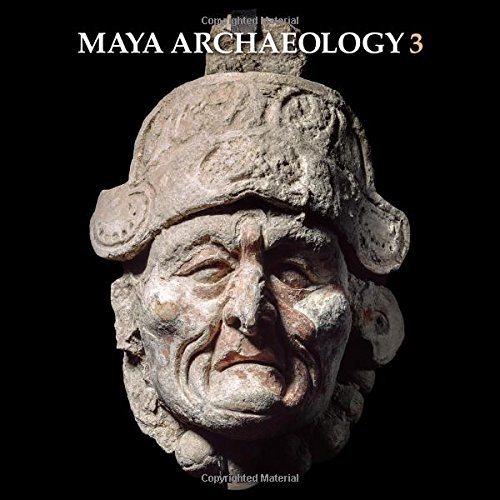
Maya Archaeology 3: Featuring the Grolier Codex
Da: Patrico Books, Apollo Beach, FL, U.S.A.
Valutazione del venditore 5 su 5 stelle

hardcover. Condizione: As New. Chip Breitwieser (illustratore). Ships Out Tomorrow!
-

Western Mesoamerican Calendars and Writing Systems
Prima edizione
paperback. Condizione: New. 1st.
-
Maya Archaeology 3: Featuring the Grolier Codex
Da: Revaluation Books, Exeter, Regno Unito
Valutazione del venditore 5 su 5 stelle
EUR 35,73
Spedizione EUR 17,32
Spedito da Regno Unito a U.S.A.Quantità: 1 disponibili
Aggiungi al carrelloHardcover. Condizione: Brand New. Chip Breitwieser (illustratore). 10.40x10.20x1.00 inches. In Stock.
-

Western Mesoamerican Calendars and Writing Systems (Paperback)
Da: Grand Eagle Retail, Bensenville, IL, U.S.A.
Valutazione del venditore 5 su 5 stelle
Paperback. Condizione: new. Paperback. Western Mesoamerican Calendars and Writing Systems draws together studies by some of the world's leading experts presented at a conference held in December 2020, 'The Origins and Developments of Central Mexican Calendars and Writing Systems'. Mesoamerica is one of the few places to witness the independent invention of writing. From the earliest attestations of this intellectual feat in the Late Preclassic period (c. 900 bc-ad 150), writing spread throughout Mesoamerica, developing and diversifying into a series of distinct and independent scripts. With the exception of the celebrated phonetic decipherments of Maya and Aztec writing, which are now well-documented and can be fully read, most Mesoamerican writing systems remain little studied and undeciphered. This is particularly true of the writing systems of Western Mesoamerica, the topic of this volume. Bringing together new research on Western Mesoamerican writing systems, some contributions focus on specific features of a given writing system, whereas others offer state-of-the-art syntheses of whole writing systems. Two contributions focus on the calendar in particular, and associated notations, as integral parts of writing systems. Chapters are included on the writing system of Teotihuacan, the Nuine writing of the Mixteca Baja and adjoining areas, the writing system of the Epiclassic period and Aztec writing of the Postclassic. These writing systems represent more than a millennium of written records and literacy in Mesoamerica, spanning from the Early Classic to the Late Postclassic (from the 2nd to the sixteenth centuries ad). Aztec writing even continued in use for several decades after the Spanish invasion of Mexico (ad 1519-1521), which saw the introduction of the Latin alphabet and the gradual obsolescence of Mesoamerican logophonetic writing systems. Mesoamerica is one of the few places to witness the independent invention of writing. Bringing together new research, papers discuss the writing systems of Teotihuacan, Mixteca Baja, the Epiclassic period and Aztec writing of the Postclassic. These writing systems represent more than a millennium of written records and literacy in Me Shipping may be from multiple locations in the US or from the UK, depending on stock availability.
-

THE WRITING SYSTEM OF CACAXTLA, TLAXCALA, MEXICO
Editore: Boundary End Archaeology Research Center, Bernardsville,NC, 2011
ISBN 10: 0979105234 ISBN 13: 9780979105234
Da: Libros Latinos, Redlands, CA, U.S.A.
Membro dell'associazione: ABAA ILAB
Valutazione del venditore 4 su 5 stelle

Prima edizione
Staplebound. Condizione: New. First edition. 60 pages, map, illustrations, tables, statistics, wrps, 28 cm. This book offers a well-documented corpus of epiclassic texts, along with a reluctance to consider the writings of central Mexico, from the classic to the post-classic. In addition to logograms, there is extensive use of phonetic signs (volcanic and syllabic signs) among some writing traditions in central Mexico in the late post-classic.
-

Redefining The Epiclassic Period In Mesoamerica: Proceedings Of The Copenhagen Roundtable
Da: Revaluation Books, Exeter, Regno Unito
Valutazione del venditore 5 su 5 stelle
EUR 83,91
Spedizione EUR 14,44
Spedito da Regno Unito a U.S.A.Quantità: 2 disponibili
Aggiungi al carrelloHardcover. Condizione: Brand New. 234 pages. In Stock.
-

Western Mesoamerican Calendars and Writing Systems (Paperback)
Da: AussieBookSeller, Truganina, VIC, Australia
Valutazione del venditore 5 su 5 stelle
EUR 114,00
Spedizione EUR 31,85
Spedito da Australia a U.S.A.Quantità: 1 disponibili
Aggiungi al carrelloPaperback. Condizione: new. Paperback. Western Mesoamerican Calendars and Writing Systems draws together studies by some of the world's leading experts presented at a conference held in December 2020, 'The Origins and Developments of Central Mexican Calendars and Writing Systems'. Mesoamerica is one of the few places to witness the independent invention of writing. From the earliest attestations of this intellectual feat in the Late Preclassic period (c. 900 bc-ad 150), writing spread throughout Mesoamerica, developing and diversifying into a series of distinct and independent scripts. With the exception of the celebrated phonetic decipherments of Maya and Aztec writing, which are now well-documented and can be fully read, most Mesoamerican writing systems remain little studied and undeciphered. This is particularly true of the writing systems of Western Mesoamerica, the topic of this volume. Bringing together new research on Western Mesoamerican writing systems, some contributions focus on specific features of a given writing system, whereas others offer state-of-the-art syntheses of whole writing systems. Two contributions focus on the calendar in particular, and associated notations, as integral parts of writing systems. Chapters are included on the writing system of Teotihuacan, the Nuine writing of the Mixteca Baja and adjoining areas, the writing system of the Epiclassic period and Aztec writing of the Postclassic. These writing systems represent more than a millennium of written records and literacy in Mesoamerica, spanning from the Early Classic to the Late Postclassic (from the 2nd to the sixteenth centuries ad). Aztec writing even continued in use for several decades after the Spanish invasion of Mexico (ad 1519-1521), which saw the introduction of the Latin alphabet and the gradual obsolescence of Mesoamerican logophonetic writing systems. Mesoamerica is one of the few places to witness the independent invention of writing. Bringing together new research, papers discuss the writing systems of Teotihuacan, Mixteca Baja, the Epiclassic period and Aztec writing of the Postclassic. These writing systems represent more than a millennium of written records and literacy in Me Shipping may be from our Sydney, NSW warehouse or from our UK or US warehouse, depending on stock availability.
-

EUR 80,12
Spedizione EUR 65,74
Spedito da Germania a U.S.A.Quantità: 2 disponibili
Aggiungi al carrelloBuch. Condizione: Neu. Neuware - This volume examines the Epiclassic period (ad 550/600-900/1000) in Central Mexico, which has long been viewed as a transitional era marked by societal upheaval and the rise of independent city-states. This period has typically been characterised by shifting settlement patterns, the intensification of militarism, and increased contact with foreign regions, such as the Maya. However, recent scholarship has begun to question these assumptions, prompting renewed interest in this key period. Drawing on a diverse range of archaeological, iconographic and linguistic evidence, the Copenhagen Epiclassic Roundtable aimed to reassess the defining features of this period and evaluate continuities and discontinuities from Classic to Postclassic times. Scholars from diverse disciplines presented evidence from various sites across Central Mexico and adjacent regions to analyse the advent of horizon markers, regional material culture, distinctive artistic styles, the emergence of new political institutions and the complex interplay between conflict and cooperation. They critically address questions regarding militarism, cultural homogeneity and exchange, geopolitical dynamics, trade networks and identity formation processes. The twelve chapters of the volume investigate general issues, site-specific archaeology and thematic contributions as they explore the legacies of Teotihuacan and the impact of Epiclassic developments on the rise of the ensuing high cultures of Central Mexico. By emphasizing the heterogeneity of the Epiclassic landscape, this volume offers a more holistic and nuanced understanding of the complexities and enduring significance of this pivotal period of Mesoamerican history.

