Importo totale (1 articolo articoli):
Destinazione ordine:

contributions c k wilkinson (3 risultati)
Vai alla pagina principale dei risultati di ricerca
Filtri di ricerca
Tipo di articolo
- Tutti i tipi di prodotto
- Libri (3)
- Riviste e Giornali (Nessun altro risultato corrispondente a questo perfezionamento)
- Fumetti (Nessun altro risultato corrispondente a questo perfezionamento)
- Spartiti (Nessun altro risultato corrispondente a questo perfezionamento)
- Arte, Stampe e Poster (Nessun altro risultato corrispondente a questo perfezionamento)
- Fotografie (Nessun altro risultato corrispondente a questo perfezionamento)
- Mappe (Nessun altro risultato corrispondente a questo perfezionamento)
- Manoscritti e Collezionismo cartaceo (Nessun altro risultato corrispondente a questo perfezionamento)
Condizioni Maggiori informazioni
- Nuovo (Nessun altro risultato corrispondente a questo perfezionamento)
- Come nuovo, Ottimo o Quasi ottimo (Nessun altro risultato corrispondente a questo perfezionamento)
- Molto buono o Buono (3)
- Discreto o Mediocre (Nessun altro risultato corrispondente a questo perfezionamento)
- Come descritto (Nessun altro risultato corrispondente a questo perfezionamento)
Legatura
- Tutte
- Rilegato (3)
- Brossura (Nessun altro risultato corrispondente a questo perfezionamento)
Ulteriori caratteristiche
- Prima ed. (2)
- Copia autograf. (Nessun altro risultato corrispondente a questo perfezionamento)
- Sovracoperta (1)
- Con foto (3)
- Non Print on Demand (3)
Lingua (2)
Prezzo
- Qualsiasi prezzo
- Inferiore a EUR 20
- EUR 20 a EUR 45
- Superiore a EUR 45 (Nessun altro risultato corrispondente a questo perfezionamento)
Spedizione gratuita
- Spedizione gratuita in U.S.A. (Nessun altro risultato corrispondente a questo perfezionamento)
Paese del venditore
Valutazione venditore
-
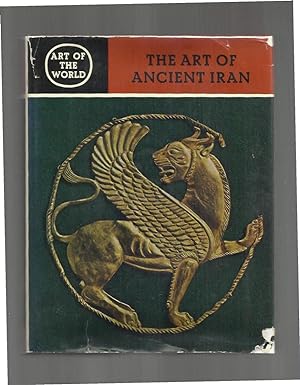
The Art of Ancient Iran Pre-Islamic Cultures
Editore: Crown Publishers, Inc., NY, 1965
Da: Clausen Books, RMABA, Colorado Springs, CO, U.S.A.
Membro dell'associazione: IOBA RMABA
Valutazione del venditore 5 su 5 stelle

Prima edizione
Cloth. Condizione: Very Good. Tipped in Color Plates; Drawings (illustratore). First English Edition. Owner's ink signature on ffep, age toned end papers, else textblock is clean and tight. Curved spine, scuffing to covers, minor wear to corners and spine. 279pp., including bibliography, glossary, and index. Size: 8vo - over 7¾" - 9¾" tall. Hardcover.
-
THE ART OF ANCIENT IRAN: Pre~Islamic Cultures.
Editore: NY etc~.1965. Crown Publishers~Arts Of The World series, 1965
Da: Chris Fessler, Bookseller, Howell, MI, U.S.A.
Valutazione del venditore 5 su 5 stelle
Prima edizione
Hardcover. Condizione: Very Good. Dust Jacket Included. 1st Edition. red, black & gilt decorative hardbound 8vo. ~ 8º (octavo). dustwrapper in protective plastic book jacket cover. vg cond. binding square & tight. covers clean, bit of sunfading along top of front cover. front cover has bottom corner crease & tiny ding in cloth (<.5cm). edges clean. wrinkly spot on front flyleaf from old bookplate (removed), otherwise contents free of all markings. dustwrapper in vg cond. 1" tear on front, corners rubbed away, 1" piece missing on rear, not price clipped. no library markings, store stamps, stickers, no names, inking , underlining, remainder markings etc ~ first edition first printing. full color glossy tipped in plate on title pg. 279p. 61 tipped in plates in full glossy color. 121 b&w illustrations. notes. b&w map. pottery style chart. chronology. bibliography. notes. index. archaeology. art history. ancient history. ancient religion. ancient literature. zoroastrianism. magian religion. ancient persia. ~ The splendid treasures of the Elamites, Medes, Achaemenids and Sassanids are presented in this lavishly illustrated volume, the latest work in the ART OF THE WORLD series. It covers the period from the first prehistoric cultures in what is now Persia up to Sassanid times. Sculpture, pottery, architecture, metalwork, and the minor arts are all treated against the general historical and cultural background, and the result is a lively narrative which will appeal to the general reader as well as to the specialist. Professor Porada discusses those features of Iranian art which seem to have endured through the centuries. Animals were favored as subjects. Their bodies were often transformed into severely formal compositions which nevertheless possess a mysterious life of their own. In them the beholder enjoys pure form and its enlivenment. Information is based on the most recent scientific excavations carried out by America, France, and other nations working with the Archaeological Service of Iran.
-
The Art of Ancient Iran: Pre-Islamic Cultures
Lingua: Inglese
Editore: Crown Publishers, Inc., New York, 1965
Da: Jorge Welsh Books, Lisboa, Portogallo
Valutazione del venditore 5 su 5 stelle
EUR 35,00
Spedizione EUR 60,00
Spedito da Portogallo a U.S.A.Quantità: 1 disponibili
Aggiungi al carrelloHardcover. Condizione: Good. No Jacket. English text.; Hardcover (without dust jacket).; 18.5 x 23.5 cm. 0.9 kg.; 279 pages with colour illustrations.; Used with signs of wear on the exterior, namely edge wear and scuffs and scratches on the front cover, spine and back cover. Interior with a pen written date and islamic text on front free endpaper. The remaining interior is in good condition.; First english edition.; "Iranian art created relatively few works of major importance, but rather many groups of objects, usually small and portable, with great artistic appeal. Animals were favoured as subjects. Their bodies were often transformed into severely formal compositions which nevertheless possess a mysterious life of their own. In them the beholder enjoys pure form and its enlivenment. A large number of the 61 colour plates of this book show such animal representations - boar, ibex and lion-from the various periods of ancient Iranian art. The small number of plates makes it impossible to give a detailed survey of Iranian art from the beginnings to the advent of Islam. For that reason I have limited myself to discussion of those features of Iranian art which seem to have endured through the centuries. To that end an effort was made to choose as far as possible works with similar motifs: mostly animals, but also demonic combinations of animals and man. The most persistent motif is that of two-horned animals flanking a tree. The variant renderings of this and other motifs from the prehistoric period to Sasanian times provide a survey of the changing styles and of their basic traits. As yet the knowledge of Iranian art is uneven, as is the interest in its various phases. While painted prehistoric pottery has been excavated in many different places in western and eastern Iran, the most spectacular finds of metal-work have been made in western Iran, especially in the region south-west of the Caspian Sea. Some phases of Iranian art are more fully illustrated in this book than others: prehistoric pottery, Elamite art of the late second millennium B.C., followed by a brief section on the Luristan bronzes. The last I consider to have been produced in part through stimuli received from Elamite art. Many objects from Hasanlu are illustrated thanks to the generosity of Robert H. Dyson Jr. These illustrations should be useful because the finds of Hasanlu provide a firmer basis for dating related material than any discoveries of earlier excavations in Iran. Also represented in the illustrations are two of the remarkable finds made at Marlik, which have enriched the knowledge of Iranian art with a hitherto unknown phase belonging to the end of the second millennium B.C. Though the chapters on Achaemenid and Sasanian art have most of the illustrations, these are nevertheless merely samples of the rich remains now known from these periods." excerpt from the preface.