
Dalloway james memior (2 risultati)

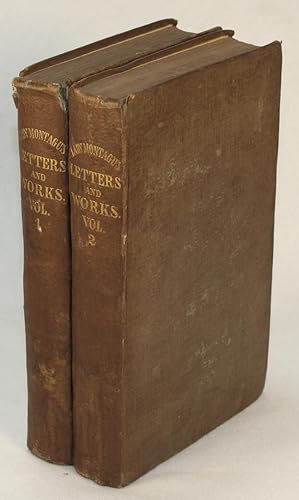
The Letters and Works of Lady Mary Wortley Montagu, in Three Volumes (3 vol. set)
Montagu, Lady Mary Wortley; Lord Wharncliffe (Editor); Dalloway, James (Memior)
Editore: Carey, Lea, and Blanchard, 1837
- Rilegato
Da: Visible Voice Books, Cleveland, OH, U.S.A.Visible Voice Books
Contatta il venditoreVenditore con 5 stelleCondizione: Usato - Molto buono
EUR 45,01
EUR 3,93 spedizioneSpedito in U.S.A.Quantità: 1 disponibili
Hardcover. Condizione: Very Good. Carey, Lea, and Blanchard January 1837 Binding: Hardcover Binding is loose, spines are missing leather, boards. Vol. I front board detached but present. Overall complete set is in poor to fair condition.
 Altre immagini
The Letters and Works of Lady Mary Wortley Montagu
Montagu, Lady Mary Wortley; Lord Wharncliffe (Editor); Dalloway, James (Memior)
Editore: Carey, Lea, and Blanchard, Philadelphia, 1837
Da: Walkabout Books, ABAA, Curtis, WA, U.S.A.Walkabout Books, ABAA
Contatta il venditoreVenditore con 4 stelleCondizione: Usato
EUR 135,03
EUR 5,03 spedizioneSpedito in U.S.A.Quantità: 1 disponibili
First American edition, complete in two volumes. 8vo, pp xlv (memoir of the author by Dalloway), 397 + ads; [13]-444, including index. Robinson (Wayward Woman) says Lady Montagu (1689-1762) was "the first authoress to travel abroad for mere curiosity's sake and call herself, with pride, a traveller," and praises "the unprecedent…ed adventurousness of her journey to Turkey and the skill with which she described its strangeness." She left England with her husband (who had been appointed ambassador to Turkey) in 1716. The journey to Constantinople overland from Holland took them a year, and they remained there for eighteen months. Her letters, circulated in manuscript during her lifetime but published posthumously, "revealed to their readers for the first time what lay behind the jewelled curtain of the East: an it was not at all what they might have expected. The slave of the seraglio, she said, were far less put-upon than servants back home, and Turkish women had far more liberty than English woman. Disguised and unrecognizable in their capes and veils. they lived delicious lives of 'perpetual masquerade': the perfect front for intrigue and adventurism. And far from swooning over the fabled excesses of Turkish life, Lady Mary merely concluded that 'gallantry and good breeding are as different, in different climates, as morality and religion. Who have the rightest notions of both, we shall never know." (Robinson p. 33). Scarce in this edition.
