

Importo totale (1 articolo articoli):
Destinazione ordine:

deane peter baker conor cunningham peter (6 risultati)
Vai alla pagina principale dei risultati di ricerca
Filtri di ricerca
Tipo di articolo
- Tutti i tipi di prodotto
- Libri (6)
- Riviste e Giornali (Nessun altro risultato corrispondente a questo perfezionamento)
- Fumetti (Nessun altro risultato corrispondente a questo perfezionamento)
- Spartiti (Nessun altro risultato corrispondente a questo perfezionamento)
- Arte, Stampe e Poster (Nessun altro risultato corrispondente a questo perfezionamento)
- Fotografie (Nessun altro risultato corrispondente a questo perfezionamento)
- Mappe (Nessun altro risultato corrispondente a questo perfezionamento)
- Manoscritti e Collezionismo cartaceo (Nessun altro risultato corrispondente a questo perfezionamento)
Condizioni Maggiori informazioni
- Nuovo (6)
- Come nuovo, Ottimo o Quasi ottimo (Nessun altro risultato corrispondente a questo perfezionamento)
- Molto buono o Buono (Nessun altro risultato corrispondente a questo perfezionamento)
- Discreto o Mediocre (Nessun altro risultato corrispondente a questo perfezionamento)
- Come descritto (Nessun altro risultato corrispondente a questo perfezionamento)
Legatura
- Tutte
- Rilegato (Nessun altro risultato corrispondente a questo perfezionamento)
- Brossura (6)
Ulteriori caratteristiche
- Prima ed. (Nessun altro risultato corrispondente a questo perfezionamento)
- Copia autograf. (Nessun altro risultato corrispondente a questo perfezionamento)
- Sovracoperta (Nessun altro risultato corrispondente a questo perfezionamento)
- Con foto (2)
- Non Print on Demand (3)
Lingua (1)
Prezzo
- Qualsiasi prezzo
- Inferiore a EUR 20 (Nessun altro risultato corrispondente a questo perfezionamento)
- EUR 20 a EUR 45
- Superiore a EUR 45
Spedizione gratuita
Paese del venditore
Valutazione venditore
-

EUR 28,36
Spedizione gratuita
Spedito in U.S.A.Quantità: Più di 20 disponibili
Aggiungi al carrelloPaperback. Condizione: New. In recent philosophical discourse, there has been a proliferation of work in the field of philosophy of religion, and in particular at the intersection between epistemology and philosophy of religion. Much of that interest has centred on the emergence of what has come to be known as 'Reformed Epistemology'. The central claim of Reformed epistemologists is that belief in God is properly basic. The purpose of the arguments offered by Reformed epistemologists is to oppose what Plantinga calls the 'de jure' objection to theistic belief - the idea that it is somehow irrational, a dereliction of epistemic duty, or in some other sense epistemically unacceptable, to believe in God. This objection is distinct from what Plantinga labels the 'de facto' objection - the objection that, whatever the rational status of belief in God, it is, in fact, a false belief. The primary goal of Reformed epistemology, then, is to defend Christian belief against the de jure objection, thereby showing that everything really depends on the truth of Christian belief. This book demonstrates the feasibility of combining the Reformed epistemologist's position with an argument for theism that the author draws from Charles Taylor's work. In it, he shows the value that would be added to the Reformed epistemologist's position by such a combination.
-
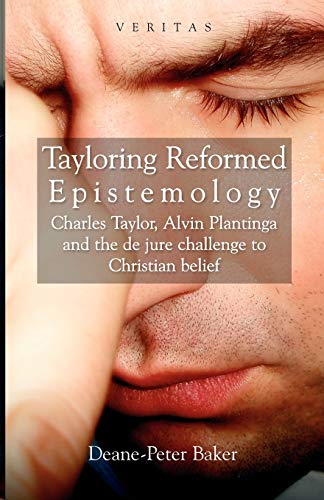
Tayloring Reformed Epistemology: Charles Taylor,Alvin Plantinga and the de jure challenge to Christian Belief (Veritas)
Da: Chiron Media, Wallingford, Regno Unito
Valutazione del venditore 5 su 5 stelle

EUR 28,51
Spedizione EUR 17,76
Spedito da Regno Unito a U.S.A.Quantità: 10 disponibili
Aggiungi al carrelloPaperback. Condizione: New.
-

Tayloring Reformed Epistemology
Da: Rarewaves USA United, OSWEGO, IL, U.S.A.
Valutazione del venditore 5 su 5 stelle
EUR 29,90
Spedizione EUR 43,01
Spedito in U.S.A.Quantità: Più di 20 disponibili
Aggiungi al carrelloPaperback. Condizione: New. In recent philosophical discourse, there has been a proliferation of work in the field of philosophy of religion, and in particular at the intersection between epistemology and philosophy of religion. Much of that interest has centred on the emergence of what has come to be known as 'Reformed Epistemology'. The central claim of Reformed epistemologists is that belief in God is properly basic. The purpose of the arguments offered by Reformed epistemologists is to oppose what Plantinga calls the 'de jure' objection to theistic belief - the idea that it is somehow irrational, a dereliction of epistemic duty, or in some other sense epistemically unacceptable, to believe in God. This objection is distinct from what Plantinga labels the 'de facto' objection - the objection that, whatever the rational status of belief in God, it is, in fact, a false belief. The primary goal of Reformed epistemology, then, is to defend Christian belief against the de jure objection, thereby showing that everything really depends on the truth of Christian belief. This book demonstrates the feasibility of combining the Reformed epistemologist's position with an argument for theism that the author draws from Charles Taylor's work. In it, he shows the value that would be added to the Reformed epistemologist's position by such a combination.
-
Tayloring Reformed Epistemology
Da: Majestic Books, Hounslow, Regno Unito
Valutazione del venditore 4 su 5 stelle

EUR 77,15
Spedizione EUR 7,45
Spedito da Regno Unito a U.S.A.Quantità: 4 disponibili
Aggiungi al carrelloCondizione: New. Print on Demand pp. 242.
-
Tayloring Reformed Epistemology
Da: Books Puddle, New York, NY, U.S.A.
Valutazione del venditore 4 su 5 stelle
Condizione: New. Print on Demand pp. 242.
-
Tayloring Reformed Epistemology
Da: Biblios, Frankfurt am main, HESSE, Germania
Valutazione del venditore 4 su 5 stelle
EUR 77,93
Spedizione EUR 9,95
Spedito da Germania a U.S.A.Quantità: 4 disponibili
Aggiungi al carrelloCondizione: New. PRINT ON DEMAND pp. 242.

