

Importo totale (1 articolo articoli):
Destinazione ordine:

edited vinson brown (5 risultati)
Vai alla pagina principale dei risultati di ricerca
Filtri di ricerca
Tipo di articolo
- Tutti i tipi di prodotto
- Libri (5)
- Riviste e Giornali (Nessun altro risultato corrispondente a questo perfezionamento)
- Fumetti (Nessun altro risultato corrispondente a questo perfezionamento)
- Spartiti (Nessun altro risultato corrispondente a questo perfezionamento)
- Arte, Stampe e Poster (Nessun altro risultato corrispondente a questo perfezionamento)
- Fotografie (Nessun altro risultato corrispondente a questo perfezionamento)
- Mappe (Nessun altro risultato corrispondente a questo perfezionamento)
- Manoscritti e Collezionismo cartaceo (Nessun altro risultato corrispondente a questo perfezionamento)
Condizioni Maggiori informazioni
- Nuovo (Nessun altro risultato corrispondente a questo perfezionamento)
- Come nuovo, Ottimo o Quasi ottimo (Nessun altro risultato corrispondente a questo perfezionamento)
- Molto buono o Buono (3)
- Discreto o Mediocre (1)
- Come descritto (1)
Legatura
- Tutte
- Rilegato (Nessun altro risultato corrispondente a questo perfezionamento)
- Brossura (5)
Ulteriori caratteristiche
- Prima ed. (2)
- Copia autograf. (1)
- Sovracoperta (Nessun altro risultato corrispondente a questo perfezionamento)
- Con foto (3)
- Non Print on Demand (5)
Lingua (1)
Spedizione gratuita
Paese del venditore
Valutazione venditore
-

Tapestries in Sand: The Spirit of Indian Sandpainting
Editore: Naturecraft Company, 1963
Da: Books From California, Simi Valley, CA, U.S.A.
Valutazione del venditore 4 su 5 stelle

paperback. Condizione: Good. Cover /edges have light wear. Pages are clean/intact.
-

COMMON SEASHORE LIFE OF SOUTHERN CALIFORNIA (NATUREGRAPH OCEAN GUIDEBOOKS, VOL. 1)
Editore: Naturegraph Co., Healdsburg, California, 1961
Da: Champ & Mabel Collectibles, San Pedro, CA, U.S.A.
Membro dell'associazione: ESA IOBA
Valutazione del venditore 5 su 5 stelle

Softcover. Condizione: Very good. 65p. Cover rubbed and lightly soiled. Plants and animals found along the Southern California coast are described and illustrated in black & white. Includes bibliographical references. B&w illustrations and photographs. (8-3/8"x5-3/8").
-
BIRDING in the BAY AREA Good Localities and Trips for Bird Observing, Plus Check List
Da: marvin granlund, Emeryville, CA, U.S.A.
Membro dell'associazione: IOBA
Valutazione del venditore 5 su 5 stelle
Stapled wraps. Naturegraph Co. (Healdsburg), c1966, stapled pictorial wraps, Near Fine, no edition stated, NAP, 20 pages, BIRDS BIRDWATCHING [file nh bx]; E2355 A3A.
-

Songs of the Yokuts and Paiutes
Editore: Naturegraph, Healdsburg, California, 1965
Da: Fox & Hedgehog, Moraga, CA, U.S.A.
Valutazione del venditore 5 su 5 stelle
Prima edizione
Softcover. Condizione: Fair. B&W photos (illustratore). Later re-issue under a slightly different title included a CD of the songs, but of course this 1965 original publication ***doesn't include a CD.*** Condition "Fair only," as the text block has detached from the cover at the spine. Pencil mark and rubber stamp corner title page, else no marks. Covers toned, but little wear.
-
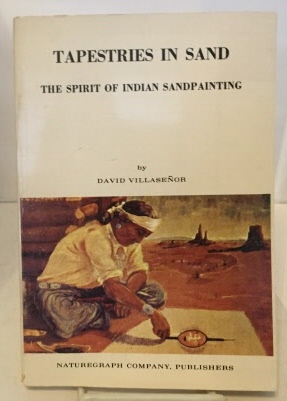
Tapestries In Sand The Spirit of Indian Sandpainting
Editore: Naturegraph Company, Healdsburg, CA, 1963
Da: S. Howlett-West Books (Member ABAA), Modesto, CA, U.S.A.
Membro dell'associazione: ABAA ILAB
Valutazione del venditore 5 su 5 stelle
Prima edizione Copia autografata
Paperback. Condizione: Very Good+. 1st Edition; 1st Printing. B&W and Color Illustrations; Signed by the author. This is a trade sized paperback book. The book is in Very Good+ condition and was issued without a dust jacket. The book covers have some light bumping, rubbing, and one small tear to the bottom front spine joint. The text pages are clean and bright. This copy has been signed by the author, with a short inscription by the author. "Born in Guadalajara to Indian and Spanish parents, he spent his early and troubled years in a Boy's Town-type school in Sonora. When he was 16 he came to the United States, where he lived with the Navajos in Santa Fe, N. M. There he learned the mechanics and spiritual symbolism of sand painting. His work was seen by Ernest Thompson Seton, the naturalist and artist who helped found the Boy Scouts of America. Seton asked if Villasenor would help teach other boys to design in the sand. Seton placed the young Villasenor in his College of Indian Wisdom in Santa Fe, where the young artist taught in exchange for room and board. Drafted into the Army in World War II, Villasenor was used to make medical sculptures and moulages--direct impressions from living tissue. After the war the Natural History Museum of New York gave him a commission for 20 sand paintings, a ritual art traditionally done on the ground with most lasting but a single day. Villasenor learned to mount them permanently and 10 of the 20 were later purchased by the Southwest Museum near downtown Los Angeles. The rest were sold to the Neiman-Marcus store in Dallas. His later work was displayed throughout the West, while two of his 12-foot, 600-pound Aztec calendars are shown permanently at the Los Angeles County Museum of Natural History and the Plaza de la Raza in Lincoln Park. One of his last works was a 10-foot-high figure of the Indian Chief Sequoyah, which he gave to the Cherokee Nation." (Los Angeles Times) ; Signed by Author.


