Search preferences
Vai alla pagina principale dei risultati di ricerca

Filtri di ricerca

Tipo di articolo

  • Tutti i tipi di prodotto 
  • Libri (3)
  • Riviste e Giornali (Nessun altro risultato corrispondente a questo perfezionamento)
  • Fumetti (Nessun altro risultato corrispondente a questo perfezionamento)
  • Spartiti (Nessun altro risultato corrispondente a questo perfezionamento)
  • Arte, Stampe e Poster (Nessun altro risultato corrispondente a questo perfezionamento)
  • Fotografie (Nessun altro risultato corrispondente a questo perfezionamento)
  • Mappe (Nessun altro risultato corrispondente a questo perfezionamento)
  • Manoscritti e Collezionismo cartaceo (Nessun altro risultato corrispondente a questo perfezionamento)

Condizioni Maggiori informazioni

  • Nuovo (1)
  • Come nuovo, Ottimo o Quasi ottimo (Nessun altro risultato corrispondente a questo perfezionamento)
  • Molto buono o Buono (2)
  • Discreto o Mediocre (Nessun altro risultato corrispondente a questo perfezionamento)
  • Come descritto (Nessun altro risultato corrispondente a questo perfezionamento)

Ulteriori caratteristiche

Lingua (1)

Prezzo

Fascia di prezzo personalizzata (EUR)

Spedizione gratuita

  • Spedizione gratuita in U.S.A. (Nessun altro risultato corrispondente a questo perfezionamento)

Paese del venditore

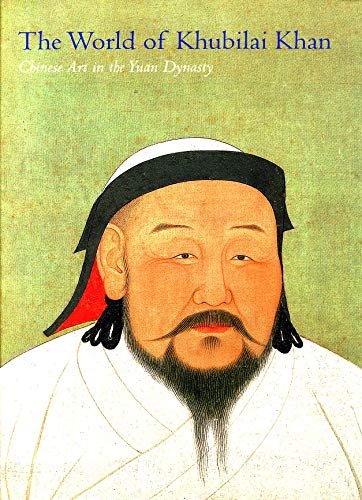
  • Watt, James C. Y.; essays by Hearn, Maxwell K.; Leidy, Denise Patry; Sun, Zhixin Jason; Guy, John.

    Lingua: Inglese

    Editore: Metropolitan Museum Of Art, 2010

    ISBN 10: 1588394034 ISBN 13: 9781588394033

    Da: Infinite Minds, Greenfield, MA, U.S.A.

    Valutazione del venditore 5 su 5 stelle 5 stelle, Maggiori informazioni sulle valutazioni dei venditori

    Contatta il venditore

    EUR 54,30

    Spedizione EUR 3,46
    Spedito in U.S.A.

    Quantità: 1 disponibili

    Aggiungi al carrello

    Paperback. Condizione: New. New - unused and unread.

  • Immagine del venditore per China: Dawn of a Golden Age, 200-750 AD venduto da Jorge Welsh Books

    EUR 25,00

    Spedizione EUR 60,00
    Spedito da Portogallo a U.S.A.

    Quantità: 1 disponibili

    Aggiungi al carrello

    Hardcover. Condizione: Good. Dust Jacket Included. 1st Edition. English text.; Hardcover (with dust jacket).; 24 x 31.5 cm.; 2.3 kg.; 416 pages with 514 illustrations, of which 479 are in colour plus 8 maps.; Used with signs of wear on the exterior and interior. The dust jacket shows edge wear, scuffs and scratches on the front cover, spine and back cover and a small tear at the top of the spine. Minor signs of wear on the interior.; Catalogue from the exhibition "China: Dawn of a Golden Age, 200-750 AD," held at The Metropolitan Museum of Art, New York, October 12, 2004-January 23, 2005.; The Han (221 B.C.-A.D. 206) and Tang (618-907) dynasties mark the two great eras of early imperial China. From the fall of the Han at the turn of the third century to reunification under the Sui in the seventh, the country experienced devastation from war and social upheaval. It was also, however, a period of creativity and cultural change. The political fragmentation that occurred between the dynasties and the massive migration of nomadic peoples into China resulted in contact with every part of Asia and the introduction of foreign ideas, religions, and art forms and motifs. An important aspect of the cultural exchange that took place at this time was the spread of Buddhism in China. By the Tang dynasty, thousands of foreigners were traveling to the capital, Chang'an, which flourished as a great cosmopolitan center of world commerce and culture. The integration of foreign motifs and styles with the traditional arts of China is the focus of this catalogue and the landmark exhibition that it accompanies, "China: Dawn of a Golden Age, 200-750 AD," held at The Metropolitan Museum of Art. The exhibition com- prises some three hundred objects, most of them excavated in recent years and many never before seen out- side China. Each work is discussed in terms of its aesthetic qualities and art-historical significance and in the context of the philosophical and religious ideas that are reflected in iconography and style. In an introductory essay, James C. Y. Watt, Brooke Russell Astor Chairman, Department of Asian Art, at The Metropolitan Museum of Art, discusses the art and history of the entire period. Essays by both Chinese and Western scholars explore important aspects of metalwork, glass, and textiles, as well as the development of Buddhist art in China.

  • Immagine del venditore per The Great Bronze Age of China: An Exhibition from the People's Republic of China venduto da Jorge Welsh Books

    EUR 25,00

    Spedizione EUR 60,00
    Spedito da Portogallo a U.S.A.

    Quantità: 1 disponibili

    Aggiungi al carrello

    Hardcover. Condizione: Good. Dust Jacket Included. English text.; Hardcover (with dust jacket).; 24 x 31 cm.; 2.2 kg.; 386 pages with 121 colour and 130 black and white illustrations plus 10 maps. Includes loose map of China's Administrative Divisions.; ISBN 0-394-51256.; Used with signs of wear on the exterior and interior. The front cover has scratches and wear marks throughout and a tear at the top. Two scratches on the front cover. The spine is scuffed on the top and bottom. Wear marks on the back cover. Interior in very good condition with minor signs of wear.; Catalogue from an exhibition held at The Metropolitan Museum of Art, New York, April 12-July 9, 1980; Field Museum of Natural History, Chicago, August 20-October 29, 1980; Kimbell Art Museum, Fort Worth, December 10, 1980-February 18, 1981; Los Angeles County Museum of Art, April 1-June 10, 1981; Museum of Fine Arts, Boston, July 22-September 30, 1981.;Here, in one magnificent volume, in authoritative text and color photographs of unparalleled richness, is the first com- prehensive view of China's Bronze Age. From random discoveries over the centuries, from legends and written records that seem scarcely removed from the realm of legend, and from a few limited excavations, the Bronze Age in China has long been thought to be one of the great epochs in the history of art. Now, thanks to astonishing recent finds by Chinese archaeologists, those legendary glories have become reality. The evidence is here, in this book and in the unprecedented exhibition on which it is based-105 precious objects in bronze, jade, and terracotta, chosen by the People's Republic of China from among the finest and most spectacular discoveries of recent years, and now seen for the first time outside their land of origin. Beginning with the shadowy Xia dynasty (which traditional chronology dates from 2205 to 1760 B.C.), coming into full flower in the Shang (now dated from about 1700 to about 1030 B.C.) and the Zhou (about 1030. to 256 B.C.), and lingering on through the Qin (221 to 206 B.C.) and into the Han that followed, the Chinese Bronze Age saw the development of the Chinese state, of writing and religious rituals, of architectural styles and urban culture. It also and pre- eminently-saw the rise and refinement of bronze metallurgy, and the works of art that were its highest expression. No other people on earth has ever created such bronzes. The group shown and discussed here-ritual vessels, weapons, bronze standards, even a complete set of fourteen exquisite bells- may be the most impressive ever assembled, and includes discoveries so recent that they are virtually unknown even to scholars. Here are jars and cups in the shapes of rhinos and elephants and bulls and rams, surfaces inlaid with jade and malachite and precious metals, weapons echoing with the clangor of ancient wars. Here, too, is a splendid array of carved jade pieces-ceremonial blades and tablets, figurines, jewelry. And there is more. Possibly the most stunning archaeological find of the twentieth century occurred in 1974, when excavation began in the huge mausoleum of Qin Shihuangdi, the First Emperor of Qin, who died in 210 B.C. after unifying China for the first time in history. Diggers came upon an entire army-no less than seven thousand life-size terracotta figures of soldiers, cavalrymen, and horses, with chariots and other battle gear, still standing, rank after rank, as they had been buried as a guard for their dead emperor more than two thousand years before. Individually modeled with great sensitivity and realism, they evoke their lost world with almost painful immediacy. Eight of them-six men and two horses- are included here, the first to be placed on exhibit anywhere outside China.