Importo totale (1 articolo articoli):
Destinazione ordine:

fordham graham (87 risultati)
Vai alla pagina principale dei risultati di ricerca
Filtri di ricerca
Tipo di articolo
- Tutti i tipi di prodotto
- Libri (87)
- Riviste e Giornali (Nessun altro risultato corrispondente a questo perfezionamento)
- Fumetti (Nessun altro risultato corrispondente a questo perfezionamento)
- Spartiti (Nessun altro risultato corrispondente a questo perfezionamento)
- Arte, Stampe e Poster (Nessun altro risultato corrispondente a questo perfezionamento)
- Fotografie (Nessun altro risultato corrispondente a questo perfezionamento)
- Mappe (Nessun altro risultato corrispondente a questo perfezionamento)
- Manoscritti e Collezionismo cartaceo (Nessun altro risultato corrispondente a questo perfezionamento)
Condizioni Maggiori informazioni
- Nuovo (73)
- Come nuovo, Ottimo o Quasi ottimo (10)
- Molto buono o Buono (4)
- Discreto o Mediocre (Nessun altro risultato corrispondente a questo perfezionamento)
- Come descritto (Nessun altro risultato corrispondente a questo perfezionamento)
Legatura
Ulteriori caratteristiche
- Prima ed. (3)
- Copia autograf. (Nessun altro risultato corrispondente a questo perfezionamento)
- Sovracoperta (1)
- Con foto (37)
- Non Print on Demand (64)
Lingua (2)
Spedizione gratuita
Paese del venditore
Valutazione venditore
-

A New Look At Thai Aids: Perspectives from the Margin
Lingua: Inglese
Editore: Berghahn Books, Incorporated, 2004
ISBN 10: 1571815198 ISBN 13: 9781571815194
Da: Bill & Ben Books, Faringdon, Regno Unito
Valutazione del venditore 5 su 5 stelle

EUR 5,96
Spedizione EUR 11,70
Spedito da Regno Unito a U.S.A.Quantità: 1 disponibili
Aggiungi al carrelloHardback. Condizione: New. Following the detection of the first HIV infections in the early 1980s, by the 1990s Thailand was routinely depicted as having the world's fastest moving HIV/AIDS epidemic. However, by the early 2000's the bulk of scholarly and medical AIDS literature portrayed the epidemic as being largely under control, and claimed that Thai AIDS prevention efforts during the 1990s had been successful. Based on long-term ethnographic research conducted in Northern Thailand this book makes an in-depth study of the social construction of Thailand's HIV/AIDS epidemic over this period. In addition to his own field research the author draws on an extensive corpus of English and Thai language social science and medical HIV/AIDS literature to examine the modeling of Thailand's AIDS epidemic, and addresses concepts and issues such as risk groups, risk behaviour, alcohol use, gender and class, masculinity, the scapegoating of female prostitutes and men in the underclass, the reporting of the HIV/AIDS epidemic in Thailand's indigenous Thai language media, and sexual activity amongst Thai youth. The analysis demonstrates the contribution of anthropology as an interpretative social science, and the use of anthropological theory and research methods, to finding alternative ways of framing the problems of Thai AIDS and of posing new questions that will lead to more effective points of intervention. It emphasises the necessity for critically reflexive approaches that question the 'taken for granted' and demonstrates how qualitative research techniques guided by social theory have the potential to take account of local meanings in complex social contexts where traditional values and cultural practices are rapidly transforming due to economic and social change. The book offers a sustained and powerful criticism of the limitations of the normative model of the Thai AIDS epidemic and, in its aim of promoting critically reflexive AIDS research techniques in order to produce a better understanding of issues 'on the ground' and hence better health policy and more effective AIDS interventions, speaks not only to the Thai AIDS epidemic but to AIDS epidemics throughout Southeast Asia and elsewhere. This is the only English language study of Thailand's HIV/AIDS epidemic to draw on long-term qualitative research in Northern Thailand as well as on a broad range of Thai (and some Khmer language) materials. Its contextualised and subtly nuanced analysis of the AIDS epidemic and of the impact of AIDS control initiatives, in concert with the theoretical and methodological contributions it makes to AIDS research and policy and behavioural interventions, makes it a timely publication of vital interest to scholars in the social sciences, as well as to the members of non-governmental organisations and international organisations working in the HIV/AIDS, health and development fields.
-

A New Look At Thai Aids: Perspectives from the Margin
Da: Bill & Ben Books, Faringdon, Regno Unito
Valutazione del venditore 5 su 5 stelle
EUR 5,96
Spedizione EUR 11,70
Spedito da Regno Unito a U.S.A.Quantità: 1 disponibili
Aggiungi al carrelloPaperback. Condizione: New. Following the detection of the first HIV infections in the early 1980s, by the 1990s Thailand was routinely depicted as having the world's fastest moving HIV/AIDS epidemic. However, by the early 2000's the bulk of scholarly and medical AIDS literature portrayed the epidemic as being largely under control, and claimed that Thai AIDS prevention efforts during the 1990s had been successful. Based on long-term ethnographic research conducted in Northern Thailand this book makes an in-depth study of the social construction of Thailand's HIV/AIDS epidemic over this period. In addition to his own field research the author draws on an extensive corpus of English and Thai language social science and medical HIV/AIDS literature to examine the modeling of Thailand's AIDS epidemic, and addresses concepts and issues such as risk groups, risk behaviour, alcohol use, gender and class, masculinity, the scapegoating of female prostitutes and men in the underclass, the reporting of the HIV/AIDS epidemic in Thailand's indigenous Thai language media, and sexual activity amongst Thai youth. The analysis demonstrates the contribution of anthropology as an interpretative social science, and the use of anthropological theory and research methods, to finding alternative ways of framing the problems of Thai AIDS and of posing new questions that will lead to more effective points of intervention. It emphasises the necessity for critically reflexive approaches that question the 'taken for granted' and demonstrates how qualitative research techniques guided by social theory have the potential to take account of local meanings in complex social contexts where traditional values and cultural practices are rapidly transforming due to economic and social change. The book offers a sustained and powerful criticism of the limitations of the normative model of the Thai AIDS epidemic and, in its aim of promoting critically reflexive AIDS research techniques in order to produce a better understanding of issues 'on the ground' and hence better health policy and more effective AIDS interventions, speaks not only to the Thai AIDS epidemic but to AIDS epidemics throughout Southeast Asia and elsewhere. This is the only English language study of Thailand's HIV/AIDS epidemic to draw on long-term qualitative research in Northern Thailand as well as on a broad range of Thai (and some Khmer language) materials. Its contextualised and subtly nuanced analysis of the AIDS epidemic and of the impact of AIDS control initiatives, in concert with the theoretical and methodological contributions it makes to AIDS research and policy and behavioural interventions, makes it a timely publication of vital interest to scholars in the social sciences, as well as to the members of non-governmental organisations and international organisations working in the HIV/AIDS, health and development fields.
-
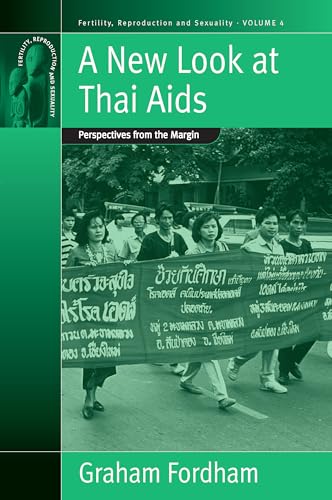
A New Look At Thai Aids
Da: PBShop.store UK, Fairford, GLOS, Regno Unito
Valutazione del venditore 5 su 5 stelle
EUR 33,53
Spedizione EUR 5,82
Spedito da Regno Unito a U.S.A.Quantità: 15 disponibili
Aggiungi al carrelloPAP. Condizione: New. New Book. Shipped from UK. Established seller since 2000.
-
New Look at Thai AIDS : Perspectives from the Margin
Da: GreatBookPrices, Columbia, MD, U.S.A.
Valutazione del venditore 5 su 5 stelle
EUR 37,23
Spedizione EUR 2,32
Spedito in U.S.A.Quantità: Più di 20 disponibili
Aggiungi al carrelloCondizione: New.
-
A New Look at Thai AIDS
Da: PBShop.store US, Wood Dale, IL, U.S.A.
Valutazione del venditore 5 su 5 stelle
PAP. Condizione: New. New Book. Shipped from UK. Established seller since 2000.
-

EUR 42,15
Spedizione gratuita
Spedito in U.S.A.Quantità: Più di 20 disponibili
Aggiungi al carrelloPaperback. Condizione: New. Following the detection of the first HIV infections in the early 1980s, by the 1990s Thailand was routinely depicted as having the world's fastest moving HIV/AIDS epidemic. However, by the early 2000's the bulk of scholarly and medical AIDS literature portrayed the epidemic as being largely under control, and claimed that Thai AIDS prevention efforts during the 1990s had been successful. Based on long-term ethnographic research conducted in Northern Thailand this book makes an in-depth study of the social construction of Thailand's HIV/AIDS epidemic over this period. In addition to his own field research the author draws on an extensive corpus of English and Thai language social science and medical HIV/AIDS literature to examine the modeling of Thailand's AIDS epidemic, and addresses concepts and issues such as risk groups, risk behaviour, alcohol use, gender and class, masculinity, the scapegoating of female prostitutes and men in the underclass, the reporting of the HIV/AIDS epidemic in Thailand's indigenous Thai language media, and sexual activity amongst Thai youth. The analysis demonstrates the contribution of anthropology as an interpretative social science, and the use of anthropological theory and research methods, to finding alternative ways of framing the problems of Thai AIDS and of posing new questions that will lead to more effective points of intervention. It emphasises the necessity for critically reflexive approaches that question the 'taken for granted' and demonstrates how qualitative research techniques guided by social theory have the potential to take account of local meanings in complex social contexts where traditional values and cultural practices are rapidly transforming due to economic and social change. The book offers a sustained and powerful criticism of the limitations of the normative model of the Thai AIDS epidemic and, in its aim of promoting critically reflexive AIDS research techniques in order to produce a better understanding of issues 'on the ground' and hence better health policy and more effective AIDS interventions, speaks not only to the Thai AIDS epidemic but to AIDS epidemics throughout Southeast Asia and elsewhere.This is the only English language study of Thailand's HIV/AIDS epidemic to draw on long-term qualitative research in Northern Thailand as well as on a broad range of Thai (and some Khmer language) materials. Its contextualised and subtly nuanced analysis of the AIDS epidemic and of the impact of AIDS control initiatives, in concert with the theoretical and methodological contributions it makes to AIDS research and policy and behavioural interventions, makes it a timely publication of vital interest to scholars in the social sciences, as well as to the members of non-governmental organisations and international organisations working in the HIV/AIDS, health and development fields.
-
Some Flowers
Lingua: Inglese
Editore: Pavilion Books in association with The National Trust, 1993
Da: Ironwood Books, Tucson, AZ, U.S.A.
Valutazione del venditore 5 su 5 stelle
Prima edizione
Hardcover. Condizione: Fine. Condizione sovraccoperta: Fine. David FORDHAM; Graham RUST (illustratore). 1st Edition. First Edition thus. DJ and initial sales price intact (£12.99); design by David Fordham. Illustrated with 28 color plates by Graham RUST. Unmarked pages. Protected in an archival wrapper. More images and/or description can be sent on request. Condition: Fine in a Fine DJ.
-
New Look at Thai AIDS : Perspectives from the Margin
Da: GreatBookPrices, Columbia, MD, U.S.A.
Valutazione del venditore 5 su 5 stelle
EUR 40,16
Spedizione EUR 2,32
Spedito in U.S.A.Quantità: Più di 20 disponibili
Aggiungi al carrelloCondizione: As New. Unread book in perfect condition.
-

A New Look At Thai Aids
Da: Rarewaves.com USA, London, LONDO, Regno Unito
Valutazione del venditore 5 su 5 stelle
EUR 42,75
Spedizione gratuita
Spedito da Regno Unito a U.S.A.Quantità: 13 disponibili
Aggiungi al carrelloPaperback. Condizione: New. Following the detection of the first HIV infections in the early 1980s, by the 1990s Thailand was routinely depicted as having the world's fastest moving HIV/AIDS epidemic. However, by the early 2000's the bulk of scholarly and medical AIDS literature portrayed the epidemic as being largely under control, and claimed that Thai AIDS prevention efforts during the 1990s had been successful. Based on long-term ethnographic research conducted in Northern Thailand this book makes an in-depth study of the social construction of Thailand's HIV/AIDS epidemic over this period. In addition to his own field research the author draws on an extensive corpus of English and Thai language social science and medical HIV/AIDS literature to examine the modeling of Thailand's AIDS epidemic, and addresses concepts and issues such as risk groups, risk behaviour, alcohol use, gender and class, masculinity, the scapegoating of female prostitutes and men in the underclass, the reporting of the HIV/AIDS epidemic in Thailand's indigenous Thai language media, and sexual activity amongst Thai youth. The analysis demonstrates the contribution of anthropology as an interpretative social science, and the use of anthropological theory and research methods, to finding alternative ways of framing the problems of Thai AIDS and of posing new questions that will lead to more effective points of intervention. It emphasises the necessity for critically reflexive approaches that question the 'taken for granted' and demonstrates how qualitative research techniques guided by social theory have the potential to take account of local meanings in complex social contexts where traditional values and cultural practices are rapidly transforming due to economic and social change. The book offers a sustained and powerful criticism of the limitations of the normative model of the Thai AIDS epidemic and, in its aim of promoting critically reflexive AIDS research techniques in order to produce a better understanding of issues 'on the ground' and hence better health policy and more effective AIDS interventions, speaks not only to the Thai AIDS epidemic but to AIDS epidemics throughout Southeast Asia and elsewhere.This is the only English language study of Thailand's HIV/AIDS epidemic to draw on long-term qualitative research in Northern Thailand as well as on a broad range of Thai (and some Khmer language) materials. Its contextualised and subtly nuanced analysis of the AIDS epidemic and of the impact of AIDS control initiatives, in concert with the theoretical and methodological contributions it makes to AIDS research and policy and behavioural interventions, makes it a timely publication of vital interest to scholars in the social sciences, as well as to the members of non-governmental organisations and international organisations working in the HIV/AIDS, health and development fields.
-
![Immagine dell'editore per A New Look At Thai Aids: Perspectives from the Margin: 4 (Fertility, Reproduction and Sexuality: Social and Cultural Perspectives, 4) [Hardcover] Fordham, Graham venduto da Hay-on-Wye Booksellers](https://pictures.abebooks.com/isbn/9781571815194-it-300.jpg)
A New Look At Thai Aids: Perspectives from the Margin: 4 (Fertility, Reproduction and Sexuality: Social and Cultural Perspectives, 4) [Hardcover] Fordham, Graham
Da: Hay-on-Wye Booksellers, Hay-on-Wye, HEREF, Regno Unito
Valutazione del venditore 4 su 5 stelle

EUR 3,58
Spedizione EUR 28,97
Spedito da Regno Unito a U.S.A.Quantità: 1 disponibili
Aggiungi al carrelloCondizione: Very Good. Unused 2005 edition. Small nick at top of front board. Contents new, unread.
-
A New Look At Thai Aids: Perspectives from the Margin: 4 (Fertility, Reproduction and Sexuality: Social and Cultural Perspectives, 4) [Library Binding] [Dec 01, 2004] Fordham, Graham
Da: Hay-on-Wye Booksellers, Hay-on-Wye, HEREF, Regno Unito
Valutazione del venditore 4 su 5 stelle
EUR 10,38
Spedizione EUR 28,97
Spedito da Regno Unito a U.S.A.Quantità: 1 disponibili
Aggiungi al carrelloCondizione: Very Good. The books cover is in very good condition with minor shelf ware such as scuffs and scratches, otherwise the content is in very good condition.
-
A New Look At Thai Aids (Paperback)
Da: Grand Eagle Retail, Bensenville, IL, U.S.A.
Valutazione del venditore 5 su 5 stelle
Paperback. Condizione: new. Paperback. Following the detection of the first HIV infections in the early 1980s, by the 1990s Thailand was routinely depicted as having the worlds fastest moving HIV/AIDS epidemic. However, by the early 2000s the bulk of scholarly and medical AIDS literature portrayed the epidemic as being largely under control, and claimed that Thai AIDS prevention efforts during the 1990s had been successful. Based on long-term ethnographic research conducted in Northern Thailand this book makes an in-depth study of the social construction of Thailands HIV/AIDS epidemic over this period. In addition to his own field research the author draws on an extensive corpus of English and Thai language social science and medical HIV/AIDS literature to examine the modeling of Thailands AIDS epidemic, and addresses concepts and issues such as risk groups, risk behaviour, alcohol use, gender and class, masculinity, the scapegoating of female prostitutes and men in the underclass, the reporting of the HIV/AIDS epidemic in Thailands indigenous Thai language media, and sexual activity amongst Thai youth. The analysis demonstrates the contribution of anthropology as an interpretative social science, and the use of anthropological theory and research methods, to finding alternative ways of framing the problems of Thai AIDS and of posing new questions that will lead to more effective points of intervention. It emphasises the necessity for critically reflexive approaches that question the taken for granted and demonstrates how qualitative research techniques guided by social theory have the potential to take account of local meanings in complex social contexts where traditional values and cultural practices are rapidly transforming due to economic and social change. The book offers a sustained and powerful criticism of the limitations of the normative model of the Thai AIDS epidemic and, in its aim of promoting critically reflexive AIDS research techniques in order to produce a better understanding of issues on the ground and hence better health policy and more effective AIDS interventions, speaks not only to the Thai AIDS epidemic but to AIDS epidemics throughout Southeast Asia and elsewhere.This is the only English language study of Thailands HIV/AIDS epidemic to draw on long-term qualitative research in Northern Thailand as well as on a broad range of Thai (and some Khmer language) materials. Its contextualised and subtly nuanced analysis of the AIDS epidemic and of the impact of AIDS control initiatives, in concert with the theoretical and methodological contributions it makes to AIDS research and policy and behavioural interventions, makes it a timely publication of vital interest to scholars in the social sciences, as well as to the members of non-governmental organisations and international organisations working in the HIV/AIDS, health and development fields. For eighteen years, Thailand's HIV/AIDS was routinely depicted as the world's fastest moving AIDS epidemic. This work takes a look at the development of AIDS and at the analyses. It concludes that the "problem" of Thai AIDS has been constructed in order to legitimate specific forms of gender and class-based interventions. Shipping may be from multiple locations in the US or from the UK, depending on stock availability.
-
New Look at Thai AIDS : Perspectives from the Margin
Da: GreatBookPricesUK, Woodford Green, Regno Unito
Valutazione del venditore 5 su 5 stelle
EUR 36,35
Spedizione EUR 17,38
Spedito da Regno Unito a U.S.A.Quantità: Più di 20 disponibili
Aggiungi al carrelloCondizione: New.
-
HIV/AIDS and the Social Consequences of Untamed Biomedicine : Anthropological Complicities
Da: GreatBookPrices, Columbia, MD, U.S.A.
Valutazione del venditore 5 su 5 stelle
Condizione: As New. Unread book in perfect condition.
-
A New Look At Thai Aids: Perspectives from the Margin
Da: THE SAINT BOOKSTORE, Southport, Regno Unito
Valutazione del venditore 5 su 5 stelle
EUR 36,36
Spedizione EUR 17,41
Spedito da Regno Unito a U.S.A.Quantità: 9 disponibili
Aggiungi al carrelloPaperback / softback. Condizione: New. New copy - Usually dispatched within 4 working days.
-

New Look at Thai AIDS : Perspectives from the Margin
Da: GreatBookPricesUK, Woodford Green, Regno Unito
Valutazione del venditore 5 su 5 stelle
EUR 42,95
Spedizione EUR 17,38
Spedito da Regno Unito a U.S.A.Quantità: Più di 20 disponibili
Aggiungi al carrelloCondizione: As New. Unread book in perfect condition.
-
HIV/AIDS and the Social Consequences of Untamed Biomedicine : Anthropological Complicities
Da: GreatBookPrices, Columbia, MD, U.S.A.
Valutazione del venditore 5 su 5 stelle
Condizione: New.
-

HIV/AIDS and the Social Consequences of Untamed Biomedicine: Anthropological Complicities (Routledge Studies in Anthropology)
Da: Majestic Books, Hounslow, Regno Unito
Valutazione del venditore 4 su 5 stelle
EUR 54,87
Spedizione EUR 7,53
Spedito da Regno Unito a U.S.A.Quantità: 3 disponibili
Aggiungi al carrelloCondizione: New. pp. 384.
-
HIV/AIDS and the Social Consequences of Untamed Biomedicine: Anthropological Complicities (Routledge Studies in Anthropology)
Da: Chiron Media, Wallingford, Regno Unito
Valutazione del venditore 5 su 5 stelle
EUR 45,73
Spedizione EUR 17,95
Spedito da Regno Unito a U.S.A.Quantità: 5 disponibili
Aggiungi al carrellopaperback. Condizione: New.
-
A New Look at Thai Aids: Perspectives from the Margin (Fertility, Reproduction & Sexuality)
Da: Revaluation Books, Exeter, Regno Unito
Valutazione del venditore 5 su 5 stelle
EUR 55,01
Spedizione EUR 11,59
Spedito da Regno Unito a U.S.A.Quantità: 2 disponibili
Aggiungi al carrelloPaperback. Condizione: Brand New. reprint edition. 321 pages. 8.25x5.25x0.75 inches. In Stock.
-

HIV/AIDS and the Social Consequences of Untamed Biomedicine : Anthropological Complicities
Da: GreatBookPricesUK, Woodford Green, Regno Unito
Valutazione del venditore 5 su 5 stelle
EUR 48,69
Spedizione EUR 17,38
Spedito da Regno Unito a U.S.A.Quantità: Più di 20 disponibili
Aggiungi al carrelloCondizione: New.
-

HIV/AIDS and the Social Consequences of Untamed Biomedicine : Anthropological Complicities
Da: GreatBookPricesUK, Woodford Green, Regno Unito
Valutazione del venditore 5 su 5 stelle
EUR 54,06
Spedizione EUR 17,38
Spedito da Regno Unito a U.S.A.Quantità: Più di 20 disponibili
Aggiungi al carrelloCondizione: As New. Unread book in perfect condition.
-
HIV/AIDS and the Social Consequences of Untamed Biomedicine: Anthropological Complicities (Routledge Studies in Anthropology)
Da: Books Puddle, New York, NY, U.S.A.
Valutazione del venditore 4 su 5 stelle
Condizione: New. pp. 384.
-
HIV/AIDS and the Social Consequences of Untamed Biomedicine: Anthropological Complicities (Routledge Studies in Anthropology)
Da: Ria Christie Collections, Uxbridge, Regno Unito
Valutazione del venditore 5 su 5 stelle
EUR 62,00
Spedizione EUR 13,88
Spedito da Regno Unito a U.S.A.Quantità: Più di 20 disponibili
Aggiungi al carrelloCondizione: New. In.
-
HIV/AIDS and the Social Consequences of Untamed Biomedicine: Anthropological Complicities (Routledge Studies in Anthropology)
Da: Biblios, Frankfurt am main, HESSE, Germania
Valutazione del venditore 4 su 5 stelle
EUR 64,67
Spedizione EUR 9,95
Spedito da Germania a U.S.A.Quantità: 3 disponibili
Aggiungi al carrelloCondizione: New. pp. 384.
-

A New Look At Thai Aids
Da: Rarewaves USA United, OSWEGO, IL, U.S.A.
Valutazione del venditore 5 su 5 stelle
EUR 43,99
Spedizione EUR 43,89
Spedito in U.S.A.Quantità: Più di 20 disponibili
Aggiungi al carrelloPaperback. Condizione: New. Following the detection of the first HIV infections in the early 1980s, by the 1990s Thailand was routinely depicted as having the world's fastest moving HIV/AIDS epidemic. However, by the early 2000's the bulk of scholarly and medical AIDS literature portrayed the epidemic as being largely under control, and claimed that Thai AIDS prevention efforts during the 1990s had been successful. Based on long-term ethnographic research conducted in Northern Thailand this book makes an in-depth study of the social construction of Thailand's HIV/AIDS epidemic over this period. In addition to his own field research the author draws on an extensive corpus of English and Thai language social science and medical HIV/AIDS literature to examine the modeling of Thailand's AIDS epidemic, and addresses concepts and issues such as risk groups, risk behaviour, alcohol use, gender and class, masculinity, the scapegoating of female prostitutes and men in the underclass, the reporting of the HIV/AIDS epidemic in Thailand's indigenous Thai language media, and sexual activity amongst Thai youth. The analysis demonstrates the contribution of anthropology as an interpretative social science, and the use of anthropological theory and research methods, to finding alternative ways of framing the problems of Thai AIDS and of posing new questions that will lead to more effective points of intervention. It emphasises the necessity for critically reflexive approaches that question the 'taken for granted' and demonstrates how qualitative research techniques guided by social theory have the potential to take account of local meanings in complex social contexts where traditional values and cultural practices are rapidly transforming due to economic and social change. The book offers a sustained and powerful criticism of the limitations of the normative model of the Thai AIDS epidemic and, in its aim of promoting critically reflexive AIDS research techniques in order to produce a better understanding of issues 'on the ground' and hence better health policy and more effective AIDS interventions, speaks not only to the Thai AIDS epidemic but to AIDS epidemics throughout Southeast Asia and elsewhere.This is the only English language study of Thailand's HIV/AIDS epidemic to draw on long-term qualitative research in Northern Thailand as well as on a broad range of Thai (and some Khmer language) materials. Its contextualised and subtly nuanced analysis of the AIDS epidemic and of the impact of AIDS control initiatives, in concert with the theoretical and methodological contributions it makes to AIDS research and policy and behavioural interventions, makes it a timely publication of vital interest to scholars in the social sciences, as well as to the members of non-governmental organisations and international organisations working in the HIV/AIDS, health and development fields.
-
HIV/AIDS and the Social Consequences of Untamed Biomedicine: Anthropological Complicities (Routledge Studies in Anthropology)
Da: Revaluation Books, Exeter, Regno Unito
Valutazione del venditore 5 su 5 stelle
EUR 82,83
Spedizione EUR 14,48
Spedito da Regno Unito a U.S.A.Quantità: 2 disponibili
Aggiungi al carrelloPaperback. Condizione: Brand New. 384 pages. 9.02x5.98x0.91 inches. In Stock.
-

A New Look At Thai Aids
Lingua: Inglese
Editore: Berghahn Books, Incorporated, US, 2004
ISBN 10: 1571815198 ISBN 13: 9781571815194
Da: Rarewaves.com USA, London, LONDO, Regno Unito
Valutazione del venditore 5 su 5 stelle
EUR 100,13
Spedizione gratuita
Spedito da Regno Unito a U.S.A.Quantità: 1 disponibili
Aggiungi al carrelloHardback. Condizione: New. Following the detection of the first HIV infections in the early 1980s, by the 1990s Thailand was routinely depicted as having the world's fastest moving HIV/AIDS epidemic. However, by the early 2000's the bulk of scholarly and medical AIDS literature portrayed the epidemic as being largely under control, and claimed that Thai AIDS prevention efforts during the 1990s had been successful. Based on long-term ethnographic research conducted in Northern Thailand this book makes an in-depth study of the social construction of Thailand's HIV/AIDS epidemic over this period. In addition to his own field research the author draws on an extensive corpus of English and Thai language social science and medical HIV/AIDS literature to examine the modeling of Thailand's AIDS epidemic, and addresses concepts and issues such as risk groups, risk behaviour, alcohol use, gender and class, masculinity, the scapegoating of female prostitutes and men in the underclass, the reporting of the HIV/AIDS epidemic in Thailand's indigenous Thai language media, and sexual activity amongst Thai youth. The analysis demonstrates the contribution of anthropology as an interpretative social science, and the use of anthropological theory and research methods, to finding alternative ways of framing the problems of Thai AIDS and of posing new questions that will lead to more effective points of intervention. It emphasises the necessity for critically reflexive approaches that question the 'taken for granted' and demonstrates how qualitative research techniques guided by social theory have the potential to take account of local meanings in complex social contexts where traditional values and cultural practices are rapidly transforming due to economic and social change. The book offers a sustained and powerful criticism of the limitations of the normative model of the Thai AIDS epidemic and, in its aim of promoting critically reflexive AIDS research techniques in order to produce a better understanding of issues 'on the ground' and hence better health policy and more effective AIDS interventions, speaks not only to the Thai AIDS epidemic but to AIDS epidemics throughout Southeast Asia and elsewhere.This is the only English language study of Thailand's HIV/AIDS epidemic to draw on long-term qualitative research in Northern Thailand as well as on a broad range of Thai (and some Khmer language) materials. Its contextualised and subtly nuanced analysis of the AIDS epidemic and of the impact of AIDS control initiatives, in concert with the theoretical and methodological contributions it makes to AIDS research and policy and behavioural interventions, makes it a timely publication of vital interest to scholars in the social sciences, as well as to the members of non-governmental organisations and international organisations working in the HIV/AIDS, health and development fields.
-
A New Look at Thai Aids: Perspectives from the Margin
Lingua: Inglese
Editore: Berghahn Books, Incorporated, 2004
ISBN 10: 1571815198 ISBN 13: 9781571815194
Da: THE SAINT BOOKSTORE, Southport, Regno Unito
Valutazione del venditore 5 su 5 stelle
EUR 89,10
Spedizione EUR 18,57
Spedito da Regno Unito a U.S.A.Quantità: 1 disponibili
Aggiungi al carrelloHardback. Condizione: New. New copy - Usually dispatched within 3 working days.
-
A New Look At Thai Aids (Paperback)
Da: AussieBookSeller, Truganina, VIC, Australia
Valutazione del venditore 5 su 5 stelle
EUR 79,05
Spedizione EUR 32,48
Spedito da Australia a U.S.A.Quantità: 1 disponibili
Aggiungi al carrelloPaperback. Condizione: new. Paperback. Following the detection of the first HIV infections in the early 1980s, by the 1990s Thailand was routinely depicted as having the worlds fastest moving HIV/AIDS epidemic. However, by the early 2000s the bulk of scholarly and medical AIDS literature portrayed the epidemic as being largely under control, and claimed that Thai AIDS prevention efforts during the 1990s had been successful. Based on long-term ethnographic research conducted in Northern Thailand this book makes an in-depth study of the social construction of Thailands HIV/AIDS epidemic over this period. In addition to his own field research the author draws on an extensive corpus of English and Thai language social science and medical HIV/AIDS literature to examine the modeling of Thailands AIDS epidemic, and addresses concepts and issues such as risk groups, risk behaviour, alcohol use, gender and class, masculinity, the scapegoating of female prostitutes and men in the underclass, the reporting of the HIV/AIDS epidemic in Thailands indigenous Thai language media, and sexual activity amongst Thai youth. The analysis demonstrates the contribution of anthropology as an interpretative social science, and the use of anthropological theory and research methods, to finding alternative ways of framing the problems of Thai AIDS and of posing new questions that will lead to more effective points of intervention. It emphasises the necessity for critically reflexive approaches that question the taken for granted and demonstrates how qualitative research techniques guided by social theory have the potential to take account of local meanings in complex social contexts where traditional values and cultural practices are rapidly transforming due to economic and social change. The book offers a sustained and powerful criticism of the limitations of the normative model of the Thai AIDS epidemic and, in its aim of promoting critically reflexive AIDS research techniques in order to produce a better understanding of issues on the ground and hence better health policy and more effective AIDS interventions, speaks not only to the Thai AIDS epidemic but to AIDS epidemics throughout Southeast Asia and elsewhere.This is the only English language study of Thailands HIV/AIDS epidemic to draw on long-term qualitative research in Northern Thailand as well as on a broad range of Thai (and some Khmer language) materials. Its contextualised and subtly nuanced analysis of the AIDS epidemic and of the impact of AIDS control initiatives, in concert with the theoretical and methodological contributions it makes to AIDS research and policy and behavioural interventions, makes it a timely publication of vital interest to scholars in the social sciences, as well as to the members of non-governmental organisations and international organisations working in the HIV/AIDS, health and development fields. For eighteen years, Thailand's HIV/AIDS was routinely depicted as the world's fastest moving AIDS epidemic. This work takes a look at the development of AIDS and at the analyses. It concludes that the "problem" of Thai AIDS has been constructed in order to legitimate specific forms of gender and class-based interventions. Shipping may be from our Sydney, NSW warehouse or from our UK or US warehouse, depending on stock availability.