

Importo totale (1 articolo articoli):
Destinazione ordine:

foreword cecil roth (17 risultati)
Vai alla pagina principale dei risultati di ricerca
Filtri di ricerca
Tipo di articolo
- Tutti i tipi di prodotto
- Libri (17)
- Riviste e Giornali (Nessun altro risultato corrispondente a questo perfezionamento)
- Fumetti (Nessun altro risultato corrispondente a questo perfezionamento)
- Spartiti (Nessun altro risultato corrispondente a questo perfezionamento)
- Arte, Stampe e Poster (Nessun altro risultato corrispondente a questo perfezionamento)
- Fotografie (Nessun altro risultato corrispondente a questo perfezionamento)
- Mappe (Nessun altro risultato corrispondente a questo perfezionamento)
- Manoscritti e Collezionismo cartaceo (Nessun altro risultato corrispondente a questo perfezionamento)
Condizioni Maggiori informazioni
Legatura
Ulteriori caratteristiche
- Prima ed. (8)
- Copia autograf. (Nessun altro risultato corrispondente a questo perfezionamento)
- Sovracoperta (10)
- Con foto (5)
- Non Print on Demand (17)
Lingua (2)
Spedizione gratuita
- Spedizione gratuita in U.S.A. (Nessun altro risultato corrispondente a questo perfezionamento)
Paese del venditore
Valutazione venditore
-
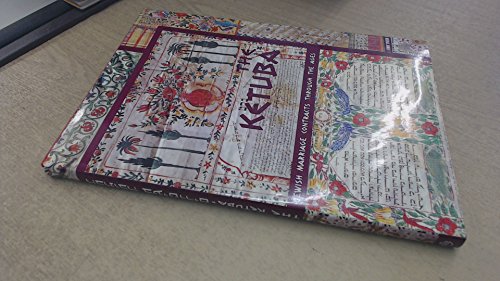
The Ketuba Jewish Marriage Contracts Through The Ages
Da: Willis Monie-Books, ABAA, Cooperstown, NY, U.S.A.
Membro dell'associazione: ABAA ESA ILAB
Valutazione del venditore 5 su 5 stelle

Hardcover. Condizione: Very Good. Condizione sovraccoperta: Very Good. Text in English and Hebrew. In slip case.
-

The Ketuba: Jewish Marriage Contracts Through The Ages
Lingua: Inglese
Editore: F. Lewin-Epstein Ltd, Tel-Aviv, 1968
Da: Arroyo Seco Books, Pasadena, Member IOBA, Pasadena, CA, U.S.A.
Membro dell'associazione: IOBA
Valutazione del venditore 4 su 5 stelle

Prima edizione
Red Cloth. Condizione: Fine. Condizione sovraccoperta: Near Fine DJ. Color Plates (illustratore). First Edition. Book Clean, Unmarked, No Wear. Dj With No Wear But Three 1/8" To 1/4" Closed Tears Along Top Edge. Folding Sleeve With Touch Of Wear At Corners. Slipcase Worn At Corners, Split Along Entire Edge At Top.
-
HEBREW ILLUMINATED MANUSCRIPTS
Editore: Macmillan Company (1969), New York, NY, 1969
Da: Riverow Bookshop, Owego, NY, U.S.A.
Membro dell'associazione: ABAA ILAB
Valutazione del venditore 5 su 5 stelle
Prima edizione
Cloth. Condizione: G/No Dustjacket. tipped-in color plates (illustratore). First Printing. New York, NY: Macmillan Company. G/No Dustjacket. (1969). First Printing. Cloth. Folio, 175 pp., cover soiled .
-
THE KETUBA Jewish Marriage Contracts Through the Ages
Editore: E, LEWIN-EPSTEIN PUB., TEL-AVIV, ISRAEL, 1968
Da: Gian Luigi Fine Books, Albany, NY, U.S.A.
Valutazione del venditore 5 su 5 stelle
Prima edizione
Hardcover. Condizione: VG. Condizione sovraccoperta: VG. First Edition. HEWBREW-ENGLISH TEXT, WITH SLIPCASE, OVERSEAS ORDERS WILL REQUIRE ADDITIONAL POSTAGE.
-
Hebrew Illuminated Manuscripts
Editore: Encyclopedia Judaica (Keter Publishing House/Leon Amiel Publisher 8148-0593-0, Jerusalem/New York
ISBN 10: 0814805930 ISBN 13: 9780814805930
Da: Spafford Books (ABAC / ILAB), Regina, SK, Canada
Membro dell'associazione: ABAC ILAB
Valutazione del venditore 5 su 5 stelle
EUR 12,72
Spedizione EUR 19,88
Spedito da Canada a U.S.A.Quantità: 1 disponibili
Aggiungi al carrello[8148-0593-0] 1974. (hardcover) Near fine in very good dust jacket. 175pp. Folio. Taupe cloth. Title stamped in gilt to spine. Jacket lightly marked and there is some wear at the upper edge, though overall, remain clean and bright. The book is clean and bright, pages crisp. Full colour plates. Description, in English for each manuscript.
-
Mediaeval Lincoln Jewry and its Synagogue
Editore: The Jewish Historical Society of England, London, England, 1934
Prima edizione
Paper Wrappers. Condizione: Very Good. No Jacket. 1st Edition. X, 11-28, [4] pages. Blank wrappers. 4 plates: 2 show the delegation of the society, a 3rd the Jews' Court in Lincoln, and a 4th the monumental doorway to the house of Bellassez the Jewess, Steep Hill, Lincoln. 260 x 195 mm. Contains a chronological summary of the Jews of Lincoln in the Middle Ages at rear. This work also deals with the blood libel against the Jews of Lincoln in 1255. In his foreword Gustave Tuck calls the visit one of the most successful functions in the history of the society. The foreword also makes reference to and condemns, in unison with Lincoln city officials and ministers, the German "Jew-baiting organ, Der Stürmer, that revived the infamous claim that Jews commit Ritual Murder. Hugh of Lincoln (1246 - 27 August 1255) was an English boy whose death was falsely attributed to Jews. Hugh is sometimes known as Little Saint Hugh or Little Sir Hugh to distinguish him from Hugh of Lincoln, an adult saint. Hugh became one of the best known of the blood libel 'saints'; generally children whose deaths were interpreted as Jewish sacrifices. Little Sir Hugh was never canonized, so "Little Saint Hugh" is a misnomer; still, many local "saints" of the early medieval period were not formally canonized but were dubbed and worshiped as saints by their contemporaries, and considered thus through the centuries. It is likely that the Bishop and Dean of Lincoln steered events in order to establish a profitable flow of pilgrims to the shrine of a martyr and saint. The event is particularly significant because it was the first time that the Crown gave credence to ritual child murder allegations, through the direct intervention of King Henry III. As a result, in contrast to the other English blood libels, the story entered the historical record, medieval literature and popular ballads that circulated until the twentieth century. Accusations of ritual child murder had become increasingly common following the circulation of The Life and Miracles of St. William of Norwich by Thomas of Monmouth, the hagiography of William of Norwich, a child-saint said to have been crucified by Jews in 1144. Other accusations followed, such as that of Harold of Gloucester (1168) and Robert of Bury (1181). The story of William and similar rumors clearly influenced the myth that developed around Hugh. The accusations may have been promoted by church officials hoping to establish local cults to attract pilgrims and donations. The years running up to the accusation were particularly hard for the English Jewish community. King Henry III taxed Jews very harshly. This in turn forced Jewish moneylenders to ensure their debts were paid, with no flexibility, and also to sell their debt bonds to Christians. Henry's relatives and courtiers in particular would buy debt bonds, with the intention of dispossessing the debtors of their lands, which would stand forfeit on a default. These policies of Henry's would later help provoke the Second Barons' War. Church teachings against Jews also built up in the period. Pronouncements were made by the Vatican demanding that Jews were kept physically separate from Christians, that Christians not work for Jews, especially in their homes, and that Jews wear badges to identify themselves. Church pronouncements in particular led to a number of English towns expelling their local Jewry. Henry III codified most of the Church's demands and put them into enforceable law in his 1253 Statute of Jewry. At the time of the Hugh of Lincoln murder accusations, Henry III had sold his rights to tax the Jews to his brother, Richard, Earl of Cornwall. Having lost this source of income, he declared that if a Jew was convicted of a crime, any money he had would then belong to the king. . . .
-

The Ketuba: Jewish Marriage Contracts Through the Ages
Editore: Tel-Aviv : E. Lewin-Epstein Limited, Publishers, 1979
EUR 13,75
Spedizione EUR 20,00
Spedito da Paesi Bassi a U.S.A.Quantità: 1 disponibili
Aggiungi al carrelloCondizione: Good. Original gilt lettered red cloth, dust jacket, illustrated endpapers, numerous (tipped-in) illustrations in colour and b/w, slipcase, folio.
-
Mediaeval Lincoln Jewry and its Synagogue
Editore: The Jewish Historical Society of England, London, England, 1934
Prima edizione
Paper Wrappers. Condizione: Very Good. No Jacket. 1st Edition. X, 11-28, [4] pages. 4 plates: 2 show the delegation of the society, another the Jews' Court in Lincoln, and a fourth the monumental doorway to the house of Bellassez the Jewess, Steep Hill, Lincoln. 260 x 195 mm. Very minor soiling to front wrapper. On verso of front wrapper is the JHSE benefactor's inscription: "With Constance Tuck's compliments." Contains a chronological summary of the Jews of Lincoln in the Middle Ages at rear. The double leaves are folded as they came out of the printer and are uncut, untrimmed and not sewn. This work also deals with the blood libel against the Jews of Lincoln in 1255. In his foreword Gustave Tuck calls the visit one of the most successful functions in the history of the society. The foreword also makes reference to and condemns, in unison with Lincoln city officials and ministers, the German "Jew-baiting organ, Der Stürmer, that revived the infamous claim that Jews commit Ritual Murder. Hugh of Lincoln (1246 - 27 August 1255) was an English boy whose death was falsely attributed to Jews. Hugh is sometimes known as Little Saint Hugh or Little Sir Hugh to distinguish him from Hugh of Lincoln, an adult saint. Hugh became one of the best known of the blood libel 'saints'; generally children whose deaths were interpreted as Jewish sacrifices. Little Sir Hugh was never canonized, so "Little Saint Hugh" is a misnomer; still, many local "saints" of the early medieval period were not formally canonized but were dubbed and worshiped as saints by their contemporaries, and considered thus through the centuries. It is likely that the Bishop and Dean of Lincoln steered events in order to establish a profitable flow of pilgrims to the shrine of a martyr and saint. The event is particularly significant because it was the first time that the Crown gave credence to ritual child murder allegations, through the direct intervention of King Henry III. As a result, in contrast to the other English blood libels, the story entered the historical record, medieval literature and popular ballads that circulated until the twentieth century. Accusations of ritual child murder had become increasingly common following the circulation of The Life and Miracles of St. William of Norwich by Thomas of Monmouth, the hagiography of William of Norwich, a child-saint said to have been crucified by Jews in 1144. Other accusations followed, such as that of Harold of Gloucester (1168) and Robert of Bury (1181). The story of William and similar rumors clearly influenced the myth that developed around Hugh. The accusations may have been promoted by church officials hoping to establish local cults to attract pilgrims and donations. The years running up to the accusation were particularly hard for the English Jewish community. King Henry III taxed Jews very harshly. This in turn forced Jewish moneylenders to ensure their debts were paid, with no flexibility, and also to sell their debt bonds to Christians. Henry's relatives and courtiers in particular would buy debt bonds, with the intention of dispossessing the debtors of their lands, which would stand forfeit on a default. These policies of Henry's would later help provoke the Second Barons' War. Church teachings against Jews also built up in the period. Pronouncements were made by the Vatican demanding that Jews were kept physically separate from Christians, that Christians not work for Jews, especially in their homes, and that Jews wear badges to identify themselves. Church pronouncements in particular led to a number of English towns expelling their local Jewry. Henry III codified most of the Church's demands and put them into enforceable law in his 1253 Statute of Jewry. At the time of the Hugh of Lincoln murder accusations, Henry III had sold his rights to tax the Jews to his brother, Richard, Earl of Cornwall. Having lost this source of income, he declared that if a Jew was convicted of a crime, any money he had would then belong to the king. . . .
-
Mediaeval Lincoln Jewry and its Synagogue
Editore: The Jewish Historical Society of England, London, England, 1934
Paper Wrappers. Condizione: Very Good. No Jacket. X, 11-28, [4] pages. 4 plates: 2 show the delegation of the society, another the Jews' Court in Lincoln, and a fourth the monumental doorway to the house of Bellassez the Jewess, Steep Hill, Lincoln. 260 x 195 mm. Contains a chronological summary of the Jews of Lincoln in the Middle Ages at rear. The double leaves are folded as they came out of the printer and are uncut, untrimmed and not sewn. This work also deals with the blood libel against the Jews of Lincoln in 1255. In his foreword Gustave Tuck calls the visit one of the most successful functions in the history of the society. The foreword also makes reference to and condemns, in unison with Lincoln city officials and ministers, the German "Jew-baiting organ, Der Stürmer, that revived the infamous claim that Jews commit Ritual Murder. Hugh of Lincoln (1246 - 27 August 1255) was an English boy whose death was falsely attributed to Jews. Hugh is sometimes known as Little Saint Hugh or Little Sir Hugh to distinguish him from Hugh of Lincoln, an adult saint. Hugh became one of the best known of the blood libel 'saints'; generally children whose deaths were interpreted as Jewish sacrifices. Little Sir Hugh was never canonized, so "Little Saint Hugh" is a misnomer; still, many local "saints" of the early medieval period were not formally canonized but were dubbed and worshiped as saints by their contemporaries, and considered thus through the centuries. It is likely that the Bishop and Dean of Lincoln steered events in order to establish a profitable flow of pilgrims to the shrine of a martyr and saint. The event is particularly significant because it was the first time that the Crown gave credence to ritual child murder allegations, through the direct intervention of King Henry III. As a result, in contrast to the other English blood libels, the story entered the historical record, medieval literature and popular ballads that circulated until the twentieth century. Accusations of ritual child murder had become increasingly common following the circulation of The Life and Miracles of St. William of Norwich by Thomas of Monmouth, the hagiography of William of Norwich, a child-saint said to have been crucified by Jews in 1144. Other accusations followed, such as that of Harold of Gloucester (1168) and Robert of Bury (1181). The story of William and similar rumors clearly influenced the myth that developed around Hugh. The accusations may have been promoted by church officials hoping to establish local cults to attract pilgrims and donations. The years running up to the accusation were particularly hard for the English Jewish community. King Henry III taxed Jews very harshly. This in turn forced Jewish moneylenders to ensure their debts were paid, with no flexibility, and also to sell their debt bonds to Christians. Henry's relatives and courtiers in particular would buy debt bonds, with the intention of dispossessing the debtors of their lands, which would stand forfeit on a default. These policies of Henry's would later help provoke the Second Barons' War. Church teachings against Jews also built up in the period. Pronouncements were made by the Vatican demanding that Jews were kept physically separate from Christians, that Christians not work for Jews, especially in their homes, and that Jews wear badges to identify themselves. Church pronouncements in particular led to a number of English towns expelling their local Jewry. Henry III codified most of the Church's demands and put them into enforceable law in his 1253 Statute of Jewry. At the time of the Hugh of Lincoln murder accusations, Henry III had sold his rights to tax the Jews to his brother, Richard, Earl of Cornwall. Having lost this source of income, he declared that if a Jew was convicted of a crime, any money he had would then belong to the king. Additionally, a number of influential Jews from across England were in Lincoln for a wedding at the time of the child's death. . .
-
Mediaeval Lincoln Jewry and its Synagogue
Editore: The Jewish Historical Society of England, London, England, 1934
Prima edizione
Paper Wrappers. Condizione: Very Good. No Jacket. 1st Edition. X, 11-28, [4] pages. 4 plates: 2 show the delegation of the society, another the Jews' Court in Lincoln, and a fourth the monumental doorway to the house of Bellassez the Jewess, Steep Hill, Lincoln. 260 x 195 mm. Contains a chronological summary of the Jews of Lincoln in the Middle Ages at rear. The double leaves are folded as they came out of the printer and are uncut, untrimmed and not sewn. This work also deals with the blood libel against the Jews of Lincoln in 1255. In his foreword Gustave Tuck calls the visit one of the most successful functions in the history of the society. The foreword also makes reference to and condemns, in unison with Lincoln city officials and ministers, the German "Jew-baiting organ, Der Stürmer, that revived the infamous claim that Jews commit Ritual Murder. Hugh of Lincoln (1246 - 27 August 1255) was an English boy whose death was falsely attributed to Jews. Hugh is sometimes known as Little Saint Hugh or Little Sir Hugh to distinguish him from Hugh of Lincoln, an adult saint. Hugh became one of the best known of the blood libel 'saints'; generally children whose deaths were interpreted as Jewish sacrifices. Little Sir Hugh was never canonized, so "Little Saint Hugh" is a misnomer; still, many local "saints" of the early medieval period were not formally canonized but were dubbed and worshiped as saints by their contemporaries, and considered thus through the centuries. It is likely that the Bishop and Dean of Lincoln steered events in order to establish a profitable flow of pilgrims to the shrine of a martyr and saint. The event is particularly significant because it was the first time that the Crown gave credence to ritual child murder allegations, through the direct intervention of King Henry III. As a result, in contrast to the other English blood libels, the story entered the historical record, medieval literature and popular ballads that circulated until the twentieth century. Accusations of ritual child murder had become increasingly common following the circulation of The Life and Miracles of St. William of Norwich by Thomas of Monmouth, the hagiography of William of Norwich, a child-saint said to have been crucified by Jews in 1144. Other accusations followed, such as that of Harold of Gloucester (1168) and Robert of Bury (1181). The story of William and similar rumors clearly influenced the myth that developed around Hugh. The accusations may have been promoted by church officials hoping to establish local cults to attract pilgrims and donations. The years running up to the accusation were particularly hard for the English Jewish community. King Henry III taxed Jews very harshly. This in turn forced Jewish moneylenders to ensure their debts were paid, with no flexibility, and also to sell their debt bonds to Christians. Henry's relatives and courtiers in particular would buy debt bonds, with the intention of dispossessing the debtors of their lands, which would stand forfeit on a default. These policies of Henry's would later help provoke the Second Barons' War. Church teachings against Jews also built up in the period. Pronouncements were made by the Vatican demanding that Jews were kept physically separate from Christians, that Christians not work for Jews, especially in their homes, and that Jews wear badges to identify themselves. Church pronouncements in particular led to a number of English towns expelling their local Jewry. Henry III codified most of the Church's demands and put them into enforceable law in his 1253 Statute of Jewry. At the time of the Hugh of Lincoln murder accusations, Henry III had sold his rights to tax the Jews to his brother, Richard, Earl of Cornwall. Having lost this source of income, he declared that if a Jew was convicted of a crime, any money he had would then belong to the king. Additionally, a number of influential Jews from across England were in Lincoln for a wedding at the time of the child's death. . .
-
HEBREW ILLUMINATED MANUSCRIPTS
Editore: Encyclopaedia Judaica, Jerusalem; Leon Amiel Publisher, New York, 1974
Da: JBK Books, North Manchester, IN, U.S.A.
Valutazione del venditore 5 su 5 stelle
Hardcover. Condizione: Very Good. Condizione sovraccoperta: Very Good. 175pp; Index; color plates. Contents clean, tight, textually unmarked. No library stamps. Owner's bookplate affixed inside front cover, else Fine. Tan cloth HC with gilt lettering on spine. Second Printing. 14" x 9.5". Inventory no. 5328.
-
Mediaeval Lincoln Jewry and its Synagogue
Editore: The Jewish Historical Society of England, London, 1934
Da: ERIC CHAIM KLINE, BOOKSELLER (ABAA ILAB), Santa Monica, CA, U.S.A.
Membro dell'associazione: ABAA ILAB
Valutazione del venditore 3 su 5 stelle

Prima edizione
Hardcover. Condizione: fair. First edition. Quarto. X, 11-28, [4]pp. Blue cloth with gold lettering on spine. Scarce work on a tragic event in Anglo-Jewish history that took place in Lincoln, in 1255. There, the ritual murder myth against the Jews took shape in the infamous story of the martyrdom of "Little Saint Hugh", with its calamitous results to the small Jewish community of those days. Very minor shelf wear on binding. Ex-library stamp at back of title-page. Heavy water-damage to pages throughout. Binding in overall good+ to very good, interior in poor to fair condition.
-
The History of the Hammersmith Synagogue
Editore: Edward Goldston, London, 1950
Da: Wheeler's Bookshop, Midhurst, West Sussex, Regno Unito
Valutazione del venditore 5 su 5 stelle
EUR 23,87
Spedizione EUR 22,48
Spedito da Regno Unito a U.S.A.Quantità: 1 disponibili
Aggiungi al carrelloHardcover. Condizione: Very Good. 1950 edition. 8vo. Dark grey cloth. 55 pp. B/w frontispiece. Included is a 1950 presentation letter from the synagogue wardens. Clean and sound. VG+.
-
Hebrew Illuminated Manuscripts / Mediaeval Hebrew Illuminated Letters [Medieval]
Editore: Keter / Ministry for Foreign Affairs, Jerusalem, 1978
Da: The Book Gallery, Jerusalem, Israele
Valutazione del venditore 2 su 5 stelle

EUR 25,81
Spedizione EUR 51,00
Spedito da Israele a U.S.A.Quantità: 1 disponibili
Aggiungi al carrelloContains Mediaeval Hebrew Illuminated Letters as a separate booklet and a color folded plate. 34.5x24 cm. 175 pages. Hardcover with dust jacket. In good condition. The book is in : English.
-
The Ketuba: Jewish Marriage Contracts Through The Ages [IN HEBREW AND ENGLISH]
Editore: Adama Books / Levin-Epshtein-Modam, New York
Da: The Book Gallery, Jerusalem, Israele
Valutazione del venditore 2 su 5 stelle
EUR 34,71
Spedizione EUR 51,00
Spedito da Israele a U.S.A.Quantità: 1 disponibili
Aggiungi al carrelloIN HEBREW AND ENGLISH. Contains leaves of plates. 24X34 Cm. 116 pages. Hardcover with gilt lettering and dust jacket. Dust jacket slightly ripped. Else in good condition. The book is in : Hebrew English.
-
The Ketuba: Jewish Marriage Contracts Through The Ages [IN HEBREW AND ENGLISH]
Editore: E. Lewin-Epstein, Tel-Aviv, 1979
Da: The Book Gallery, Jerusalem, Israele
Valutazione del venditore 2 su 5 stelle
EUR 44,50
Spedizione EUR 51,00
Spedito da Israele a U.S.A.Quantità: 1 disponibili
Aggiungi al carrelloIN HEBREW AND ENGLISH. Contains leaves of plates. 34X24 Cm. 116 pages. Gilt hardcover with dust jacket in slipcase. In good condition. The book is in : Hebrew English.
-
The Ketuba Jewish Marriage Contracts Through the Ages
Editore: E, LEWIN-EPSTEIN PUB.,, TEL-AVIV, ISRAEL,, 1968
Prima edizione
Hardcover. Condizione: New. Condizione sovraccoperta: New. 1st Edition. First edition 1968. Hebrew and English languages. Published by E, LEWIN-EPSTEIN PUB. Hardcover with pictorial DJ with pictorial slipcase. Condition new, square and tight book, no edgewear, corners not bumped, no names, no underlinings, no highlights, not a reminder. DJ new, no tears, no chips, no edgewear, not clipped. Slipcase near fine, worn corners. Folio, 168 pages, illustrated throughout. Heavy book will require additional postage for international orders.


