

Importo totale (1 articolo articoli):
Destinazione ordine:

freedman morris kaplan edith winocur (6 risultati)
Vai alla pagina principale dei risultati di ricerca
Filtri di ricerca
Tipo di articolo
- Tutti i tipi di prodotto
- Libri (6)
- Riviste e Giornali (Nessun altro risultato corrispondente a questo perfezionamento)
- Fumetti (Nessun altro risultato corrispondente a questo perfezionamento)
- Spartiti (Nessun altro risultato corrispondente a questo perfezionamento)
- Arte, Stampe e Poster (Nessun altro risultato corrispondente a questo perfezionamento)
- Fotografie (Nessun altro risultato corrispondente a questo perfezionamento)
- Mappe (Nessun altro risultato corrispondente a questo perfezionamento)
- Manoscritti e Collezionismo cartaceo (Nessun altro risultato corrispondente a questo perfezionamento)
Condizioni Maggiori informazioni
- Nuovo (2)
- Come nuovo, Ottimo o Quasi ottimo (1)
- Molto buono o Buono (3)
- Discreto o Mediocre (Nessun altro risultato corrispondente a questo perfezionamento)
- Come descritto (Nessun altro risultato corrispondente a questo perfezionamento)
Legatura
- Tutte
- Rilegato (6)
- Brossura (Nessun altro risultato corrispondente a questo perfezionamento)
Ulteriori caratteristiche
- Prima ed. (1)
- Copia autograf. (Nessun altro risultato corrispondente a questo perfezionamento)
- Sovracoperta (Nessun altro risultato corrispondente a questo perfezionamento)
- Con foto (3)
- Non Print on Demand (6)
Lingua (1)
Prezzo
- Qualsiasi prezzo
- Inferiore a EUR 20 (Nessun altro risultato corrispondente a questo perfezionamento)
- EUR 20 a EUR 40
- Superiore a EUR 40
Spedizione gratuita
Paese del venditore
Valutazione venditore
-
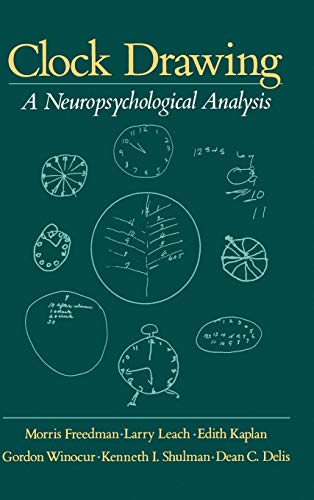
Clock Drawing: A Neuropsychological Analysis
Prima edizione
Hardcover. Condizione: Near Fine. Condizione sovraccoperta: No Dust Jacket. 1st Edition. Name of previous owner in ink on FFEP. Some underlining. Otherwise this book is clean and in excellent condition. First edition. 182 pages.
-
Clock Drawing : A Neuropsychological Analysis
Lingua: Inglese
Editore: Oxford University Press, Incorporated, 1994
ISBN 10: 0195059069 ISBN 13: 9780195059069
Da: Better World Books, Mishawaka, IN, U.S.A.
Valutazione del venditore 5 su 5 stelle

Condizione: Good. Pages intact with minimal writing/highlighting. The binding may be loose and creased. Dust jackets/supplements are not included. Stock photo provided. Product includes identifying sticker. Better World Books: Buy Books. Do Good.
-

Clock Drawing: A Neuropsychological Analysis
Da: Zoom Books Company, Lynden, WA, U.S.A.
Valutazione del venditore 5 su 5 stelle
Condizione: very_good. Book is in very good condition and may include minimal underlining highlighting. The book can also include "From the library of" labels. May not contain miscellaneous items toys, dvds, etc. . We offer 100% money back guarantee and 24 7 customer service.
-
Clock Drawing: A Neuropsychological Analysis
Da: Sunshine State Books, Lithia, FL, U.S.A.
Valutazione del venditore 5 su 5 stelle
hardcover. Condizione: Very Good. Hardback--name inside cover--otherwise excellent condition.
-

Clock Drawing
Lingua: Inglese
Editore: Oxford University Press Inc, US, 1994
ISBN 10: 0195059069 ISBN 13: 9780195059069
Da: Rarewaves.com USA, London, LONDO, Regno Unito
Valutazione del venditore 5 su 5 stelle
EUR 78,21
Spedizione gratuita
Spedito da Regno Unito a U.S.A.Quantità: Più di 20 disponibili
Aggiungi al carrelloHardback. Condizione: New. Written by a multi-disciplinary team of experts in neurobehaviour, this concise, well-illustrated book provides long-awaited normative data on clock drawing from ages 20 to 90 years.A practical guide to the quantitative assessment of clock drawing, it also takes a process-oriented approach to qualitative impairment. The authors discuss clock drawing as a neuropsychological test instrument and the rationale for selecting specific time settings, as well as the basis for using different clock conditions.The book contains numerous examples of clocks drawn by patients with cognitive impairment due to dementia, metabolic encephalopathy, traumatic brain injury, disconnection syndrome and focal brain lesions. Insight into changes in clock drawing ability that may represent the earliest markers of cognitive decline in dementia are also presented. This volume will be of interest to clinicians and researchers in neuropsychology, neurology, psychiatry, geriatric medicine, language therapy, and occupational therapy. It offers readers normative data on the clock drawing task, guidelines for administration and scoring, and a rich selection of clock drawings that illustrate the abnormalities commonly encountered in clinical practice and research.
-

Clock Drawing
Lingua: Inglese
Editore: Oxford University Press Inc, US, 1994
ISBN 10: 0195059069 ISBN 13: 9780195059069
Da: Rarewaves.com UK, London, Regno Unito
Valutazione del venditore 5 su 5 stelle
EUR 72,58
Spedizione EUR 74,66
Spedito da Regno Unito a U.S.A.Quantità: Più di 20 disponibili
Aggiungi al carrelloHardback. Condizione: New. Written by a multi-disciplinary team of experts in neurobehaviour, this concise, well-illustrated book provides long-awaited normative data on clock drawing from ages 20 to 90 years.A practical guide to the quantitative assessment of clock drawing, it also takes a process-oriented approach to qualitative impairment. The authors discuss clock drawing as a neuropsychological test instrument and the rationale for selecting specific time settings, as well as the basis for using different clock conditions.The book contains numerous examples of clocks drawn by patients with cognitive impairment due to dementia, metabolic encephalopathy, traumatic brain injury, disconnection syndrome and focal brain lesions. Insight into changes in clock drawing ability that may represent the earliest markers of cognitive decline in dementia are also presented. This volume will be of interest to clinicians and researchers in neuropsychology, neurology, psychiatry, geriatric medicine, language therapy, and occupational therapy. It offers readers normative data on the clock drawing task, guidelines for administration and scoring, and a rich selection of clock drawings that illustrate the abnormalities commonly encountered in clinical practice and research.

