
Gail l mortimer (13 risultati)
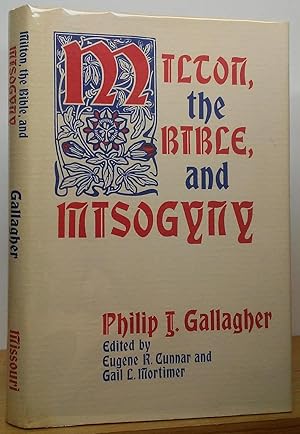
- Rilegato
- Prima edizione
Da: Stephen Peterson, Bookseller, Eden Prairie, MN, U.S.A.Stephen Peterson, Bookseller
Contatta il venditoreVenditore con 5 stelleCondizione: Usato - Ottimo
EUR 3,56
EUR 6,05 spedizioneSpedito in U.S.A.Quantità: 1 disponibili
Hardcover. Condizione: Fine. Condizione sovraccoperta: Very Good. First Edition. Fine, unmarked book in DJ with minor yellowing to spine and small tear to top edge of front panel; DJ protected by mylar cover.

- Rilegato
Da: BooksRun, Philadelphia, PA, U.S.A.BooksRun
Contatta il venditoreVenditore con 5 stelleCondizione: Usato - Molto buono
EUR 13,46
Spedizione gratuitaSpedito in U.S.A.Quantità: 1 disponibili
Hardcover. Condizione: Very Good. With dust jacket. It's a well-cared-for item that has seen limited use. The item may show minor signs of wear. All the text is legible, with all pages included. It may have slight markings and/or highlighting.

- Rilegato
Da: Princeton Antiques Bookshop / Ruffolo Enterprises, Atlantic City, NJ, U.S.A.Princeton Antiques Bookshop / Ruffolo Enterprises
Contatta il venditoreVenditore con 5 stelleCondizione: Usato
EUR 9,79
EUR 5,18 spedizioneSpedito in U.S.A.Quantità: 1 disponibili
HARDBACK PINK. Condizione: GOOD+. JACKET: GOOD+ DJ. Dust jacket: minimal wear, rubs. Boards: silver gilt title on spine, minimal wear. DATE PUBLISHED: 1994 EDITION: 213.

The Southern Literary Journal Vol. XIX, No. 2 - Spring, 1987
Thomas P. Adler, Robert H. Brinkmeyer, Jr., Lamar York, Joyce Dyer, Gail L. Mortimer, Elaine Ware, James Everett Kibler, Jr.,; Harris, Christopher
Lingua: Inglese
Editore: Univeristy of North Carolina Press 1987
- Brossura
Da: Next Chapter Books SC, LLC, Lexington, SC, U.S.A.Next Chapter Books SC, LLC
Contatta il venditoreVenditore con 5 stelleCondizione: Usato - Ottimo
EUR 17,80
EUR 5,62 spedizioneSpedito in U.S.A.Quantità: 1 disponibili
Soft cover. Condizione: Fine. This softcover book is square and tight. The pages are clean, with no markings or folds. The wrappers are bright with no damage to the points and no folds or creases to the spine. The condition is As New. Not ex-library. No remainder mark. Articles include pieces on Tennesee Williams, Bobbie Ann Mas…on, Pat Conroy, Sylvia Wilkinson, Eudor Welty, George W. Cable, William Gilmore Simms, and Mason Locke Weems.

- Rilegato
Da: ThriftBooks-Dallas, Dallas, TX, U.S.A.ThriftBooks-Dallas
Contatta il venditoreVenditore con 5 stelleCondizione: Usato - Buono
EUR 27,07
Spedizione gratuitaSpedito in U.S.A.Quantità: 1 disponibili
Hardcover. Condizione: Good. No Jacket. Former library book; Pages can have notes/highlighting. Spine may show signs of wear. ~ ThriftBooks: Read More, Spend Less.

- Rilegato
Da: GreatBookPrices, Columbia, MD, U.S.A.GreatBookPrices
Contatta il venditoreVenditore con 5 stelleCondizione: Usato - Come nuovo
EUR 57,41
EUR 2,28 spedizioneSpedito in U.S.A.Quantità: 6 disponibili
Condizione: As New. Unread book in perfect condition.
- Rilegato
Da: Grand Eagle Retail, Bensenville, IL, U.S.A.Grand Eagle Retail
Contatta il venditoreVenditore con 5 stelleCondizione: Nuovo
EUR 60,39
Spedizione gratuitaSpedito in U.S.A.Quantità: 1 disponibili
Hardcover. Condizione: new. Hardcover. Readers of Eudora Welty's stories often encounter a protective and domelike nighttime sky, the moon and constellations beckoning a character to venture beyond the familiar, visible world. This striking metaphor for the human need to seek out the unknown serves as an anchoring image in Daugh…ter of the Swan, Gail L. Mortimer's study of Welty's lifelong inquiry into the nature and contexts of knowledge.Mortimer argues that Welty's views on epistemology and the elusiveness of certainty lie at the heart of this writer's subtle and revelatory work. Employing the psychoanalytic object-relations theories of Nancy Chodorow and Carol Gilligan, she reveals how Welty uses assumptions about relationships to shape her characters' consciousnesses. Mortimer also contrasts Welty's world with William Faulkner's; each elucidates the other's remarkably different ways of perceiving humanity, relationships, and approaches to the unknown.The author then turns to Welty's childhood to consider her evolving sense of what--and how--things can be known. Her childhood with adults created impressions of a benign, wondrous, orderly world. As Mortimer observes, Welty eventually replaced these impressions with the realization that adults frequently distort and withhold the truth. Welty's own family's conception of love as a kind of shield, and her resistance to this protection, finds its way into much of her fiction.For many Welty characters, this protective love becomes an obstacle to fuller understanding. Mortimer invokes two of the writer's most beguiling images, the circle and the labyrinth, to demonstrate that "the perceiver" who is "both an insider and an outsider" is best able to recognize and assimilate new knowledge. In The Golden Apples Welty contemplates the difficulty and fascination implicit in this quest for knowledge, given the ambiguous nature of what we know--and given our language's surfaces, and of masks, myths, and falsities to create benevolent illusions. Ultimately, Mortimer concludes, Welty comes to see the concept of protective love as a limited one and, in The Optimist's Daughter, for instance, she advocates instead the courage to face even the harshest realities.Recognizing the richness of Welty's artistry, Mortimer views her through the lens of various literary traditions, including that of Shelley and Yeats. The latter's poem "Among School Children," from which the title of Mortimer's study is borrowed, summons the image of the swan to reflect the solitary human soul in search of knowledge. In that same spirit of wonder and curiosity, Eudora Welty's fiction illuminates the conditions of that search. Weltys stories often depict a protective and domelike nighttime sky, the moon and constellations beckoning a character to venture beyond the familiar, visible world. This metaphor for the human need to seek out the unknown serves as an anchoring image in Mortimers study of Weltys inquiry into the nature and contexts of knowledge. Shipping may be from multiple locations in the US or from the UK, depending on stock availability.
- Rilegato
Da: GreatBookPrices, Columbia, MD, U.S.A.GreatBookPrices
Contatta il venditoreVenditore con 5 stelleCondizione: Nuovo
EUR 58,05
EUR 2,28 spedizioneSpedito in U.S.A.Quantità: 6 disponibili
Condizione: New.
- Rilegato
Da: Kennys Bookshop and Art Galleries Ltd., Galway, GY, IrlandaKennys Bookshop and Art Galleries Ltd.
Contatta il venditoreVenditore con 5 stelleCondizione: Nuovo
EUR 65,97
EUR 10,50 spedizioneSpedito da Irlanda a U.S.A.Quantità: 6 disponibili
Condizione: New.
- Rilegato
Da: Revaluation Books, Exeter, , Regno UnitoRevaluation Books
Contatta il venditoreVenditore con 5 stelleCondizione: Nuovo
EUR 67,35
EUR 14,49 spedizioneSpedito da Regno Unito a U.S.A.Quantità: 2 disponibili
Hardcover. Condizione: Brand New. 213 pages. 9.50x6.50x1.00 inches. In Stock.
- Rilegato
Da: Kennys Bookstore, Olney, MD, U.S.A.Kennys Bookstore
Contatta il venditoreVenditore con 5 stelleCondizione: Nuovo
EUR 84,28
EUR 9,07 spedizioneSpedito in U.S.A.Quantità: 6 disponibili
Condizione: New.

- Rilegato
Da: moluna, Greven, , Germaniamoluna
Contatta il venditoreVenditore con 5 stelleCondizione: Nuovo
EUR 60,08
EUR 48,99 spedizioneSpedito da Germania a U.S.A.Quantità: 5 disponibili
Gebunden. Condizione: New. Über den AutorGail L. Mortimer is a professor of English at the University of Texas at El Paso.KlappentextrnrnIn this book the author explores a number of Welty s assumptions about the nature of knowledge and the.

- Rilegato
Da: AHA-BUCH GmbH, Einbeck, GermaniaAHA-BUCH GmbH
Contatta il venditoreVenditore con 5 stelleCondizione: Nuovo
EUR 79,95
EUR 62,75 spedizioneSpedito da Germania a U.S.A.Quantità: 2 disponibili
Buch. Condizione: Neu. Neuware - In this book the author explores a number of Welty's assumptions about the nature of knowledge and the contexts in which it can take place, using as clues Welty's explicit treatment of the subject and the premises that come through in her use of imagery and her narrative choices.


