

Importo totale (1 articolo articoli):
Destinazione ordine:

galup jean (34 risultati)
Vai alla pagina principale dei risultati di ricerca
Filtri di ricerca
Tipo di articolo
- Tutti i tipi di prodotto
- Libri (31)
- Riviste e Giornali (Nessun altro risultato corrispondente a questo perfezionamento)
- Fumetti (Nessun altro risultato corrispondente a questo perfezionamento)
- Spartiti (Nessun altro risultato corrispondente a questo perfezionamento)
- Arte, Stampe e Poster (Nessun altro risultato corrispondente a questo perfezionamento)
- Fotografie (Nessun altro risultato corrispondente a questo perfezionamento)
- Mappe (3)
- Manoscritti e Collezionismo cartaceo (Nessun altro risultato corrispondente a questo perfezionamento)
Condizioni Maggiori informazioni
- Nuovo (9)
- Come nuovo, Ottimo o Quasi ottimo (4)
- Molto buono o Buono (1)
- Discreto o Mediocre (Nessun altro risultato corrispondente a questo perfezionamento)
- Come descritto (20)
Legatura
Ulteriori caratteristiche
- Prima ed. (2)
- Copia autograf. (Nessun altro risultato corrispondente a questo perfezionamento)
- Sovracoperta (1)
- Con foto (16)
- Non Print on Demand (32)
Lingua (2)
Spedizione gratuita
Paese del venditore
Valutazione venditore
-

L'Authérapie ascitique -Language: french
Da: GreatBookPrices, Columbia, MD, U.S.A.
Valutazione del venditore 5 su 5 stelle

EUR 15,59
Spedizione EUR 2,29
Spedito in U.S.A.Quantità: Più di 20 disponibili
Aggiungi al carrelloCondizione: As New. Unread book in perfect condition.
-

L'Authérapie ascitique -Language: french
Da: GreatBookPrices, Columbia, MD, U.S.A.
Valutazione del venditore 5 su 5 stelle
EUR 15,73
Spedizione EUR 2,29
Spedito in U.S.A.Quantità: Più di 20 disponibili
Aggiungi al carrelloCondizione: New.
-

L'Auth�rapie Ascitique (Paperback or Softback)
Lingua: Francese
Editore: Hachette Livre Bnf 2/1/2018, 2018
ISBN 10: 2019225328 ISBN 13: 9782019225322
Da: BargainBookStores, Grand Rapids, MI, U.S.A.
Valutazione del venditore 5 su 5 stelle
Paperback or Softback. Condizione: New. L'Auth�rapie Ascitique. Book.
-
L'Authérapie Ascitique
Da: Rarewaves.com USA, London, LONDO, Regno Unito
Valutazione del venditore 5 su 5 stelle
EUR 18,32
Spedizione gratuita
Spedito da Regno Unito a U.S.A.Quantità: Più di 20 disponibili
Aggiungi al carrelloPaperback. Condizione: New.
-

L'Authérapie Ascitique (French Edition)
Da: Ria Christie Collections, Uxbridge, Regno Unito
Valutazione del venditore 5 su 5 stelle
EUR 16,73
Spedizione EUR 13,88
Spedito da Regno Unito a U.S.A.Quantità: Più di 20 disponibili
Aggiungi al carrelloCondizione: New. In.
-

L'Authérapie ascitique -Language: french
Da: GreatBookPricesUK, Woodford Green, Regno Unito
Valutazione del venditore 5 su 5 stelle
EUR 16,34
Spedizione EUR 17,38
Spedito da Regno Unito a U.S.A.Quantità: Più di 20 disponibili
Aggiungi al carrelloCondizione: New.
-

L'Authérapie ascitique -Language: french
Da: GreatBookPricesUK, Woodford Green, Regno Unito
Valutazione del venditore 5 su 5 stelle
EUR 19,19
Spedizione EUR 17,38
Spedito da Regno Unito a U.S.A.Quantità: Più di 20 disponibili
Aggiungi al carrelloCondizione: As New. Unread book in perfect condition.
-
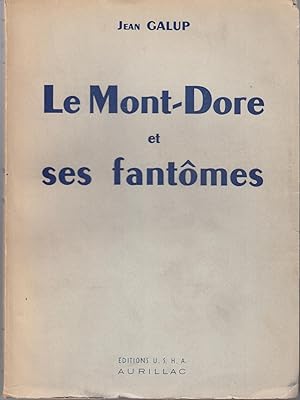
Le Mont-Dore et ses fantômes
Lingua: Francese
Editore: Editions U.S.H.A., Aurillac, 1948
Da: le livre ouvert. Isabelle Krummenacher, Cossonay-Ville, Svizzera
Valutazione del venditore 4 su 5 stelle

EUR 15,63
Spedizione EUR 27,00
Spedito da Svizzera a U.S.A.Quantità: 1 disponibili
Aggiungi al carrelloCouverture souple. Condizione: Assez bon. 195x145mm. 221 pages. En partie non coupé. Couverture défraichie.
-

EUR 23,27
Spedizione EUR 48,99
Spedito da Germania a U.S.A.Quantità: Più di 20 disponibili
Aggiungi al carrelloCondizione: New.
-

Le Mont-Dore et ses fantômes
Editore: U.S.H.A., Aurillac, 1948
Da: Librairie Seigneur, VOINGT, Francia
Valutazione del venditore 4 su 5 stelle
EUR 25,00
Spedizione EUR 39,50
Spedito da Francia a U.S.A.Quantità: 1 disponibili
Aggiungi al carrelloBroché. Condizione: Très bon. Ex-libris sur page de garde. 1 volume in-8°.
-
L'Authrapie ascitique
Da: PBShop.store US, Wood Dale, IL, U.S.A.
Valutazione del venditore 5 su 5 stelle
EUR 19,14
Spedizione gratuita
Spedito in U.S.A.Quantità: Più di 20 disponibili
Aggiungi al carrelloPAP. Condizione: New. New Book. Shipped from UK. THIS BOOK IS PRINTED ON DEMAND. Established seller since 2000.
-

L'Authérapie Ascitique
Da: Rarewaves.com UK, London, Regno Unito
Valutazione del venditore 5 su 5 stelle
EUR 16,33
Spedizione EUR 75,29
Spedito da Regno Unito a U.S.A.Quantità: Più di 20 disponibili
Aggiungi al carrelloPaperback. Condizione: New.
-
L'Authrapie ascitique
Da: PBShop.store UK, Fairford, GLOS, Regno Unito
Valutazione del venditore 5 su 5 stelle
EUR 18,30
Spedizione EUR 3,81
Spedito da Regno Unito a U.S.A.Quantità: Più di 20 disponibili
Aggiungi al carrelloPAP. Condizione: New. New Book. Delivered from our UK warehouse in 4 to 14 business days. THIS BOOK IS PRINTED ON DEMAND. Established seller since 2000.
-

Le Mont-Dore et ses fantômes.
Editore: Aurillac, U.S.H.A., 1948, 1948
Da: Librairie Historique F. Teissèdre, SAUVE, Francia
Membro dell'associazione: ILAB
Valutazione del venditore 5 su 5 stelle
EUR 40,00
Spedizione EUR 45,00
Spedito da Francia a U.S.A.Quantità: 1 disponibili
Aggiungi al carrelloin-12, 221 pp., planches, broché. - - VENTE PAR CORRESPONDANCE UNIQUEMENT - LIEN DE PAIEMENT, NOUS CONSULTER.
-
EUR 10,90
Spedizione EUR 105,00
Spedito da Germania a U.S.A.Quantità: 1 disponibili
Aggiungi al carrelloCondizione: Hervorragend. Zustand: Hervorragend | Sprache: Französisch | Produktart: Bücher | L'Authérapie ascitique, par le Dr Jean Galup, .Date de l'édition originale: 1911Le présent ouvrage s'inscrit dans une politique de conservation patrimoniale des ouvrages de la littérature Française mise en place avec la BNF. HACHETTE LIVRE et la BNF proposent ainsi un catalogue de titres indisponibles, la BNF ayant numérisé ces oeuvres et HACHETTE LIVRE les imprimant à la demande. Certains de ces ouvrages reflètent des courants de pensée caractéristiques de leur époque, mais qui seraient aujourd'hui jugés condamnables. Ils n'en appartiennent pas moins à l'histoire des idées en France et sont susceptibles de présenter un intérêt scientifique ou historique. Le sens de notre démarche éditoriale consiste ainsi à permettre l'accès à ces oeuvres sans pour autant que nous en cautionnions en aucune façon le contenu. Pour plus d'informations, rendez-vous sur [LINK ENTFERNT].
-

LE MONT-DORE ET SES FANTOMES
Editore: U.S.H.A.
Da: Le-Livre, SABLONS, Francia
Membro dell'associazione: ILAB
Valutazione del venditore 5 su 5 stelle
EUR 45,80
Spedizione EUR 42,00
Spedito da Francia a U.S.A.Quantità: 1 disponibili
Aggiungi al carrelloCouverture souple. Condizione: bon. R200097054: NON DATE. In-8. Broché. Etat d'usage, Couv. convenable, Dos satisfaisant, Papier jauni. 221 pages. Quelques pliures et rousseurs. . . . Classification Dewey : 908.4459-Régionalisme : Auvergne.
-

The Journal of Jean-Francois De Galaup De La Perouse, 1785-88. Translated and edited by John Dunmore. NEAR FINE SET IN UNCLIPPED DUSTWRAPPERS
Editore: Hakluyt Society, [1994-95], 1994
Da: Island Books, Thakeham, West Sussex, Regno Unito
Valutazione del venditore 4 su 5 stelle
Prima edizione
EUR 93,06
Spedizione EUR 26,87
Spedito da Regno Unito a U.S.A.Quantità: 1 disponibili
Aggiungi al carrello2 vols., 8vo., First Edition, with frontispieces, plates and maps; original series binding of blue cloth, upper boards framed in blind and blocked in gilt, gilt backs, a near fine set in unclipped dustwrapper. Hakluyt Society, Second Series, Vols., 179, 180.
-
Pathogénie et Traitement de l'Asthme. Essai de mise au point de notions anciennes et nouvelles.
Editore: Paris, Librairie Octave Doin, 1927., 1927
Da: Hesperia Libros, Zaragoza, Z, Spagna
Valutazione del venditore 5 su 5 stelle
AffareEUR 45,00
Spedizione EUR 28,00
Spedito da Spagna a U.S.A.Quantità: 1 disponibili
Aggiungi al carrello4to. menor; VIII-262 pp., 1 h. Cubiertas originales.
-
Relation du voyage à la recherche de La Pérouse.
Editore: Paris: H.J. Jansen, an VIII [1799-1800]., 1800
Da: Arader Galleries - AraderNYC, New York, NY, U.S.A.
Valutazione del venditore 5 su 5 stelle
Prima edizione
Hardcover. 1st Edition. 2 text volumes, 4to., (290 x 215 mm.), and one folio atlas volume (529 x 376 mm.). Text: xvi, 442; 332, 113, [1] pp. Half-titles, errata page at end of volume 2 (some very light and occasional marginal spotting, very pale marginal dampstain to a few quires at the end of volume 2.) Atlas: engraved title-page, large double-paged engraved folding map by d'Houdan after J. D. Barbié du Bocage, and 43 engraved plates, numbered 2-44, by Copia, Perée, or Maleuvre (1) and printed by Dien, after Piron, Jean-Baptiste Audebert (ornithological plates), and Pierre-Joseph Redouté (botanical plates), all mounted on guards (some occasionally heavy marginal spotting, not affecting the images). Uniformly bound in early 19th-century French black calf, marbled paper boards gilt by A. Varicault of Chatellerault with his binder's ticket on the front paste-down of each text volume (extremities a bit scuffed). First edition, the text volumes published simultaneously in 8vo., of this celebrated account of the expedition sent by the French Assembly in search of the vanished La Pérouse, written by the doctor and naturalist who accompanied the expedition. Under the general command of Bruni d'Entrecasteaux, two ships bearing 219 men set sail in September 1791, proceeding round the Cape of Good Hope to the Australian coast and Tasmania, where they spent months searching doggedly but in vain for a trace of the great navigator and his party, last seen in Botany Bay in 1788. In the course of the search the ships circumnavigated Australia twice, and visited New Caledonia, the Solomon Islands, the Admiralty Islands, Tonga, New Guinea, and New Britain. The expedition was plagued by misfortune; not only was no trace of La Pérouse's party found, but a large number of crewmen perished from scurvy, which killed d'Entrecasteaux himself in the summer of 1793, soon after the death of his fellow commander Kermadec. Following the loss of its leaders, and split between royalist officers and a crew supporting the revolutionaries, the expedition dispersed. Although it failed to achieve its primary goal, the voyage was of considerable importance for the numerous important scientific observations - geographical, ethnographic, botanical, zoological and hydrographic - made throughout the region. In 1795 the expedition papers and Labillardière's botanical and zoological specimens were seized by British forces, but, at the urging of Joseph Banks and the Royal Society, were returned a year later, enabling Labillardière to be the first to publish an account of the voyage. Of particular scientific interest for his description of the Tongas, "an excellent contribution to the ethnology of that people" (Hill), Labillardière's detailed narrative includes as well the first scientific descriptions of the New Zealand flax and several other New Zealand plants, specimens of which he brought back, and appendices containing glossaries of Malay and of the native languages of Tasmania, Tonga, New Caledonia, and Waygiou (New Guinea), with tables charting the route of the Espérance. The illustrations of the atlas volume, most after Piron, include detailed depictions of native headdresses and activities (preparation of meals, fishing, dancing), ceremonial objects, tools, boats and views of the islands, four plates of birds, of which three after Audebert, and 14 botanical plates after Redouté. Along with this quarto edition, Janson published an octavo edition during the same year (two issues are known, one giving a different publisher's address). Although priority has not been established, it is likely that the more luxurious quarto edition was issued first from the presses; comparison of copies shows the impression of the engravings to be a bit darker and crisper. Sabin 38420; Ferguson 307; Hill 954 (8vo edition). Catalogued by Kate Hunter. Book.
-
"Exocarpos cupressiformis", Plate 14 from "Atlas du Voyage a la Recherche de la Perouse"
Editore: [Paris: H.J. Jansen, an VIII [1799-1800]., 1800
Da: Arader Galleries - AraderNYC, New York, NY, U.S.A.
Valutazione del venditore 5 su 5 stelle
Single sheet (19 4/8 x 13 2/8 inches, full margins showing the plate mark). Fine engraved plate of the Australian native cherry, engraved by Copia, perfected by Redoute, after Piron (see below). From the atlas volume of the celebrated account of the expedition sent by the French Assembly in search of the vanished La Pérouse, written by the doctor and naturalist who accompanied the expedition. Under the general command of Bruni d'Entrecasteaux, two ships bearing 219 men set sail in September 1791, proceeding round the Cape of Good Hope to the Australian coast and Tasmania, where they spent months searching doggedly but in vain for a trace of the great navigator and his party, last seen in Botany Bay in 1788. In the course of the search the ships circumnavigated Australia twice, and visited New Caledonia, the Solomon Islands, the Admiralty Islands, Tonga, New Guinea, and New Britain. The expedition was plagued by misfortune; not only was no trace of La Pérouse's party found, but a large number of crewmen perished from scurvy, which killed d'Entrecasteaux himself in the summer of 1793, soon after the death of his fellow commander Kermadec. Following the loss of its leaders, and split between royalist officers and a crew supporting the revolutionaries, the expedition dispersed. Although it failed to achieve its primary goal, the voyage was of considerable importance for the numerous important scientific observations - geographical, ethnographic, botanical, zoological and hydrographic - made throughout the region. In 1795 the expedition papers and Labillardière's botanical and zoological specimens were seized by British forces, but, at the urging of Joseph Banks and the Royal Society, were returned a year later, enabling Labillardière to be the first to publish an account of the voyage. Of particular scientific interest for his description of the Tongas, "an excellent contribution to the ethnology of that people" (Hill), Labillardière's detailed narrative includes as well the first scientific descriptions of the New Zealand flax and several other New Zealand plants, specimens of which he brought back, and appendices containing glossaries of Malay and of the native languages of Tasmania, Tonga, New Caledonia, and Waygiou (New Guinea), with tables charting the route of the Espérance. The illustrations of the atlas volume, most after Piron (one of the natural history artists on the expedition), include detailed depictions of native headdresses and activities (preparation of meals, fishing, dancing), ceremonial objects, tools, boats and views of the islands, four plates of birds, of which three after Audebert, and 14 botanical plates after Redouté. Along with this quarto edition, Janson published an octavo edition during the same year (two issues are known, one giving a different publisher's address). Although priority has not been established, it is likely that the more luxurious quarto edition was issued first from the presses; comparison of copies shows the impression of the engravings to be a bit darker and crisper. Sabin 38420; Ferguson 307; Hill 954 Catalgoued by Kate Hunter @ Arader Galleries.
-
"Double Pirogue de la Nouvelle Caledonie - Catimarron du Cap de Diemen - Pirogue de l'Ile de Ste. Croix", plate 44 from "Atlas du Voyage a la Recherche de la Perouse"
Editore: [Paris: H.J. Jansen, an VIII [1799-1800]., 1800
Da: Arader Galleries - AraderNYC, New York, NY, U.S.A.
Valutazione del venditore 5 su 5 stelle
Single sheet (19 4/8 x 13 2/8 inches, full margins showing the plate mark). Fine engraved plate with two images, one of New Caledonians paddling their catermaran, and the other showing the vessel in detail, engraved by Copia after Dion. From the atlas volume of the celebrated account of the expedition sent by the French Assembly in search of the vanished La Pérouse, written by the doctor and naturalist who accompanied the expedition. Under the general command of Bruni d'Entrecasteaux, two ships bearing 219 men set sail in September 1791, proceeding round the Cape of Good Hope to the Australian coast and Tasmania, where they spent months searching doggedly but in vain for a trace of the great navigator and his party, last seen in Botany Bay in 1788. In the course of the search the ships circumnavigated Australia twice, and visited New Caledonia, the Solomon Islands, the Admiralty Islands, Tonga, New Guinea, and New Britain. The expedition was plagued by misfortune; not only was no trace of La Pérouse's party found, but a large number of crewmen perished from scurvy, which killed d'Entrecasteaux himself in the summer of 1793, soon after the death of his fellow commander Kermadec. Following the loss of its leaders, and split between royalist officers and a crew supporting the revolutionaries, the expedition dispersed. Although it failed to achieve its primary goal, the voyage was of considerable importance for the numerous important scientific observations - geographical, ethnographic, botanical, zoological and hydrographic - made throughout the region. In 1795 the expedition papers and Labillardière's botanical and zoological specimens were seized by British forces, but, at the urging of Joseph Banks and the Royal Society, were returned a year later, enabling Labillardière to be the first to publish an account of the voyage. Of particular scientific interest for his description of the Tongas, "an excellent contribution to the ethnology of that people" (Hill), Labillardière's detailed narrative includes as well the first scientific descriptions of the New Zealand flax and several other New Zealand plants, specimens of which he brought back, and appendices containing glossaries of Malay and of the native languages of Tasmania, Tonga, New Caledonia, and Waygiou (New Guinea), with tables charting the route of the Espérance. The illustrations of the atlas volume, most after Piron (one of the natural history artists on the expedition), include detailed depictions of native headdresses and activities (preparation of meals, fishing, dancing), ceremonial objects, tools, boats and views of the islands, four plates of birds, of which three after Audebert, and 14 botanical plates after Redouté. Along with this quarto edition, Janson published an octavo edition during the same year (two issues are known, one giving a different publisher's address). Although priority has not been established, it is likely that the more luxurious quarto edition was issued first from the presses; comparison of copies shows the impression of the engravings to be a bit darker and crisper. Sabin 38420; Ferguson 307; Hill 954 Catalogued by Kate Hunter @ Arader Galleries.
-

Carte Particuliere de la Còte du Nord-Quest de L Amerique reconnue par les Fregates Francaifes la Boussole et L Astrolabe en 1786 le Feuille. La Perouse, Jean-Francois de Galup Carte Particuliere de la Còte du Nord-Quest de L Ameri. Antique Map, Copper Engraving 495 x 685mm Paris 1786
Editore: Paris, 1786
Da: Antiquariat Reinhold Berg eK Inh. R.Berg, Regensburg, Germania
Membro dell'associazione: ILAB VDA
Valutazione del venditore 5 su 5 stelle
Mappa
EUR 392,52
Spedizione EUR 24,00
Spedito da Germania a U.S.A.Quantità: 1 disponibili
Aggiungi al carrelloOther. Copper Engraving, uncolored by La Perouse, Jean-Francois de Galup, published 1786 by Paris. Image size: 495 by 685mm (19 by 27 inches). By Lapérouse among the rarest and most historically important charts of the Northwest Coast ever produced. Jean-François de Galaup, Comte de Lapérouse (17411788), was the foremost French navigator and explorer of the late 18th century. Commissioned by Louis XVI to lead a major scientific and commercial expedition to the Pacific, he departed Brest in 1785 with two frigates the Boussole and the Astrolabe and spent three years charting the Pacific and North American coasts with extraordinary precision. His charts of the Northwest Coast of North America (1786) were the first scientific surveys of many sections of that coastline and were published posthumously in the celebrated four-volume Voyage de Lapérouse autour du monde (1797). The expedition disappeared without trace near Vanikoro in 1788. Lapérouse's charts are among the most historically important and rarest maps of the Pacific and Northwest Coast ever produced.This antique map of Carte Particuliere de la Còte du Nord-Quest de L Amerique r was published in 1786 by Paris (495 by 685mm (19 by 27 inches).). It is printed as a copper engraving, uncolored. The map documents the region with careful attention to rivers, settlements, roads, and political boundaries, reflecting the geographical knowledge available at the time of publication and offering an invaluable primary source for historians and collectors of North American antique cartography. In excellent condition. 495 by 685mm (19 by 27 inches). In excellent condition. 495 by 685mm (19 by 27 inches). 495 by 685mm (19 by 27 inches).
-

Carte Particuliere de la Cote du Nord-Quest de L Amérique reconnue par les Frégates Francaises la Boussole et L`Astrolabe en 1786 2e Feuille.
Editore: Paris, 1786
Da: Antiquariat Reinhold Berg eK Inh. R.Berg, Regensburg, Germania
Membro dell'associazione: ILAB VDA
Valutazione del venditore 5 su 5 stelle
Mappa
EUR 420,00
Spedizione EUR 24,00
Spedito da Germania a U.S.A.Quantità: 1 disponibili
Aggiungi al carrelloOther. Copper engraving, uncolored as published. In excellent condition. 490 by 860mm (19¼ by 33¾ inches).
-
"Femme des Iles des Amis - Femme d'Amboine", Plate 30 from "Atlas du Voyage a la Recherche de la Perouse"
Editore: [Paris: H.J. Jansen, an VIII [1799-1800]., 1800
Da: Arader Galleries - AraderNYC, New York, NY, U.S.A.
Valutazione del venditore 5 su 5 stelle
Single sheet (13 2/8 x 19 4/8 inches, full margins showing the plate mark). Fine engraved double portrait of woman from the Friendly Islands and from the island of Amboine near Ceram in the Pacific, by Copia after Piron (see below). From the atlas volume of the celebrated account of the expedition sent by the French Assembly in search of the vanished La Pérouse, written by the doctor and naturalist who accompanied the expedition. In the course of the search the ships circumnavigated Australia twice, and visited New Caledonia, the Solomon Islands, the Admiralty Islands, Tonga, New Guinea, and New Britain. The expedition was plagued by misfortune; not only was no trace of La Pérouse's party found, but a large number of crewmen perished from scurvy, which killed d'Entrecasteaux himself in the summer of 1793, soon after the death of his fellow commander Kermadec. Following the loss of its leaders, and split between royalist officers and a crew supporting the revolutionaries, the expedition dispersed. Although it failed to achieve its primary goal, the voyage was of considerable importance for the numerous important scientific observations - geographical, ethnographic, botanical, zoological and hydrographic - made throughout the region. In 1795 the expedition papers and Labillardière's botanical and zoological specimens were seized by British forces, but, at the urging of Joseph Banks and the Royal Society, were returned a year later, enabling Labillardière to be the first to publish an account of the voyage. Of particular scientific interest for his description of the Tongas, "an excellent contribution to the ethnology of that people" (Hill), Labillardière's detailed narrative includes as well the first scientific descriptions of the New Zealand flax and several other New Zealand plants, specimens of which he brought back, and appendices containing glossaries of Malay and of the native languages of Tasmania, Tonga, New Caledonia, and Waygiou (New Guinea), with tables charting the route of the Espérance. The illustrations of the atlas volume, most after Piron (one of the natural history artists on the expedition), include detailed depictions of native headdresses and activities (preparation of meals, fishing, dancing), ceremonial objects, tools, boats and views of the islands, four plates of birds, of which three after Audebert, and 14 botanical plates after Redouté. Along with this quarto edition, Janson published an octavo edition during the same year (two issues are known, one giving a different publisher's address). Although priority has not been established, it is likely that the more luxurious quarto edition was issued first from the presses; comparison of copies shows the impression of the engravings to be a bit darker and crisper. Sabin 38420; Ferguson 307; Hill 954 Catalogued by Kate Hunter at Arader Galleries.
-
"Femme de la Nouvelle Caledonie", Plate 36 from "Atlas du Voyage a la Recherche de la Perouse"
Editore: [Paris: H.J. Jansen, an VIII [1799-1800]., 1800
Da: Arader Galleries - AraderNYC, New York, NY, U.S.A.
Valutazione del venditore 5 su 5 stelle
Under the general command of Bruni d'Entrecasteaux, two ships bearing 219 men set sail in September 1791, proceeding round the Cape of Good Hope to the Australian coast and Tasmania, where they spent months searching doggedly but in vain for a trace of the great navigator and his party, last seen in Botany Bay in 1788. In the course of the search the ships circumnavigated Australia twice, and visited New Caledonia, the Solomon Islands, the Admiralty Islands, Tonga, New Guinea, and New Britain. The expedition was plagued by misfortune; not only was no trace of La Pérouse's party found, but a large number of crewmen perished from scurvy, which killed d'Entrecasteaux himself in the summer of 1793, soon after the death of his fellow commander Kermadec. Following the loss of its leaders, and split between royalist officers and a crew supporting the revolutionaries, the expedition dispersed. Although it failed to achieve its primary goal, the voyage was of considerable importance for the numerous important scientific observations - geographical, ethnographic, botanical, zoological and hydrographic - made throughout the region. In 1795 the expedition papers and Labillardière's botanical and zoological specimens were seized by British forces, but, at the urging of Joseph Banks and the Royal Society, were returned a year later, enabling Labillardière to be the first to publish an account of the voyage. Of particular scientific interest for his description of the Tongas, "an excellent contribution to the ethnology of that people" (Hill), Labillardière's detailed narrative includes as well the first scientific descriptions of the New Zealand flax and several other New Zealand plants, specimens of which he brought back, and appendices containing glossaries of Malay and of the native languages of Tasmania, Tonga, New Caledonia, and Waygiou (New Guinea), with tables charting the route of the Espérance. The illustrations of the atlas volume, most after Piron (one of the natural history artists on the expedition), include detailed depictions of native headdresses and activities (preparation of meals, fishing, dancing), ceremonial objects, tools, boats and views of the islands, four plates of birds, of which three after Audebert, and 14 botanical plates after Redouté. Along with this quarto edition, Janson published an octavo edition during the same year (two issues are known, one giving a different publisher's address). Although priority has not been established, it is likely that the more luxurious quarto edition was issued first from the presses; comparison of copies shows the impression of the engravings to be a bit darker and crisper. Sabin 38420; Ferguson 307; Hill 954 Catalogued by Kate Hunter @ Arader Galleries.
-
"Femme du Cap de Diemen", Plate 6 from "Atlas du Voyage a la Recherche de la Perouse"
Editore: [Paris: H.J. Jansen, an VIII [1799-1800]., 1800
Da: Arader Galleries - AraderNYC, New York, NY, U.S.A.
Valutazione del venditore 5 su 5 stelle
Single sheet (19 4/8 x 13 2/8 inches, full margins showing the plate mark). Fine engraved Portrait of a native woman of Tasmania carrying a baby on her shoulders, after Piron (see below). From the atlas volume of the celebrated account of the expedition sent by the French Assembly in search of the vanished La Pérouse, written by the doctor and naturalist who accompanied the expedition. Under the general command of Bruni d'Entrecasteaux, two ships bearing 219 men set sail in September 1791, proceeding round the Cape of Good Hope to the Australian coast and Tasmania, where they spent months searching doggedly but in vain for a trace of the great navigator and his party, last seen in Botany Bay in 1788. In the course of the search the ships circumnavigated Australia twice, and visited New Caledonia, the Solomon Islands, the Admiralty Islands, Tonga, New Guinea, and New Britain. The expedition was plagued by misfortune; not only was no trace of La Pérouse's party found, but a large number of crewmen perished from scurvy, which killed d'Entrecasteaux himself in the summer of 1793, soon after the death of his fellow commander Kermadec. Following the loss of its leaders, and split between royalist officers and a crew supporting the revolutionaries, the expedition dispersed. Although it failed to achieve its primary goal, the voyage was of considerable importance for the numerous important scientific observations - geographical, ethnographic, botanical, zoological and hydrographic - made throughout the region. In 1795 the expedition papers and Labillardière's botanical and zoological specimens were seized by British forces, but, at the urging of Joseph Banks and the Royal Society, were returned a year later, enabling Labillardière to be the first to publish an account of the voyage. Of particular scientific interest for his description of the Tongas, "an excellent contribution to the ethnology of that people" (Hill), Labillardière's detailed narrative includes as well the first scientific descriptions of the New Zealand flax and several other New Zealand plants, specimens of which he brought back, and appendices containing glossaries of Malay and of the native languages of Tasmania, Tonga, New Caledonia, and Waygiou (New Guinea), with tables charting the route of the Espérance. The illustrations of the atlas volume, most after Piron (one of the natural history artists on the expedition), include detailed depictions of native headdresses and activities (preparation of meals, fishing, dancing), ceremonial objects, tools, boats and views of the islands, four plates of birds, of which three after Audebert, and 14 botanical plates after Redouté. Along with this quarto edition, Janson published an octavo edition during the same year (two issues are known, one giving a different publisher's address). Although priority has not been established, it is likely that the more luxurious quarto edition was issued first from the presses; comparison of copies shows the impression of the engravings to be a bit darker and crisper. Sabin 38420; Ferguson 307; Hill 954. Catalogued by Kate Hunter @ Arader Galleries.
-
"Homme du Cap de Diemen - Enfant du Cap de Diemen", Plate 7 from "Atlas du Voyage a la Recherche de la Perouse"
Editore: [Paris: H.J. Jansen, an VIII [1799-1800]., 1800
Da: Arader Galleries - AraderNYC, New York, NY, U.S.A.
Valutazione del venditore 5 su 5 stelle
Single sheet (13 2/8 x 19 4/8 inches, full margins showing the plate mark). Fine engraved double portrait of a native man and child of Tasmania, after Piron. From the atlas volume of the celebrated account of the expedition sent by the French Assembly in search of the vanished La Pérouse, written by the doctor and naturalist who accompanied the expedition. Under the general command of Bruni d'Entrecasteaux, two ships bearing 219 men set sail in September 1791, proceeding round the Cape of Good Hope to the Australian coast and Tasmania, where they spent months searching doggedly but in vain for a trace of the great navigator and his party, last seen in Botany Bay in 1788. In the course of the search the ships circumnavigated Australia twice, and visited New Caledonia, the Solomon Islands, the Admiralty Islands, Tonga, New Guinea, and New Britain. The expedition was plagued by misfortune; not only was no trace of La Pérouse's party found, but a large number of crewmen perished from scurvy, which killed d'Entrecasteaux himself in the summer of 1793, soon after the death of his fellow commander Kermadec. Following the loss of its leaders, and split between royalist officers and a crew supporting the revolutionaries, the expedition dispersed. Although it failed to achieve its primary goal, the voyage was of considerable importance for the numerous important scientific observations - geographical, ethnographic, botanical, zoological and hydrographic - made throughout the region. In 1795 the expedition papers and Labillardière's botanical and zoological specimens were seized by British forces, but, at the urging of Joseph Banks and the Royal Society, were returned a year later, enabling Labillardière to be the first to publish an account of the voyage. Of particular scientific interest for his description of the Tongas, "an excellent contribution to the ethnology of that people" (Hill), Labillardière's detailed narrative includes as well the first scientific descriptions of the New Zealand flax and several other New Zealand plants, specimens of which he brought back, and appendices containing glossaries of Malay and of the native languages of Tasmania, Tonga, New Caledonia, and Waygiou (New Guinea), with tables charting the route of the Espérance. The illustrations of the atlas volume, most after Piron (one of the natural history artists on the expedition), include detailed depictions of native headdresses and activities (preparation of meals, fishing, dancing), ceremonial objects, tools, boats and views of the islands, four plates of birds, of which three after Audebert, and 14 botanical plates after Redouté. Along with this quarto edition, Janson published an octavo edition during the same year (two issues are known, one giving a different publisher's address). Although priority has not been established, it is likely that the more luxurious quarto edition was issued first from the presses; comparison of copies shows the impression of the engravings to be a bit darker and crisper. Sabin 38420; Ferguson 307; Hill 954 Catalogued by Kate Hunter @ Arader Galleries.
-
"Femme de l'Ile Beaupre - Homme de l'Ile Beaupre", plate 34 from "Atlas du Voyage a la Recherche de la Perouse"
Editore: [Paris: H.J. Jansen, an VIII [1799-1800]., 1800
Da: Arader Galleries - AraderNYC, New York, NY, U.S.A.
Valutazione del venditore 5 su 5 stelle
From the atlas volume of the celebrated account of the expedition sent by the French Assembly in search of the vanished La Pérouse, written by the doctor and naturalist who accompanied the expedition. Under the general command of Bruni d'Entrecasteaux, two ships bearing 219 men set sail in September 1791, proceeding round the Cape of Good Hope to the Australian coast and Tasmania, where they spent months searching doggedly but in vain for a trace of the great navigator and his party, last seen in Botany Bay in 1788. In the course of the search the ships circumnavigated Australia twice, and visited New Caledonia, the Solomon Islands, the Admiralty Islands, Tonga, New Guinea, and New Britain. The expedition was plagued by misfortune; not only was no trace of La Pérouse's party found, but a large number of crewmen perished from scurvy, which killed d'Entrecasteaux himself in the summer of 1793, soon after the death of his fellow commander Kermadec. Following the loss of its leaders, and split between royalist officers and a crew supporting the revolutionaries, the expedition dispersed. Although it failed to achieve its primary goal, the voyage was of considerable importance for the numerous important scientific observations - geographical, ethnographic, botanical, zoological and hydrographic - made throughout the region. In 1795 the expedition papers and Labillardière's botanical and zoological specimens were seized by British forces, but, at the urging of Joseph Banks and the Royal Society, were returned a year later, enabling Labillardière to be the first to publish an account of the voyage. Of particular scientific interest for his description of the Tongas, "an excellent contribution to the ethnology of that people" (Hill), Labillardière's detailed narrative includes as well the first scientific descriptions of the New Zealand flax and several other New Zealand plants, specimens of which he brought back, and appendices containing glossaries of Malay and of the native languages of Tasmania, Tonga, New Caledonia, and Waygiou (New Guinea), with tables charting the route of the Espérance. The illustrations of the atlas volume, most after Piron (one of the natural history artists on the expedition), include detailed depictions of native headdresses and activities (preparation of meals, fishing, dancing), ceremonial objects, tools, boats and views of the islands, four plates of birds, of which three after Audebert, and 14 botanical plates after Redouté. Along with this quarto edition, Janson published an octavo edition during the same year (two issues are known, one giving a different publisher's address). Although priority has not been established, it is likely that the more luxurious quarto edition was issued first from the presses; comparison of copies shows the impression of the engravings to be a bit darker and crisper. Sabin 38420; Ferguson 307; Hill 954 Catalogued by Kate Hunter @ Arader Galleries.
-

Carte Générale D `une Partie de la Cote du Nord-Quest. De L Amérique reconnue parles Frégates Francaifes La Bousole et L`astrolabe Assujettie au point journalier de la Frégate la Boussole déterminé astronomiquement par M. Dageler. La Perouse, Jean-Francois de Galup Carte Générale D `une Partie de la Cote du Nord-Quest. Antique Map, Copper Engraving 690 x 490mm Paris 1797
Editore: Paris, 1797
Da: Antiquariat Reinhold Berg eK Inh. R.Berg, Regensburg, Germania
Membro dell'associazione: ILAB VDA
Valutazione del venditore 5 su 5 stelle
Mappa
EUR 595,00
Spedizione EUR 24,00
Spedito da Germania a U.S.A.Quantità: 1 disponibili
Aggiungi al carrelloOther. Copper Engraving, uncolored by La Perouse, Jean-Francois de Galup, published 1797 by Paris. Image size: 690 by 490mm (27 by 19 inches). By Lapérouse among the rarest and most historically important charts of the Northwest Coast ever produced. Jean-François de Galaup, Comte de Lapérouse (17411788), was the foremost French navigator and explorer of the late 18th century. Commissioned by Louis XVI to lead a major scientific and commercial expedition to the Pacific, he departed Brest in 1785 with two frigates the Boussole and the Astrolabe and spent three years charting the Pacific and North American coasts with extraordinary precision. His charts of the Northwest Coast of North America (1786) were the first scientific surveys of many sections of that coastline and were published posthumously in the celebrated four-volume Voyage de Lapérouse autour du monde (1797). The expedition disappeared without trace near Vanikoro in 1788. Lapérouse's charts are among the most historically important and rarest maps of the Pacific and Northwest Coast ever produced.This antique map of Carte Générale D `une Partie de la Cote du Nord-Quest. De L was published in 1797 by Paris (690 by 490mm (27 by 19 inches).). It is printed as a copper engraving, uncolored. The map documents the region with careful attention to rivers, settlements, roads, and political boundaries, reflecting the geographical knowledge available at the time of publication and offering an invaluable primary source for historians and collectors of North American antique cartography. In excellent condition. In excellent condition. 690 by 490mm (27 by 19 inches). 690 by 490mm (27 by 19 inches).
-
"Sauvage des Iles de L'Amiraute", Plate 3 from "Atlas du Voyage a la Recherche de la Perouse"
Editore: [Paris: H.J. Jansen, an VIII [1799-1800]., 1800
Da: Arader Galleries - AraderNYC, New York, NY, U.S.A.
Valutazione del venditore 5 su 5 stelle
Single sheet (19 4/8 x 13 2/8 inches, full margins showing the plate mark). Fine engraved portrait of a warrior from the Admiralty Islands, by Copia after Piron (see below). From the atlas volume of the celebrated account of the expedition sent by the French Assembly in search of the vanished La Pérouse, written by the doctor and naturalist who accompanied the expedition. Under the general command of Bruni d'Entrecasteaux, two ships bearing 219 men set sail in September 1791, proceeding round the Cape of Good Hope to the Australian coast and Tasmania, where they spent months searching doggedly but in vain for a trace of the great navigator and his party, last seen in Botany Bay in 1788. In the course of the search the ships circumnavigated Australia twice, and visited New Caledonia, the Solomon Islands, the Admiralty Islands, Tonga, New Guinea, and New Britain. The expedition was plagued by misfortune; not only was no trace of La Pérouse's party found, but a large number of crewmen perished from scurvy, which killed d'Entrecasteaux himself in the summer of 1793, soon after the death of his fellow commander Kermadec. Following the loss of its leaders, and split between royalist officers and a crew supporting the revolutionaries, the expedition dispersed. Although it failed to achieve its primary goal, the voyage was of considerable importance for the numerous important scientific observations - geographical, ethnographic, botanical, zoological and hydrographic - made throughout the region. In 1795 the expedition papers and Labillardière's botanical and zoological specimens were seized by British forces, but, at the urging of Joseph Banks and the Royal Society, were returned a year later, enabling Labillardière to be the first to publish an account of the voyage. Of particular scientific interest for his description of the Tongas, "an excellent contribution to the ethnology of that people" (Hill), Labillardière's detailed narrative includes as well the first scientific descriptions of the New Zealand flax and several other New Zealand plants, specimens of which he brought back, and appendices containing glossaries of Malay and of the native languages of Tasmania, Tonga, New Caledonia, and Waygiou (New Guinea), with tables charting the route of the Espérance. The illustrations of the atlas volume, most after Piron (one of the natural history artists on the expedition), include detailed depictions of native headdresses and activities (preparation of meals, fishing, dancing), ceremonial objects, tools, boats and views of the islands, four plates of birds, of which three after Audebert, and 14 botanical plates after Redouté. Along with this quarto edition, Janson published an octavo edition during the same year (two issues are known, one giving a different publisher's address). Although priority has not been established, it is likely that the more luxurious quarto edition was issued first from the presses; comparison of copies shows the impression of the engravings to be a bit darker and crisper. Sabin 38420; Ferguson 307; Hill 954 Catalogued by Kate Hunter at Arader Galleries.


