

Importo totale (1 articolo articoli):
Destinazione ordine:

gorion micha josef (244 risultati)
Vai alla pagina principale dei risultati di ricerca
Filtri di ricerca
Tipo di articolo
- Tutti i tipi di prodotto
- Libri (244)
- Riviste e Giornali (Nessun altro risultato corrispondente a questo perfezionamento)
- Fumetti (Nessun altro risultato corrispondente a questo perfezionamento)
- Spartiti (Nessun altro risultato corrispondente a questo perfezionamento)
- Arte, Stampe e Poster (Nessun altro risultato corrispondente a questo perfezionamento)
- Fotografie (Nessun altro risultato corrispondente a questo perfezionamento)
- Mappe (Nessun altro risultato corrispondente a questo perfezionamento)
- Manoscritti e Collezionismo cartaceo (Nessun altro risultato corrispondente a questo perfezionamento)
Condizioni Maggiori informazioni
Legatura
Ulteriori caratteristiche
- Prima ed. (17)
- Copia autograf. (Nessun altro risultato corrispondente a questo perfezionamento)
- Sovracoperta (23)
- Con foto (124)
- Non Print on Demand (213)
Lingua (5)
Spedizione gratuita
Paese del venditore
Valutazione venditore
-

Aus einer Judenstadt
Lingua: Inglese
Editore: Schocken, Berlin, 1936
Da: Hellertown Books, Hellertown, PA, U.S.A.
Valutazione del venditore 4 su 5 stelle

Hardcover. Condizione: Acceptable. No Jacket. spine is missing but book remains bound.
-
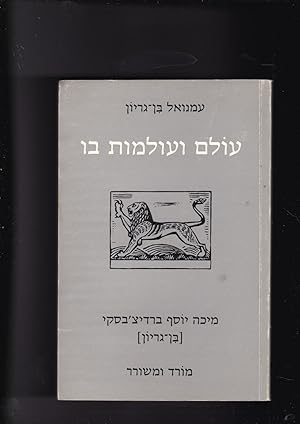
Olam ve-olamot bo olam veolamot bo : M. I. Berdyczevski (Bin Gorion) Sofer umeshorer Rebel and Poet
Lingua: Ebraico
Editore: Reshafim, Israel, 1986
Soft cover. Condizione: Very Good. No Jacket. In Hebrew. 159 pages. 225 x 150 mm. Barely visible water stain in bottom blank margin of last 40 pages and very minor damage to back wrapper, see image.
-
Kol Kitvey Micha Yosef Berdyczewski. Kerekh sheni [volume II only] MEOTZAR HA'AGADA kovetz bet AGADOT AM kolel agadot mehayamim shakhrey hatalmud ve'ad ata. Hebraeische Schriften Zweiter Band Aus dem judischen Sagenschatz Teil II Nachtalmudische Zeit
Lingua: Ebraico
Editore: Achisefer, Berlin, German, 1914
Hardcover. Condizione: Acceptable. No Jacket. In Hebrew. XV, 234 pages. 23 x 17 cm. Lacks spine strip. Water stained boards and water stain in foredge margin. Micha Josef Berdyczewski, or Mikhah Yosef Bin-Gorion (August 7, 1865 - November 18, 1921) (also written Berdichevsky), was born in Little Russia. He was a writer of Hebrew, a journalist, and a scholar. He appealed to Jews to move away from religion, tradition and history, but is also known for his work with pre-modern Jewish myths and legends. He wrote in Hebrew, Yiddish and German. He was born in the town Medzhybizh in western Ukraine, to a family of Hasidic Rabbis. His father was the town Rabbi. In his youth he began to read works from the Jewish Enlightenment, and their influence is noticeable in his works. Berdyczewski was forced to divorce his first wife following her family's objection to his involvement with secular literature. He then moved to the Volozhin Yeshiva, but there too his pursuit of unconventional literature stirred anger and objection. One of his earliest publications was about this period of his life, an article titled "Hetzitz V'nifga" (= peeked and was hurt), meaning "gone to heresy", published in 1888 in the newspaper Ha-Melitz. Most of his works from this period were polemic, and his emotional style became his trademark throughout his writing career. In 1890 he went to Germany and Switzerland, studied at the universities of Berlin, Breslau and Bern, and completed his Doctor of Philosophy degree. In this period Berdyczewski studied the works of Nietzsche and Hegel, and was deeply influenced by them. In the ten years until his return to Ukraine he published many articles and stories in Hebrew journals. Up to 1900, the year in which he married Rahel Ramberg, he had published ten books. Upon his return to Ukraine, Berdyczewski encountered the harsh reality of the Jewish life in the Pale of Settlement, and subsequently the subject of many of his stories is the deterioration of the traditional way of life. After a short stay in Warsaw, he returned to Germany in 1911, where he lived until his death in 1921. He is buried in the Jewish Cemetery in Weißensee, Berlin. Berdyczewski adopted the surname Bin-Gorion, first used to sign a collection of his works that he published in Berlin in 1914. The name Bin-Gorion is also inscribed on his tombstone. His last years were spent in intensive writing and research, collecting Jewish legends and folktales and publishing in Hebrew, Yiddish, and German. After his death, his wife and their son Emanuel Bin-Gorion translated some of his works into German, among them Die Sagen der Juden ("The Legends of the Jews", 1935) and Der Born Judas ("The Well of Judah"), published in six volumes. Berdyczewski's popularity among the Jews of his age is attributed to his success in expressing their ambivalent attitude towards the traditional Jewish world, and to the secular European culture.
-
Der Born Judas
Editore: Insel Verlag, 1959
Da: Recycle Bookstore, San Jose, CA, U.S.A.
Valutazione del venditore 4 su 5 stelle
Hardcover. Condizione: Very Good. There is some wear and rubbing on the covers and spine, with slight bowing of the front cover, fading of the cloth on the spine, some notation on the inside of the front cover, and yellowed pages; the book is otherwise in very good condition with clean print and a solid binding.
-
Der Born Judas
Editore: Insel, 1959, 1959
Da: Antiquariat Walter Nowak, Göttingen, Germania
Valutazione del venditore 5 su 5 stelle

EUR 3,00
Spedizione EUR 9,90
Spedito da Germania a U.S.A.Quantità: 1 disponibili
Aggiungi al carrelloLegenden, Märchen und Erzählungen Gewicht in Gramm: 550 minimale äußere Gebrauchsspuren, innen sauber.
-
Hardcover. Condizione: Acceptable. No Jacket. In Hebrew. XV, 234 pages. 23 x 17 cm. Loose in binding. While book block is solid, it is loose in the binding. Free endpapers made of woodpulp and so are yellow and brittle. Oscar Summer of Washington D.C. apparently donated it to the Library of Congress which disposed of it in 1952. Micha Josef Berdyczewski, or Mikhah Yosef Bin-Gorion (August 7, 1865 - November 18, 1921) (also written Berdichevsky), was born in Little Russia. He was a writer of Hebrew, a journalist, and a scholar. He appealed to Jews to move away from religion, tradition and history, but is also known for his work with pre-modern Jewish myths and legends. He wrote in Hebrew, Yiddish and German. He was born in the town Medzhybizh in western Ukraine, to a family of Hasidic Rabbis. His father was the town Rabbi. In his youth he began to read works from the Jewish Enlightenment, and their influence is noticeable in his works. Berdyczewski was forced to divorce his first wife following her family's objection to his involvement with secular literature. He then moved to the Volozhin Yeshiva, but there too his pursuit of unconventional literature stirred anger and objection. One of his earliest publications was about this period of his life, an article titled "Hetzitz V'nifga" (= peeked and was hurt), meaning "gone to heresy", published in 1888 in the newspaper Ha-Melitz. Most of his works from this period were polemic, and his emotional style became his trademark throughout his writing career. In 1890 he went to Germany and Switzerland, studied at the universities of Berlin, Breslau and Bern, and completed his Doctor of Philosophy degree. In this period Berdyczewski studied the works of Nietzsche and Hegel, and was deeply influenced by them. In the ten years until his return to Ukraine he published many articles and stories in Hebrew journals. Up to 1900, the year in which he married Rahel Ramberg, he had published ten books. Upon his return to Ukraine, Berdyczewski encountered the harsh reality of the Jewish life in the Pale of Settlement, and subsequently the subject of many of his stories is the deterioration of the traditional way of life. After a short stay in Warsaw, he returned to Germany in 1911, where he lived until his death in 1921. He is buried in the Jewish Cemetery in Weißensee, Berlin. Berdyczewski adopted the surname Bin-Gorion, first used to sign a collection of his works that he published in Berlin in 1914. The name Bin-Gorion is also inscribed on his tombstone. His last years were spent in intensive writing and research, collecting Jewish legends and folktales and publishing in Hebrew, Yiddish, and German. After his death, his wife and their son Emanuel Bin-Gorion translated some of his works into German, among them Die Sagen der Juden ("The Legends of the Jews", 1935) and Der Born Judas ("The Well of Judah"), published in six volumes. Berdyczewski's popularity among the Jews of his age is attributed to his success in expressing their ambivalent attitude towards the traditional Jewish world, and to the secular European culture.
-
SIPURIM [in the series:] sifrey mofet levatey midrash
Lingua: Ebraico
Editore: Israel Matz Foundation, Eretz Israel, 1939
Hardcover. Condizione: Very Good. No Jacket. In Hebrew. 22 x 14 cm. (6), xxxi, 201 pages. Micha Josef Berdyczewski, or Mikhah Yosef Bin-Gorion (August 7, 1865 - November 18, 1921) (also written Berdichevsky), was born in Little Russia. He was a writer of Hebrew, a journalist, and a scholar. He appealed to Jews to move away from religion, tradition and history, but is also known for his work with pre-modern Jewish myths and legends. He wrote in Hebrew, Yiddish and German. He was born in the town Medzhybizh in western Ukraine, to a family of Hasidic Rabbis. His father was the town Rabbi. In his youth he began to read works from the Jewish Enlightenment, and their influence is noticeable in his works. Berdyczewski was forced to divorce his first wife following her family's objection to his involvement with secular literature. He then moved to the Volozhin Yeshiva, but there too his pursuit of unconventional literature stirred anger and objection. One of his earliest publications was about this period of his life, an article titled "Hetzitz V'nifga" (= peeked and was hurt), meaning "gone to heresy", published in 1888 in the newspaper Ha-Melitz. Most of his works from this period were polemic, and his emotional style became his trademark throughout his writing career. In 1890 he went to Germany and Switzerland, studied at the universities of Berlin, Breslau and Bern, and completed his Doctor of Philosophy degree. In this period Berdyczewski studied the works of Nietzsche and Hegel, and was deeply influenced by them. In the ten years until his return to Ukraine he published many articles and stories in Hebrew journals. Up to 1900, the year in which he married Rahel Ramberg, he had published ten books. Upon his return to Ukraine, Berdyczewski encountered the harsh reality of the Jewish life in the Pale of Settlement, and subsequently the subject of many of his stories is the deterioration of the traditional way of life. After a short stay in Warsaw, he returned to Germany in 1911, where he lived until his death in 1921. He is buried in the Jewish Cemetery in Weißensee, Berlin. Berdyczewski adopted the surname Bin-Gorion, first used to sign a collection of his works that he published in Berlin in 1914. The name Bin-Gorion is also inscribed on his tombstone. His last years were spent in intensive writing and research, collecting Jewish legends and folktales and publishing in Hebrew, Yiddish, and German. After his death, his wife and their son Emanuel Bin-Gorion translated some of his works into German, among them Die Sagen der Juden ("The Legends of the Jews", 1935) and Der Born Judas ("The Well of Judah"), published in six volumes. Berdyczewski's popularity among the Jews of his age is attributed to his success in expressing their ambivalent attitude towards the traditional Jewish world, and to the secular European culture.
-
SIPURIM mivkhar mot'am lekhativa haelyona shel bet hasefer al pi tokhnit halimudim shel misrad hakhinukh vehatarbut [Stories chosen for high school students]
Lingua: Ebraico
Editore: Dvir, Jerusalem and Tel Aviv, Israel, 1980
Soft cover. Condizione: Very Good. No Jacket. In Hebrew. 18 x 10.5 cm. 266 pages. Micha Josef Berdyczewski, or Mikhah Yosef Bin-Gorion (August 7, 1865 - November 18, 1921) (also written Berdichevsky), was born in Little Russia. He was a writer of Hebrew, a journalist, and a scholar. He appealed to Jews to move away from religion, tradition and history, but is also known for his work with pre-modern Jewish myths and legends. He wrote in Hebrew, Yiddish and German. He was born in the town Medzhybizh in western Ukraine, to a family of Hasidic Rabbis. His father was the town Rabbi. In his youth he began to read works from the Jewish Enlightenment, and their influence is noticeable in his works. Berdyczewski was forced to divorce his first wife following her family's objection to his involvement with secular literature. He then moved to the Volozhin Yeshiva, but there too his pursuit of unconventional literature stirred anger and objection. One of his earliest publications was about this period of his life, an article titled "Hetzitz V'nifga" (= peeked and got hurt), meaning "gone to heresy", published in 1888 in the newspaper Ha-Melitz. Most of his works from this period were polemic, and his emotional style became his trademark throughout his writing career. In 1890 he went to Germany and Switzerland, studied at the universities of Berlin, Breslau and Bern, and completed his Doctor of Philosophy degree. In this period Berdyczewski studied the works of Nietzsche and Hegel, and was deeply influenced by them. In the ten years until his return to Ukraine he published many articles and stories in Hebrew journals. Up to 1900, the year in which he married Rahel Ramberg, he had published ten books. Upon his return to Ukraine, Berdyczewski encountered the harsh reality of the Jewish life in the Pale of Settlement, and subsequently the subject of many of his stories is the deterioration of the traditional way of life. After a short stay in Warsaw, he returned to Germany in 1911, where he lived until his death in 1921. He is buried in the Jewish Cemetery in Weißensee, Berlin. Berdyczewski adopted the surname Bin-Gorion, first used to sign a collection of his works that he published in Berlin in 1914. The name Bin-Gorion is also inscribed on his tombstone. His last years were spent in intensive writing and research, collecting Jewish legends and folktales and publishing in Hebrew, Yiddish, and German. After his death, his wife and their son Emanuel Bin-Gorion translated some of his works into German, among them Die Sagen der Juden ("The Legends of the Jews", 1935) and Der Born Judas ("The Well of Judah"), published in six volumes. Berdyczewski's popularity among the Jews of his age is attributed to his success in expressing their ambivalent attitude towards the traditional Jewish world, and to the secular European culture.
-
SIPURIM mivkhar mot'am lekhativa haelyona shel bet hasefer al pi tokhnit halimudim shel misrad hakhinukh vehatarbut [Stories chosen for high school students]
Lingua: Ebraico
Editore: Dvir, Jerusalem and Tel Aviv, Israel, 1980
Soft cover. Condizione: Very Good. No Jacket. In Hebrew. 18 x 10.5 cm. 266 pages. Micha Josef Berdyczewski, or Mikhah Yosef Bin-Gorion (August 7, 1865 - November 18, 1921) (also written Berdichevsky), was born in Little Russia. He was a writer of Hebrew, a journalist, and a scholar. He appealed to Jews to move away from religion, tradition and history, but is also known for his work with pre-modern Jewish myths and legends. He wrote in Hebrew, Yiddish and German. He was born in the town Medzhybizh in western Ukraine, to a family of Hasidic Rabbis. His father was the town Rabbi. In his youth he began to read works from the Jewish Enlightenment, and their influence is noticeable in his works. Berdyczewski was forced to divorce his first wife following her family's objection to his involvement with secular literature. He then moved to the Volozhin Yeshiva, but there too his pursuit of unconventional literature stirred anger and objection. One of his earliest publications was about this period of his life, an article titled "Hetzitz V'nifga" (= peeked and was hurt), meaning "gone to heresy", published in 1888 in the newspaper Ha-Melitz. Most of his works from this period were polemic, and his emotional style became his trademark throughout his writing career. In 1890 he went to Germany and Switzerland, studied at the universities of Berlin, Breslau and Bern, and completed his Doctor of Philosophy degree. In this period Berdyczewski studied the works of Nietzsche and Hegel, and was deeply influenced by them. In the ten years until his return to Ukraine he published many articles and stories in Hebrew journals. Up to 1900, the year in which he married Rahel Ramberg, he had published ten books. Upon his return to Ukraine, Berdyczewski encountered the harsh reality of the Jewish life in the Pale of Settlement, and subsequently the subject of many of his stories is the deterioration of the traditional way of life. After a short stay in Warsaw, he returned to Germany in 1911, where he lived until his death in 1921. He is buried in the Jewish Cemetery in Weißensee, Berlin. Berdyczewski adopted the surname Bin-Gorion, first used to sign a collection of his works that he published in Berlin in 1914. The name Bin-Gorion is also inscribed on his tombstone. His last years were spent in intensive writing and research, collecting Jewish legends and folktales and publishing in Hebrew, Yiddish, and German. After his death, his wife and their son Emanuel Bin-Gorion translated some of his works into German, among them Die Sagen der Juden ("The Legends of the Jews", 1935) and Der Born Judas ("The Well of Judah"), published in six volumes. Berdyczewski's popularity among the Jews of his age is attributed to his success in expressing their ambivalent attitude towards the traditional Jewish world, and to the secular European culture.
-
Der Born Judas. Legenden, Märchen und Erzählungen nur 1. Band
Editore: Insel Verlag, Leipzig, 1978
Da: Bücherpanorama am Johannisbad, Zwickau, Germania
Valutazione del venditore 3 su 5 stelle

EUR 6,00
Spedizione EUR 14,95
Spedito da Germania a U.S.A.Quantità: 1 disponibili
Aggiungi al carrelloLeinen. Condizione: Gut. Condizione sovraccoperta: Guter Schutzumschlag. S. 794. schöne Ausgabe!
-
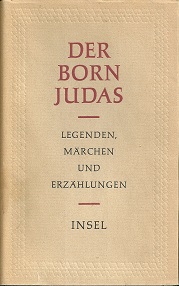
Der Born Judas. Legenden, Märchen und Erzählungen. Gesammelt von Micha Josef Bin Gorion. Neu herausgegeben und mit einem Nachwort versehen von Emanuel Bin Gorion
Editore: o.O.: Insel-Verlag, 1963
Da: Antiquariat Axel Kurta, Berlin, Germania
Membro dell'associazione: ILAB VDA
Valutazione del venditore 5 su 5 stelle
EUR 12,00
Spedizione EUR 10,00
Spedito da Germania a U.S.A.Quantità: 1 disponibili
Aggiungi al carrelloCondizione: Sehr gut. 6.-12. Tausend. 8° (18x11cm). 794 Seiten. Flexiber OLeinenband mit Schutzumschlag und Schuber. Das Papier an den Rändern etwas gebräunt, sonst ein sauberes Exemplar in Dünndruck!
-
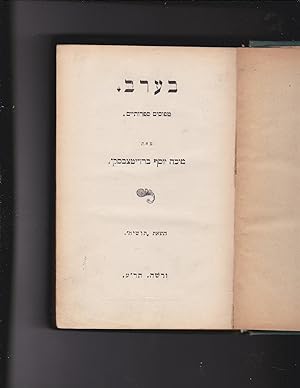
BaErev; BeShira uvelashon; Pri Sefer (3 works bound together)
Lingua: Ebraico
Editore: Tushiyah 1910, 1911, 1911, Warsaw, 1911
Hardcover. Condizione: Poor. No Jacket. In Hebrew. 105, 75, 76 pages. 211 x 146 mm. Pages yellowed, some wrinkled. Micha Josef Berdyczewski (Mikhah Yosef Bin-Gorion Berdichevsky)(August 7, 1865 Medzhybizh, western Ukraine, Russian Empire - November 18, 1921 Berlin) was a writer of Hebrew, a journalist, and a scholar. He appealed for the Jews to change their way of thinking and free themselves from dogmas ruling the Jewish religion, tradition and history, but he is also known for his work with pre-modern Jewish myths and legends. He wrote in Hebrew, Yiddish and German and has been described as "the first Hebrew writer living in Berlin to be revered in the world of German letters." His father was the town Rabbi. In his youth he began to read works from the Jewish Enlightenment, and their influence is noticeable in his works. He was forced to divorce his first wife following her family's objection to his involvement with secular literature. He then moved to the Volozhin Yeshiva, but there too, his pursuit of secular literature stirred anger and objection. One of his earliest publications was about this period of his life, an article titled "Hetzitz V'nifga" (= "peeked and got hurt" = meaning "gone to heresy"), published in 1888 in the newspaper Ha-Melitz. Most of his works from this period were polemic, and his emotional style became his trademark throughout his writing career. In 1890 he went to Germany and Switzerland, studied at the universities of Berlin, Breslau and Bern, and completed his Doctor of Philosophy degree. In this period Berdyczewski studied the works of the Nietzsche and Hegel, and was deeply influenced by them. In the 10 years until his return to Ukraine, he published many articles and stories in Hebrew journals. Up to 1900, the year in which he married Rahel Ramberg, He had published 10 books. Upon his return to Ukraine, he encountered the harsh reality of Jewish life in the Pale of Settlement, and subsequently the subject of many of his stories is the deterioration of the traditional way of life. After a short stay in Warsaw, he returned to Germany in 1911, where he lived until his death in 1921. He is buried in the Jewish Cemetery in Weißensee, Berlin. Berdyczewski adopted the surname Bin-Gorion, first used to sign a collection of his works that he published in Berlin in 1914. His last years were spent in intensive writing and research, collecting Jewish legends and folktales and publishing in Hebrew, Yiddish, and German. After his death, his wife and their son Emanuel Bin-Gorion translated some of his works into German, among them Die Sagen der Juden ("The Legends of the Jews", 1935) and Der Born Judas ("The Well of Judah"), published in six volumes. Berdyczewski's popularity among the Jews of his age is attributed to his success in expressing their ambivalent attitude towards the traditional Jewish world, and to the secular European culture.
-
Ma'amarim. Helek Shelishi. Mahashavot ve-Torot.
Editore: Hotsaat Abraham Yosef Shtibl, Lipsiyah [Leipzig], 1922
Da: Henry Hollander, Bookseller, Los Angeles, CA, U.S.A.
Valutazione del venditore 4 su 5 stelle
Hardbound. Condizione: Good. Duodecimo, soiled paper covered boards, soiled front endpaper with a non-authorial gift inscription, 116 pp. Text is in Hebrew.
-
Ma'amarim. Helek Sheni: Hukim u-Sefarim.
Editore: Hotsaat Abraham Yosef Shtibl, Lipsiyah [Leipzig], 1922
Da: Henry Hollander, Bookseller, Los Angeles, CA, U.S.A.
Valutazione del venditore 4 su 5 stelle
Hardbound. Condizione: Good. Duodecimo, soiled paper covered boards, 160 pp. Text is in Hebrew.
-
Ma'amarim. Helek Rishon: Mahashavot ve-torot.
Editore: Hotsaat Abraham Yosef Shtibl, Lipsiyah [Leipzig], 1922
Da: Henry Hollander, Bookseller, Los Angeles, CA, U.S.A.
Valutazione del venditore 4 su 5 stelle
Hardbound. Condizione: Good. Octavo, soiled paper covered boards, 170 pp. Text is in Hebrew.
-
Yidishe ksovim fun a vaytn korev. Ferter Teyl: Fun Shvere Tseyten un Anderes.
Editore: Hotsaat Abrahm Yosef Shtibl, Berlin, 1924
Da: Henry Hollander, Bookseller, Los Angeles, CA, U.S.A.
Valutazione del venditore 4 su 5 stelle
Softbound. Condizione: Very Good. Duodecimo, paper covers, 174 pp. Text is in Yiddish.
-
Yidishe ksovim fun a vaytn korev. Tsvayter Teyl: Umdiges und Heyteres: Bilder/Skitsen.
Editore: Hotsaat Abrahm Yosef Shtibl, Berlin, 1924
Da: Henry Hollander, Bookseller, Los Angeles, CA, U.S.A.
Valutazione del venditore 4 su 5 stelle
Softbound. Condizione: Very Good. Duodecimo, paper covers, 146 pp. Text is in Yiddish.
-
Yidishe ksovim fun a vaytn korev. Finfter Teyl: Am Ve-Lashon.
Editore: Hotsaat Abrahm Yosef Shtibl, Berlin, 1924
Da: Henry Hollander, Bookseller, Los Angeles, CA, U.S.A.
Valutazione del venditore 4 su 5 stelle
Softbound. Condizione: Very Good. Duodecimo, paper covers, 172 pp. Text is in Yiddish.
-
Kitvey Micha Yosef Bin Gurion (Berdichevski) KHADASHIM GAM YESHANIM : Baderekh khelek sheni [Part Two, only] (kitvei)
Lingua: Ebraico
Editore: Avraham Yosef Stibel (Abraham Joseph Stiebel), Leipzig, Germany, 1922
Hardcover. Condizione: Good. No Jacket. In Hebrew. 83, (2) pages. 234 x 156 mm. Damage to upper spine strip, see image here. Micha Josef Berdyczewski (Mikhah Yosef Bin-Gorion Berdichevsky)(August 7, 1865 Medzhybizh, western Ukraine, Russian Empire - November 18, 1921 Berlin) was a writer of Hebrew, a journalist, and a scholar. He appealed for the Jews to change their way of thinking and free themselves from dogmas ruling the Jewish religion, tradition and history, but he is also known for his work with pre-modern Jewish myths and legends. He wrote in Hebrew, Yiddish and German and has been described as "the first Hebrew writer living in Berlin to be revered in the world of German letters." His father was the town Rabbi. In his youth he began to read works from the Jewish Enlightenment, and their influence is noticeable in his works. He was forced to divorce his first wife following her family's objection to his involvement with secular literature. He then moved to the Volozhin Yeshiva, but there too, his pursuit of secular literature stirred anger and objection. One of his earliest publications was about this period of his life, an article titled "Hetzitz V'nifga" (= "peeked and got hurt" = meaning "gone to heresy"), published in 1888 in the newspaper Ha-Melitz. Most of his works from this period were polemic, and his emotional style became his trademark throughout his writing career. In 1890 he went to Germany and Switzerland, studied at the universities of Berlin, Breslau and Bern, and completed his Doctor of Philosophy degree. In this period Berdyczewski studied the works of the Nietzsche and Hegel, and was deeply influenced by them. In the 10 years until his return to Ukraine, he published many articles and stories in Hebrew journals. Up to 1900, the year in which he married Rahel Ramberg, He had published 10 books. Upon his return to Ukraine, he encountered the harsh reality of Jewish life in the Pale of Settlement, and subsequently the subject of many of his stories is the deterioration of the traditional way of life. After a short stay in Warsaw, he returned to Germany in 1911, where he lived until his death in 1921. He is buried in the Jewish Cemetery in Weißensee, Berlin. Berdyczewski adopted the surname Bin-Gorion, first used to sign a collection of his works that he published in Berlin in 1914. His last years were spent in intensive writing and research, collecting Jewish legends and folktales and publishing in Hebrew, Yiddish, and German. After his death, his wife and their son Emanuel Bin-Gorion translated some of his works into German, among them Die Sagen der Juden ("The Legends of the Jews", 1935) and Der Born Judas ("The Well of Judah"), published in six volumes. Berdyczewski's popularity among the Jews of his age is attributed to his success in expressing their ambivalent attitude towards the traditional Jewish world, and to the secular European culture.
-
Sipurim. Helek Shelishi: Romanim Ketsarim. Kitve Mikhah Yosef Bin Goryon Hadashim gam yeshanim V.
Editore: Hotsaat Avaraham Yosef Shtibl, Lipsiyah, 1923
Da: Henry Hollander, Bookseller, Los Angeles, CA, U.S.A.
Valutazione del venditore 4 su 5 stelle
Hardbound. Condizione: Very Good. Octvo, tan cloth with gold lettering and black decorations, 217 pp. Text is in Hebrew.
-
Mini kedem: [Tsefunot ve-agadot]. Helekh Shelishii: Mi-Yeme Ha-Talmud. Kitve Mikhah Yosef Bin Goryon Hadashim gam yeshanim IX.
Editore: Hotsaat Avaraham Yosef Shtibl, Lipsiyah, 1924
Da: Henry Hollander, Bookseller, Los Angeles, CA, U.S.A.
Valutazione del venditore 4 su 5 stelle
Hardbound. Condizione: Very Good. Octvo, tan cloth with gold lettering and black decorations, 196 pp. Text is in Hebrew.
-
Mini kedem: [Tsefunot ve-agadot]. Helekh Sheni: Mi-Sheloshah Mo'adim. Kitve Mikhah Yosef Bin Goryon Hadashim gam yeshanim VIII.
Editore: Hotsaat Avaraham Yosef Shtibl, Lipsiyah, 1924
Da: Henry Hollander, Bookseller, Los Angeles, CA, U.S.A.
Valutazione del venditore 4 su 5 stelle
Hardbound. Condizione: Very Good. Octvo, tan cloth with gold lettering and black decorations, 252 pp. Text is in Hebrew.
-
Mini kedem: [Tsefunot ve-agadot]. Helekh Rishon: Mi-Sipure Bereshit. Kitve Mikhah Yosef Bin Goryon Hadashim gam yeshanim VII.
Editore: Hotsaat Avaraham Yosef Shtibl, Lipsiyah, 1924
Da: Henry Hollander, Bookseller, Los Angeles, CA, U.S.A.
Valutazione del venditore 4 su 5 stelle
Hardbound. Condizione: Very Good. Octvo, tan cloth with gold lettering and black decorations, 208 pp. Text is in Hebrew.
-
Ba-Derekh. Helek Rishon: Divre Hazon. Helek Sheni: Shnui-Arakhin. Helek Shelishi: Am ve=Arets. Kitve Mikhah Yosef Bin Goryon Hadashim gam yeshanim II: Ma'amarim.
Editore: Hotsaat Avaraham Yosef Shtibl, Lipsiyah, 1922
Da: Henry Hollander, Bookseller, Los Angeles, CA, U.S.A.
Valutazione del venditore 4 su 5 stelle
Hardbound. Condizione: Very Good. Octvo, tan cloth with gold lettering and black decorations, 80, 86, 130 pp. Text is in Hebrew.
-
Ba-Derekh. Helek Rishon: Divre Hazon. Helek Sheni: Shnui-Arakhin. Helek Shelishi: Am ve=Arets. Kitve Mikhah Yosef Bin Goryon Hadashim gam yeshanim II: Ma'amarim.
Editore: Hotsaat Avaraham Yosef Shtibl, Lipsiyah, 1922
Da: Henry Hollander, Bookseller, Los Angeles, CA, U.S.A.
Valutazione del venditore 4 su 5 stelle
Hardbound. Condizione: Very Good. Octvo, tan cloth with gold lettering and black decorations, 80, 86, 130 pp. Text is in Hebrew.
-
Juda und Israel. Jüdische Sagen und Mythen.
Editore: Rütten & Loening Verlag, Frankfurt a. M., 1927
Da: Henry Hollander, Bookseller, Los Angeles, CA, U.S.A.
Valutazione del venditore 4 su 5 stelle
Hardbound. Condizione: Very Good. Octavo, brown cloth spine with gold lettering, light brown paper covers, xii, 498 pp., sources, indexes. With a six page prospectus laid-in. Translated and edited by Rahel and Emanuel bin Gorion.
-
Yudishe Kesuvim fun a Vaytn Krov/ Yiddish works of a distant relative.
Editore: Magnes Press The Hebrew University, Jerusalem, 1981
Da: Henry Hollander, Bookseller, Los Angeles, CA, U.S.A.
Valutazione del venditore 4 su 5 stelle
Softbound. Condizione: Very Good-. Small octavo, partially sunned paper covers, cvi, 225, lvii pp., translation of the introduction into English at the rear. Text is in Yiddish except as noted. OCLC Number: 258267356. Introduction and selection by Shmuel Werses. Inscirbed by Werses.
-
Der Born Judas. Legenden, Märchen und Erzählungen. Gesammelt von Micha Josef bin Gorion. Herausgegeben und mit einem Nachwort von Emanuel bin Gorion.
Editore: Wiesbaden: Insel,, 1959
Da: Antiquariat Hartmut R. Schreyer, Augsburg, Germania
Valutazione del venditore 5 su 5 stelle
EUR 16,00
Spedizione EUR 12,00
Spedito da Germania a U.S.A.Quantità: 1 disponibili
Aggiungi al carrelloKl. 8°; 794 (2) Dünndruck.-Seiten. Original-Leinen. (Sarkowski 203 A). - (gut erhalten).
-
EUR 3,92
Spedizione EUR 20,99
Spedito da Repubblica Ceca a U.S.A.Quantità: 1 disponibili
Aggiungi al carrelloHardcover. Condizione: Fair. Spuren von Feuchtigkeit / Nasse; Leichte Rillen / Abschurfungen / Risse / Knicke. Sbirka povesti a legend o stvoreni sveta a cloveka, chasidske prameny a Targumy.
-
EUR 3,80
Spedizione EUR 20,99
Spedito da Repubblica Ceca a U.S.A.Quantità: 1 disponibili
Aggiungi al carrelloHardcover. Condizione: Fair. Beschriftungen / Markierungen bis 20 %; Spuren von Feuchtigkeit / Nässe; Leichte Rillen / Abschürfungen / Risse / Knicke.



![Immagine del venditore per Kol Kitvey Micha Yosef Berdyczewski. Kerekh sheni [volume II only] MEOTZAR HA'AGADA kovetz bet AGADOT AM kolel agadot mehayamim shakhrey hatalmud ve'ad ata. Hebraeische Schriften Zweiter Band Aus dem judischen Sagenschatz Teil II Nachtalmudische Zeit venduto da Meir Turner](https://pictures.abebooks.com/inventory/md/md30455019487.jpg)

![Immagine del venditore per SIPURIM [in the series:] sifrey mofet levatey midrash venduto da Meir Turner](https://pictures.abebooks.com/inventory/md/md30427371504.jpg)
![Immagine del venditore per SIPURIM mivkhar mot'am lekhativa haelyona shel bet hasefer al pi tokhnit halimudim shel misrad hakhinukh vehatarbut [Stories chosen for high school students] venduto da Meir Turner](https://pictures.abebooks.com/inventory/md/md22836364292.jpg)

![Immagine del venditore per Kitvey Micha Yosef Bin Gurion (Berdichevski) KHADASHIM GAM YESHANIM : Baderekh khelek sheni [Part Two, only] (kitvei) venduto da Meir Turner](https://pictures.abebooks.com/inventory/md/md30473462920.jpg)

