

Importo totale (1 articolo articoli):
Destinazione ordine:

hoppenrath mona (11 risultati)
Vai alla pagina principale dei risultati di ricerca
Filtri di ricerca
Tipo di articolo
- Tutti i tipi di prodotto
- Libri (11)
- Riviste e Giornali (Nessun altro risultato corrispondente a questo perfezionamento)
- Fumetti (Nessun altro risultato corrispondente a questo perfezionamento)
- Spartiti (Nessun altro risultato corrispondente a questo perfezionamento)
- Arte, Stampe e Poster (Nessun altro risultato corrispondente a questo perfezionamento)
- Fotografie (Nessun altro risultato corrispondente a questo perfezionamento)
- Mappe (Nessun altro risultato corrispondente a questo perfezionamento)
- Manoscritti e Collezionismo cartaceo (Nessun altro risultato corrispondente a questo perfezionamento)
Condizioni Maggiori informazioni
- Nuovo (9)
- Come nuovo, Ottimo o Quasi ottimo (1)
- Molto buono o Buono (Nessun altro risultato corrispondente a questo perfezionamento)
- Discreto o Mediocre (Nessun altro risultato corrispondente a questo perfezionamento)
- Come descritto (1)
Legatura
Ulteriori caratteristiche
- Prima ed. (Nessun altro risultato corrispondente a questo perfezionamento)
- Copia autograf. (Nessun altro risultato corrispondente a questo perfezionamento)
- Sovracoperta (Nessun altro risultato corrispondente a questo perfezionamento)
- Con foto (8)
- Non Print on Demand (11)
Lingua (1)
Spedizione gratuita
- Spedizione gratuita in U.S.A. (Nessun altro risultato corrispondente a questo perfezionamento)
Paese del venditore
Valutazione venditore
-
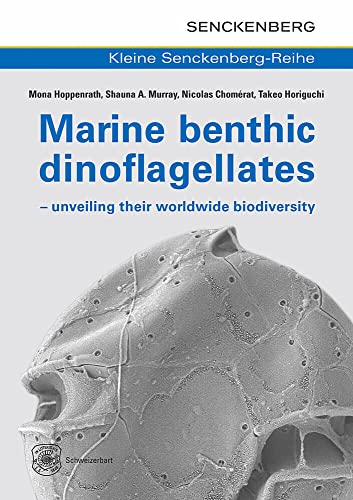
Marine benthic dinoflagellates - unveiling their worldwide biodiversity
Lingua: Inglese
Editore: Schweizerbart'sche Verlagsbuchhandlung, 2014. 276 pp., 2014
ISBN 10: 351061402X ISBN 13: 9783510614028
Da: Antiquariaat Hortus Conclusus, Bergambacht, Paesi Bassi
Valutazione del venditore 5 su 5 stelle

EUR 12,50
Spedizione EUR 14,50
Spedito da Paesi Bassi a U.S.A.Quantità: 1 disponibili
Aggiungi al carrelloPaperback, in very good condition. Almost as new. Text in English. Please see description or ask for photos.
-
Marine benthic dinoflagellates - unveiling their worldwide biodiversity
Da: Revaluation Books, Exeter, Regno Unito
Valutazione del venditore 5 su 5 stelle
EUR 21,31
Spedizione EUR 14,49
Spedito da Regno Unito a U.S.A.Quantità: 2 disponibili
Aggiungi al carrelloPaperback. Condizione: Brand New. 8.31x5.87x0.75 inches. In Stock.
-

Marine benthic dinoflagellates - unveiling their worldwide biodiversity
Lingua: Inglese
Editore: Schweizerbart Sche Vlgsb. Jul 2014, 2014
ISBN 10: 351061402X ISBN 13: 9783510614028
Da: Rheinberg-Buch Andreas Meier eK, Bergisch Gladbach, Germania
Valutazione del venditore 5 su 5 stelle
EUR 19,90
Spedizione EUR 23,00
Spedito da Germania a U.S.A.Quantità: 2 disponibili
Aggiungi al carrelloTaschenbuch. Condizione: Neu. Neuware -This publication presents the first summary of our knowledge of benthic dinoflagellate species. Dinoflagellates are important primary producers and symbionts, but, at the same time, also consumers and parasites. Species compositions of benthic habitats are quite distinct from those of planktonic habitats. Less than 10% of the approximately 2000 described extant dinoflagellate species appear to be benthic. They occur in different types of habitats (chapter II) and their morphology, their behavior, and some of their life cycles (chapter VI) seem to be well adapted to the benthic lifestyle. Information on their geographic distribution is still very limited and is compiled herein (chapter V). The study of harmful benthic dinoflagellates started in the late 1970s when it was suspected that a benthic species, later named Gambierdiscus toxicus, was responsible for ciguatera fish poisoning, a type of human poisoning linked to the consumption of certain species of tropical reef fish. As the number of ciguatera fish poisoning incidents increases, and the distribution of toxin producing benthic taxa seems to be expanding, detailed understanding of the species diversity and the ability to accurately identify them is becoming increasingly important (chapter VII). Dinoflagellate classification is currently undergoing changes and far from being settled, as new species and genera are discovered and systematic entities are rearranged. Many benthic dinoflagellate genera have unusual morphologies and appear to be only remotely related to known planktonic taxa, so that molecular phylogenetic analyses frequently show little statistical support for any relationship (chapter IV). Benthic species display unique thecal plate arrangements compared to planktonic species, e.g. Adenoides, Amphidiniella, Cabra, Planodinium, Sabulodinium, Rhinodinium (chapter III). Therefore, no classification on higher rank levels (e.g. family, order) was used throughout this book. Genera (and species within a genus) are presented in alphabetical order. The book presents the first comprehensive identification help for benthic dinoflagellates. At the same time it aims to lend support in order to improve monitoring efforts worldwide. About 190 species in 45 genera are presented in detail, illustrated with more than 200 color images, approximately 150 scanning electron micrographs, and more than 250 drawings. 276 pp. Englisch.
-

Marine benthic dinoflagellates - unveiling their worldwide biodiversity
Lingua: Inglese
Editore: Schweizerbart Sche Vlgsb. Jul 2014, 2014
ISBN 10: 351061402X ISBN 13: 9783510614028
Da: BuchWeltWeit Ludwig Meier e.K., Bergisch Gladbach, Germania
Valutazione del venditore 5 su 5 stelle
EUR 19,90
Spedizione EUR 23,00
Spedito da Germania a U.S.A.Quantità: 2 disponibili
Aggiungi al carrelloTaschenbuch. Condizione: Neu. Neuware -This publication presents the first summary of our knowledge of benthic dinoflagellate species. Dinoflagellates are important primary producers and symbionts, but, at the same time, also consumers and parasites. Species compositions of benthic habitats are quite distinct from those of planktonic habitats. Less than 10% of the approximately 2000 described extant dinoflagellate species appear to be benthic. They occur in different types of habitats (chapter II) and their morphology, their behavior, and some of their life cycles (chapter VI) seem to be well adapted to the benthic lifestyle. Information on their geographic distribution is still very limited and is compiled herein (chapter V). The study of harmful benthic dinoflagellates started in the late 1970s when it was suspected that a benthic species, later named Gambierdiscus toxicus, was responsible for ciguatera fish poisoning, a type of human poisoning linked to the consumption of certain species of tropical reef fish. As the number of ciguatera fish poisoning incidents increases, and the distribution of toxin producing benthic taxa seems to be expanding, detailed understanding of the species diversity and the ability to accurately identify them is becoming increasingly important (chapter VII). Dinoflagellate classification is currently undergoing changes and far from being settled, as new species and genera are discovered and systematic entities are rearranged. Many benthic dinoflagellate genera have unusual morphologies and appear to be only remotely related to known planktonic taxa, so that molecular phylogenetic analyses frequently show little statistical support for any relationship (chapter IV). Benthic species display unique thecal plate arrangements compared to planktonic species, e.g. Adenoides, Amphidiniella, Cabra, Planodinium, Sabulodinium, Rhinodinium (chapter III). Therefore, no classification on higher rank levels (e.g. family, order) was used throughout this book. Genera (and species within a genus) are presented in alphabetical order. The book presents the first comprehensive identification help for benthic dinoflagellates. At the same time it aims to lend support in order to improve monitoring efforts worldwide. About 190 species in 45 genera are presented in detail, illustrated with more than 200 color images, approximately 150 scanning electron micrographs, and more than 250 drawings. 276 pp. Englisch.
-
EUR 24,89
Spedizione EUR 20,99
Spedito da Repubblica Ceca a U.S.A.Quantità: 1 disponibili
Aggiungi al carrelloSoftcover. Condizione: As New. Leichte Kratzer / Abnutzungen / Druckstellen. Marine phytoplankton forms the basis of the food web in the oceans. Phytoplankton, although small enough to be invisible to the naked eye, can under favourable conditions actually be seen from a space satellite, because it occurs in such huge quantities. According to NASA, phytoplankton produces between 50% and 90% of the oxygen in the air that we breathe, depending on the season. This book provides a key to determine almost 300 phytoplankton species from the North Sea around Helgoland and Sylt, documenting them with close to 1100 images and 70 line drawings on 85 plates. This book is an important contribution to our unterstanding of marine phytoplankton of North Sea ecosystems.
-

Marine benthic dinoflagellates - unveiling their worldwide biodiversity
Lingua: Inglese
Editore: Schweizerbart Sche Vlgsb. Jul 2014, 2014
ISBN 10: 351061402X ISBN 13: 9783510614028
EUR 19,90
Spedizione EUR 25,95
Spedito da Germania a U.S.A.Quantità: 2 disponibili
Aggiungi al carrelloTaschenbuch. Condizione: Neu. Neuware -This publication presents the first summary of our knowledge of benthic dinoflagellate species. Dinoflagellates are important primary producers and symbionts, but, at the same time, also consumers and parasites. Species compositions of benthic habitats are quite distinct from those of planktonic habitats. Less than 10% of the approximately 2000 described extant dinoflagellate species appear to be benthic. They occur in different types of habitats (chapter II) and their morphology, their behavior, and some of their life cycles (chapter VI) seem to be well adapted to the benthic lifestyle. Information on their geographic distribution is still very limited and is compiled herein (chapter V). The study of harmful benthic dinoflagellates started in the late 1970s when it was suspected that a benthic species, later named Gambierdiscus toxicus, was responsible for ciguatera fish poisoning, a type of human poisoning linked to the consumption of certain species of tropical reef fish. As the number of ciguatera fish poisoning incidents increases, and the distribution of toxin producing benthic taxa seems to be expanding, detailed understanding of the species diversity and the ability to accurately identify them is becoming increasingly important (chapter VII). Dinoflagellate classification is currently undergoing changes and far from being settled, as new species and genera are discovered and systematic entities are rearranged. Many benthic dinoflagellate genera have unusual morphologies and appear to be only remotely related to known planktonic taxa, so that molecular phylogenetic analyses frequently show little statistical support for any relationship (chapter IV). Benthic species display unique thecal plate arrangements compared to planktonic species, e.g. Adenoides, Amphidiniella, Cabra, Planodinium, Sabulodinium, Rhinodinium (chapter III). Therefore, no classification on higher rank levels (e.g. family, order) was used throughout this book. Genera (and species within a genus) are presented in alphabetical order. The book presents the first comprehensive identification help for benthic dinoflagellates. At the same time it aims to lend support in order to improve monitoring efforts worldwide. About 190 species in 45 genera are presented in detail, illustrated with more than 200 color images, approximately 150 scanning electron micrographs, and more than 250 drawings.
-

Marine benthic dinoflagellates - unveiling their worldwide biodiversity
Lingua: Inglese
Editore: Schweizerbart\'sche Verlagsbuchhandlung, 2014
ISBN 10: 351061402X ISBN 13: 9783510614028
EUR 19,90
Spedizione EUR 48,99
Spedito da Germania a U.S.A.Quantità: 2 disponibili
Aggiungi al carrelloKartoniert / Broschiert. Condizione: New. This publication presents the first summary of our knowledge of benthic dinoflagellate species. Dinoflagellates are important primary producers and symbionts, but, at the same time, also consumers and parasites. Species compositions of benthic habitats are .
-

Marine benthic dinoflagellates - unveiling their worldwide biodiversity
Lingua: Inglese
Editore: Schweizerbart Sche Vlgsb. Jul 2014, 2014
ISBN 10: 351061402X ISBN 13: 9783510614028
Da: buchversandmimpf2000, Emtmannsberg, BAYE, Germania
Valutazione del venditore 5 su 5 stelle
EUR 19,90
Spedizione EUR 60,00
Spedito da Germania a U.S.A.Quantità: 2 disponibili
Aggiungi al carrelloTaschenbuch. Condizione: Neu. Neuware -This publication presents the first summary of our knowledge of benthic dinoflagellate species. Dinoflagellates are important primary producers and symbionts, but, at the same time, also consumers and parasites. Species compositions of benthic habitats are quite distinct from those of planktonic habitats. Less than 10% of the approximately 2000 described extant dinoflagellate species appear to be benthic. They occur in different types of habitats (chapter II) and their morphology, their behavior, and some of their life cycles (chapter VI) seem to be well adapted to the benthic lifestyle. Information on their geographic distribution is still very limited and is compiled herein (chapter V). The study of harmful benthic dinoflagellates started in the late 1970s when it was suspected that a benthic species, later named Gambierdiscus toxicus, was responsible for ciguatera fish poisoning, a type of human poisoning linked to the consumption of certain species of tropical reef fish. As the number of ciguatera fish poisoning incidents increases, and the distribution of toxin producing benthic taxa seems to be expanding, detailed understanding of the species diversity and the ability to accurately identify them is becoming increasingly important (chapter VII). Dinoflagellate classification is currently undergoing changes and far from being settled, as new species and genera are discovered and systematic entities are rearranged. Many benthic dinoflagellate genera have unusual morphologies and appear to be only remotely related to known planktonic taxa, so that molecular phylogenetic analyses frequently show little statistical support for any relationship (chapter IV). Benthic species display unique thecal plate arrangements compared to planktonic species, e.g. Adenoides, Amphidiniella, Cabra, Planodinium, Sabulodinium, Rhinodinium (chapter III). Therefore, no classification on higher rank levels (e.g. family, order) was used throughout this book. Genera (and species within a genus) are presented in alphabetical order. The book presents the first comprehensive identification help for benthic dinoflagellates. At the same time it aims to lend support in order to improve monitoring efforts worldwide. About 190 species in 45 genera are presented in detail, illustrated with more than 200 color images, approximately 150 scanning electron micrographs, and more than 250 drawings.Schweizerbart Sche Vlgsb., JOHANNESSTR. 3A, 70176 Stuttgart 276 pp. Englisch.
-

Marine benthic dinoflagellates - unveiling their worldwide biodiversity
Lingua: Inglese
Editore: Schweizerbart Sche Vlgsb. Jul 2014, 2014
ISBN 10: 351061402X ISBN 13: 9783510614028
EUR 19,90
Spedizione EUR 63,01
Spedito da Germania a U.S.A.Quantità: 2 disponibili
Aggiungi al carrelloTaschenbuch. Condizione: Neu. Neuware - This publication presents the first summary of our knowledge of benthic dinoflagellate species. Dinoflagellates are important primary producers and symbionts, but, at the same time, also consumers and parasites. Species compositions of benthic habitats are quite distinct from those of planktonic habitats. Less than 10% of the approximately 2000 described extant dinoflagellate species appear to be benthic. They occur in different types of habitats (chapter II) and their morphology, their behavior, and some of their life cycles (chapter VI) seem to be well adapted to the benthic lifestyle. Information on their geographic distribution is still very limited and is compiled herein (chapter V). The study of harmful benthic dinoflagellates started in the late 1970s when it was suspected that a benthic species, later named Gambierdiscus toxicus, was responsible for ciguatera fish poisoning, a type of human poisoning linked to the consumption of certain species of tropical reef fish. As the number of ciguatera fish poisoning incidents increases, and the distribution of toxin producing benthic taxa seems to be expanding, detailed understanding of the species diversity and the ability to accurately identify them is becoming increasingly important (chapter VII). Dinoflagellate classification is currently undergoing changes and far from being settled, as new species and genera are discovered and systematic entities are rearranged. Many benthic dinoflagellate genera have unusual morphologies and appear to be only remotely related to known planktonic taxa, so that molecular phylogenetic analyses frequently show little statistical support for any relationship (chapter IV). Benthic species display unique thecal plate arrangements compared to planktonic species, e.g. Adenoides, Amphidiniella, Cabra, Planodinium, Sabulodinium, Rhinodinium (chapter III). Therefore, no classification on higher rank levels (e.g. family, order) was used throughout this book. Genera (and species within a genus) are presented in alphabetical order. The book presents the first comprehensive identification help for benthic dinoflagellates. At the same time it aims to lend support in order to improve monitoring efforts worldwide. About 190 species in 45 genera are presented in detail, illustrated with more than 200 color images, approximately 150 scanning electron micrographs, and more than 250 drawings.
-

EUR 19,90
Spedizione EUR 70,00
Spedito da Germania a U.S.A.Quantità: 1 disponibili
Aggiungi al carrelloTaschenbuch. Condizione: Neu. Marine benthic dinoflagellates - unveiling their worldwide biodiversity | Mona Hoppenrath (u. a.) | Taschenbuch | Kleine Senckenberg-Reihe | Kartoniert / Broschiert | Englisch | 2014 | Schweizerbart Sche Vlgsb. | EAN 9783510614028 | Verantwortliche Person für die EU: Schweizerbart Sche Vlgsb., Johannesstr. 3a, 70176 Stuttgart, mail[at]schweizerbart[dot]de | Anbieter: preigu.
-

Marine benthic dinoflagellates - their relevance for science and society (Senckenberg-Buch)
Da: ECOSPHERE, Champs sur marne, Francia
Valutazione del venditore 5 su 5 stelle
EUR 129,00
Spedizione EUR 65,00
Spedito da Francia a U.S.A.Quantità: 1 disponibili
Aggiungi al carrelloCouverture rigide. Condizione: Neuf.

