

Importo totale (1 articolo articoli):
Destinazione ordine:

jason spence linda samuelson deborah (11 risultati)
Vai alla pagina principale dei risultati di ricerca
Filtri di ricerca
Tipo di articolo
- Tutti i tipi di prodotto
- Libri (11)
- Riviste e Giornali (Nessun altro risultato corrispondente a questo perfezionamento)
- Fumetti (Nessun altro risultato corrispondente a questo perfezionamento)
- Spartiti (Nessun altro risultato corrispondente a questo perfezionamento)
- Arte, Stampe e Poster (Nessun altro risultato corrispondente a questo perfezionamento)
- Fotografie (Nessun altro risultato corrispondente a questo perfezionamento)
- Mappe (Nessun altro risultato corrispondente a questo perfezionamento)
- Manoscritti e Collezionismo cartaceo (Nessun altro risultato corrispondente a questo perfezionamento)
Condizioni Maggiori informazioni
- Nuovo (9)
- Come nuovo, Ottimo o Quasi ottimo (2)
- Molto buono o Buono (Nessun altro risultato corrispondente a questo perfezionamento)
- Discreto o Mediocre (Nessun altro risultato corrispondente a questo perfezionamento)
- Come descritto (Nessun altro risultato corrispondente a questo perfezionamento)
Legatura
- Tutte
- Rilegato (11)
- Brossura (Nessun altro risultato corrispondente a questo perfezionamento)
Ulteriori caratteristiche
- Prima ed. (Nessun altro risultato corrispondente a questo perfezionamento)
- Copia autograf. (Nessun altro risultato corrispondente a questo perfezionamento)
- Sovracoperta (Nessun altro risultato corrispondente a questo perfezionamento)
- Con foto (6)
- Non Print on Demand (11)
Lingua (1)
Prezzo
- Qualsiasi prezzo
- Inferiore a EUR 20 (Nessun altro risultato corrispondente a questo perfezionamento)
- EUR 20 a EUR 45 (Nessun altro risultato corrispondente a questo perfezionamento)
- Superiore a EUR 45
Spedizione gratuita
Paese del venditore
Valutazione venditore
-

Translational Gastroenterology : Organogenesis to Disease
Da: GreatBookPrices, Columbia, MD, U.S.A.
Valutazione del venditore 5 su 5 stelle

EUR 128,80
Spedizione EUR 2,25
Spedito in U.S.A.Quantità: Più di 20 disponibili
Aggiungi al carrelloCondizione: New.
-
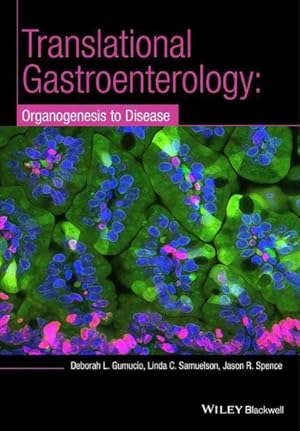
Translational Gastroenterology : Organogenesis to Disease
Da: GreatBookPrices, Columbia, MD, U.S.A.
Valutazione del venditore 5 su 5 stelle
EUR 149,44
Spedizione EUR 2,25
Spedito in U.S.A.Quantità: Più di 20 disponibili
Aggiungi al carrelloCondizione: As New. Unread book in perfect condition.
-

Translational Gastroenterology : Organogenesis to Disease
Da: GreatBookPricesUK, Woodford Green, Regno Unito
Valutazione del venditore 5 su 5 stelle
EUR 135,16
Spedizione EUR 17,32
Spedito da Regno Unito a U.S.A.Quantità: 11 disponibili
Aggiungi al carrelloCondizione: New.
-
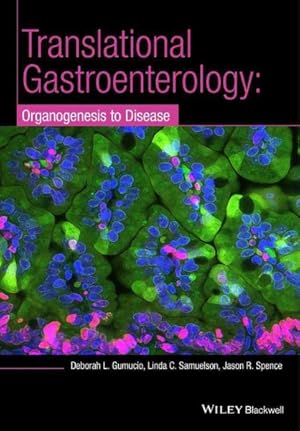
Translational Gastroenterology : Organogenesis to Disease
Da: GreatBookPricesUK, Woodford Green, Regno Unito
Valutazione del venditore 5 su 5 stelle
EUR 152,06
Spedizione EUR 17,32
Spedito da Regno Unito a U.S.A.Quantità: 11 disponibili
Aggiungi al carrelloCondizione: As New. Unread book in perfect condition.
-

Translational Research and Discovery in Gastroenterology
Lingua: Inglese
Editore: John Wiley and Sons Ltd, GB, 2014
ISBN 10: 1118492870 ISBN 13: 9781118492871
Da: Rarewaves.com USA, London, LONDO, Regno Unito
Valutazione del venditore 5 su 5 stelle
EUR 180,04
Spedizione gratuita
Spedito da Regno Unito a U.S.A.Quantità: 5 disponibili
Aggiungi al carrelloHardback. Condizione: New. Translational Gastroenterology: Organogenesis to Disease bridges the gap between basic and clinical research by providing information on GI (gastrointestinal) organ development discovered through scientific inquiry, alongside clinical observations of acquired and congenital abnormalities. Paired chapters, written from basic science and clinical viewpoints, review the major biological pathways and molecules at work in organ ontogeny and disease. In addition to a comprehensive survey of GI organ development and pathologies, the book also highlights model organisms and new areas of research, with chapters devoted to recent advances in the field of GI stem cell biology, and the potential for tissue engineering of GI organs. The topics covered provide a unique window onto current activity in the field of gastroenterology, fostering enhanced knowledge for developmental biologists as well as for clinical practitioners. Notable features include the following: . Basic science chapters review the molecular and cellular pathways of GI organ development alongside clinical chapters examining organ-based diseases, closing the gap between the bench and the clinic. . Derivative organs - esophagus, stomach, pylorus, small intestine, colon, liver, and pancreas -as well as tissues such as serosa and enteric nervous system that are common to multiple GI organs. . Chapters detailing the use of model organisms - Drosophila, sea urchin, zebrafish, C. elegans, Xenopus - for basic discovery studies are included. . Chapters on GI stem cells and the potential for tissue engineering of the GI organs provide a view to the future of research and therapy in these organs.
-

Translational Research and Discovery in Gastroenterology: Organogenesis to Disease
Lingua: Inglese
Editore: Wiley-Blackwell 2014-07-25, 2014
ISBN 10: 1118492870 ISBN 13: 9781118492871
Da: Chiron Media, Wallingford, Regno Unito
Valutazione del venditore 5 su 5 stelle
EUR 168,98
Spedizione EUR 17,88
Spedito da Regno Unito a U.S.A.Quantità: 9 disponibili
Aggiungi al carrelloHardcover. Condizione: New.
-
EUR 184,77
Spedizione EUR 2,56
Spedito in U.S.A.Quantità: Più di 20 disponibili
Aggiungi al carrelloCondizione: New. Brand new! Please provide a physical shipping address.
-
Translational Research and Discovery in Gastroenterology:.
Da: Majestic Books, Hounslow, Regno Unito
Valutazione del venditore 4 su 5 stelle

EUR 182,50
Spedizione EUR 7,50
Spedito da Regno Unito a U.S.A.Quantità: 3 disponibili
Aggiungi al carrelloCondizione: New. pp. 352.
-
Translational Research and Discovery in Gastroenterology:.
Da: Books Puddle, New York, NY, U.S.A.
Valutazione del venditore 4 su 5 stelle
Condizione: New. pp. 352.
-
Translational Research and Discovery in Gastroenterology: Organogenesis to Disease
Da: Revaluation Books, Exeter, Regno Unito
Valutazione del venditore 5 su 5 stelle
EUR 199,24
Spedizione EUR 14,43
Spedito da Regno Unito a U.S.A.Quantità: 2 disponibili
Aggiungi al carrelloHardcover. Condizione: Brand New. 336 pages. 9.75x6.75x0.75 inches. In Stock.
-

Translational Research and Discovery in Gastroenterology
Lingua: Inglese
Editore: John Wiley and Sons Ltd, GB, 2014
ISBN 10: 1118492870 ISBN 13: 9781118492871
Da: Rarewaves.com UK, London, Regno Unito
Valutazione del venditore 5 su 5 stelle
EUR 168,45
Spedizione EUR 75,05
Spedito da Regno Unito a U.S.A.Quantità: 5 disponibili
Aggiungi al carrelloHardback. Condizione: New. Translational Gastroenterology: Organogenesis to Disease bridges the gap between basic and clinical research by providing information on GI (gastrointestinal) organ development discovered through scientific inquiry, alongside clinical observations of acquired and congenital abnormalities. Paired chapters, written from basic science and clinical viewpoints, review the major biological pathways and molecules at work in organ ontogeny and disease. In addition to a comprehensive survey of GI organ development and pathologies, the book also highlights model organisms and new areas of research, with chapters devoted to recent advances in the field of GI stem cell biology, and the potential for tissue engineering of GI organs. The topics covered provide a unique window onto current activity in the field of gastroenterology, fostering enhanced knowledge for developmental biologists as well as for clinical practitioners. Notable features include the following: . Basic science chapters review the molecular and cellular pathways of GI organ development alongside clinical chapters examining organ-based diseases, closing the gap between the bench and the clinic. . Derivative organs - esophagus, stomach, pylorus, small intestine, colon, liver, and pancreas -as well as tissues such as serosa and enteric nervous system that are common to multiple GI organs. . Chapters detailing the use of model organisms - Drosophila, sea urchin, zebrafish, C. elegans, Xenopus - for basic discovery studies are included. . Chapters on GI stem cells and the potential for tissue engineering of the GI organs provide a view to the future of research and therapy in these organs.

