

Importo totale (1 articolo articoli):
Destinazione ordine:

john 1909 ewers (8 risultati)
Vai alla pagina principale dei risultati di ricerca
Filtri di ricerca
Tipo di articolo
- Tutti i tipi di prodotto
- Libri (8)
- Riviste e Giornali (Nessun altro risultato corrispondente a questo perfezionamento)
- Fumetti (Nessun altro risultato corrispondente a questo perfezionamento)
- Spartiti (Nessun altro risultato corrispondente a questo perfezionamento)
- Arte, Stampe e Poster (Nessun altro risultato corrispondente a questo perfezionamento)
- Fotografie (Nessun altro risultato corrispondente a questo perfezionamento)
- Mappe (Nessun altro risultato corrispondente a questo perfezionamento)
- Manoscritti e Collezionismo cartaceo (Nessun altro risultato corrispondente a questo perfezionamento)
Condizioni Maggiori informazioni
- Nuovo (3)
- Come nuovo, Ottimo o Quasi ottimo (3)
- Molto buono o Buono (Nessun altro risultato corrispondente a questo perfezionamento)
- Discreto o Mediocre (Nessun altro risultato corrispondente a questo perfezionamento)
- Come descritto (2)
Legatura
Ulteriori caratteristiche
- Prima ed. (Nessun altro risultato corrispondente a questo perfezionamento)
- Copia autograf. (Nessun altro risultato corrispondente a questo perfezionamento)
- Sovracoperta (Nessun altro risultato corrispondente a questo perfezionamento)
- Con foto (1)
- Non Print on Demand (7)
Lingua (2)
Spedizione gratuita
- Spedizione gratuita in U.S.A. (Nessun altro risultato corrispondente a questo perfezionamento)
Paese del venditore
Valutazione venditore
-
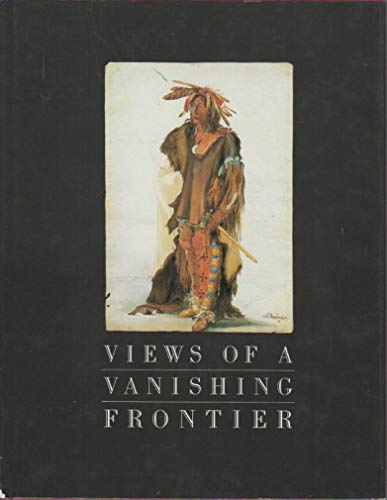
VIEWS OF A VANISHING FRONTIER.
Lingua: Inglese
Editore: Omaha, NE - Lincoln, NE; London: Center for Western Studies, Joslyn Art Museum - University of Nebraska Press (distributor), 1984., 1984
ISBN 10: 0936364130 ISBN 13: 9780936364131
Da: David Hallinan, Bookseller, Columbus, MS, U.S.A.
Valutazione del venditore 5 su 5 stelle

103 pages. Paperback: H 27.75cm x L 21.25cm. Black paper covers rubbed. Interior pages are clean. Binding is firm with some slight stress caused by 12 page staple-bound exhibit brochure laid-in between pages 64-65. A very good+ copy. Publisher's summary: "Catalogue of an exhibition which originated at the Joslyn Art Museum commemorating the 150th anniversary of the expedition of German Prince Maximilian of Wied and Swiss artist Karl Bodmer to North America." ISBN 0936364130.
-

George Catlin, Painter of Indians of the West / by John C. Ewers.
Da: GreatBookPrices, Columbia, MD, U.S.A.
Valutazione del venditore 5 su 5 stelle
EUR 18,12
Spedizione EUR 2,31
Spedito in U.S.A.Quantità: Più di 20 disponibili
Aggiungi al carrelloCondizione: As New. Unread book in perfect condition.
-

Artists of the Old West.[1819-1893].
Editore: Doubleday & Co. January 1965, 1965
Da: The Book Garden, Bountiful, UT, U.S.A.
Valutazione del venditore 5 su 5 stelle
Hardcover. Condizione: Very Good - Cash. Minor rubbing and edge wear to cover, with light reader wear to pages. Still great condition. Dust jacket has minor surface and edgewear. Stock photos may not look exactly like the book.
-
George Catlin, Painter of Indians of the West / by John C. Ewers.
Da: GreatBookPrices, Columbia, MD, U.S.A.
Valutazione del venditore 5 su 5 stelle
EUR 35,75
Spedizione EUR 2,31
Spedito in U.S.A.Quantità: Più di 20 disponibili
Aggiungi al carrelloCondizione: New.
-
George Catlin, Painter of Indians of the West / by John C. Ewers.
Da: GreatBookPricesUK, Woodford Green, Regno Unito
Valutazione del venditore 5 su 5 stelle
EUR 22,53
Spedizione EUR 17,61
Spedito da Regno Unito a U.S.A.Quantità: Più di 20 disponibili
Aggiungi al carrelloCondizione: New.
-
George Catlin, Painter of Indians of the West / by John C. Ewers.
Da: GreatBookPricesUK, Woodford Green, Regno Unito
Valutazione del venditore 5 su 5 stelle
EUR 25,52
Spedizione EUR 17,61
Spedito da Regno Unito a U.S.A.Quantità: Più di 20 disponibili
Aggiungi al carrelloCondizione: As New. Unread book in perfect condition.
-
George Catlin, Painter of Indians of the West / by John C. Ewers.
Da: THE SAINT BOOKSTORE, Southport, Regno Unito
Valutazione del venditore 5 su 5 stelle
EUR 22,54
Spedizione EUR 14,45
Spedito da Regno Unito a U.S.A.Quantità: Più di 20 disponibili
Aggiungi al carrelloPaperback / softback. Condizione: New. This item is printed on demand. New copy - Usually dispatched within 5-9 working days.
-
The Horse in Blackfoot Indian Culture: With Comparative material from Other Western Tribes
Editore: Smithsonian Institution, Washington DC, 1955
Da: Blacks Bookshop: Member of CABS 2017, IOBA, SIBA, ABA, Argillite, KY, U.S.A.
Membro dell'associazione: IOBA
Valutazione del venditore 5 su 5 stelle
Hardcover. Condizione: Near Fine. 5.75"x9" 374 pages; Rebound in red cloth library binding boards; gold lettering on spine; index. No DJ. B&W frontispiece of photo of Blackfoot Indian pony by Thomas Magee, 1910 of the Plains Indian Bulletin 159 Plate 1. Spine straight, binding tight, pages clean w/vanilla tone. X-library w/graphics & markings, book is wrapped and then boxed with tracking number. Thank you. John Canfield Ewers was an American ethnologist and museum curator. Known for his studies on the art and history of the American Plains Indians, he was described by The New York Times as one of his country's "foremost interpreters of American Indian culture. Much of the factual information on which this study is based was supplied by elderly, fullblood Piegan and Blood Indian informants, whose knowledge of the functions of horses in the late years of buffalo days was solidly grounded in personal experiences. These old people really loved horses and enjoyed talking about them. They were uniformly cooperative and interested in getting the record straight. Clark Wissler (1927, p. 154) has named the period 1540 to 1880 in the history of the Indian tribes of the Great Plains "the horse culture period." This period can be defined more accurately and meaningfully in cultural than in temporal terms. Among all the tribes of the area it began much later than 1540. With some tribes it ended before 1880. Yet for each Plains Indian tribe the horse culture period spanned the years between the acquisition and first use of horses and the extermination of the economically important buffalo in the region in which that tribe lived. Anthropologists and historians have been intrigued by the problem of the diffusion of the European horse among the Plains Indians. It is well known that many tribes began to acquire horses before their first recorded contacts with white men. Paucity of documentation has given rise to much speculation as to the sources of the horses diffused to these tribes, the date when the first Plains Indians acquired horses, the rate of diffusion from tribe to tribe, and the conditions under which the spread took place. The three Blackfoot tribes of the northwestern Plains, the Piegan, Blood, and North Blackfoot, were among those tribes that possessed horses when first met by literate white men. To view their acquisition in proper historical and cultural perspective it is necessary to consider the larger problem of the diffusion of horses to the northern Plains and Plateau tribes.


