Importo totale (1 articolo articoli):
Destinazione ordine:

juris zarins (24 risultati)
Vai alla pagina principale dei risultati di ricerca
Filtri di ricerca
Tipo di articolo
- Tutti i tipi di prodotto
- Libri (24)
- Riviste e Giornali (Nessun altro risultato corrispondente a questo perfezionamento)
- Fumetti (Nessun altro risultato corrispondente a questo perfezionamento)
- Spartiti (Nessun altro risultato corrispondente a questo perfezionamento)
- Arte, Stampe e Poster (Nessun altro risultato corrispondente a questo perfezionamento)
- Fotografie (Nessun altro risultato corrispondente a questo perfezionamento)
- Mappe (Nessun altro risultato corrispondente a questo perfezionamento)
- Manoscritti e Collezionismo cartaceo (Nessun altro risultato corrispondente a questo perfezionamento)
Condizioni Maggiori informazioni
- Nuovo (18)
- Come nuovo, Ottimo o Quasi ottimo (5)
- Molto buono o Buono (1)
- Discreto o Mediocre (Nessun altro risultato corrispondente a questo perfezionamento)
- Come descritto (Nessun altro risultato corrispondente a questo perfezionamento)
Legatura
Ulteriori caratteristiche
- Prima ed. (2)
- Copia autograf. (Nessun altro risultato corrispondente a questo perfezionamento)
- Sovracoperta (2)
- Con foto (17)
- Non Print on Demand (24)
Lingua (2)
Prezzo
- Qualsiasi prezzo
- Inferiore a EUR 20 (Nessun altro risultato corrispondente a questo perfezionamento)
- EUR 20 a EUR 45
- Superiore a EUR 45
Spedizione gratuita
Paese del venditore
Valutazione venditore
-

Dhofar Through the Ages : An Ecological, Archaeological and Historical Landscape
Da: GreatBookPrices, Columbia, MD, U.S.A.
Valutazione del venditore 5 su 5 stelle

Condizione: New.
-

Dhofar Through the Ages : An Ecological, Archaeological and Historical Landscape
Da: GreatBookPrices, Columbia, MD, U.S.A.
Valutazione del venditore 5 su 5 stelle
Condizione: As New. Unread book in perfect condition.
-

Dhofar Through the Ages
Da: Rarewaves.com USA, London, LONDO, Regno Unito
Valutazione del venditore 5 su 5 stelle
EUR 55,47
Spedizione gratuita
Spedito da Regno Unito a U.S.A.Quantità: 1 disponibili
Aggiungi al carrelloPaperback. Condizione: New. Dhofar, the southern governorate of Oman, lies within a distinctive ecological zone due to the summer Southwest Monsoon. It is home to numerous indigenous succulent plants, the most famous of which is frankincense (Boswellia sacra). The region, tied in the past to both Oman and Yemen, has a long and distinguished archaeological past stretching back to the Lower Paleolithic ca. 1.5 my BP. Dhofar is also home to a distinctive people, the Modern South Arabian Languages speakers (MSAL) since at least the last 15,000 years. Ancient Zafar (Al-Habudi), now called Al-Baleed, and its successor Salalah was and is the province's largest city. From the seventh century onwards until the arrival of the Portuguese in 1504 AD Al-Baleed dominated the central southern Arabian coastline politically and economically. Archaeological surveys and excavations in the governorate, beginning in 1954, have brought to light Dhofar's ancient past.
-

Paperback. Condizione: New. Dhofar, the southern governorate of Oman, lies within a distinctive ecological zone due to the summer Southwest Monsoon. It is home to numerous indigenous succulent plants, the most famous of which is frankincense (Boswellia sacra). The region, tied in the past to both Oman and Yemen, has a long and distinguished archaeological past stretching back to the Lower Paleolithic ca. 1.5 my BP. Dhofar is also home to a distinctive people, the Modern South Arabian Languages speakers (MSAL) since at least the last 15,000 years. Ancient Zafar (Al-Habudi), now called Al-Baleed, and its successor Salalah was and is the province's largest city. From the seventh century onwards until the arrival of the Portuguese in 1504 AD Al-Baleed dominated the central southern Arabian coastline politically and economically. Archaeological surveys and excavations in the governorate, beginning in 1954, have brought to light Dhofar's ancient past.
-

Dhofar Through the Ages: An Ecological, Archaeological and Historical Landscape (The Archaeological Heritage of Oman): 1
Lingua: Inglese
Editore: Archaeopress Archaeology 2019-03-11, 2019
ISBN 10: 1789691605 ISBN 13: 9781789691603
Da: Chiron Media, Wallingford, Regno Unito
Valutazione del venditore 5 su 5 stelle
EUR 43,94
Spedizione EUR 18,24
Spedito da Regno Unito a U.S.A.Quantità: 2 disponibili
Aggiungi al carrelloPaperback. Condizione: New.
-

Dhofar Through the Ages : An Ecological, Archaeological and Historical Landscape
Da: GreatBookPricesUK, Woodford Green, Regno Unito
Valutazione del venditore 5 su 5 stelle
EUR 45,50
Spedizione EUR 17,66
Spedito da Regno Unito a U.S.A.Quantità: 2 disponibili
Aggiungi al carrelloCondizione: New.
-
Dhofar Through the Ages: An Ecological, Archaeological and Historical Landscape (The Archaeological Heritage of Oman)
Da: Ria Christie Collections, Uxbridge, Regno Unito
Valutazione del venditore 5 su 5 stelle
EUR 49,21
Spedizione EUR 14,11
Spedito da Regno Unito a U.S.A.Quantità: 2 disponibili
Aggiungi al carrelloCondizione: New. In.
-

Dhofar Through the Ages : An Ecological, Archaeological and Historical Landscape
Da: GreatBookPricesUK, Woodford Green, Regno Unito
Valutazione del venditore 5 su 5 stelle
EUR 50,81
Spedizione EUR 17,66
Spedito da Regno Unito a U.S.A.Quantità: 2 disponibili
Aggiungi al carrelloCondizione: As New. Unread book in perfect condition.
-
Dhofar Through The Ages: An Ecological, Archaeological And Historical Landscape
Da: Revaluation Books, Exeter, Regno Unito
Valutazione del venditore 5 su 5 stelle
EUR 53,87
Spedizione EUR 14,72
Spedito da Regno Unito a U.S.A.Quantità: 2 disponibili
Aggiungi al carrelloPaperback. Condizione: Brand New. 128 pages. 11.50x8.25x0.25 inches. In Stock.
-

EUR 50,90
Spedizione EUR 48,99
Spedito da Germania a U.S.A.Quantità: 2 disponibili
Aggiungi al carrelloCondizione: New. Dhofar, the southern governorate of Oman, lies within a distinctive ecological zone due to the summer Southwest Monsoon. Archaeological surveys and excavations in the governorate, beginning in 1954, have brought to light Dhofar s ancient past stretching bac.
-

Dhofar Through the Ages
Da: Rarewaves USA United, OSWEGO, IL, U.S.A.
Valutazione del venditore 5 su 5 stelle
Paperback. Condizione: New. Dhofar, the southern governorate of Oman, lies within a distinctive ecological zone due to the summer Southwest Monsoon. It is home to numerous indigenous succulent plants, the most famous of which is frankincense (Boswellia sacra). The region, tied in the past to both Oman and Yemen, has a long and distinguished archaeological past stretching back to the Lower Paleolithic ca. 1.5 my BP. Dhofar is also home to a distinctive people, the Modern South Arabian Languages speakers (MSAL) since at least the last 15,000 years. Ancient Zafar (Al-Habudi), now called Al-Baleed, and its successor Salalah was and is the province's largest city. From the seventh century onwards until the arrival of the Portuguese in 1504 AD Al-Baleed dominated the central southern Arabian coastline politically and economically. Archaeological surveys and excavations in the governorate, beginning in 1954, have brought to light Dhofar's ancient past.
-

Domestication of Equidae in Third Millennium Bce Mesopotamia : Equidae of Mesopotamia (3rd Millennium Bce)
Da: GreatBookPrices, Columbia, MD, U.S.A.
Valutazione del venditore 5 su 5 stelle
Condizione: As New. Unread book in perfect condition.
-

Domestication of Equidae in Third Millennium Bce Mesopotamia : Equidae of Mesopotamia (3rd Millennium Bce)
Da: GreatBookPrices, Columbia, MD, U.S.A.
Valutazione del venditore 5 su 5 stelle
Condizione: New.
-

CUSAS 24 (Hardcover)
Da: Grand Eagle Retail, Bensenville, IL, U.S.A.
Valutazione del venditore 5 su 5 stelle
Hardcover. Condizione: new. Hardcover. Analysis of the role of equidae and the introduction of the horse into the ancient Near East through analysis of archaeological remains, glyptic evidence, and cuneiform texts. Shipping may be from multiple locations in the US or from the UK, depending on stock availability.
-

EUR 51,81
Spedizione EUR 62,86
Spedito da Germania a U.S.A.Quantità: 1 disponibili
Aggiungi al carrelloTaschenbuch. Condizione: Neu. Neuware - Dhofar, the southern governorate of Oman, lies within a distinctive ecological zone due to the summer Southwest Monsoon. Archaeological surveys and excavations in the governorate, beginning in 1954, have brought to light Dhofar's ancient past stretching back to the Lower Paleolithic ca. 1.5 my BP.
-

Dhofar Through the Ages
Da: Rarewaves.com UK, London, Regno Unito
Valutazione del venditore 5 su 5 stelle
EUR 51,35
Spedizione EUR 76,54
Spedito da Regno Unito a U.S.A.Quantità: 1 disponibili
Aggiungi al carrelloPaperback. Condizione: New. Dhofar, the southern governorate of Oman, lies within a distinctive ecological zone due to the summer Southwest Monsoon. It is home to numerous indigenous succulent plants, the most famous of which is frankincense (Boswellia sacra). The region, tied in the past to both Oman and Yemen, has a long and distinguished archaeological past stretching back to the Lower Paleolithic ca. 1.5 my BP. Dhofar is also home to a distinctive people, the Modern South Arabian Languages speakers (MSAL) since at least the last 15,000 years. Ancient Zafar (Al-Habudi), now called Al-Baleed, and its successor Salalah was and is the province's largest city. From the seventh century onwards until the arrival of the Portuguese in 1504 AD Al-Baleed dominated the central southern Arabian coastline politically and economically. Archaeological surveys and excavations in the governorate, beginning in 1954, have brought to light Dhofar's ancient past.
-

EUR 57,30
Spedizione EUR 70,00
Spedito da Germania a U.S.A.Quantità: 1 disponibili
Aggiungi al carrelloTaschenbuch. Condizione: Neu. Dhofar Through the Ages | An Ecological, Archaeological and Historical Landscape | Juris Zarins (u. a.) | Taschenbuch | The Archaeological Heritage of Oman | Kartoniert / Broschiert | Englisch | 2019 | Archaeopress | EAN 9781789691603 | Verantwortliche Person für die EU: Libri GmbH, Europaallee 1, 36244 Bad Hersfeld, gpsr[at]libri[dot]de | Anbieter: preigu.
-
Cusas 24 Domestication Equidae Third-h
Da: Kennys Bookshop and Art Galleries Ltd., Galway, GY, Irlanda
Valutazione del venditore 5 su 5 stelle
EUR 134,25
Spedizione EUR 10,50
Spedito da Irlanda a U.S.A.Quantità: 1 disponibili
Aggiungi al carrelloCondizione: New. 2014. Illustrated. hardcover. . . . . .
-

EUR 114,41
Spedizione EUR 48,99
Spedito da Germania a U.S.A.Quantità: 1 disponibili
Aggiungi al carrelloGebunden. Condizione: New.
-
Cusas 24 Domestication Equidae Third-h
Da: Kennys Bookstore, Olney, MD, U.S.A.
Valutazione del venditore 5 su 5 stelle
Condizione: New. 2014. Illustrated. hardcover. . . . . . Books ship from the US and Ireland.
-

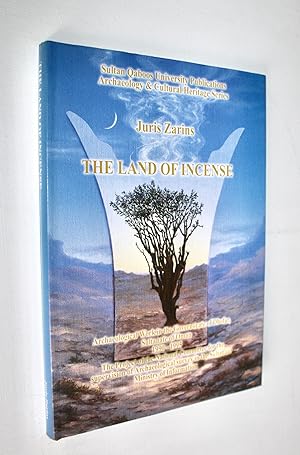
The Land of Incense - Archaeological Work in the Governorate of Dhofar, Sultanate of Oman 1990-1995
Lingua: Inglese
Editore: Sultan Qaboos University, Oman, 2001
Da: Arete Books, Melbourne, VIC, Australia
Valutazione del venditore 5 su 5 stelle
Prima edizione
EUR 157,49
Spedizione EUR 41,07
Spedito da Australia a U.S.A.Quantità: 1 disponibili
Aggiungi al carrelloHardcover. Condizione: Fine. Condizione sovraccoperta: Fine. 1st Edition.
-

EUR 157,87
Spedizione EUR 68,71
Spedito da Germania a U.S.A.Quantità: 1 disponibili
Aggiungi al carrelloBuch. Condizione: Neu. Neuware.
-
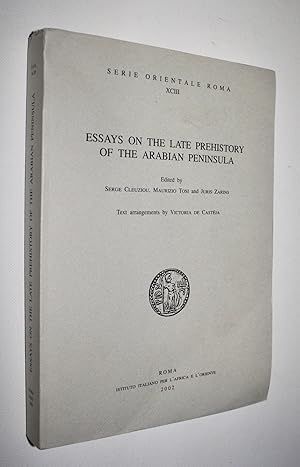
Essays on the Late Prehistory of the Arabian Peninsula (Rome Oriental Series / Serie Orientale Roma Vol. XCIII)
Lingua: Inglese
Editore: Istituto Italiano per l'Africa e l'Oriente, Roma, 2002
Prima edizione
EUR 576,13
Spedizione EUR 29,44
Spedito da Regno Unito a U.S.A.Quantità: 1 disponibili
Aggiungi al carrelloSoft cover. Condizione: Very Good. 1st Edition. Original printed wraps 17 x 24cm. 438pp including numerous b/w photo illustrations, drawings, maps, charts and tables. Very good, bumped with short tear to the spine head, lightly creased to corners, with label remnants to title page. The essays are divided into 3 parts: 1. Adaptations to the Desert Environments (5 papers of which 3 in English, 1 Italian, 1 French); 2. Emerging Complexity and the Archaeological Record (5 papers in English); 3. Early Contacts with the Urban Civilizations (6 of which 5 English, 1 French). Most relate to sites in Oman and Yemen. There is also an introduction by the editors, and a list of contributors.
-
The Land of Incense - Archaeological Work in the Governorate of Dhofar, Sultanate of Oman 1990-1995, The Project of the National Committee for the supervision of Archaeological survey in the Sultanate (Sultan Qaboos University Archaeology & Cultural Heritage Series Vol. 1)
Editore: Ministry of Information; Sultan Qaboos University, Sultanate of Oman, 2001
EUR 576,13
Spedizione EUR 29,44
Spedito da Regno Unito a U.S.A.Quantità: 1 disponibili
Aggiungi al carrelloHardcover. Condizione: Near Fine. Condizione sovraccoperta: Near Fine. Gilt-titled brown cloth in colour illustrated jacket 22 x 31cm. Printed by Al Nahda Printing Press Oman. 192pp with royal portrait frontis and many mostly b/w illustrations + 5 folding sheets o/w 2 printed to both sides. Near fine with marks to text block edge and rubbing to jacket edges. This original English language edition was also translated into Arabic by the Department of Archaeology at Sultan Qaboos University, with both published in 2001. Both look to be scarce with Worldcat and Jisc listing 17 locations for the English and 2 for the Arabic. This significant work presents findings from Southwest Missouri State University's expedition to Dhofar led by Professor Juris Zarins in 1990-95: "The importance of this study stems from the fact that there are only a few comprehensive reports about the archaeology of Dhofar. Indeed [it] further authenticates the important and influential role in the region played by Dhofar for multitudes since early prehistory". The expedition followed work for a documentary by Nicholas Clapp and George Hedges with Ranulph Fiennes in 1990, about the search for the lost city of Ubar. First sponsored by the Oman International Bank, the Government took over in 1991 when Sultan Qaboos established the National Committee for Supervision of Archaeological Survey. Building on its findings Sultan Qaboos University joined excavations at Al Baleed in Salalah from 1996 as part of a master plan to restore and develop the site as a visitor park. The first in a projected series, this high profile publication also aimed to encourage Arab and international experts to come forward to explore joint projects with the University and Omani Government (Preface by Mohammed Bin Al-Zubair Bin Ali, Advisor to HM The Sultan for Economic Planning Affairs, President of Sultan Qaboos University; introductory note by Abdul Aziz bin Mohammed Al Rowas, Minister of Information; Acknowledgments; Editorial Preface by Moawiyah M. Ibrahim, Editor in Chief). Chapters cover early explorers (Bertram Thomas, Clapp, and before); Ecology; Summer Monsoon; Palaeolithic and Neolithic archaeology; Dhofar (origins of frankincense trade, Dhofar and the West); Bronze Age (northern Oman / East Arabia, Hadhramaut, Dhofar and the incense trade); Iron Age (northern Oman, Yemen, Dhofar, Shisr, Al Humran, and the frankincense trade); Dhofar Regional Survey; the Mahra; the Omani; classical sources; and the Islamic Period. Among its findings were modern man's arrival in Najd and Shisr 100,000 years ago; abandonment of most of the Peninsula due to extreme aridity 20-8,000 years ago; arrival of pastoral nomads from the Levant 6,000 BC establishing ancient trade routes, maritime trade, and beginning the incense trade to meet demand from Mesopotamia; retrenchment, camel domestication and copper trade with Masirah and Dhofar in the Bronze Age; re-emergence of herders with crops in the Iron Age in a lifestyle similar to the modern Mahra, migration of Omani Arabs, influence of Parthian Persians, the possibility Shisr could be either Ubar or Omanum Emporium, emergence of Al Baleed as a major port, etc. Interior trade prospered in the Islamic Period driven by horses and incense, ties with India were sustained, and coastal Dhofar participated in long distance trade. Ottoman and Portuguese invasions brought things to a standstill. Illustrations include drawings, maps and plans including fold-outs showing sites, past and current stream flows, and sections based on Ptolomey's map. Colour illustrations include the Bertram Thomas Ubar Road and remote sensing map of Salalah.