

Importo totale (1 articolo articoli):
Destinazione ordine:

ketchum john davidson (2 risultati)
Vai alla pagina principale dei risultati di ricerca
Filtri di ricerca
Tipo di articolo
- Tutti i tipi di prodotto
- Libri (2)
- Riviste e Giornali (Nessun altro risultato corrispondente a questo perfezionamento)
- Fumetti (Nessun altro risultato corrispondente a questo perfezionamento)
- Spartiti (Nessun altro risultato corrispondente a questo perfezionamento)
- Arte, Stampe e Poster (Nessun altro risultato corrispondente a questo perfezionamento)
- Fotografie (Nessun altro risultato corrispondente a questo perfezionamento)
- Mappe (Nessun altro risultato corrispondente a questo perfezionamento)
- Manoscritti e Collezionismo cartaceo (Nessun altro risultato corrispondente a questo perfezionamento)
Condizioni Maggiori informazioni
- Nuovo (Nessun altro risultato corrispondente a questo perfezionamento)
- Come nuovo, Ottimo o Quasi ottimo (Nessun altro risultato corrispondente a questo perfezionamento)
- Molto buono o Buono (1)
- Discreto o Mediocre (Nessun altro risultato corrispondente a questo perfezionamento)
- Come descritto (1)
Legatura
- Tutte
- Rilegato (1)
- Brossura (Nessun altro risultato corrispondente a questo perfezionamento)
Ulteriori caratteristiche
- Prima ed. (2)
- Copia autograf. (Nessun altro risultato corrispondente a questo perfezionamento)
- Sovracoperta (1)
- Con foto (1)
- Non Print on Demand (2)
Lingua (1)
Prezzo
- Qualsiasi prezzo
- Inferiore a EUR 20 (Nessun altro risultato corrispondente a questo perfezionamento)
- EUR 20 a EUR 45
- Superiore a EUR 45
Spedizione gratuita
- Spedizione gratuita in U.S.A. (Nessun altro risultato corrispondente a questo perfezionamento)
Paese del venditore
Valutazione venditore
-
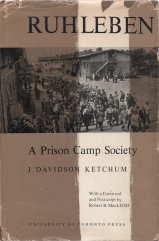
RUHLEBEN, a prison camp Society
Editore: University of Toronto Press, Toronto, 1965
Da: Harry E Bagley Books, Fredericton, NB, Canada
Valutazione del venditore 4 su 5 stelle

Prima edizione
EUR 31,10
Spedizione EUR 25,88
Spedito da Canada a U.S.A.Quantità: 1 disponibili
Aggiungi al carrelloHardcover. Condizione: Very Good. Condizione sovraccoperta: Poor. First Edition. brown cloth, dust jacket, xxiii, 397 pages illustrations, index, edge chips and tears to d,j, in protective mylar jacket,CONTENTS: A racehors near Berlin -- November 1914: the first three weeks -- The achievement of solidarity -- Rumours and morale -- The winter of 1914-15 -- Community structure: the barracks -- Ruhleben's families: the boxes -- Physical improvements: physical and mental health -- The first spring and summer -- The explosion of activity -- The organized camp -- The world of sport -- Education, the arts, religion -- Camp roles, leadership, and status -- Lovernment and politics -- Life in the new society -- The long years: 1916 to 1917 -- The end of the Ruhleben story -- Implications: sociological and psychological. "Ruhleben internment camp was a civilian detention camp during World War I. It was located in Ruhleben, then a village 10 km (6.2 mi) to the west of Berlin, now split between the districts of Spandau and Charlottenburg-Wilmersdorf. The camp was originally a horse racecourse . The camp detainees included male citizens of the Allied Powers living, studying, working or on holiday in Germany at the outbreak of World War I. They also included the crews of several civilian ships stranded in German harbours or captured at sea. There were also quite a number of fishermen captured from trawlers which were sunk in the North Sea in the first days of the war - these were mainly men from Hull, Grimsby and Boston. The camp contained between 4,000 and 5,500 prisoners, most of them British."--Wikipedia. Size: 8 vo, Book.
-

Ruhleben: A Prison Camp Society
Editore: University of Toronto Press [c1965], [Toronto], 1965
Da: Ground Zero Books, Ltd., Silver Spring, MD, U.S.A.
Valutazione del venditore 5 su 5 stelle

Prima edizione
Condizione: very good, fair. First? Edition. First? Printing. 24 cm, 397, illus., front DJ flap price clipped. The author was studying music in Germany in 1914 when he was interned for four years in the prison camp at Ruhleben. The experience led him to the study of psychology. After Dr. Ketchum's death, Robert B. MacLeod wrote the Foreword and Postscript, providing perspective.


