

Importo totale (1 articolo articoli):
Destinazione ordine:

koch h g (144 risultati)
Vai alla pagina principale dei risultati di ricerca
Filtri di ricerca
Tipo di articolo
- Tutti i tipi di prodotto
- Libri (143)
- Riviste e Giornali (Nessun altro risultato corrispondente a questo perfezionamento)
- Fumetti (Nessun altro risultato corrispondente a questo perfezionamento)
- Spartiti (Nessun altro risultato corrispondente a questo perfezionamento)
- Arte, Stampe e Poster (Nessun altro risultato corrispondente a questo perfezionamento)
- Fotografie (Nessun altro risultato corrispondente a questo perfezionamento)
- Mappe (1)
- Manoscritti e Collezionismo cartaceo (Nessun altro risultato corrispondente a questo perfezionamento)
Condizioni Maggiori informazioni
- Nuovo (84)
- Come nuovo, Ottimo o Quasi ottimo (11)
- Molto buono o Buono (17)
- Discreto o Mediocre (Nessun altro risultato corrispondente a questo perfezionamento)
- Come descritto (32)
Legatura
Ulteriori caratteristiche
- Prima ed. (11)
- Copia autograf. (Nessun altro risultato corrispondente a questo perfezionamento)
- Sovracoperta (3)
- Con foto (72)
- Non Print on Demand (111)
Lingua (4)
Spedizione gratuita
Paese del venditore
Valutazione venditore
-

THE PANIC BROADCAST; The Whole Story of the Night the Martians Landed; Orson welles' Legendary Radio Show, Invasion from Mars
Editore: Avon, NY, 1971
Da: Books from the Crypt, N. Potomac, MD, U.S.A.
Membro dell'associazione: IOBA
Valutazione del venditore 5 su 5 stelle

Mass Market Paperback. Condizione: Very Good-. 6th printing #26906. Cover art is uncredited. "The complete script, with many photographs, cartoons and newspaper articles of the astounding aftermath! An introductory interview with Arthur C. Clarke." Cover partially sunned 9see scan); tanning; a little creasing. Book.
-

Suchen und Finden, ein systematisches Verzeichnis der Romane, Novellen , Erzählungen , Geschichten u. Erlebnisbücher
Editore: Leipzig Stuttgart Oktober 1935, 1935
Da: Antiquariat Bücherparadies, Landsberg, Germania
Valutazione del venditore 4 su 5 stelle

EUR 5,40
Spedizione EUR 5,80
Spedito da Germania a U.S.A.Quantità: 1 disponibili
Aggiungi al carrello115 S., brosch., guter zustand,
-
Hardcover. Condizione: very good. Very Good Copy. Customer Service Guaranteed.
-

CDU CSU verhinderte Staatspartei.
Da: books4less (Versandantiquariat Petra Gros GmbH & Co. KG), Welling, Germania
Valutazione del venditore 5 su 5 stelle
EUR 1,45
Spedizione EUR 9,95
Spedito da Germania a U.S.A.Quantità: 1 disponibili
Aggiungi al carrelloTaschenbuch, Condizione: Gut. 239 Seiten, Papierqualität und Alter führten zu einer Nachdunklung der Seiten und der Buchschnitt ist angebräunt. Im übrigen ist das Taschenbuch in einem guten Zustand. Sprache: Deutsch Gewicht in Gramm: 300.
-
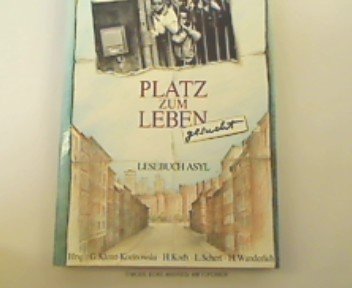
Platz zum Leben gesucht
Editore: Signal Verlag 1990, 1990
ISBN 10: 3797102593 ISBN 13: 9783797102591
Da: Antiquariat Walter Nowak, Göttingen, Germania
Valutazione del venditore 5 su 5 stelle
EUR 4,00
Spedizione EUR 9,90
Spedito da Germania a U.S.A.Quantità: 1 disponibili
Aggiungi al carrelloguter Zustand. Lesebuch Asyl Gewicht in Gramm: 550.
-

Andorra ist überall
Da: Antiquariat Walter Nowak, Göttingen, Germania
Valutazione del venditore 5 su 5 stelle
EUR 5,00
Spedizione EUR 9,90
Spedito da Germania a U.S.A.Quantità: 1 disponibili
Aggiungi al carrelloguter Zustand. Lesebuch Vorurteile Gewicht in Gramm: 550.
-

Hannoversches Lesebuch für die Grundschulen des Regierungsbezirkes Hildesheim. Erster Teil: Unterstufe.
Editore: Carl Meyer, Hannover, 1926
Da: Antiquariat Puderbach, Dresden, Germania
Valutazione del venditore 5 su 5 stelle
EUR 9,00
Spedizione EUR 12,00
Spedito da Germania a U.S.A.Quantità: 1 disponibili
Aggiungi al carrelloIllustriert. Pappeinband 22x15 cm, Einband stark berieben und fleckig, Rücken repariert, Namenseinträge auf Vorsatzblatt und Titelseite, sehr vereinzelt Bleistiftmarkierungen. 126 S. Gewicht in Gramm: 270.
-
Neue Erde ohne Himmel. Der Kampf des Atheismus gegen das Christentum in der "DDR". Modell einer weltweiten Auseinandersetzung. Sonderausg.
Lingua: Tedesco
Editore: Stgt., Quell-V., 1963., 1963
Da: Bojara & Bojara-Kellinghaus OHG, Osnabrück, Germania
Valutazione del venditore 5 su 5 stelle
EUR 8,00
Spedizione EUR 9,95
Spedito da Germania a U.S.A.Quantità: 1 disponibili
Aggiungi al carrelloMit Abb. a. Taf. 592 S. OLwd. - Gutes Ex. 1.
-
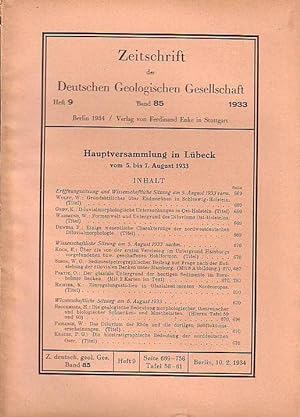
Zeitschrift der Deutschen Geologischen Gesellschaft. Band 85, Heft 9, 10. Februar 1934. Hauptversammlung in Lübeck am 5. bis 6. August 1933 und mit Vorträgen der wissenschaftlichen Sitzung am 5. und 6. August 1933 von: W. Wolff (Grundsätzliches über Endmoränen in Schleswig-Holstein), K. Gripp, W. Wassmund, F. Dewers, E. Koch, W.G. Simon, O. Pratje, K. Richter, H. Brockmeier, W. Passarge, P.G. Krause.
Editore: Stuttgart: Verlag Ferdinand Enke, 1934., 1934
Da: Antiquariat Carl Wegner, Berlin, B, Germania
Membro dell'associazione: GIAQ
Valutazione del venditore 5 su 5 stelle
Prima edizione
EUR 15,60
Spedizione EUR 9,00
Spedito da Germania a U.S.A.Quantità: 2 disponibili
Aggiungi al carrelloSoftcover. Seiten 669 - 756 der fortlaufenden Jahrgangspaginierung mit mehreren Textabbildungen und den Tafeln 58 - 61. Gelbes Originalheft. 25 x 17,5 cm. Durchgehend wellig und minimal feuchtrandig. Insgesamt jedoch sauberes Exemplar in noch gutem Zustand. -- Bitte Portokosten außerhalb EU erfragen! / Please ask for postage costs outside EU! / S ' il vous plait demander des frais de port en dehors de l ' UE! // Bitte beachten Sie auch unsere Fotos! / Please also note our photos! / Veuillez noter nos photos -- Nehmen Sie sich ein gutes Buch mit auf die Sommerwiese. Bei uns werden Sie fündig! -- Wir kaufen Ihre werthaltigen Bücher! K21696-209872.
-
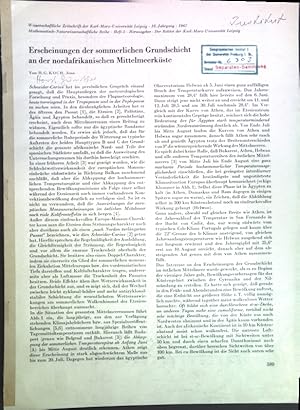
Erscheinungen der sommerlichen Grundschicht an der nordafrikanischen Mittelmeerküste;
Lingua: Tedesco
Data di pubblicazione: 1967
Da: books4less (Versandantiquariat Petra Gros GmbH & Co. KG), Welling, Germania
Valutazione del venditore 5 su 5 stelle
EUR 9,95
Spedizione EUR 9,95
Spedito da Germania a U.S.A.Quantità: 1 disponibili
Aggiungi al carrelloHeft; Condizione: Gut. 10 Seiten mit zahlr. Ill. Separatum/Sonderdruck aus wissenschaftlicher Bibliothek mit den entsprechenden Kennzeichnungen (Vermerke, Stempel.); Seiten alters-/papierbedingt angebräunt; ansonsten ordentlicher Erhaltungszustand. Aufgrund der Rarität und des geringen Umfangs des Werkes bitten wir um Verständnis, dass dieser Sonderdruck vom Rückgaberecht ausgeschlossen ist. Sprache: Deutsch Gewicht in Gramm: 80.
-

Metallogenesis and Tectonics of the Russian Far East, Alaska, and the Canadian Cordillera Professional Paper 1697
Editore: USGS, 2005
ISBN 10: 0607984074 ISBN 13: 9780607984071
Da: Crossroads Books, Reno, NV, U.S.A.
Membro dell'associazione: IOBA
Valutazione del venditore 5 su 5 stelle
Condizione: new. "The Proterozoic and Phanerozoic metallogenic and tectonic evolution of the Russian Far East, Alaska, and the Canadian Cordillera is recorded in the cratons, craton margins, and orogenic collages of the Circum-North Pacific mountain belts that separate the North Pacific from the eastern North Asian and western North American Cratons. The collages consist of tectonostratigraphic terranes and contained metallogenic belts, which are composed of fragments of igneous arcs, accretionary-wedge and subduction-zone complexes, passive continental margins, and cratons. The terranes are overlapped by continental-margin-arc and sedimentary-basin assemblages and contained metallogenic belts. The metallogenic and geologic history of terranes, overlap assemblages, cratons, and craton margins has been complicated by postaccretion dismemberment and translation during strike-slip faulting that occurred subparallel to continental margins. Seven processes overlapping in time were responsible for most of metallogenic and geologic complexities of the region (1) In the Early and Middle Proterozoic, marine sedimentary basins developed on major cratons and were the loci for ironstone (Superior Fe) deposits and sediment-hosted Cu deposits that occur along both the North Asia Craton and North American Craton Margin. (2) In the Late Proterozoic, Late Devonian, and Early Carboniferous, major periods of rifting occurred along the ancestral margins of present-day Northeast Asia and northwestern North America. The rifting resulted in fragmentation of each continent, and formation of cratonal and passive continental-margin terranes that eventually migrated and accreted to other sites along the evolving margins of the original or adjacent continents. The rifting also resulted in formation of various massive-sulfide metallogenic belts. (3) From about the late Paleozoic through the mid-Cretaceous, a succession of island arcs and contained igneous-arc-related metallogenic belts and tectonically paired subduction zones formed near continental margins. (4) From about mainly the mid-Cretaceous through the present, a succession of continental-margin igneous arcs (some extending offshore into island arcs) and contained metallogenic belts, and tectonically paired subduction zones formed along the continental margins. (5) From about the Jurassic to the present, oblique convergence and rotations caused orogen-parallel sinistral, and then dextral displacements within the plate margins of the Northeast Asian and North American Cratons. The oblique convergences and rotations resulted in the fragmentation, displacement, and duplication of formerly more continuous arcs, subduction zones, passive continental margins, and contained metallogenic belts. These fragments were subsequently accreted along the margins of the expanding continental margins. (6) From the Early Jurassic through Tertiary, movement of the upper continental plates toward subduction zones resulted in strong plate coupling and accretion of the former island arcs, subduction zones, and contained metallogenic belts to continental margins. In this region, the multiple arc accretions were accompanied and followed by crustal thickening, anatexis, metamorphism, formation of collision-related metallogenic belts, and uplift; this resulted in the substantial growth of the North Asian and North American continents. (7) In the middle and late Cenozoic, oblique to orthogonal convergence of the Pacific Plate with present-day Alaska and Northeast Asia resulted in formation of the present ring of volcanoes and contained metallogenic belts around the Circum-North Pacific. Oblique convergence between the Pacific Plate and Alaska also resulted in major dextral-slip faulting in interior and southern Alaska and along the western part of the Aleutian- Wrangell arc. Associated with dextral-slip faulting was crustal extrusion of terranes from western Alaska into the Bering Sea. " DV2. softcover, wrapped in shrink wrap, tight, crisp, 429 pages.
-

Metallogenesis and Tectonics of the Russian Far East, Alaska, and the Canadian Cordillera Professional Paper 1697
Editore: USGS, 2005
ISBN 10: 0607984074 ISBN 13: 9780607984071
Da: Crossroads Books, Reno, NV, U.S.A.
Membro dell'associazione: IOBA
Valutazione del venditore 5 su 5 stelle
Condizione: new. "The Proterozoic and Phanerozoic metallogenic and tectonic evolution of the Russian Far East, Alaska, and the Canadian Cordillera is recorded in the cratons, craton margins, and orogenic collages of the Circum-North Pacific mountain belts that separate the North Pacific from the eastern North Asian and western North American Cratons. The collages consist of tectonostratigraphic terranes and contained metallogenic belts, which are composed of fragments of igneous arcs, accretionary-wedge and subduction-zone complexes, passive continental margins, and cratons. The terranes are overlapped by continental-margin-arc and sedimentary-basin assemblages and contained metallogenic belts. The metallogenic and geologic history of terranes, overlap assemblages, cratons, and craton margins has been complicated by postaccretion dismemberment and translation during strike-slip faulting that occurred subparallel to continental margins. Seven processes overlapping in time were responsible for most of metallogenic and geologic complexities of the region (1) In the Early and Middle Proterozoic, marine sedimentary basins developed on major cratons and were the loci for ironstone (Superior Fe) deposits and sediment-hosted Cu deposits that occur along both the North Asia Craton and North American Craton Margin. (2) In the Late Proterozoic, Late Devonian, and Early Carboniferous, major periods of rifting occurred along the ancestral margins of present-day Northeast Asia and northwestern North America. The rifting resulted in fragmentation of each continent, and formation of cratonal and passive continental-margin terranes that eventually migrated and accreted to other sites along the evolving margins of the original or adjacent continents. The rifting also resulted in formation of various massive-sulfide metallogenic belts. (3) From about the late Paleozoic through the mid-Cretaceous, a succession of island arcs and contained igneous-arc-related metallogenic belts and tectonically paired subduction zones formed near continental margins. (4) From about mainly the mid-Cretaceous through the present, a succession of continental-margin igneous arcs (some extending offshore into island arcs) and contained metallogenic belts, and tectonically paired subduction zones formed along the continental margins. (5) From about the Jurassic to the present, oblique convergence and rotations caused orogen-parallel sinistral, and then dextral displacements within the plate margins of the Northeast Asian and North American Cratons. The oblique convergences and rotations resulted in the fragmentation, displacement, and duplication of formerly more continuous arcs, subduction zones, passive continental margins, and contained metallogenic belts. These fragments were subsequently accreted along the margins of the expanding continental margins. (6) From the Early Jurassic through Tertiary, movement of the upper continental plates toward subduction zones resulted in strong plate coupling and accretion of the former island arcs, subduction zones, and contained metallogenic belts to continental margins. In this region, the multiple arc accretions were accompanied and followed by crustal thickening, anatexis, metamorphism, formation of collision-related metallogenic belts, and uplift; this resulted in the substantial growth of the North Asian and North American continents. (7) In the middle and late Cenozoic, oblique to orthogonal convergence of the Pacific Plate with present-day Alaska and Northeast Asia resulted in formation of the present ring of volcanoes and contained metallogenic belts around the Circum-North Pacific. Oblique convergence between the Pacific Plate and Alaska also resulted in major dextral-slip faulting in interior and southern Alaska and along the western part of the Aleutian- Wrangell arc. Associated with dextral-slip faulting was crustal extrusion of terranes from western Alaska into the Bering Sea. " DV1. softcover, wrapped in shrink wrap, tight, crisp, 429 pages.
-

Metallogenesis and Tectonics of the Russian Far East, Alaska, and the Canadian Cordillera Professional Paper 1697
Editore: USGS, 2005
ISBN 10: 0607984074 ISBN 13: 9780607984071
Da: Crossroads Books, Reno, NV, U.S.A.
Membro dell'associazione: IOBA
Valutazione del venditore 5 su 5 stelle
Condizione: new. "The Proterozoic and Phanerozoic metallogenic and tectonic evolution of the Russian Far East, Alaska, and the Canadian Cordillera is recorded in the cratons, craton margins, and orogenic collages of the Circum-North Pacific mountain belts that separate the North Pacific from the eastern North Asian and western North American Cratons. The collages consist of tectonostratigraphic terranes and contained metallogenic belts, which are composed of fragments of igneous arcs, accretionary-wedge and subduction-zone complexes, passive continental margins, and cratons. The terranes are overlapped by continental-margin-arc and sedimentary-basin assemblages and contained metallogenic belts. The metallogenic and geologic history of terranes, overlap assemblages, cratons, and craton margins has been complicated by postaccretion dismemberment and translation during strike-slip faulting that occurred subparallel to continental margins. Seven processes overlapping in time were responsible for most of metallogenic and geologic complexities of the region (1) In the Early and Middle Proterozoic, marine sedimentary basins developed on major cratons and were the loci for ironstone (Superior Fe) deposits and sediment-hosted Cu deposits that occur along both the North Asia Craton and North American Craton Margin. (2) In the Late Proterozoic, Late Devonian, and Early Carboniferous, major periods of rifting occurred along the ancestral margins of present-day Northeast Asia and northwestern North America. The rifting resulted in fragmentation of each continent, and formation of cratonal and passive continental-margin terranes that eventually migrated and accreted to other sites along the evolving margins of the original or adjacent continents. The rifting also resulted in formation of various massive-sulfide metallogenic belts. (3) From about the late Paleozoic through the mid-Cretaceous, a succession of island arcs and contained igneous-arc-related metallogenic belts and tectonically paired subduction zones formed near continental margins. (4) From about mainly the mid-Cretaceous through the present, a succession of continental-margin igneous arcs (some extending offshore into island arcs) and contained metallogenic belts, and tectonically paired subduction zones formed along the continental margins. (5) From about the Jurassic to the present, oblique convergence and rotations caused orogen-parallel sinistral, and then dextral displacements within the plate margins of the Northeast Asian and North American Cratons. The oblique convergences and rotations resulted in the fragmentation, displacement, and duplication of formerly more continuous arcs, subduction zones, passive continental margins, and contained metallogenic belts. These fragments were subsequently accreted along the margins of the expanding continental margins. (6) From the Early Jurassic through Tertiary, movement of the upper continental plates toward subduction zones resulted in strong plate coupling and accretion of the former island arcs, subduction zones, and contained metallogenic belts to continental margins. In this region, the multiple arc accretions were accompanied and followed by crustal thickening, anatexis, metamorphism, formation of collision-related metallogenic belts, and uplift; this resulted in the substantial growth of the North Asian and North American continents. (7) In the middle and late Cenozoic, oblique to orthogonal convergence of the Pacific Plate with present-day Alaska and Northeast Asia resulted in formation of the present ring of volcanoes and contained metallogenic belts around the Circum-North Pacific. Oblique convergence between the Pacific Plate and Alaska also resulted in major dextral-slip faulting in interior and southern Alaska and along the western part of the Aleutian- Wrangell arc. Associated with dextral-slip faulting was crustal extrusion of terranes from western Alaska into the Bering Sea." DV4. softcover, wrapped in shrink wrap, tight, crisp, 429 pages.
-

Metallogenesis and Tectonics of the Russian Far East, Alaska, and the Canadian Cordillera Professional Paper 1697
Editore: USGS, 2005
ISBN 10: 0607984074 ISBN 13: 9780607984071
Da: Crossroads Books, Reno, NV, U.S.A.
Membro dell'associazione: IOBA
Valutazione del venditore 5 su 5 stelle
Condizione: new. The Proterozoic and Phanerozoic metallogenic and tectonic evolution of the Russian Far East, Alaska, and the Canadian Cordillera is recorded in the cratons, craton margins, and orogenic collages of the Circum-North Pacific mountain belts that separate the North Pacific from the eastern North Asian and western North American Cratons. The collages consist of tectonostratigraphic terranes and contained metallogenic belts, which are composed of fragments of igneous arcs, accretionary-wedge and subduction-zone complexes, passive continental margins, and cratons. The terranes are overlapped by continental-margin-arc and sedimentary-basin assemblages and contained metallogenic belts. The metallogenic and geologic history of terranes, overlap assemblages, cratons, and craton margins has been complicated by postaccretion dismemberment and translation during strike-slip faulting that occurred subparallel to continental margins. Seven processes overlapping in time were responsible for most of metallogenic and geologic complexities of the region (1) In the Early and Middle Proterozoic, marine sedimentary basins developed on major cratons and were the loci for ironstone (Superior Fe) deposits and sediment-hosted Cu deposits that occur along both the North Asia Craton and North American Craton Margin. (2) In the Late Proterozoic, Late Devonian, and Early Carboniferous, major periods of rifting occurred along the ancestral margins of present-day Northeast Asia and northwestern North America. The rifting resulted in fragmentation of each continent, and formation of cratonal and passive continental-margin terranes that eventually migrated and accreted to other sites along the evolving margins of the original or adjacent continents. The rifting also resulted in formation of various massive-sulfide metallogenic belts. (3) From about the late Paleozoic through the mid-Cretaceous, a succession of island arcs and contained igneous-arc-related metallogenic belts and tectonically paired subduction zones formed near continental margins. (4) From about mainly the mid-Cretaceous through the present, a succession of continental-margin igneous arcs (some extending offshore into island arcs) and contained metallogenic belts, and tectonically paired subduction zones formed along the continental margins. (5) From about the Jurassic to the present, oblique convergence and rotations caused orogen-parallel sinistral, and then dextral displacements within the plate margins of the Northeast Asian and North American Cratons. The oblique convergences and rotations resulted in the fragmentation, displacement, and duplication of formerly more continuous arcs, subduction zones, passive continental margins, and contained metallogenic belts. These fragments were subsequently accreted along the margins of the expanding continental margins. (6) From the Early Jurassic through Tertiary, movement of the upper continental plates toward subduction zones resulted in strong plate coupling and accretion of the former island arcs, subduction zones, and contained metallogenic belts to continental margins. In this region, the multiple arc accretions were accompanied and followed by crustal thickening, anatexis, metamorphism, formation of collision-related metallogenic belts, and uplift; this resulted in the substantial growth of the North Asian and North American continents. (7) In the middle and late Cenozoic, oblique to orthogonal convergence of the Pacific Plate with present-day Alaska and Northeast Asia resulted in formation of the present ring of volcanoes and contained metallogenic belts around the Circum-North Pacific. Oblique convergence between the Pacific Plate and Alaska also resulted in major dextral-slip faulting in interior and southern Alaska and along the western part of the Aleutian- Wrangell arc. Associated with dextral-slip faulting was crustal extrusion of terranes from western Alaska into the Bering Sea. DX1. softcover, wrapped in shrink wrap, tight, crisp, 429 pages.
-
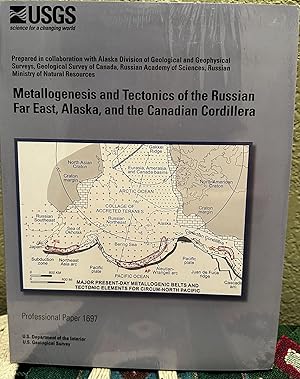
Metallogenesis and Tectonics of the Russian Far East, Alaska, and the Canadian Cordillera Professional Paper 1697
Editore: USGS, 2005
ISBN 10: 0607984074 ISBN 13: 9780607984071
Da: Crossroads Books, Reno, NV, U.S.A.
Membro dell'associazione: IOBA
Valutazione del venditore 5 su 5 stelle
Condizione: new. The Proterozoic and Phanerozoic metallogenic and tectonic evolution of the Russian Far East, Alaska, and the Canadian Cordillera is recorded in the cratons, craton margins, and orogenic collages of the Circum-North Pacific mountain belts that separate the North Pacific from the eastern North Asian and western North American Cratons. The collages consist of tectonostratigraphic terranes and contained metallogenic belts, which are composed of fragments of igneous arcs, accretionary-wedge and subduction-zone complexes, passive continental margins, and cratons. The terranes are overlapped by continental-margin-arc and sedimentary-basin assemblages and contained metallogenic belts. The metallogenic and geologic history of terranes, overlap assemblages, cratons, and craton margins has been complicated by postaccretion dismemberment and translation during strike-slip faulting that occurred subparallel to continental margins. Seven processes overlapping in time were responsible for most of metallogenic and geologic complexities of the region (1) In the Early and Middle Proterozoic, marine sedimentary basins developed on major cratons and were the loci for ironstone (Superior Fe) deposits and sediment-hosted Cu deposits that occur along both the North Asia Craton and North American Craton Margin. (2) In the Late Proterozoic, Late Devonian, and Early Carboniferous, major periods of rifting occurred along the ancestral margins of present-day Northeast Asia and northwestern North America. The rifting resulted in fragmentation of each continent, and formation of cratonal and passive continental-margin terranes that eventually migrated and accreted to other sites along the evolving margins of the original or adjacent continents. The rifting also resulted in formation of various massive-sulfide metallogenic belts. (3) From about the late Paleozoic through the mid-Cretaceous, a succession of island arcs and contained igneous-arc-related metallogenic belts and tectonically paired subduction zones formed near continental margins. (4) From about mainly the mid-Cretaceous through the present, a succession of continental-margin igneous arcs (some extending offshore into island arcs) and contained metallogenic belts, and tectonically paired subduction zones formed along the continental margins. (5) From about the Jurassic to the present, oblique convergence and rotations caused orogen-parallel sinistral, and then dextral displacements within the plate margins of the Northeast Asian and North American Cratons. The oblique convergences and rotations resulted in the fragmentation, displacement, and duplication of formerly more continuous arcs, subduction zones, passive continental margins, and contained metallogenic belts. These fragments were subsequently accreted along the margins of the expanding continental margins. (6) From the Early Jurassic through Tertiary, movement of the upper continental plates toward subduction zones resulted in strong plate coupling and accretion of the former island arcs, subduction zones, and contained metallogenic belts to continental margins. In this region, the multiple arc accretions were accompanied and followed by crustal thickening, anatexis, metamorphism, formation of collision-related metallogenic belts, and uplift; this resulted in the substantial growth of the North Asian and North American continents. (7) In the middle and late Cenozoic, oblique to orthogonal convergence of the Pacific Plate with present-day Alaska and Northeast Asia resulted in formation of the present ring of volcanoes and contained metallogenic belts around the Circum-North Pacific. Oblique convergence between the Pacific Plate and Alaska also resulted in major dextral-slip faulting in interior and southern Alaska and along the western part of the Aleutian- Wrangell arc. Associated with dextral-slip faulting was crustal extrusion of terranes from western Alaska into the Bering Sea. softcover, wrapped in shrink wrap, tight, crisp, 429 pages.
-

Abhandlungen aus dem Kaiser Wilhelm-Institut für Physikalische Chemie und Elektrochemie. XXVIII. (28.) Band 1941: R.Baule - Über die Ausbreitung einer thermischen Störung. Der übermolekulare Aufbau der Hydratcellulose. Die Einführung der Blättchenmicelle in die Theorie der Deformationsvorgänge / D. Beischer - Neuere Methoden zur Erforschung der Struktur kolloider Systeme / F. Frey - Über die Kondensation von Dämpfen in einem Trägergas / R.Fricke, R.Haul, W.Holzmüller, E. Jenckel, H.Klette, H.-W. Koch, J.Komor, O.Kratky, A. Lüttringhaus, J.C. Nicolas, A. Pongratz, Th. Schoon, D.Schade, R.Schultze, F. Seelich, A. Sekora, H.Siebert, H.Stage, P.A. Thiessen, R.Treer, K.Ueberreuter, A.Winkel, H.Witzmann
Editore: Berlin-Dahlem, Kaiser Wilhelm-Institut für Physikalische Chemie und Elektrochemie 1942., 1942
Da: Antiquariat Carl Wegner, Berlin, B, Germania
Membro dell'associazione: GIAQ
Valutazione del venditore 5 su 5 stelle
Prima edizione
EUR 26,00
Spedizione EUR 9,00
Spedito da Germania a U.S.A.Quantità: 1 disponibili
Aggiungi al carrelloHardcover. Gr.-8° ( 23 : 16 cm). Neuerer Halbleinenband mit goldgeprägtem Rückentitel. (4), 570 Seiten mit sehr zahlreichen Abbildungen, Skizzen, Diagrammen etc. Auf dem vorderen Vorsatz mit Stempel: Mit den besten Empfehlungen überreicht von P. A. Thiessen. Mit eingebunden zwei Gedenkphotos für Uffz. Konrad Bläsius, gef. als Fallschirmjäger auf Kreta 20.5.1941 und Uffz. Heinz Böge, gef. 22.7.1941 in Rußland. Innen wie außen sauber, gutes Exemplar. Es handelt sich um gesammelte Sonderabdrucke aus diversen Fachzeitschriften wie z.B.: VDI-Beihefte, Ztschr. für anorg. und allgem. Chemie, Ztschr. für physik. Chemie, Justus Liebig's Annalen der Chemie, aber auch um Vorträge bei versch. Institutionen. Beiträge unter anderem von . -- Bitte Portokosten außerhalb EU erfragen! / Please ask for postage costs outside EU! / S ' il vous plait demander des frais de port en dehors de l ' UE! // Bitte beachten Sie auch unsere Fotos! / Please also note our photos! / Veuillez noter nos photos -- Nehmen Sie sich ein gutes Buch mit auf die Sommerwiese. Bei uns werden Sie fündig! -- Wir kaufen Ihre werthaltigen Bücher! Chem.
-

Hannoversches Lesebuch für die Grundschulen des des Regierungsbezirks Hildesheim. Zweiter Teil: 3. und 4. Schuljahr.
Lingua: Tedesco
Editore: Verlag von Carl Meyer, Hannover, 1929
Da: KULTur-Antiquariat, Boizenburg, MV, Germania
Valutazione del venditore 5 su 5 stelle
Prima edizione
EUR 14,20
Spedizione EUR 17,00
Spedito da Germania a U.S.A.Quantità: 1 disponibili
Aggiungi al carrelloGebundene Ausgabe, Halbleinen. Condizione: Gut. 1. Auflage. 291Seiten, mit s.w. Abbildungen. Buch gut erhalten, Einband und Buchrücken angeschmutzt, Buchblock vom Einband etwas gelöst, Seiten altersbedingt nachgedunklt, Schnitt angeshcmutzt. Sprache: Deutsch Gewicht in Gramm: 520.
-
der Aufschluss - Jahrgang 69 Ausgabe 1-6 2018 (aus dem Inhalt u.a.: Selenid-Mineralisation , Epsomit , Epidot in Eisenkiesel , Korallenfauna , Kreide Park Uberaba , Urucum , Riesendiamanten , Trés Ilhotas , Corumbá , Der Harz , Kreidetransgression zwischen Elbtalzone und Erzgebirge , Blauquarz , Dawsonit & Britholith , Mineralienfunde der Ost- und Westeifel , An der Schanz , Bernsteinklumpen , Kozákov und Levin , Fundstellen in Sachsen , Brekzie , Zwischen Weichsel- Kalt- und Eisenzeit , Pergatit , Shatter-Cone-Bildung
Editore: VFMG e.V. / Heidelberg, 2018
Da: Akademische Buchhandlung Antiquariat, Freiberg, Germania
Membro dell'associazione: BOEV
Valutazione del venditore 5 su 5 stelle
Prima edizione
AffareEUR 26,25
Spedizione EUR 17,50
Spedito da Germania a U.S.A.Quantità: 1 disponibili
Aggiungi al carrelloSoftcover. Condizione: Wie neu. 1. Auflage. 380 S., 6 Hefte , neuwertig.
-
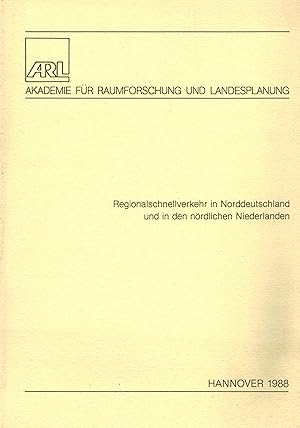
Regionalschnellverkehr in Norddeutschland und in den nördlichen
Da: Clivia Mueller, Isernhagen, Germania
Valutazione del venditore 5 su 5 stelle
EUR 10,30
Spedizione EUR 24,10
Spedito da Germania a U.S.A.Quantità: 1 disponibili
Aggiungi al carrelloNiederlanden. Akademie für Raumforschung und Landesplanung. V+69 S.Quart.m.Abb.Kt.-2). Akademie für Raumforschung. Hannover. 1988. Mit Gebrauchsspuren/Used condition. Kartoniert/Paperback. Sprache: deutsch/german.
-
![Immagine del venditore per Mathematics In Berlin. [Neubuch]. ed. H. Begehr . on behalf of the Berliner Mathematische Gesellschaft. venduto da ANTIQUARIAT Franke BRUDDENBOOKS](https://pictures.abebooks.com/inventory/md/md32158086095.jpg)
Mathematics In Berlin. [Neubuch]. ed. H. Begehr . on behalf of the Berliner Mathematische Gesellschaft.
Da: ANTIQUARIAT Franke BRUDDENBOOKS, Lübeck, Germania
Valutazione del venditore 5 su 5 stelle
EUR 52,00
Spedizione EUR 18,18
Spedito da Germania a U.S.A.Quantità: 1 disponibili
Aggiungi al carrelloBroschur, 8°. Condizione: Neu. 1998. 216 S. Buch ist neu, aus priv. Vorbesitz, ungelesen. -----Inhalt:. This little book is conceived as a service to mathematicians attending the 1998 International Congress of Mathematicians in Berlin. It presents a comprehensive, condensed overview of mathematical activity in Berlin, from Leibniz almost to the present day (without, however, including biographies of living mathematicians). Since many towering figures in mathematical history worked in Berlin, most of the chapters of this book are concise biographies. These are held together by a few survey articles presenting the overall development of entire periods of scientific life at Berlin. Overlaps between various chapters and differences in style between the chap ters were inevitable, but sometimes this provided opportunities to show different aspects of a single historical event - for instance, the Kronecker-Weierstrass con troversy. The book aims at readability rather than scholarly completeness. There are no footnotes, only references to the individual bibliographies of each chapter. Still, we do hope that the texts brought together here, and written by the various authors for this volume, constitute a solid introduction to the history of Berlin mathematics. Mathematics at the Prussian Academy of Sciences 1700-1810.- Mathematics in Berlin, 1810-1933.- Augustus Leopold Crelle.- Gustav Peter Lejeune Dirichlet.- Carl Gustav Jacob Jacobi.- Jacob Steiner and Synthetic Geometry.- Gotthold Eisenstein.- Kummer and Kronecker.- Weierstrass and some members of his circle: Kovalevskaia, Fuchs, Schwarz, Schottky.- Frobenius, Schur, and the Berlin Algebraic Tradition.- Erhard Schmidt, John von Neumann.- Constantin Carathéodory.- Richard von Mises.- Einstein in Berlin.- The Nazi era: the Berlin way of politicizing mathematics.- The University of Berlin from Reopening until 1953.- Helmut Hasse, Hermann Ludwig Schmid and their students in Berlin.- Freie Universität Berlin, a summary of its history.- Mathematics at the Berlin Technische Hochschule/Technische Universität.- Mathematics in Berlin at the Humboldt University: from 1953 until now.- The Mathematical Institute of the Academy of Sciences of the GDR.- Fast Algorithms, Fast Computers: The Konrad-Zuse-Zentrum Berlin (ZIB).- Weierstrass Institute for Applied Analysis and Stochastics (WIAS).- Zentralblatt für Mathematik und ihre Grenzgebiete.- Sources of photographs.- Addresses of authors and editors. ISBN: 9783764359430 Wir senden umgehend mit beiliegender MwSt.Rechnung. Sprache: Englisch Gewicht in Gramm: 288.
-

Platz zum Leben gesucht
ISBN 10: 3797102593 ISBN 13: 9783797102591
Da: Clivia Mueller, Isernhagen, Germania
Valutazione del venditore 5 su 5 stelle
EUR 10,80
Spedizione EUR 24,10
Spedito da Germania a U.S.A.Quantità: 1 disponibili
Aggiungi al carrelloLesebuch Asyl. 223 S. gr.8. mit Textabbildungen. ISBN: 3797102593. Signal. Baden-Baden. 1987. Guter Zustand/Good condition. Leinen mit Schutzumschlag/Hardcover/Dustjacket. Sprache: deutsch/german.
-
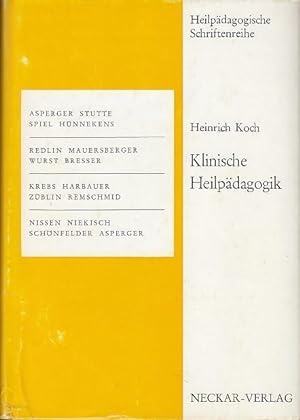
Klinische Heilpädagogik. (= Heilpädagogische Schriftenreihe hrsg. von Prof. W. Hofmann und Dr. W. Katein).
Editore: Villingen, Neckar - Verlag, 1973., 1973
Da: Antiquariat Carl Wegner, Berlin, B, Germania
Membro dell'associazione: GIAQ
Valutazione del venditore 5 su 5 stelle
Prima edizione
EUR 37,00
Spedizione EUR 9,00
Spedito da Germania a U.S.A.Quantità: 1 disponibili
Aggiungi al carrelloHardcover. Originalpappband im Schutzumschlag, 21 x 15 cm, 158 Seiten, gut erhalten. -- Bitte Portokosten außerhalb EU erfragen! / Please ask for postage costs outside EU! / S ' il vous plait demander des frais de port en dehors de l ' UE! // Bitte beachten Sie auch unsere Fotos! / Please also note our photos! / Veuillez noter nos photos -- Nehmen Sie sich ein gutes Buch mit auf die Sommerwiese. Bei uns werden Sie fündig! -- Wir kaufen Ihre werthaltigen Bücher! Paeda.
-
War of the World: The Actual Broadcast By The Mercury Theatre on the Air as Heard Over Columbia Broadcasting System, October 30, 1938. 2 Record Set.
Editore: Murray Hill Records
Da: Bibliodisia Books, Caxton Club, Chicago, IL, U.S.A.
Membro dell'associazione: MWABA
Valutazione del venditore 5 su 5 stelle
Prima edizione
No Binding. Condizione: As New. First Edition. 12" LPs. Sealed in the original plastic; never played. Date not visible on outside, but appears to be from the 1970s or earlier.
-

Mathematics In Berlin
Lingua: Inglese
Editore: Birkh�user Basel 1998-09-02, 1998
ISBN 10: 3764359439 ISBN 13: 9783764359430
Da: Chiron Media, Wallingford, Regno Unito
Valutazione del venditore 5 su 5 stelle
EUR 57,03
Spedizione EUR 17,96
Spedito da Regno Unito a U.S.A.Quantità: 10 disponibili
Aggiungi al carrelloPaperback. Condizione: New.
-
![Immagine dell'editore per Die Police. Ein Versicherungsalmanach. [Firmenschrift der Albingia Versicherungsgruppe]. venduto da Versandantiquariat Georg Koch](https://pictures.abebooks.com/isbn/9783882910070-it-300.jpg)
Die Police. Ein Versicherungsalmanach. [Firmenschrift der Albingia Versicherungsgruppe].
Lingua: Tedesco
Editore: O. O., P.F.K. Verlagsgesellschaft, o. J.
ISBN 10: 3882910070 ISBN 13: 9783882910070
Da: Versandantiquariat Georg Koch, München, Germania
Valutazione del venditore 4 su 5 stelle
EUR 6,00
Spedizione EUR 35,00
Spedito da Germania a U.S.A.Quantità: 1 disponibili
Aggiungi al carrello143 S. m. zahlr. Ill., 21,5 x 17 cm, ill. OPbd. (Gutes Exemplar) Versand per Deutsche Post /DHL. Vorkasse grundsätzlich vorbehalten. BECAUSE OF THE EPR REGULATION NO SHIPPIMG POSSIBLE TO AUSTRIA, BULGARIA, FRANCE, GREECE, LUXEMBOURG, POLAND, ROMANIA, SWEDE, SLOVAKIA, SPAIN. Sprache: Deutsch Gewicht in Gramm: 500.
-
10 Bücher aus der Reige 'Verständliche Wissenschaft'. 1. Was ist physikalische Chemie, 2. Schallwellen un Lichtwellen, 3. Die Sonnenuhren, 4. Atomkraft, 5. Baum und Wald, 6. Das Buch der Bücher, 7. Tropfen, Blasen und Lamellen, 8. Die Erde als Planet, 9. Ebbe und Flut des Meeres, 10. Musik und Sprache
Editore: Berlin, Springer Verlag, -1973, 1968
Da: Pallas Books Antiquarian Booksellers, Leiden, Paesi Bassi
Valutazione del venditore 4 su 5 stelle
EUR 20,00
Spedizione EUR 27,00
Spedito da Paesi Bassi a U.S.A.Quantità: 1 disponibili
Aggiungi al carrellopaperbound, samll 8vo, 10 volumes ca. 1000 pp. nrs. 49, 42, 97, 83, 29, 73, 69, 109, 102, 50 of the series; very good condition (almost unused).
-

Boote aus aller Welt. [Katalog zur Sonderausstellung Boote aus Aller Welt, 30. Januar - 5. Mai 1985 Staatliche Museen Preussischer Kulturbesitz, Museum für Völkerkunde Berlin.
Lingua: Tedesco
Editore: Berlin Frölich und Kaufmann,, 1985
ISBN 10: 3887251709 ISBN 13: 9783887251703
Da: Versandantiquariat Georg Koch, München, Germania
Valutazione del venditore 4 su 5 stelle
EUR 9,00
Spedizione EUR 35,00
Spedito da Germania a U.S.A.Quantità: 1 disponibili
Aggiungi al carrello328 S. m. zahlr. Abb., 22 x 23 cm, OKart. (Gutes Exemplar) Versand per Deutsche Post /DHL. Vorkasse grundsätzlich vorbehalten. BECAUSE OF THE EPR REGULATION NO SHIPPIMG POSSIBLE TO AUSTRIA, BULGARIA, FRANCE, GREECE, LUXEMBOURG, POLAND, ROMANIA, SWEDE, SLOVAKIA, SPAIN. Sprache: Deutsch Gewicht in Gramm: 1500.
-
G. H. von Koch. Banbrytare i svensk socialvård.
Editore: Rabén & Sjögren 1980, 1980
Da: Rönnells Antikvariat AB, Stockholm, Svezia
Membro dell'associazione: ILAB SVAF
Valutazione del venditore 5 su 5 stelle
EUR 15,06
Spedizione EUR 26,00
Spedito da Svezia a U.S.A.Quantità: 1 disponibili
Aggiungi al carrello250 (2) s. + planschsid. Förlagsband med skyddsomslag.
-

Neue und alte Märchen. Zwölf Märchen mit 12 farbigen und vielen schwarzen Bildern von G(ertrud) Caspari, F(ritz) Koch-Gotha, E(ernst) Kutzer, R. Hansche und H. Koberstein.
Editore: Leipzig, Hahn, (um 1920)., 1920
Da: Antiquariat MEINDL & SULZMANN OG, Wien - Vienna, Austria
Valutazione del venditore 5 su 5 stelle
EUR 20,00
Spedizione EUR 35,00
Spedito da Austria a U.S.A.Quantità: 1 disponibili
Aggiungi al carrelloGr.-8°. Mit12 farb. Tafeln und zahlr. Textillustrationen. 32 Bll. Farb. illustr. OHln. (fleckig, beschabt und bestoßen. Kanten und Ecken mit Läsuren. Papier wasserrandig und etw. gebräunt).
-

Hannoversches Lesebuch für die Grundschulen des
Da: Clivia Mueller, Isernhagen, Germania
Valutazione del venditore 5 su 5 stelle
EUR 18,90
Spedizione EUR 24,10
Spedito da Germania a U.S.A.Quantità: 1 disponibili
Aggiungi al carrelloRegierungsbezirks Hildesheim. 1. Teil: Unterstufe. Vlg. C. Meyer. Hann. 1929. VII + 126 S. gr8. m. zahlr. Zeichnungen. Hln. -3/4).


