

Importo totale (1 articolo articoli):
Destinazione ordine:

la forge louis (79 risultati)
Vai alla pagina principale dei risultati di ricerca
Filtri di ricerca
Tipo di articolo
- Tutti i tipi di prodotto
- Libri (79)
- Riviste e Giornali (Nessun altro risultato corrispondente a questo perfezionamento)
- Fumetti (Nessun altro risultato corrispondente a questo perfezionamento)
- Spartiti (Nessun altro risultato corrispondente a questo perfezionamento)
- Arte, Stampe e Poster (Nessun altro risultato corrispondente a questo perfezionamento)
- Fotografie (Nessun altro risultato corrispondente a questo perfezionamento)
- Mappe (Nessun altro risultato corrispondente a questo perfezionamento)
- Manoscritti e Collezionismo cartaceo (Nessun altro risultato corrispondente a questo perfezionamento)
Condizioni Maggiori informazioni
Legatura
Ulteriori caratteristiche
- Prima ed. (6)
- Copia autograf. (Nessun altro risultato corrispondente a questo perfezionamento)
- Sovracoperta (Nessun altro risultato corrispondente a questo perfezionamento)
- Con foto (56)
- Non Print on Demand (38)
Lingua (4)
Spedizione gratuita
Paese del venditore
Valutazione venditore
-

Trait? de l'Esprit de l'Homme, de Ses Facultez, de Ses Fonctions, Et de Son Union Avec le Corps, Suivant les Principes de Mr. Descartes (Classic Reprint)
Da: PBShop.store US, Wood Dale, IL, U.S.A.
Valutazione del venditore 5 su 5 stelle

PAP. Condizione: New. New Book. Shipped from UK. Established seller since 2000.
-
Trait? de l'Esprit de l'Homme, de Ses Facultez, de Ses Fonctions, Et de Son Union Avec le Corps, Suivant les Principes de Mr. Descartes (Classic Reprint)
Da: PBShop.store UK, Fairford, GLOS, Regno Unito
Valutazione del venditore 4 su 5 stelle

EUR 27,79
Spedizione EUR 6,80
Spedito da Regno Unito a U.S.A.Quantità: 15 disponibili
Aggiungi al carrelloPAP. Condizione: New. New Book. Shipped from UK. Established seller since 2000.
-

EUR 18,00
Spedizione EUR 17,43
Spedito da Francia a U.S.A.Quantità: 1 disponibili
Aggiungi al carrelloCondizione: Neuf.
-

Trait? de l''Esprit de l''Homme, de Ses Facultez, de Ses Fonctions, Et de Son Union Avec le Corps, Suivant les Principes de Mr. Descartes (Classic Reprint)
Da: PBShop.store US, Wood Dale, IL, U.S.A.
Valutazione del venditore 5 su 5 stelle
HRD. Condizione: New. New Book. Shipped from UK. Established seller since 2000.
-
Trait? de l''Esprit de l''Homme, de Ses Facultez, de Ses Fonctions, Et de Son Union Avec le Corps, Suivant les Principes de Mr. Descartes (Classic Reprint)
Da: PBShop.store UK, Fairford, GLOS, Regno Unito
Valutazione del venditore 4 su 5 stelle
EUR 33,65
Spedizione EUR 6,80
Spedito da Regno Unito a U.S.A.Quantità: 15 disponibili
Aggiungi al carrelloHRD. Condizione: New. New Book. Shipped from UK. Established seller since 2000.
-
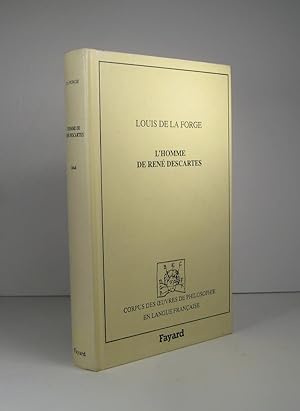
L'Homme de René Descartes et un traité de la formation du foetus
Editore: Fayard, Paris, 1999
Da: Librairie Bonheur d'occasion (LILA / ILAB), Montréal, QC, Canada
Membro dell'associazione: ABAC ILAB
Valutazione del venditore 5 su 5 stelle
EUR 28,89
Spedizione EUR 20,68
Spedito da Canada a U.S.A.Quantità: 1 disponibili
Aggiungi al carrelloCouverture rigide. Condizione: Très bon. In-8. 430 pages. Coll. "Corpus des oeuvres de philosophie en langue française". Réédition de cet ouvrage paru en 1664.
-

Traité de l'Esprit de l'Homme,
Da: SKULIMA Wiss. Versandbuchhandlung, Westhofen, Germania
Valutazione del venditore 5 su 5 stelle
EUR 18,00
Spedizione EUR 40,00
Spedito da Germania a U.S.A.Quantità: 3 disponibili
Aggiungi al carrelloCondizione: Wie Neu. de ses facultés ou fonctions et de son union avec le corps. Suivant les principes de René Descartes. Reprint der Ausgabe Amsterdam 1666. XLIV,462 Seiten, Leinen (Olms Verlag 1984). Statt EUR 88,00. Gewicht: 650 g - Gebunden/Gebundene Ausgabe.
-

TRAITE DE L'ESPRIT DE L'HOMME.: de ses facultes ou fonctions et de son union avec le corps. Suivant les principes de Rene Descartes. (1666)
Editore: Hildesheim: G.Olms, 1984., 1984
Da: SUBUN-SO BOOK STORE, ABAJ-ILAB, Tokyo, Giappone
Membro dell'associazione: ILAB
Valutazione del venditore 4 su 5 stelle
EUR 36,79
Spedizione EUR 21,54
Spedito da Giappone a U.S.A.Quantità: 1 disponibili
Aggiungi al carrellopreface+462pp. sm.8vo. red cloth. sl.spotted.
-

Traitté de l'esprit de l'homme, de ses facultez & fonctions, & de son union avec le corps, suivant les principes de René Descartes.
Da: Kloof Booksellers & Scientia Verlag, Amsterdam, Paesi Bassi
Membro dell'associazione: ILAB NVVA
Valutazione del venditore 4 su 5 stelle
EUR 38,95
Spedizione EUR 30,00
Spedito da Paesi Bassi a U.S.A.Quantità: 1 disponibili
Aggiungi al carrelloCondizione: very good. Hildesheim : Georg Olms, 1984. Facsimile reprint of the Amsterdam 1966-edition. Orig. cloth binding. [4],[64],462,[1] pp. 20 cm. Condition : very good copy. ISBN 9783487074764. Keywords : PHILOSOPHY,
-

Treatise on the Human Mind (1666) (International Archives of the History of Ideas Archives internationales d'histoire des idées)
Libro 59 di 111: International Archives of the History of Ideas Archives internationales d'histoire des idéesDa: Ria Christie Collections, Uxbridge, Regno Unito
Valutazione del venditore 5 su 5 stelle
EUR 114,66
Spedizione EUR 13,87
Spedito da Regno Unito a U.S.A.Quantità: Più di 20 disponibili
Aggiungi al carrelloCondizione: New. In.
-

Treatise on the Human Mind (1664) (No. 153, International Archives of the History of Ideas/Archives internationales d'histoire des idées)
Libro 59 di 111: International Archives of the History of Ideas Archives internationales d'histoire des idéesDa: Ria Christie Collections, Uxbridge, Regno Unito
Valutazione del venditore 5 su 5 stelle
EUR 114,66
Spedizione EUR 13,87
Spedito da Regno Unito a U.S.A.Quantità: Più di 20 disponibili
Aggiungi al carrelloCondizione: New. In.
-
Treatise on the Human Mind (1664) (International Archives of the History of Ideas Archives Internationales D'histoire Des Idées, 153)
Libro 59 di 111: International Archives of the History of Ideas Archives internationales d'histoire des idéesEUR 109,40
Spedizione EUR 32,26
Spedito da Regno Unito a U.S.A.Quantità: 1 disponibili
Aggiungi al carrelloCondizione: Good. This is an ex-library book and may have the usual library/used-book markings inside.This book has hardback covers. In good all round condition. No dust jacket. Please note the Image in this listing is a stock photo and may not match the covers of the actual item,600grams, ISBN:0792347781.
-
Treatise on the Human Mind (1666)
Libro 59 di 111: International Archives of the History of Ideas Archives internationales d'histoire des idéesLingua: Inglese
Editore: Kluwer Academic Publishers, 1997
ISBN 10: 0792347781 ISBN 13: 9780792347781
Da: Kennys Bookshop and Art Galleries Ltd., Galway, GY, Irlanda
Valutazione del venditore 5 su 5 stelle
EUR 130,54
Spedizione EUR 10,50
Spedito da Irlanda a U.S.A.Quantità: 15 disponibili
Aggiungi al carrelloCondizione: New. Offers a version of Cartesian mind-body dualism. This book provides an introduction for students of early modern philosophy to various issues which were developed by Malebranche and expressed in their definitive form in David Hume's analysis of causal relations. Editor(s): Clarke, Desmond M. Translator(s): Clarke, Desmond A. Series: International Archives of the History of Ideas / Archives Internationales d'Histoire des Idees. Num Pages: 271 pages, biography. BIC Classification: HPC. Category: (P) Professional & Vocational; (UP) Postgraduate, Research & Scholarly; (UU) Undergraduate. Dimension: 240 x 163 x 21. Weight in Grams: 602. . 1997. Hardback. . . . .
-
Treatise on the Human Mind (1666)
Libro 59 di 111: International Archives of the History of Ideas Archives internationales d'histoire des idéesDa: Books Puddle, New York, NY, U.S.A.
Valutazione del venditore 4 su 5 stelle
Condizione: New. pp. 276.
-
Treatise on the Human Mind (1666) (International Archives of the History of Ideas Archives internationales d'histoire des idées)
Libro 59 di 111: International Archives of the History of Ideas Archives internationales d'histoire des idéesDa: Revaluation Books, Exeter, Regno Unito
Valutazione del venditore 5 su 5 stelle
EUR 152,43
Spedizione EUR 11,58
Spedito da Regno Unito a U.S.A.Quantità: 2 disponibili
Aggiungi al carrelloPaperback. Condizione: Brand New. 264 pages. 9.00x6.00x0.63 inches. In Stock.
-
Treatise On The Human Mind (1666)
Libro 59 di 111: International Archives of the History of Ideas Archives internationales d'histoire des idéesDa: Revaluation Books, Exeter, Regno Unito
Valutazione del venditore 5 su 5 stelle
EUR 154,41
Spedizione EUR 14,47
Spedito da Regno Unito a U.S.A.Quantità: 2 disponibili
Aggiungi al carrelloHardcover. Condizione: Brand New. 237 pages. 9.75x6.75x1.00 inches. In Stock.
-
Treatise on the Human Mind (1666)
Libro 59 di 111: International Archives of the History of Ideas Archives internationales d'histoire des idéesLingua: Inglese
Editore: Kluwer Academic Publishers, 1997
ISBN 10: 0792347781 ISBN 13: 9780792347781
Da: Kennys Bookstore, Olney, MD, U.S.A.
Valutazione del venditore 5 su 5 stelle
Condizione: New. Offers a version of Cartesian mind-body dualism. This book provides an introduction for students of early modern philosophy to various issues which were developed by Malebranche and expressed in their definitive form in David Hume's analysis of causal relations. Editor(s): Clarke, Desmond M. Translator(s): Clarke, Desmond A. Series: International Archives of the History of Ideas / Archives Internationales d'Histoire des Idees. Num Pages: 271 pages, biography. BIC Classification: HPC. Category: (P) Professional & Vocational; (UP) Postgraduate, Research & Scholarly; (UU) Undergraduate. Dimension: 240 x 163 x 21. Weight in Grams: 602. . 1997. Hardback. . . . . Books ship from the US and Ireland.
-

Treatise on the Human Mind (1666)
Libro 59 di 111: International Archives of the History of Ideas Archives internationales d'histoire des idéesEUR 112,77
Spedizione EUR 62,12
Spedito da Germania a U.S.A.Quantità: 1 disponibili
Aggiungi al carrelloTaschenbuch. Condizione: Neu. Druck auf Anfrage Neuware - Printed after ordering - Descartes' philosophy represented one of the most explicit statements of mind-body dualism in the history of philosophy. Its most familiar expression is found in the Meditations (1641) and in Part I of The Principles 0/ Philosophy (1644). However neither of these books provided a detailed discussion of dualism. The Meditations was primarily concerned with finding a foundation for reliable human knowledge, while the Principles attempted to provide an alternative metaphysical framework, in contrast with scholastic philosophy, within which natural philosophy or a scien tific explanation of natural phenomena could be developed. Thus neither book ex plicitly presents a Cartesian theory of the mind nor does either give a detailed account of how, if dualism were accepted, mind and body would interact. The task of articulating such a theory was left to two further works, only one of which was completed by Descartes, viz. the Treatise on Man (published posthumously in 1664). The Treatise began with the following sentence, describing the hypothetical human beings who were to be explained in that work: 'These human beings will be com posed, as we are, of a soul and a body; and, first of all, I must describe the body for you separately; then, also separately, the soul; and fmally I must show you how these two natures would have to be joined and united to constitute human beings resembling us.
-

Treatise on the Human Mind (1666)
Libro 59 di 111: International Archives of the History of Ideas Archives internationales d'histoire des idéesEUR 114,36
Spedizione EUR 62,91
Spedito da Germania a U.S.A.Quantità: 1 disponibili
Aggiungi al carrelloBuch. Condizione: Neu. Druck auf Anfrage Neuware - Printed after ordering - Descartes' philosophy represented one of the most explicit statements of mind-body dualism in the history of philosophy. Its most familiar expression is found in the Meditations (1641) and in Part I of The Principles 0/ Philosophy (1644). However neither of these books provided a detailed discussion of dualism. The Meditations was primarily concerned with finding a foundation for reliable human knowledge, while the Principles attempted to provide an alternative metaphysical framework, in contrast with scholastic philosophy, within which natural philosophy or a scien tific explanation of natural phenomena could be developed. Thus neither book ex plicitly presents a Cartesian theory of the mind nor does either give a detailed account of how, if dualism were accepted, mind and body would interact. The task of articulating such a theory was left to two further works, only one of which was completed by Descartes, viz. the Treatise on Man (published posthumously in 1664). The Treatise began with the following sentence, describing the hypothetical human beings who were to be explained in that work: 'These human beings will be com posed, as we are, of a soul and a body; and, first of all, I must describe the body for you separately; then, also separately, the soul; and fmally I must show you how these two natures would have to be joined and united to constitute human beings resembling us.
-
Treatise on the Human Mind (1664) (No. 153, International Archives of the History of Ideas/Archives internationales d*histoire des idées)
Libro 59 di 111: International Archives of the History of Ideas Archives internationales d'histoire des idéesDa: Mispah books, Redhill, SURRE, Regno Unito
Valutazione del venditore 4 su 5 stelle
EUR 186,05
Spedizione EUR 28,95
Spedito da Regno Unito a U.S.A.Quantità: 1 disponibili
Aggiungi al carrelloHardcover. Condizione: Like New. LIKE NEW. SHIPS FROM MULTIPLE LOCATIONS. book.
-
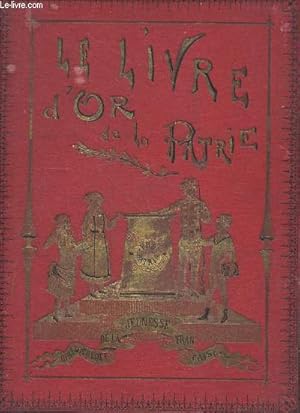
Le livre d'or de la patrie - bibliotheque de la jeunesse francaise
Editore: LIBRAIRIE CENTRALE DES PUBLICATIONS POPULAIRES, 1885
Da: Le-Livre, SABLONS, Francia
Membro dell'associazione: ILAB
Valutazione del venditore 5 su 5 stelle
EUR 35,80
Spedizione EUR 42,00
Spedito da Francia a U.S.A.Quantità: 1 disponibili
Aggiungi al carrelloCouverture rigide. Condizione: bon. RO20247817: 1885. In-4. Cartonnage d'éditeurs. Etat d'usage, Couv. légèrement passée, Dos fané, Quelques rousseurs. 216 pages - annotation en page de garde - nombreuses illustrations en noir et blanc, dans et hors texte - tranches dorées - 2e plat rouge illustré en noir - titre doré au dos. . . . Classification Dewey : 355.021-Militaria.
-

Traità de l'Esprit de l'Homme, de Ses Facultez, de Ses Fonctions, Et de Son
Da: Forgotten Books, London, Regno Unito
Valutazione del venditore 4 su 5 stelle
EUR 22,43
Spedizione gratuita
Spedito da Regno Unito a U.S.A.Quantità: Più di 20 disponibili
Aggiungi al carrelloPaperback. Condizione: New. Print on Demand. This book explores the nature of the human soul and its relationship to the body. The author, a prominent thinker in the field, argues that the soul is an immaterial substance that is distinct from the body and capable of existing independently of it. The author draws on a wide range of sources, including philosophy, theology, and science, to support this claim. The book also explores the nature of consciousness, free will, and the afterlife. Ultimately, the author argues that the soul is the essential aspect of human nature and that it is the source of our highest aspirations and achievements. This book is a reproduction of an important historical work, digitally reconstructed using state-of-the-art technology to preserve the original format. In rare cases, an imperfection in the original, such as a blemish or missing page, may be replicated in the book. print-on-demand item.
-
EUR 94,27
Spedizione EUR 12,92
Spedito da Giappone a U.S.A.Quantità: 1 disponibili
Aggiungi al carrelloCondizione: New. [olms ak 5279].
-
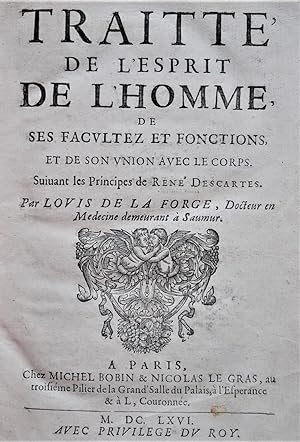
Traité de l'Esprit de l'Homme, de ses facultez et Fonctions, et de son union avec le Corps. Suivant les Principes de René Descartes.
Lingua: Francese
Editore: Chez Théodore Girard, 1666
Da: Librairie Voyage et Exploration, Cerny, Francia
Valutazione del venditore 3 su 5 stelle

Prima edizione
EUR 1.100,00
Spedizione EUR 29,00
Spedito da Francia a U.S.A.Quantità: 1 disponibili
Aggiungi al carrelloCouverture rigide. Condizione: Assez bon. Edition originale. LA FORGE (LOUIS DE). Traité de l'Esprit de l'Homme, de ses facultez et Fonctions, et de son union avec le Corps. Suivant les Principes de René Descartes. Paris, Chez Théodore Girard, 1666. In-4 (240x180mm), (56)-453-(3)pp., relié plein veau, dos à nerfs orné, reliure de l'époque, avec un frontispice gravé par Patigny. Édition originale rare. Médecin et philosophe, né à Saumur, Louis de la Forge était l'ami et le disciple de Descartes. Cet ouvrage constitue l'essentiel de son uvre ; La Forge insiste sur le lien qui unit la pensée de son maître avec Saint Augustin et les platoniciens. Bon exemplaire, coins usés, coiffes et charnières faibles, léger travail de vers n'affectant pas le texte.
-

Traitte, de L'Esprit de L'Homme, de ses Facultez et Fonctions, et de son Union avec le Corps, suivant les Principes de Ren� Descartes
Editore: Paris: Chez Michel Bobin & Nicolas Le Gras
Da: Wonder Book, Frederick, MD, U.S.A.
Membro dell'associazione: ABAA ILAB
Valutazione del venditore 5 su 5 stelle
Condizione: Fair. Paris: Chez Michel Bobin & Nicolas Le Gras, 1666. Presumed 1st. Sm 4to Leather Bound. 453pp. French. Fair book. Full leather with raised spine bands. Heavy edgewear. Boards, spine and title page reinforced with clear tape. Pages age toned. Front hinge broken. Preliminary pages detached, but present. Slight dampstaining to the top-edge of most pages. With typical period foxing. In polypropylene bag. (philosophy, psychology, mind and body) Inquire if you need further information.
-
Tractatus de homine, et de formatione foetus : quorum prior notis perpetuis Ludovici de la Forge, M.D., illustratur [bound with] Renati Des-Cartes Musicae compendium. Original editions.
Editore: Amsterdam: Danielem Elsevirium, 1677 [and] Ex Typographica Blaviana, Amstelodami, M DC LXXXIII [i.e. 1683], 1683
Da: Wittenborn Art Books, San Francisco, CA, U.S.A.
Valutazione del venditore 5 su 5 stelle
Condizione: Good. Two works bounds together in contemporary vellum; small piece missing on spine. Small 4to. 15 x 19.5cm. Numerous woodcuts. Collation [76], 239, 49pp.Tractatus de homine = OCLC Number / Unique Identifier:1156436662:Notes:"Claudii Clerselier praefatio, Gallicae editioni praefixa, & in Latinum conversa:" p. [5]-70 at frontAt head of title: Renati Des-CartesPrinter's device on t-pReprint of 1662 first Latin editionSignatures: a-i? k A-Z? 2A-2G?Title in red and black; head and tail pieces; initials; side notes.AND.Musicæ compendivm = OCLC Number / Unique Identifier:894012867:Physical Description:49 pages : illustrations, music, diagrams ; 21 cm (4to)Notes:Woodcut title vignette with text "Indefessus Agendo.".René DESCARTES - Tractatus de Homine & Musicae Compendium Très rare ensemble de deux importants ouvrages de René Descartes, reliés ensemble en un volume, reliure d'époque en plein parchemin, plats un peu salis, pièces de titre de maroquin au dos, manques en tête et en queue, autrement bel état. Intérieur avec quelques rousseurs et certaines pages bien brunies, sans gravité. René DESCARTES - Tractatus de Homine, et de Formatione Foetus. Apud Danielem Elsevirium, Amstelodami [Chez Daniel Elsevir à Amsterdam], 1677 - Édition originale en latin de cet important ouvrage de l'auteur : le traité de l'homme, jolie vignette de l'éditeur en page de titre. Illustré de nombreux bois gravés dont certains particulièrement évocateurs. (74) 239pp. [Relié avec] René DESCARTES - Musicae Compendium Ex typographia Blaviana, 1683, Amstelodami (Amsterdam) Belle réédition de cet abrégé de musique publié pour la première fois en 1618, intérieur bien complet des quelques figures en bois gravé, jolie vignette en page de titre. 49pp. Provenance : un cachet illisible, effacé en page de titre du premier ouvrage.
-
Medicine Mentis Sive Artis Inveniendi Praecepta Generalia. Editio Nova, Auctior & Correctior, cum Praefatione Autoris. [with] Medicina Corporis, Seu Cogitationes Admodum Probabiles de Conservanda Sanitate. [with] Medicinae apud Salmurienses Doctoris, Tractatus de Mente Humana, Ejus Facultatibus & Functionibus, Nec Non De Ejusdem Unione Cum Corpore, Secunudm Prinicipia Renati Descartes. Emendatus & Auctus Praeter Numeratam Paragraphorum Distinctionem Summariis Marginalibus, Atque Rerum Primariarumque Questionum Philosophicarum Indicibus
Editore: Apud J. Thomam Fritsch. / Ex Typographia Blaviana, 1695
Da: Yesterday's Muse, ABAA, ILAB, IOBA, Webster, NY, U.S.A.
Membro dell'associazione: ABAA ILAB IOBA
Valutazione del venditore 5 su 5 stelle
Hard Cover. Condizione: Very Good. No Jacket. Ink name and date on front flyleaf, minor pencil notes on endpapers. 1695 Hard Cover. [xxviii], 296, [iv], 64, 241, [6] pp. Original vellum. Latin text. Two 1695 works by Ehrenfried Walther von Tschirnhaus bound together with a 1688 work by Louis de la Forge and Johann Flender. Tschirnhaus was most well known as a mathematician, though he corresponded with both Leibniz and Spinoza about philosophical matters (he was among the first to receive a copy of the latter's Ethics). The works included here illustrate his interest in deduction via empiricism, and other concepts related to the Enlightenment. Louis de la Forge was a personal friend of the renowned philosopher Rene Descartes, and his contribution here references Cartesian principles as a means of explaining his doctrine of occasionalism (a theory of causation ascribing causality of events to God rather than to created substances [of which humanity would be one]). Includes: Medicine Mentis Sive Artis Inveniendi Praecepta Generalia. Editio Nova, Auctior & Correctior, cum Praefatione Autoris.; Medicina Corporis, Seu Cogitationes Admodum Probabiles de Conservanda Sanitate.; Medicinae apud Salmurienses Doctoris, Tractatus de Mente Humana, Ejus Facultatibus & Functionibus, Nec Non De Ejusdem Unione Cum Corpore, Secunudm Prinicipia Renati Descartes. Emendatus & Auctus Praeter Numeratam Paragraphorum Distinctionem Summariis Marginalibus, Atque Rerum Primariarumque Questionum Philosophicarum Indicibus.
-
Tractatus de homine et de formation foetus quorum prior notis suivi du Tractatus de mente humana de Louis de La Forge
Editore: Ex Typographia Blaviana, 1686
Da: Librairie du Levant, Bayonne, Francia
Valutazione del venditore 1 su 5 stelle

EUR 1.400,00
Spedizione EUR 6,00
Spedito da Francia a U.S.A.Quantità: 1 disponibili
Aggiungi al carrelloCouverture rigide. Condizione: Très bon. 1686, Ex Typographia Blaviana, Amstelodami (Amsterdam). In-8, relié, plein vélin de l'époque, dos lisse à pièce. (80)+239+(1). Très nombreuses figures sur bois in et hors texte. 1688, Ex Typographia Blaviana, Amstelodami. Tractatus de mente humana [24]-241)[5]pp. Intérieur bon voire frais. Coiffe de tête très légèrement enfoncée. Rares traces du temps. Très bel exemplaire Édition latine de L'Homme de Descartes, oeuvre inachevée du philosophe et publiée pour la première fois en 1662 (puis 1664 en français), reliée ici avec le Traité de l'esprit humain de son admirateur Louis de La Forge.
-
Opera philosophica: Specimina Philosophiae seu Dissertatio de methodo. . .Dioptrice, Meteora [1685]; Principia philosophiæ [1664]; Passiones animæ [1685]. Bound with: Ludovici de la Forge, Tractatus de Mente Humana. [1688]
Editore: Blaviani, Amstelodami, 1685, 1688 & Danielem Elzevirium, 1664, 1688
Da: Moroccobound Fine Books, IOBA, Lewis Center, OH, U.S.A.
Membro dell'associazione: IOBA
Valutazione del venditore 5 su 5 stelle
Hardcover. Condizione: Very Good. Four volumes bound in one. (16), 248; (36), 222; (24), 92, (4); (22) 241, (6) pp. Hardcover, bound in early calf over speckled paper covered pasteboard. The binding recased, thus solid, but well rubbed with some loss; the text generally clean with some toning, occasional underlining, notations, a few small dampstains and scattered blemishes.
-
Traité de l'esprit de l'homme, de ses FACULTEZ et FONCTIONS et de son union avec le corps suivant les principes de René DESCARTES -- EDITION ORIGINALE
Editore: P., Bobin & Legras, 1666, 1666
Da: LIBRAIRIE Bernard MAILLE, PARIS, Francia
Valutazione del venditore 4 su 5 stelle
Prima edizione
EUR 600,00
Spedizione EUR 32,85
Spedito da Francia a U.S.A.Quantità: 1 disponibili
Aggiungi al carrelloCouverture rigide. Condizione: Bon. Edition originale. ---- EDITION ORIGINALE ---- EXEMPLAIRE DE LA COMTESSE DE BRASSAC ---- P., Bobin & Legras, 1664, un volume in 4 relié en plein veau de l'époque (coiffes restaurées, petit manque de papier dans la marge extérieure du portrait), ARMES SUR LES PLATS, 1 PORTRAIT, (28), 453pp., (1pp.), (1) ---- "LOUIS DE LA FORGE, Médecin et philosophe français du XVIIème siècle, devint avec Clerselier, Fédé, Cordemoy. un des champions de la "nouvelle philosophie". Clerselier accepta ses services pour les figures de l'Homme de Descartes avec un imposant appareil de Remarques forgéennes. Celles-ci ne consistent pas seulement en un commentaire sérieux, mais se recommandent par leur originalité. Les études physiologiques apparaissent remarquables, surtout en ce qui concerne le cerveau. C'est d'ailleurs sur le fonctionnement de cet organe que son ouvrage personnel, Traité de l'esprit de l'homme (1666), brille, avec des interrogations, des ouvertures, susceptibles d'intéresser la science du XXe siècle. Recherches bien sûr dans le domaine de la psychologie. Les investigations forgéennes dépassent en approfondissement celles de Descartes. Cependant ladite psychologie n'est pas que physique. La Forge distingue les sens, l'imagination et l'entendement. Il présente une théorie de la représentation, dont les divers agents relèvent du corps, de l'esprit, ou restent intermédiaires. Son insistance sur les idées de l'esprit et les notions primitives met en évidence une manière d'intellectualisme, voire d'idéalisme. Ainsi s'est développé chez lui l'occasionnalisme, nouveauté au XVIIe siècle dont il serait le promoteur. Il y a aussi place dans le Traité de l'esprit pour de fins et beaux développements métaphysico-psychologiques". (P. Claire "Dictionnaire des philosophes" I) ---- Parlant de cet ouvrage V. Riese utilise l'expression de "neuro-physiologie imaginaire" ---- De la nature de l'esprit de l'homme - Des facultez inséparables de l'esprit et de celles qui sont particulières à celui de l'homme - De la connaissance en général - De la volonté - De la manière dont l'esprit et le corps en général peuvent être unis - De la manière dont l'esprit et le corps de l'homme sont unis et quelles sont les choses qui nous font connaitre leur union - Comment l'esprit et le corps agissent l'un sur l'autre - De l'imagination, de la mémoire, du raisonnement, de la parole, des émotions, de la douleur, remèdes généraux contre les fougues des passions - etc**1734/H1-1732/Cart9-1733/ARM3.



![Immagine del venditore per Tractatus de homine, et de formatione foetus : quorum prior notis perpetuis Ludovici de la Forge, M.D., illustratur [bound with] Renati Des-Cartes Musicae compendium. Original editions. venduto da Wittenborn Art Books](https://pictures.abebooks.com/inventory/md/md31991547344.jpg)
![Immagine del venditore per Medicine Mentis Sive Artis Inveniendi Praecepta Generalia. Editio Nova, Auctior & Correctior, cum Praefatione Autoris. [with] Medicina Corporis, Seu Cogitationes Admodum Probabiles de Conservanda Sanitate. [with] Medicinae apud Salmurienses Doctoris, Tractatus de Mente Humana, Ejus Facultatibus & Functionibus, Nec Non De Ejusdem Unione Cum Corpore, Secunudm Prinicipia Renati Descartes. Emendatus & Auctus Praeter Numeratam Paragraphorum Distinctionem Summariis Marginalibus, Atque Rerum Primariarumque Questionum Philosophicarum Indicibus venduto da Yesterday's Muse, ABAA, ILAB, IOBA](https://pictures.abebooks.com/inventory/md/md31433907974.jpg)


![Immagine del venditore per Opera philosophica: Specimina Philosophiae seu Dissertatio de methodo. . .Dioptrice, Meteora [1685]; Principia philosophiæ [1664]; Passiones animæ [1685]. Bound with: Ludovici de la Forge, Tractatus de Mente Humana. [1688] venduto da Moroccobound Fine Books, IOBA](https://pictures.abebooks.com/inventory/md/md22903530729.jpg)