

Importo totale (1 articolo articoli):
Destinazione ordine:

late william silverman (6 risultati)
Vai alla pagina principale dei risultati di ricerca
Filtri di ricerca
Tipo di articolo
- Tutti i tipi di prodotto
- Libri (6)
- Riviste e Giornali (Nessun altro risultato corrispondente a questo perfezionamento)
- Fumetti (Nessun altro risultato corrispondente a questo perfezionamento)
- Spartiti (Nessun altro risultato corrispondente a questo perfezionamento)
- Arte, Stampe e Poster (Nessun altro risultato corrispondente a questo perfezionamento)
- Fotografie (Nessun altro risultato corrispondente a questo perfezionamento)
- Mappe (Nessun altro risultato corrispondente a questo perfezionamento)
- Manoscritti e Collezionismo cartaceo (Nessun altro risultato corrispondente a questo perfezionamento)
Condizioni Maggiori informazioni
- Nuovo (5)
- Come nuovo, Ottimo o Quasi ottimo (Nessun altro risultato corrispondente a questo perfezionamento)
- Molto buono o Buono (1)
- Discreto o Mediocre (Nessun altro risultato corrispondente a questo perfezionamento)
- Come descritto (Nessun altro risultato corrispondente a questo perfezionamento)
Legatura
Ulteriori caratteristiche
- Prima ed. (2)
- Copia autograf. (Nessun altro risultato corrispondente a questo perfezionamento)
- Sovracoperta (Nessun altro risultato corrispondente a questo perfezionamento)
- Con foto (Nessun altro risultato corrispondente a questo perfezionamento)
- Non Print on Demand (2)
Lingua (1)
Spedizione gratuita
Paese del venditore
Valutazione venditore
-

Ethics and Perinatology: Issues and Perspectives (Oxford Medical Publications)
Da: AwesomeBooks, Wallingford, Regno Unito
Valutazione del venditore 5 su 5 stelle

EUR 7,79
Spedizione EUR 4,78
Spedito da Regno Unito a U.S.A.Quantità: 1 disponibili
Aggiungi al carrelloHardcover. Condizione: Very Good. Ethics and Perinatology: Issues and Perspectives (Oxford Medical Publications) This book is in very good condition and will be shipped within 24 hours of ordering. The cover may have some limited signs of wear but the pages are clean, intact and the spine remains undamaged. This book has clearly been well maintained and looked after thus far. Money back guarantee if you are not satisfied. See all our books here, order more than 1 book and get discounted shipping. .
-
Ethics and Perinatology: Issues and Perspectives (Oxford Medical Publications)
Da: Revaluation Books, Exeter, Regno Unito
Valutazione del venditore 5 su 5 stelle
EUR 114,98
Spedizione EUR 14,50
Spedito da Regno Unito a U.S.A.Quantità: 1 disponibili
Aggiungi al carrelloHardcover. Condizione: Brand New. 506 pages. 9.75x6.75x1.25 inches. In Stock.
-
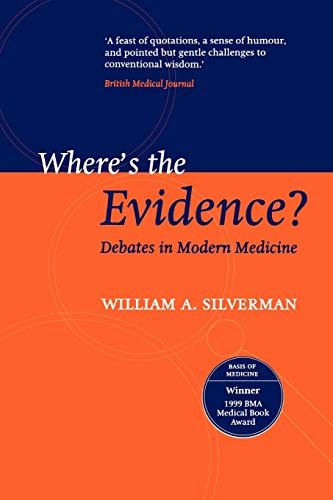
Where's the Evidence?
Da: PBShop.store US, Wood Dale, IL, U.S.A.
Valutazione del venditore 5 su 5 stelle
EUR 104,11
Spedizione gratuita
Spedito in U.S.A.Quantità: Più di 20 disponibili
Aggiungi al carrelloPAP. Condizione: New. New Book. Shipped from UK. THIS BOOK IS PRINTED ON DEMAND. Established seller since 2000.
-
Where's the Evidence?
Da: PBShop.store UK, Fairford, GLOS, Regno Unito
Valutazione del venditore 4 su 5 stelle

EUR 99,88
Spedizione EUR 5,82
Spedito da Regno Unito a U.S.A.Quantità: Più di 20 disponibili
Aggiungi al carrelloPAP. Condizione: New. New Book. Delivered from our UK warehouse in 4 to 14 business days. THIS BOOK IS PRINTED ON DEMAND. Established seller since 2000.
-
Where's the Evidence? (Paperback)
Lingua: Inglese
Editore: Oxford University Press, Oxford, 1999
ISBN 10: 0192630881 ISBN 13: 9780192630889
Da: AussieBookSeller, Truganina, VIC, Australia
Valutazione del venditore 5 su 5 stelle
Prima edizione Print on Demand
EUR 85,62
Spedizione EUR 31,80
Spedito da Australia a U.S.A.Quantità: 1 disponibili
Aggiungi al carrelloPaperback. Condizione: new. Paperback. The essays in Where's the Evidence? focus on problems ignored. This book is a unique collection of critical andw controversial essays on intractable ethical issues and evidence-based problems in modern medicine. Most, but notr therapeutic disasters. Although it is impossible to prevent all missteps in medicine, the author argues, a hedging strategy using concurrent controls when new therapies are introduced always reduces the number of patients killed orinjured. It is dangerous to use treatments widely, he warns, before they are subject to rigorous comparative trials. Additionally, the author points out, questions have emerged about how to wield medicine's newcapabilities wisely. How do we draw the line,' he asks 'between "knowing" (the acquisition of new medical information) and "doing" (the application of that new knowledge). What are the long- term consequences (moral, social, economic, and biological) of responding to a demand that medicine always do everything that can be done?' This book now issued in paperback is a collection of critical and controversial essays discussing intractable ethical issues andevidence-based problems in modern medicine. The essays together with responses were published over a ten-year period in the journal Paediatric and Perinatal Medicine. Most of the examples, but not all are taken from perinatal medicine, thefield in which the author has worked for many years. The essays are thought provoking and will be of great interest to those involved in the ongoing evidence-based medicine debate. (See selected reviews) A collection of essays which argue that parallel comparisons must be made before new treatments are adopted to reduce the number of patients exposed to the unknown hazards of medical innovations. Additionally, the long-term consequences of new treatments must not be ignored. This item is printed on demand. Shipping may be from our Sydney, NSW warehouse or from our UK or US warehouse, depending on stock availability.
-
Where's the Evidence? (Paperback)
Lingua: Inglese
Editore: Oxford University Press, Oxford, 1999
ISBN 10: 0192630881 ISBN 13: 9780192630889
Da: CitiRetail, Stevenage, Regno Unito
Valutazione del venditore 5 su 5 stelle
Prima edizione Print on Demand
EUR 106,90
Spedizione EUR 42,91
Spedito da Regno Unito a U.S.A.Quantità: 1 disponibili
Aggiungi al carrelloPaperback. Condizione: new. Paperback. The essays in Where's the Evidence? focus on problems ignored. This book is a unique collection of critical andw controversial essays on intractable ethical issues and evidence-based problems in modern medicine. Most, but notr therapeutic disasters. Although it is impossible to prevent all missteps in medicine, the author argues, a hedging strategy using concurrent controls when new therapies are introduced always reduces the number of patients killed orinjured. It is dangerous to use treatments widely, he warns, before they are subject to rigorous comparative trials. Additionally, the author points out, questions have emerged about how to wield medicine's newcapabilities wisely. How do we draw the line,' he asks 'between "knowing" (the acquisition of new medical information) and "doing" (the application of that new knowledge). What are the long- term consequences (moral, social, economic, and biological) of responding to a demand that medicine always do everything that can be done?' This book now issued in paperback is a collection of critical and controversial essays discussing intractable ethical issues andevidence-based problems in modern medicine. The essays together with responses were published over a ten-year period in the journal Paediatric and Perinatal Medicine. Most of the examples, but not all are taken from perinatal medicine, thefield in which the author has worked for many years. The essays are thought provoking and will be of great interest to those involved in the ongoing evidence-based medicine debate. (See selected reviews) A collection of essays which argue that parallel comparisons must be made before new treatments are adopted to reduce the number of patients exposed to the unknown hazards of medical innovations. Additionally, the long-term consequences of new treatments must not be ignored. This item is printed on demand. Shipping may be from our UK warehouse or from our Australian or US warehouses, depending on stock availability.

