

Importo totale (1 articolo articoli):
Destinazione ordine:

m gilot (23 risultati)
Vai alla pagina principale dei risultati di ricerca
Filtri di ricerca
Tipo di articolo
- Tutti i tipi di prodotto
- Libri (23)
- Riviste e Giornali (Nessun altro risultato corrispondente a questo perfezionamento)
- Fumetti (Nessun altro risultato corrispondente a questo perfezionamento)
- Spartiti (Nessun altro risultato corrispondente a questo perfezionamento)
- Arte, Stampe e Poster (Nessun altro risultato corrispondente a questo perfezionamento)
- Fotografie (Nessun altro risultato corrispondente a questo perfezionamento)
- Mappe (Nessun altro risultato corrispondente a questo perfezionamento)
- Manoscritti e Collezionismo cartaceo (Nessun altro risultato corrispondente a questo perfezionamento)
Condizioni Maggiori informazioni
Legatura
Ulteriori caratteristiche
- Prima ed. (Nessun altro risultato corrispondente a questo perfezionamento)
- Copia autograf. (Nessun altro risultato corrispondente a questo perfezionamento)
- Sovracoperta (Nessun altro risultato corrispondente a questo perfezionamento)
- Con foto (11)
- Non Print on Demand (23)
Lingua (3)
Spedizione gratuita
Paese del venditore
Valutazione venditore
-

John Brown's Raid: Harpers Ferry and the Coming of the Civil War, October 16-18, 1859 (Emerging Civil War Series)
Libro 52 di 68: Emerging Civil WarDa: Books From California, Simi Valley, CA, U.S.A.
Valutazione del venditore 4 su 5 stelle

paperback. Condizione: Very Good.
-
John Brown's Raid: Harpers Ferry and the Coming of the Civil War, October 16-18, 1859 (Emerging Civil War Series)
Libro 52 di 68: Emerging Civil WarDa: Books From California, Simi Valley, CA, U.S.A.
Valutazione del venditore 4 su 5 stelle
paperback. Condizione: Fine.
-
John Brown's Raid: Harpers Ferry and the Coming of the Civil War, October 16-18, 1859 (Emerging Civil War Series)
Libro 52 di 68: Emerging Civil WarDa: Books From California, Simi Valley, CA, U.S.A.
Valutazione del venditore 4 su 5 stelle
paperback. Condizione: Good. Book is slightly bowing/bending. In otherwise great condition with minimal/no other wear, crisp & clean interiors showing unmarked text, and firm binding of the text block. A good reading copy!
-
John Brown's Raid: Harpers Ferry and the Coming of the Civil War, October 16-18, 1859 (Emerging Civil War Series)
Libro 52 di 68: Emerging Civil WarDa: Books From California, Simi Valley, CA, U.S.A.
Valutazione del venditore 4 su 5 stelle
paperback. Condizione: Acceptable. poorly cut and badly bound copy. it is complete, but it doesn't look pretty.
-
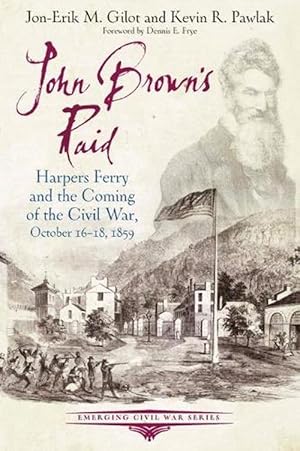
John Brown's Raid (Paperback)
Libro 52 di 68: Emerging Civil WarLingua: Inglese
Editore: Savas Beatie, El Dorado Hills, 2024
ISBN 10: 1611215978 ISBN 13: 9781611215977
Da: Grand Eagle Retail, Bensenville, IL, U.S.A.
Valutazione del venditore 5 su 5 stelle

Paperback. Condizione: new. Paperback. The first shot of the American Civil War was not fired on April 12, 1861, in Charleston, South Carolina, but instead came on October 16, 1859, in Harpers Ferry, Virginia - or so claimed former slave turned abolitionist Frederick Douglass. The shot came like a meteor in the dark. John Brown, the infamous fighter on the Kansas plains and detester of slavery, led a band of nineteen men on a desperate nighttime raid that targeted the Federal arsenal at Harpers Ferry. There, they planned to begin a war to end slavery in the United States. But after 36 tumultuous hours, John Brown's Raid failed, and Brown himself became a prisoner of the state of Virginia. Brown's subsequent trial further divided north and south on the issue of slavery as Brown justified his violent actions to a national audience forced to choose sides. Ultimately, Southerners cheered Brown's death at the gallows while Northerners observed it with reverence. The nation's dividing line had been drawn. Herman Melville and Walt Whitman extolled Brown as a "meteor" of the war. Roughly one year after Brown and his men attacked slavery in Virginia, the nation split apart, fueled by Brown's fiery actions. John Brown's Raid tells the story of the first shots that led to disunion. Richly filled with maps and images, it includes a driving and walking tour of sites related to Brown's Raid so visitors today can walk in the footsteps of America's meteor. AUTHORS: Jon-Erik Gilot has been indelibly fascinated with Harpers Ferry since his first visit as a child - so much so that he later proposed to his wife on Maryland Heights. A native of historic Mount Pleasant, Ohio, Jon-Erik has spent more than fifteen years in the fields of history and preservation. He works as an archivist and records manager in Wheeling, West Virginia; since 2021 he has also served as curator at the Captain Thomas Espy Grand Army of the Republic Post in Carnegie, PA. Outside of work, Jon-Erik is a historic landmarks commissioner with the City of Wheeling, West Virginia, and a board member with the West Virginia Independence Hall Foundation. Kevin R. Pawlak is a historic site manager for Prince William County's Office of Historic Preservation and a Certified Battlefield Guide at Antietam National Battlefield. He previously worked as a park ranger at Harpers Ferry National Historical Park. Kevin is the author of four books about the American Civil War, including To Hazard All: A Guide to the Maryland Campaign, 1862, part of the Emerging Civil War Series. 150 images, 10 maps The first shot of the American Civil War was not fired on April 12, 1861, in Charleston, South Carolina, but instead came on October 16, 1859, in Harpers Ferry, Virginia--or so claimed former slave turned abolitionist Frederick Douglass. Shipping may be from multiple locations in the US or from the UK, depending on stock availability.
-
EUR 14,42
Spedizione gratuita
Spedito in U.S.A.Quantità: Più di 20 disponibili
Aggiungi al carrelloCondizione: New. Brand New.
-

Paperback. Condizione: New. The first shot of the American Civil War was not fired on April 12, 1861, in Charleston, South Carolina, but instead came on October 16, 1859, in Harpers Ferry, Virginia - or so claimed former slave turned abolitionist Frederick Douglass. The shot came like a meteor in the dark. John Brown, the infamous fighter on the Kansas plains and detester of slavery, led a band of nineteen men on a desperate nighttime raid that targeted the Federal arsenal at Harpers Ferry. There, they planned to begin a war to end slavery in the United States. But after 36 tumultuous hours, John Brown's Raid failed, and Brown himself became a prisoner of the state of Virginia. Brown's subsequent trial further divided north and south on the issue of slavery as Brown justified his violent actions to a national audience forced to choose sides. Ultimately, Southerners cheered Brown's death at the gallows while Northerners observed it with reverence. The nation's dividing line had been drawn. Herman Melville and Walt Whitman extolled Brown as a "meteor" of the war. Roughly one year after Brown and his men attacked slavery in Virginia, the nation split apart, fueled by Brown's fiery actions. John Brown's Raid tells the story of the first shots that led to disunion. Richly filled with maps and images, it includes a driving and walking tour of sites related to Brown's Raid so visitors today can walk in the footsteps of America's meteor.
-
John Brown's Raid: Harpers Ferry and the Coming of the Civil War, October 16-18, 1859 (Emerging Civil War Series)
Libro 52 di 68: Emerging Civil WarDa: Military History Books, El Dorado Hills, CA, U.S.A.
Valutazione del venditore 3 su 5 stelle

Soft cover. Condizione: New. The first shot of the American Civil War was not fired on April 12, 1861, in Charleston, South Carolina, but instead came on October 16, 1859, in Harpers Ferry, Virginia or so claimed former slave turned abolitionist Frederick Douglass. The shot came like a meteor in the dark. John Brown, the infamous fighter on the Kansas plains and detester of slavery, led a band of nineteen men on a desperate nighttime raid that targeted the Federal arsenal at Harpers Ferry. There, they planned to begin a war to end slavery in the United States. But after 36 tumultuous hours, John Brown's Raid failed, and Brown himself became a prisoner of the state of Virginia. Brown's subsequent trial further divided north and south on the issue of slavery as Brown justified his violent actions to a national audience forced to choose sides. Ultimately, Southerners cheered Brown s death at the gallows while Northerners observed it with reverence. The nation's dividing line had been drawn. Herman Melville and Walt Whitman extolled Brown as a meteor of the war. Roughly one year after Brown and his men attacked slavery in Virginia, the nation split apart, fueled by Brown's fiery actions. John Brown's Raid tells the story of the first shots that led to disunion. Richly filled with maps and images, it includes a driving and walking tour of sites related to Brown's Raid so visitors today can walk in the footsteps of America's meteor.
-

John Brown's Raid
Libro 52 di 68: Emerging Civil WarDa: Rarewaves.com USA, London, LONDO, Regno Unito
Valutazione del venditore 5 su 5 stelle
EUR 18,67
Spedizione gratuita
Spedito da Regno Unito a U.S.A.Quantità: 13 disponibili
Aggiungi al carrelloPaperback. Condizione: New. The first shot of the American Civil War was not fired on April 12, 1861, in Charleston, South Carolina, but instead came on October 16, 1859, in Harpers Ferry, Virginia - or so claimed former slave turned abolitionist Frederick Douglass. The shot came like a meteor in the dark. John Brown, the infamous fighter on the Kansas plains and detester of slavery, led a band of nineteen men on a desperate nighttime raid that targeted the Federal arsenal at Harpers Ferry. There, they planned to begin a war to end slavery in the United States. But after 36 tumultuous hours, John Brown's Raid failed, and Brown himself became a prisoner of the state of Virginia. Brown's subsequent trial further divided north and south on the issue of slavery as Brown justified his violent actions to a national audience forced to choose sides. Ultimately, Southerners cheered Brown's death at the gallows while Northerners observed it with reverence. The nation's dividing line had been drawn. Herman Melville and Walt Whitman extolled Brown as a "meteor" of the war. Roughly one year after Brown and his men attacked slavery in Virginia, the nation split apart, fueled by Brown's fiery actions. John Brown's Raid tells the story of the first shots that led to disunion. Richly filled with maps and images, it includes a driving and walking tour of sites related to Brown's Raid so visitors today can walk in the footsteps of America's meteor.
-

Marivaux: Le Prince Travesti: Le Triomphe de L'armour
Lingua: Francese
Editore: Librairie Honore Champion, 1983
ISBN 10: 2852031167 ISBN 13: 9782852031166
EUR 2,99
Spedizione EUR 15,74
Spedito da Regno Unito a U.S.A.Quantità: 1 disponibili
Aggiungi al carrelloCondizione: Good. This is an ex-library book and may have the usual library/used-book markings inside.This book has soft covers. Clean from markings In good all round condition. Please note the Image in this listing is a stock photo and may not match the covers of the actual item,250grams, ISBN:2852031167.
-

EUR 3,50
Spedizione EUR 16,50
Spedito da Francia a U.S.A.Quantità: 1 disponibili
Aggiungi al carrelloSoftcover. Condizione: Bon. Couverture différente. Livre reconditionné de bibliothèque. Ammareal reverse jusqu'à 15% du prix net de cet article à des organisations caritatives. ENGLISH DESCRIPTION Book Condition: Used, Good. Different cover. Refurbished library book. Ammareal gives back up to 15% of this item's net price to charity organizations.
-
EUR 3,50
Spedizione EUR 16,50
Spedito da Francia a U.S.A.Quantità: 1 disponibili
Aggiungi al carrelloSoftcover. Condizione: Bon. Couverture différente. Edition 1988. Ammareal reverse jusqu'à 15% du prix net de cet article à des organisations caritatives. ENGLISH DESCRIPTION Book Condition: Used, Good. Different cover. Edition 1988. Ammareal gives back up to 15% of this item's net price to charity organizations.
-

John Brown's Raid : Harpers Ferry and the Coming of the Civil War, October 16-18, 1859
Libro 52 di 68: Emerging Civil WarDa: GreatBookPrices, Columbia, MD, U.S.A.
Valutazione del venditore 5 su 5 stelle
Condizione: As New. Unread book in perfect condition.
-
John Brown's Raid : Harpers Ferry and the Coming of the Civil War, October 16-18, 1859
Libro 52 di 68: Emerging Civil WarDa: GreatBookPrices, Columbia, MD, U.S.A.
Valutazione del venditore 5 su 5 stelle
Condizione: New.
-
John Brown's Raid: Harpers Ferry and the Coming of the Civil War, October 16-18, 1859
Libro 52 di 68: Emerging Civil WarDa: Revaluation Books, Exeter, Regno Unito
Valutazione del venditore 5 su 5 stelle
EUR 24,18
Spedizione EUR 14,47
Spedito da Regno Unito a U.S.A.Quantità: 2 disponibili
Aggiungi al carrelloPaperback. Condizione: Brand New. 163 pages. 8.75x5.75x0.50 inches. In Stock.
-

Journaux et Oeuvres diverses
Lingua: Francese
Editore: Paris; Classiques Garnier, 1988,, 1988
ISBN 10: 2040174168 ISBN 13: 9782040174163
EUR 11,92
Spedizione EUR 23,15
Spedito da Regno Unito a U.S.A.Quantità: 1 disponibili
Aggiungi al carrellopaperback, xiv,832pp, clean and tight, no inscriptions, spine not creased, Very Good condition. ISBN: 9782040174163.
-
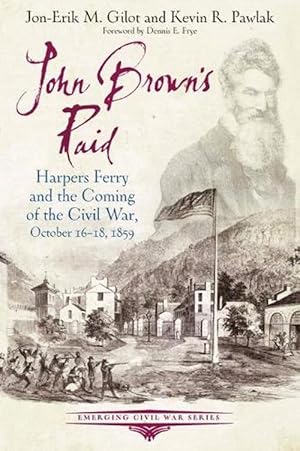
John Brown's Raid (Paperback)
Libro 52 di 68: Emerging Civil WarLingua: Inglese
Editore: Savas Beatie, El Dorado Hills, 2024
ISBN 10: 1611215978 ISBN 13: 9781611215977
Da: AussieBookSeller, Truganina, VIC, Australia
Valutazione del venditore 5 su 5 stelle
EUR 29,17
Spedizione EUR 31,92
Spedito da Australia a U.S.A.Quantità: 1 disponibili
Aggiungi al carrelloPaperback. Condizione: new. Paperback. The first shot of the American Civil War was not fired on April 12, 1861, in Charleston, South Carolina, but instead came on October 16, 1859, in Harpers Ferry, Virginia - or so claimed former slave turned abolitionist Frederick Douglass. The shot came like a meteor in the dark. John Brown, the infamous fighter on the Kansas plains and detester of slavery, led a band of nineteen men on a desperate nighttime raid that targeted the Federal arsenal at Harpers Ferry. There, they planned to begin a war to end slavery in the United States. But after 36 tumultuous hours, John Brown's Raid failed, and Brown himself became a prisoner of the state of Virginia. Brown's subsequent trial further divided north and south on the issue of slavery as Brown justified his violent actions to a national audience forced to choose sides. Ultimately, Southerners cheered Brown's death at the gallows while Northerners observed it with reverence. The nation's dividing line had been drawn. Herman Melville and Walt Whitman extolled Brown as a "meteor" of the war. Roughly one year after Brown and his men attacked slavery in Virginia, the nation split apart, fueled by Brown's fiery actions. John Brown's Raid tells the story of the first shots that led to disunion. Richly filled with maps and images, it includes a driving and walking tour of sites related to Brown's Raid so visitors today can walk in the footsteps of America's meteor. AUTHORS: Jon-Erik Gilot has been indelibly fascinated with Harpers Ferry since his first visit as a child - so much so that he later proposed to his wife on Maryland Heights. A native of historic Mount Pleasant, Ohio, Jon-Erik has spent more than fifteen years in the fields of history and preservation. He works as an archivist and records manager in Wheeling, West Virginia; since 2021 he has also served as curator at the Captain Thomas Espy Grand Army of the Republic Post in Carnegie, PA. Outside of work, Jon-Erik is a historic landmarks commissioner with the City of Wheeling, West Virginia, and a board member with the West Virginia Independence Hall Foundation. Kevin R. Pawlak is a historic site manager for Prince William County's Office of Historic Preservation and a Certified Battlefield Guide at Antietam National Battlefield. He previously worked as a park ranger at Harpers Ferry National Historical Park. Kevin is the author of four books about the American Civil War, including To Hazard All: A Guide to the Maryland Campaign, 1862, part of the Emerging Civil War Series. 150 images, 10 maps The first shot of the American Civil War was not fired on April 12, 1861, in Charleston, South Carolina, but instead came on October 16, 1859, in Harpers Ferry, Virginia--or so claimed former slave turned abolitionist Frederick Douglass. Shipping may be from our Sydney, NSW warehouse or from our UK or US warehouse, depending on stock availability.
-

John Brown's Raid
Libro 52 di 68: Emerging Civil WarDa: Rarewaves USA United, OSWEGO, IL, U.S.A.
Valutazione del venditore 5 su 5 stelle
Paperback. Condizione: New. The first shot of the American Civil War was not fired on April 12, 1861, in Charleston, South Carolina, but instead came on October 16, 1859, in Harpers Ferry, Virginia - or so claimed former slave turned abolitionist Frederick Douglass. The shot came like a meteor in the dark. John Brown, the infamous fighter on the Kansas plains and detester of slavery, led a band of nineteen men on a desperate nighttime raid that targeted the Federal arsenal at Harpers Ferry. There, they planned to begin a war to end slavery in the United States. But after 36 tumultuous hours, John Brown's Raid failed, and Brown himself became a prisoner of the state of Virginia. Brown's subsequent trial further divided north and south on the issue of slavery as Brown justified his violent actions to a national audience forced to choose sides. Ultimately, Southerners cheered Brown's death at the gallows while Northerners observed it with reverence. The nation's dividing line had been drawn. Herman Melville and Walt Whitman extolled Brown as a "meteor" of the war. Roughly one year after Brown and his men attacked slavery in Virginia, the nation split apart, fueled by Brown's fiery actions. John Brown's Raid tells the story of the first shots that led to disunion. Richly filled with maps and images, it includes a driving and walking tour of sites related to Brown's Raid so visitors today can walk in the footsteps of America's meteor.
-

John Brown\ s Raid: Harpers Ferry and the Coming of the Civil War, October 16-18, 1859
Libro 52 di 68: Emerging Civil WarEUR 22,74
Spedizione EUR 48,99
Spedito da Germania a U.S.A.Quantità: Più di 20 disponibili
Aggiungi al carrelloCondizione: New. Über den AutorJon-Erik M. Gilot has worked more than fifteen years in the field of public history. In addition to his work as a business archivist and records manager, he also serves as curator at the Captain Thomas Espy Grand Army .
-

John Brown's Raid
Libro 52 di 68: Emerging Civil WarDa: Rarewaves.com UK, London, Regno Unito
Valutazione del venditore 5 su 5 stelle
EUR 24,14
Spedizione EUR 75,23
Spedito da Regno Unito a U.S.A.Quantità: 13 disponibili
Aggiungi al carrelloPaperback. Condizione: New. The first shot of the American Civil War was not fired on April 12, 1861, in Charleston, South Carolina, but instead came on October 16, 1859, in Harpers Ferry, Virginia - or so claimed former slave turned abolitionist Frederick Douglass. The shot came like a meteor in the dark. John Brown, the infamous fighter on the Kansas plains and detester of slavery, led a band of nineteen men on a desperate nighttime raid that targeted the Federal arsenal at Harpers Ferry. There, they planned to begin a war to end slavery in the United States. But after 36 tumultuous hours, John Brown's Raid failed, and Brown himself became a prisoner of the state of Virginia. Brown's subsequent trial further divided north and south on the issue of slavery as Brown justified his violent actions to a national audience forced to choose sides. Ultimately, Southerners cheered Brown's death at the gallows while Northerners observed it with reverence. The nation's dividing line had been drawn. Herman Melville and Walt Whitman extolled Brown as a "meteor" of the war. Roughly one year after Brown and his men attacked slavery in Virginia, the nation split apart, fueled by Brown's fiery actions. John Brown's Raid tells the story of the first shots that led to disunion. Richly filled with maps and images, it includes a driving and walking tour of sites related to Brown's Raid so visitors today can walk in the footsteps of America's meteor.
-
Je suis musicien
Editore: Editions Musicales Alphouse Leduc Sans date
Da: Démons & Merveilles, Joinville, Francia
Valutazione del venditore 5 su 5 stelle
EUR 23,00
Spedizione EUR 22,00
Spedito da Francia a U.S.A.Quantità: 1 disponibili
Aggiungi al carrelloCondizione: Very Good. Bon état. Sans date. Very Good.
-

Sclerose et atherosclerose du reseau arteriel coronarien chez des Mammiferes et oiseaux morts en jardin zoologique. - Thrombose coronarienne ayant entraine la mort chez un Panda (Ailurus fulgens).
Editore: Anvers, 1959
Da: Zentralantiquariat Leipzig GmbH, Leipzig, Germania
Valutazione del venditore 5 su 5 stelle
EUR 5,00
Spedizione EUR 48,00
Spedito da Germania a U.S.A.Quantità: 1 disponibili
Aggiungi al carrelloM. zahlr. Abb. 51 S. OBr. Klammerbind angerostet. (Bulletins de la societe Royale de Zoologie d Anvers 14). Sprache: Französisch.
-
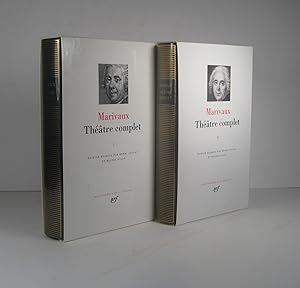
Théâtre complet I et II (1 et 2). 2 Volumes
Editore: Gallimard, Paris, 1993
Da: Librairie Bonheur d'occasion (LILA / ILAB), Montréal, QC, Canada
Membro dell'associazione: ABAC ILAB
Valutazione del venditore 5 su 5 stelle
EUR 95,25
Spedizione EUR 20,70
Spedito da Canada a U.S.A.Quantità: 1 disponibili
Aggiungi al carrelloCuir. Condizione: Très bon. 2 vol. in-12. 1204 et 1237 pages. Sous étuis illustrés. Coll. "Bibliothèque de la Pléiade".


