

Importo totale (1 articolo articoli):
Destinazione ordine:

madelyn shaw (48 risultati)
Vai alla pagina principale dei risultati di ricerca
Filtri di ricerca
Tipo di articolo
- Tutti i tipi di prodotto
- Libri (48)
- Riviste e Giornali (Nessun altro risultato corrispondente a questo perfezionamento)
- Fumetti (Nessun altro risultato corrispondente a questo perfezionamento)
- Spartiti (Nessun altro risultato corrispondente a questo perfezionamento)
- Arte, Stampe e Poster (Nessun altro risultato corrispondente a questo perfezionamento)
- Fotografie (Nessun altro risultato corrispondente a questo perfezionamento)
- Mappe (Nessun altro risultato corrispondente a questo perfezionamento)
- Manoscritti e Collezionismo cartaceo (Nessun altro risultato corrispondente a questo perfezionamento)
Condizioni Maggiori informazioni
- Nuovo (25)
- Come nuovo, Ottimo o Quasi ottimo (9)
- Molto buono o Buono (14)
- Discreto o Mediocre (Nessun altro risultato corrispondente a questo perfezionamento)
- Come descritto (Nessun altro risultato corrispondente a questo perfezionamento)
Legatura
Ulteriori caratteristiche
Lingua (3)
Spedizione gratuita
Paese del venditore
Valutazione venditore
-

From Paris to Providence: Fashion, Art and the Tirocchi Dressmakers Shop, 1915-1947
Lingua: Inglese
Editore: Rhode Island School of Design, 1999
ISBN 10: 0911517693 ISBN 13: 9780911517699
Da: ThriftBooks-Atlanta, AUSTELL, GA, U.S.A.
Valutazione del venditore 5 su 5 stelle

Paperback. Condizione: Very Good. No Jacket. May have limited writing in cover pages. Pages are unmarked. ~ ThriftBooks: Read More, Spend Less.
-
From Paris to Providence: Fashion, Art and the Tirocchi Dressmakers Shop, 1915-1947
Lingua: Inglese
Editore: Rhode Island School of Design, 1999
ISBN 10: 0911517693 ISBN 13: 9780911517699
Da: ThriftBooks-Dallas, Dallas, TX, U.S.A.
Valutazione del venditore 5 su 5 stelle
Paperback. Condizione: Very Good. No Jacket. May have limited writing in cover pages. Pages are unmarked. ~ ThriftBooks: Read More, Spend Less.
-

From Paris to Providence: Fashion, Art and the Tirocchi Dressmakers Shop, 1915-1947
Lingua: Inglese
Editore: Rhode Island School of Design, 1999
ISBN 10: 0911517693 ISBN 13: 9780911517699
Da: Lavendier Books, Foster, RI, U.S.A.
Valutazione del venditore 5 su 5 stelle
paperback. Condizione: Very Good. Museum of Art (Rhode Island School of Design); Providence, 2000. Softcover. A Very Good, binding sturdy and intact, some handling/scuff marks to covers, bit of cover edge/corner wear, cut out top front free endpaper (at corner), mild waving to pages along top and bottom page edges, a nice and clean copy in Oversize Wraps. 4to[quarto or approx. 9.75 x 11 inches], 223pp., bibliography, color and b&w illustrations. We pack securely and ship daily with delivery confirmation on every book. The picture on the listing page is of the actual book for sale. Additional Scan(s) are available for any item, please inquire.Please note: Oversized books/sets MAY require additional postage then what is quoted for 2.2lb book.
-

Connections: Georgia in the World: The Seventh Henry D. Green Symposium of the Decorative Arts
Da: CONTINENTAL MEDIA & BEYOND, Ocala, FL, U.S.A.
Valutazione del venditore 5 su 5 stelle
Condizione: Used: Very Good. 2016 paperback clean unmarked pages cover has some wear slight tear at cover nice book.
-
From Paris to Providence, Fashion, Art and the Tirocchi Dressmakers' Shop, 1915-1947
Lingua: Inglese
Editore: Rhode Island School of Design, 1999
ISBN 10: 0911517693 ISBN 13: 9780911517699
Paperback. Condizione: Very Good. Very Good. Gently used with no markings in text. Binding is tight. Some light edgewear to covers.
-

Marguerita Mergentime: American Textiles, Modern Ideas
Da: Book_Mob, Santa Clarita, CA, U.S.A.
Valutazione del venditore 5 su 5 stelle
hardcover. Condizione: Good. Minor wear on the corners. Clean pages with no markings. Ships same day in most cases!The image in this listing is stock photo for reference. Actual item may differ. Any queries, just ask for photos. Your satisfaction matters!
-
American Silk, 1830-1930: Entrepreneurs and Artifacts (Costume Society of America Series)
Lingua: Inglese
Editore: Texas Tech University Press, 2007
ISBN 10: 0896725898 ISBN 13: 9780896725898
Hardcover. Condizione: Good. Condizione sovraccoperta: Very Good. Dust cover is clean. Hardboard is clean. Spots on the inside cover pages. Foxing on the page edges. No markings on the pages. Musty smell. Green spine.
-

Homefront & Battlefield Quilt & Context in the Civil War
Lingua: Inglese
Editore: American Textile History Museum, c.2012,, 2012
ISBN 10: 0937474053 ISBN 13: 9780937474051
hardcover, Condizione: Very Good, American Textile History Museum, Lowell, c.2012, 9"x11", paperbk., 231pp., many color illusts., VG $.
-
Homefront & Battlefield: Quilts & Context in the Civil War
Lingua: Inglese
Editore: American Textile History Museum, 2012
ISBN 10: 0937474053 ISBN 13: 9780937474051
Da: G.J. Askins Bookseller, New Lebanon, NY, U.S.A.
Membro dell'associazione: SNEAB
Valutazione del venditore 5 su 5 stelle
Copia autografata
Soft cover. Condizione: Very Good. 240 page soft cover with many color illustrations. Published in conjunction with the exhibition at American Textile Museum in Lowell, MA. The exhibition then traveled to New York Historical Society, the Shelburne Museum, and Nebraska State Historical Society. Signed by both authors on the title page. Textile Glossary and Index at rear. Very good condition- no flaws. Inscribed by Author(s).
-

Southern Tufts : The Regional Origins and National Craze for Chenille Fashion
Lingua: Inglese
Editore: University of Georgia Press, 2015
ISBN 10: 0820345164 ISBN 13: 9780820345161
Da: GreatBookPrices, Columbia, MD, U.S.A.
Valutazione del venditore 5 su 5 stelle
EUR 28,07
Spedizione EUR 2,28
Spedito in U.S.A.Quantità: Più di 20 disponibili
Aggiungi al carrelloCondizione: New.
-

Fleeced : Unraveling the History of Wool and War
Da: GreatBookPrices, Columbia, MD, U.S.A.
Valutazione del venditore 5 su 5 stelle
Condizione: New.
-

Fleeced (Hardcover)
Da: Grand Eagle Retail, Bensenville, IL, U.S.A.
Valutazione del venditore 5 su 5 stelle
Hardcover. Condizione: new. Hardcover. Not everything about wool is warm and fuzzy.Wool, for millennia the cold climate textile fiber, has a long relationship to war, both in terms of supporting it and causing it. Wools strategic value in wartime, a position it gained over centuries, and contrived shortages of same in the 20th century, have helped drive consumers transition to the synthetic fibers that have enabled fast fashion, and as both fiber and cloth are global contemporary pollutants.Fleeced argues that the 19th century advent of southern hemisphere large scale sheep pastoralism and northern hemisphere industrialization of the woolen textile industry allowed - at least in part - the huge armies of the 20th century to exist. World War I represented a fundamental shift in the scale of armies and the kind of wars they fought. Demand for wool to outfit the tens of millions of men and women involved in fighting the war or supporting those who did grew way beyond what could be accommodated by any nations normal supply. The contrived wool shortages of this war had a lasting impact - nations subject to supply chain difficulties began the search for substitutes that led first to the semi-synthetic rayon, and ultimately to the plastic fibers such as polyester and acrylic that dominate todays world of fast fashion.Each chapter of Fleeced begins with a surprising object, document or image that takes us into this fascinating and previously untold history. Change is not necessarily progress.Fleeced explains how competition for wool in wartime helped create our current unsustainable and environmentally disastrous reliance on petrochemical fibers. Nothing about wool is warm and fuzzy. The history of wool is intertwined with the history of war.Fleeced explains how competition for wool in wartime helped create our current unsustainable and environmentally disastrous reliance on petrochemical fibers. Shipping may be from multiple locations in the US or from the UK, depending on stock availability.
-
Marguerita Mergentime: American Textiles, Modern Ideas
Da: Your Online Bookstore, Houston, TX, U.S.A.
Valutazione del venditore 5 su 5 stelle
hardcover. Condizione: New.
-

Southern Tufts : The Regional Origins and National Craze for Chenille Fashion
Lingua: Inglese
Editore: University of Georgia Press, 2015
ISBN 10: 0820345164 ISBN 13: 9780820345161
Da: GreatBookPrices, Columbia, MD, U.S.A.
Valutazione del venditore 5 su 5 stelle
EUR 33,12
Spedizione EUR 2,28
Spedito in U.S.A.Quantità: Più di 20 disponibili
Aggiungi al carrelloCondizione: As New. Unread book in perfect condition.
-
Fleeced: Unraveling the History of Wool and War
Da: California Books, Miami, FL, U.S.A.
Valutazione del venditore 5 su 5 stelle
EUR 37,29
Spedizione gratuita
Spedito in U.S.A.Quantità: Più di 20 disponibili
Aggiungi al carrelloCondizione: New.
-

Fleeced : Unraveling the History of Wool and War
Da: GreatBookPrices, Columbia, MD, U.S.A.
Valutazione del venditore 5 su 5 stelle
Condizione: As New. Unread book in perfect condition.
-

Homefront & Battlefield. Quilts & Context in the Civil War.
Editore: (Lowell, MA: American Textile History Museum, 2012)., 2012
Da: Thomas Dorn, ABAA, Canton, GA, U.S.A.
Membro dell'associazione: ABAA ILAB
Valutazione del venditore 5 su 5 stelle
Prima edizione
Soft cover. Condizione: As New. 1st Edition. First printing. Exhibition catalog. 4to. ix, 231pp. Profusely illustrated with color photographs; printed on coated paper. Original photographic French-style wrappers. This is a tight, fine book. Uncommon.
-

EUR 40,75
Spedizione gratuita
Spedito da Regno Unito a U.S.A.Quantità: Più di 20 disponibili
Aggiungi al carrelloHardback. Condizione: New. Not everything about wool is warm and fuzzy.Wool, for millennia the cold climate textile fiber, has a long relationship to war, both in terms of supporting it and causing it. Wool's strategic value in wartime, a position it gained over centuries, and contrived shortages of same in the 20th century, have helped drive consumers' transition to the synthetic fibers that have enabled fast fashion, and as both fiber and cloth are global contemporary pollutants.Fleeced argues that the 19th century advent of southern hemisphere large scale sheep pastoralism and northern hemisphere industrialization of the woolen textile industry allowed - at least in part - the huge armies of the 20th century to exist. World War I represented a fundamental shift in the scale of armies and the kind of wars they fought. Demand for wool to outfit the tens of millions of men and women involved in fighting the war or supporting those who did grew way beyond what could be accommodated by any nation's normal supply. The contrived wool shortages of this war had a lasting impact - nations subject to supply chain difficulties began the search for substitutes that led first to the semi-synthetic rayon, and ultimately to the plastic fibers such as polyester and acrylic that dominate today's world of fast fashion.Each chapter of Fleeced begins with a surprising object, document or image that takes us into this fascinating and previously untold history. Change is not necessarily progress.Fleeced explains how competition for wool in wartime helped create our current unsustainable and environmentally disastrous reliance on petrochemical fibers.
-

Fleeced: Unraveling the History of Wool and War
Editore: Rowman & Littlefield Publishers, 2025
Da: Books From California, Simi Valley, CA, U.S.A.
Valutazione del venditore 4 su 5 stelle

hardcover. Condizione: Very Good.
-
Fleeced: Unraveling the History of Wool and War
Editore: Rowman & Littlefield Publishers, 2025
Da: Books From California, Simi Valley, CA, U.S.A.
Valutazione del venditore 4 su 5 stelle
hardcover. Condizione: Fine.
-
Fleeced: Unraveling the History of Wool and War
Editore: Rowman & Littlefield Publishers, 2025
Da: Books From California, Simi Valley, CA, U.S.A.
Valutazione del venditore 4 su 5 stelle
hardcover. Condizione: Good. noticeable wear and tear on spine.
-

EUR 43,87
Spedizione gratuita
Spedito in U.S.A.Quantità: Più di 20 disponibili
Aggiungi al carrelloHardback. Condizione: New. Not everything about wool is warm and fuzzy.Wool, for millennia the cold climate textile fiber, has a long relationship to war, both in terms of supporting it and causing it. Wool's strategic value in wartime, a position it gained over centuries, and contrived shortages of same in the 20th century, have helped drive consumers' transition to the synthetic fibers that have enabled fast fashion, and as both fiber and cloth are global contemporary pollutants.Fleeced argues that the 19th century advent of southern hemisphere large scale sheep pastoralism and northern hemisphere industrialization of the woolen textile industry allowed - at least in part - the huge armies of the 20th century to exist. World War I represented a fundamental shift in the scale of armies and the kind of wars they fought. Demand for wool to outfit the tens of millions of men and women involved in fighting the war or supporting those who did grew way beyond what could be accommodated by any nation's normal supply. The contrived wool shortages of this war had a lasting impact - nations subject to supply chain difficulties began the search for substitutes that led first to the semi-synthetic rayon, and ultimately to the plastic fibers such as polyester and acrylic that dominate today's world of fast fashion.Each chapter of Fleeced begins with a surprising object, document or image that takes us into this fascinating and previously untold history. Change is not necessarily progress.Fleeced explains how competition for wool in wartime helped create our current unsustainable and environmentally disastrous reliance on petrochemical fibers.
-

Beyond Weaving: International Art Textiles
Da: ThriftBooks-Dallas, Dallas, TX, U.S.A.
Valutazione del venditore 5 su 5 stelle
Paperback. Condizione: Good. No Jacket. Thomas Grotta (illustratore). Pages can have notes/highlighting. Spine may show signs of wear. ~ ThriftBooks: Read More, Spend Less.
-
Fleeced: Unraveling the History of Wool and War
Da: Ria Christie Collections, Uxbridge, Regno Unito
Valutazione del venditore 5 su 5 stelle
EUR 35,08
Spedizione EUR 13,77
Spedito da Regno Unito a U.S.A.Quantità: Più di 20 disponibili
Aggiungi al carrelloCondizione: New. In.
-
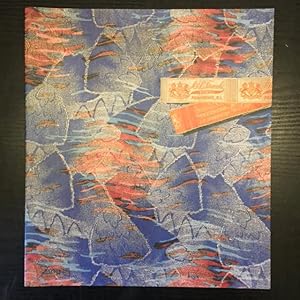
From Paris to Providence: Fashion, Art and the Tirocchi Dressmakers Shop, 1915-1947
Lingua: Inglese
Editore: Rhode Island School of Design 2000, Providence, Rhode Island, U.S.A., 2000
ISBN 10: 0911517693 ISBN 13: 9780911517699
Da: Foster Books - Stephen Foster - ABA, ILAB, & PBFA, London, Regno Unito
Membro dell'associazione: ABA ILAB PBFA
Valutazione del venditore 5 su 5 stelle
EUR 35,52
Spedizione EUR 14,37
Spedito da Regno Unito a U.S.A.Quantità: 1 disponibili
Aggiungi al carrelloSoftcover. Condizione: As New. 224 pp., In their elegant Providence Shop, Italian emigre sisters Anna and Laura Tirocchi sold French couture clothing to an elite clientele. The shop, remained virtually untouched from 1947 until 1990, when RISD Museum curators were given their choice of its contents, which included apparel by Paul Poiret, Lucien Lelong, and dresses in the style of Madeleine Vionnet. All reflect the advent of modernism in the Paris art world of 1920s and 30s, when designers, painters and printmakers were collaborating as never before to create fashion. From "Paris to Providence" catalogues these efforts with beautiful illustrations and six essays that examine the era's social and art-historical issues. 0911517693 4to.
-
Marguerita Mergentime: American Textiles, Modern Ideas
Da: Revaluation Books, Exeter, Regno Unito
Valutazione del venditore 5 su 5 stelle
EUR 37,16
Spedizione EUR 14,37
Spedito da Regno Unito a U.S.A.Quantità: 1 disponibili
Aggiungi al carrelloHardcover. Condizione: Brand New. 144 pages. 10.25x8.25x0.75 inches. In Stock.
-

Fleeced : Unraveling the History of Wool and War
Da: GreatBookPricesUK, Woodford Green, Regno Unito
Valutazione del venditore 5 su 5 stelle
EUR 34,77
Spedizione EUR 17,24
Spedito da Regno Unito a U.S.A.Quantità: Più di 20 disponibili
Aggiungi al carrelloCondizione: New.
-

Fleeced : Unraveling the History of Wool and War
Da: GreatBookPricesUK, Woodford Green, Regno Unito
Valutazione del venditore 5 su 5 stelle
EUR 38,71
Spedizione EUR 17,24
Spedito da Regno Unito a U.S.A.Quantità: Più di 20 disponibili
Aggiungi al carrelloCondizione: As New. Unread book in perfect condition.
-
Fleeced (Hardcover)
Da: AussieBookSeller, Truganina, VIC, Australia
Valutazione del venditore 5 su 5 stelle
EUR 34,82
Spedizione EUR 31,89
Spedito da Australia a U.S.A.Quantità: 1 disponibili
Aggiungi al carrelloHardcover. Condizione: new. Hardcover. Not everything about wool is warm and fuzzy.Wool, for millennia the cold climate textile fiber, has a long relationship to war, both in terms of supporting it and causing it. Wools strategic value in wartime, a position it gained over centuries, and contrived shortages of same in the 20th century, have helped drive consumers transition to the synthetic fibers that have enabled fast fashion, and as both fiber and cloth are global contemporary pollutants.Fleeced argues that the 19th century advent of southern hemisphere large scale sheep pastoralism and northern hemisphere industrialization of the woolen textile industry allowed - at least in part - the huge armies of the 20th century to exist. World War I represented a fundamental shift in the scale of armies and the kind of wars they fought. Demand for wool to outfit the tens of millions of men and women involved in fighting the war or supporting those who did grew way beyond what could be accommodated by any nations normal supply. The contrived wool shortages of this war had a lasting impact - nations subject to supply chain difficulties began the search for substitutes that led first to the semi-synthetic rayon, and ultimately to the plastic fibers such as polyester and acrylic that dominate todays world of fast fashion.Each chapter of Fleeced begins with a surprising object, document or image that takes us into this fascinating and previously untold history. Change is not necessarily progress.Fleeced explains how competition for wool in wartime helped create our current unsustainable and environmentally disastrous reliance on petrochemical fibers. Nothing about wool is warm and fuzzy. The history of wool is intertwined with the history of war.Fleeced explains how competition for wool in wartime helped create our current unsustainable and environmentally disastrous reliance on petrochemical fibers. Shipping may be from our Sydney, NSW warehouse or from our UK or US warehouse, depending on stock availability.
-

Clothing Through American History Vol. 1 : The British Colonial Era
Da: Better World Books, Mishawaka, IN, U.S.A.
Valutazione del venditore 5 su 5 stelle
Condizione: Very Good. Former library copy. Pages intact with possible writing/highlighting. Binding strong with minor wear. Dust jackets/supplements may not be included. Includes library markings. Stock photo provided. Product includes identifying sticker. Better World Books: Buy Books. Do Good.


