

Importo totale (1 articolo articoli):
Destinazione ordine:

marco carloni (37 risultati)
Vai alla pagina principale dei risultati di ricerca
Filtri di ricerca
Tipo di articolo
- Tutti i tipi di prodotto
- Libri (14)
- Riviste e Giornali (Nessun altro risultato corrispondente a questo perfezionamento)
- Fumetti (Nessun altro risultato corrispondente a questo perfezionamento)
- Spartiti (Nessun altro risultato corrispondente a questo perfezionamento)
- Arte, Stampe e Poster (11)
- Fotografie (Nessun altro risultato corrispondente a questo perfezionamento)
- Mappe (12)
- Manoscritti e Collezionismo cartaceo (Nessun altro risultato corrispondente a questo perfezionamento)
Condizioni Maggiori informazioni
- Nuovo (13)
- Come nuovo, Ottimo o Quasi ottimo (Nessun altro risultato corrispondente a questo perfezionamento)
- Molto buono o Buono (2)
- Discreto o Mediocre (Nessun altro risultato corrispondente a questo perfezionamento)
- Come descritto (22)
Legatura
Ulteriori caratteristiche
- Prima ed. (1)
- Copia autograf. (Nessun altro risultato corrispondente a questo perfezionamento)
- Sovracoperta (Nessun altro risultato corrispondente a questo perfezionamento)
- Con foto (36)
- Non Print on Demand (25)
Lingua (2)
Spedizione gratuita
Paese del venditore
Valutazione venditore
-

Il cantiere delle lobby. Processi decisionali, consenso, regole
Da: libreriauniversitaria.it, Occhiobello, RO, Italia
Valutazione del venditore 4 su 5 stelle

EUR 14,25
Spedizione EUR 17,95
Spedito da Italia a U.S.A.Quantità: 2 disponibili
Aggiungi al carrelloCondizione: NEW.
-
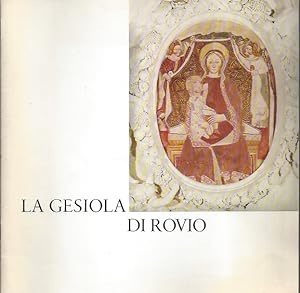
LA GESIOLA DI ROVIO / Inauguration of the restoration of the church of the Madonna in Rovio
Editore: Rovio: Chiesa della Madonna, 1976, 1976
Da: °ART...on paper - 20th Century Art Books, Lugano, Svizzera
Membro dell'associazione: ILAB
Valutazione del venditore 5 su 5 stelle

Prima edizione
EUR 39,28
Spedizione EUR 25,00
Spedito da Svizzera a U.S.A.Quantità: 1 disponibili
Aggiungi al carrelloSoft cover. Condizione: Very Good. 1st Edition. Sm.8° - Unpaginated - B/w Photo-reproductions. Inauguration of the restoration of the church of the Madonna in Rovio. First edition, text in Italian. Original wrappers. In Very good condition.
-
![Immagine del venditore per Bassirilievi volsci in terracotta dipinti a varj colori : trovati nella citta di Velletri / da Marco Carloni . 1785 [LeatherBound] venduto da S N Books World](https://pictures.abebooks.com/inventory/md/md30877603180.jpg)
Bassirilievi volsci in terracotta dipinti a varj colori : trovati nella citta di Velletri / da Marco Carloni . 1785 [LeatherBound]
Lingua: Italiano
Data di pubblicazione: 2025
EUR 21,44
Spedizione gratuita
Spedito da India a U.S.A.Quantità: 18 disponibili
Aggiungi al carrelloLeatherBound. Condizione: NEW. BOOKS ARE EXEMPT FROM IMPORT DUTIES AND TARIFFS; NO EXTRA CHARGES APPLY. Leather Binding on Spine and Corners with Golden leaf printing on spine. Bound in genuine leather with Satin ribbon page markers and Spine with raised gilt bands. A perfect gift for your loved ones. Reprinted from 1785 edition. NO changes have been made to the original text. This is NOT a retyped or an ocr'd reprint. Illustrations, Index, if any, are included in black and white. Each page is checked manually before printing. As this print on demand book is reprinted from a very old book, there could be some missing or flawed pages, but we always try to make the book as complete as possible. Fold-outs, if any, are not part of the book. If the original book was published in multiple volumes then this reprint is of only one volume, not the whole set and contains approximately 40 pages. IF YOU WISH TO ORDER PARTICULAR VOLUME OR ALL THE VOLUMES YOU CAN CONTACT US. Resized as per current standards. Sewing binding for longer life, where the book block is actually sewn (smythe sewn/section sewn) with thread before binding which results in a more durable type of binding. Language: Italian.
-

Antique Print-CHARIOT RACING-ANCIENT ROME-PL. 96-Bartoli-Carloni-1782
Data di pubblicazione: 1782
Da: Pictura Prints, Art & Books, Overasselt, Paesi Bassi
Membro dell'associazione: ILAB NVVA
Valutazione del venditore 5 su 5 stelle
Arte / Stampa / Poster
EUR 60,00
Spedizione EUR 20,00
Spedito da Paesi Bassi a U.S.A.Quantità: 1 disponibili
Aggiungi al carrelloCondizione: Good. Pietro Sancto Bartoli (illustratore). engraving on hand laid (vergé) paper. Sheet size: 20 x 26 cm. (7,9 x 10,2 inch). Image size: x cm. (0 x 0 inch).From: Bartoli, Pietro Sancto (c.1635-1700). 'Picturae Antiquissimi Virgiliani Codicis Bibliothecae .' Rome: Monaldini, 1782. This work contains 124 miniatures from two important ancient virgilian Mss. in the Vatican Library, the Vergilius Vaticanus (Vat. Lat. 3225) and the Codex Romanus (Vat. Lat. 3867). The first of these manuscrips was formerly in the posession of Pontano, Bembo and Fulvio Orsini before being deposited in the Vatican in 1602. An edition based on this manuscript was prepared by the librarian G. C. Bottari (1689-1775) and appeared in 1741, reproducing engravings of the miniatures by Pietro Sancto Bartoli and fragments of the text.This edition contains over twice as many engravings as the 1741 edition, besides engravings based on the two manuscripts mentioned earlier, it also contains illustrations taken from antique gems and sculptures. Most of the illustrations are unsigned, but artists of the others include Corvi, Lanci, Giusti and de Rossi, while the engravers include Benedetti, Giardoni, Carloni, Bombelli, Barbazza, Beheim, Morgalli and Baratti.Made by 'Marco Carloni' after 'Pietro Sancto Bartoli'. Marco Carloni, Italian engraver (1742-1796). Pietro Santo Bartoli (1635-1700) was an Italian engraver from Perugia. He was a student of the French artist Poussin. His nickname was Perugino. He was antiquarian to both the Queen Christina and Benedetto Odescalchi (1611-1689), who became Pope in 1676 under the name of Innocent XI.Condition: Good, given age. Some browning and spots mostly in the margins. General age-related toning and/or occasional minor defects from handling. Please study scan carefully.Keywords: CHARIOT RACING-ANCIENT ROME-PL. 96PCO-C240-18.
-

Detail of a fresco in the 'Domus Aureus'
Editore: Ludovico Mirri, Rome, 1778
Da: Donald A. Heald Rare Books (ABAA), New York, NY, U.S.A.
Membro dell'associazione: ABAA ILAB
Valutazione del venditore 5 su 5 stelle
Arte / Stampa / Poster
Original engraving with modern bodycolour. Very good condition apart from some mild creasing and light soiling and in the margins. A fine plate from 'Vestigia delle terme di Tito e loro interne pitture' of an ancient fresco from the 'Domus Aureus', Nero's sumptuous imperial complex in Rome. Situated between the Palatine and Esquiline Hills in Rome and designed by architects Severus and Celer, the Domus Aureus (Golden House) was erected by Nero in 64 AD after the great fire in Rome. The magnitude and decadent extravagance of the impressive gold-covered, jewel bedecked palace was intended to glorify the Emperor's reign. Its rooms were filled with lavish furniture and its walls and ceilings covered with decorative late-Hellenistic murals by the renowned ancient artist Fabullus. Nero, however, died in 68 AD before the Domus was totally completed. Years later, Titus (and later Trajan) built his thermal bath over its ruins, which were used as a foundation for and were partially preserved by Titus' edifice. Successive emperors continued to erect various buildings on the site and subsequently make several renovations to the Domus substructure. In 1480, practically forgotten, the Domus was excavated, and its subterranean passages and rooms thereafter became known as 'le grotte' (cave). Many of its original frescoes survived, and their motifs and ancient style of ornamentation, called 'grotteschi' (grotesque) after 'grotte', became extremely popular during the Renaissance, influencing many prominent artists such as Raphael, Michelangelo, Ghirlandio, and Pinturicchio. Published in the late eighteenth century, 'Vestigia delle terme di Tito e loro interne pitture' is an elaborate album of engravings depicting the stunning 'al fresco' and 'al stucco' murals of Nero's Domus Aureus. Carloni's colourful and beautifully rendered plates faithfully capture the grotesque style of the ancient frescoes, which was characterized by decorative borders filled with whimsical, often comical animals and foliage taken from both nature and the artist's imagination. The ornamental borders also served the practical functions of framing the central mythological, religious, or historical subject portrayed and separating the various murals in a single decorative scheme.
-
Detail of a fresco in the 'Domus Aureus'
Editore: Ludovico Mirri, Rome, 1778
Da: Donald A. Heald Rare Books (ABAA), New York, NY, U.S.A.
Membro dell'associazione: ABAA ILAB
Valutazione del venditore 5 su 5 stelle
Arte / Stampa / Poster
Original engraving with modern bodycolour. Very good condition apart from some mild creasing. A fine plate from 'Vestigia delle terme di Tito e loro interne pitture' of an ancient fresco from the 'Domus Aureus', Nero's sumptuous imperial complex in Rome. Situated between the Palatine and Esquiline Hills in Rome and designed by architects Severus and Celer, the Domus Aureus (Golden House) was erected by Nero in 64 AD after the great fire in Rome. The magnitude and decadent extravagance of the impressive gold-covered, jewel bedecked palace was intended to glorify the Emperor's reign. Its rooms were filled with lavish furniture and its walls and ceilings covered with decorative late-Hellenistic murals by the renowned ancient artist Fabullus. Nero, however, died in 68 AD before the Domus was totally completed. Years later, Titus (and later Trajan) built his thermal bath over its ruins, which were used as a foundation for and were partially preserved by Titus' edifice. Successive emperors continued to erect various buildings on the site and subsequently make several renovations to the Domus substructure. In 1480, practically forgotten, the Domus was excavated, and its subterranean passages and rooms thereafter became known as 'le grotte' (cave). Many of its original frescoes survived, and their motifs and ancient style of ornamentation, called 'grotteschi' (grotesque) after 'grotte', became extremely popular during the Renaissance, influencing many prominent artists such as Raphael, Michelangelo, Ghirlandio, and Pinturicchio. Published in the late eighteenth century, 'Vestigia delle terme di Tito e loro interne pitture' is an elaborate album of engravings depicting the stunning 'al fresco' and 'al stucco' murals of Nero's Domus Aureus. Carloni's colourful and beautifully rendered plates faithfully capture the grotesque style of the ancient frescoes, which was characterized by decorative borders filled with whimsical, often comical animals and foliage taken from both nature and the artist's imagination. The ornamental borders also served the practical functions of framing the central mythological, religious, or historical subject portrayed and separating the various murals in a single decorative scheme.
-
Detail of a fresco in the 'Domus Aureus'
Editore: Ludovico Mirri, Rome, 1778
Da: Donald A. Heald Rare Books (ABAA), New York, NY, U.S.A.
Membro dell'associazione: ABAA ILAB
Valutazione del venditore 5 su 5 stelle
Arte / Stampa / Poster
Original engraving with modern bodycolour. Very good condition apart from some mild rippling and two minor brownish stains in the left and right margins. A fine plate from 'Vestigia delle terme di Tito e loro interne pitture' of an ancient fresco from the 'Domus Aureus', Nero's sumptuous imperial complex in Rome. Situated between the Palatine and Esquiline Hills in Rome and designed by architects Severus and Celer, the Domus Aureus (Golden House) was erected by Nero in 64 AD after the great fire in Rome. The magnitude and decadent extravagance of the impressive gold-covered, jewel bedecked palace was intended to glorify the Emperor's reign. Its rooms were filled with lavish furniture and its walls and ceilings covered with decorative late-Hellenistic murals by the renowned ancient artist Fabullus. Nero, however, died in 68 AD before the Domus was totally completed. Years later, Titus (and later Trajan) built his thermal bath over its ruins, which were used as a foundation for and were partially preserved by Titus' edifice. Successive emperors continued to erect various buildings on the site and subsequently make several renovations to the Domus substructure. In 1480, practically forgotten, the Domus was excavated, and its subterranean passages and rooms thereafter became known as 'le grotte' (cave). Many of its original frescoes survived, and their motifs and ancient style of ornamentation, called 'grotteschi' (grotesque) after 'grotte', became extremely popular during the Renaissance, influencing many prominent artists such as Raphael, Michelangelo, Ghirlandio, and Pinturicchio. Published in the late eighteenth century, 'Vestigia delle terme di Tito e loro interne pitture' is an elaborate album of engravings depicting the stunning 'al fresco' and 'al stucco' murals of Nero's Domus Aureus. Carloni's colourful and beautifully rendered plates faithfully capture the grotesque style of the ancient frescoes, which was characterized by decorative borders filled with whimsical, often comical animals and foliage taken from both nature and the artist's imagination. The ornamental borders also served the practical functions of framing the central mythological, religious, or historical subject portrayed and separating the various murals in a single decorative scheme.
-
Detail of a fresco in the 'Domus Aureus'
Editore: Ludovico Mirri, Rome, 1778
Da: Donald A. Heald Rare Books (ABAA), New York, NY, U.S.A.
Membro dell'associazione: ABAA ILAB
Valutazione del venditore 5 su 5 stelle
Arte / Stampa / Poster
Original engraving with modern bodycolour. Very good condition apart from somel light soiling and mild rippling. A fine plate from 'Vestigia delle terme di Tito e loro interne pitture' of an ancient fresco from the 'Domus Aureus', Nero's sumptuous imperial complex in Rome. Situated between the Palatine and Esquiline Hills in Rome and designed by architects Severus and Celer, the Domus Aureus (Golden House) was erected by Nero in 64 AD after the great fire in Rome. The magnitude and decadent extravagance of the impressive gold-covered, jewel bedecked palace was intended to glorify the Emperor's reign. Its rooms were filled with lavish furniture and its walls and ceilings covered with decorative late-Hellenistic murals by the renowned ancient artist Fabullus. Nero, however, died in 68 AD before the Domus was totally completed. Years later, Titus (and later Trajan) built his thermal bath over its ruins, which were used as a foundation for and were partially preserved by Titus' edifice. Successive emperors continued to erect various buildings on the site and subsequently make several renovations to the Domus substructure. In 1480, practically forgotten, the Domus was excavated, and its subterranean passages and rooms thereafter became known as 'le grotte' (cave). Many of its original frescoes survived, and their motifs and ancient style of ornamentation, called 'grotteschi' (grotesque) after 'grotte', became extremely popular during the Renaissance, influencing many prominent artists such as Raphael, Michelangelo, Ghirlandio, and Pinturicchio. Published in the late eighteenth century, 'Vestigia delle terme di Tito e loro interne pitture' is an elaborate album of engravings depicting the stunning 'al fresco' and 'al stucco' murals of Nero's Domus Aureus. Carloni's colourful and beautifully rendered plates faithfully capture the grotesque style of the ancient frescoes, which was characterized by decorative borders filled with whimsical, often comical animals and foliage taken from both nature and the artist's imagination. The ornamental borders also served the practical functions of framing the central mythological, religious, or historical subject portrayed and separating the various murals in a single decorative scheme.
-
Detail of a fresco in the 'Domus Aureus'
Editore: Ludovico Mirri, Rome, 1778
Da: Donald A. Heald Rare Books (ABAA), New York, NY, U.S.A.
Membro dell'associazione: ABAA ILAB
Valutazione del venditore 5 su 5 stelle
Arte / Stampa / Poster
Original engraving with modern bodycolour. Very good condition apart from a small light brown stain in the top right corner of the sheet and some mild creasing and rippling. A fine plate from 'Vestigia delle terme di Tito e loro interne pitture' of an ancient fresco from the 'Domus Aureus', Nero's sumptuous imperial complex in Rome. Situated between the Palatine and Esquiline Hills in Rome and designed by architects Severus and Celer, the Domus Aureus (Golden House) was erected by Nero in 64 AD after the great fire in Rome. The magnitude and decadent extravagance of the impressive gold-covered, jewel bedecked palace was intended to glorify the Emperor's reign. Its rooms were filled with lavish furniture and its walls and ceilings covered with decorative late-Hellenistic murals by the renowned ancient artist Fabullus. Nero, however, died in 68 AD before the Domus was totally completed. Years later, Titus (and later Trajan) built his thermal bath over its ruins, which were used as a foundation for and were partially preserved by Titus' edifice. Successive emperors continued to erect various buildings on the site and subsequently make several renovations to the Domus substructure. In 1480, practically forgotten, the Domus was excavated, and its subterranean passages and rooms thereafter became known as 'le grotte' (cave). Many of its original frescoes survived, and their motifs and ancient style of ornamentation, called 'grotteschi' (grotesque) after 'grotte', became extremely popular during the Renaissance, influencing many prominent artists such as Raphael, Michelangelo, Ghirlandio, and Pinturicchio. Published in the late eighteenth century, 'Vestigia delle terme di Tito e loro interne pitture' is an elaborate album of engravings depicting the stunning 'al fresco' and 'al stucco' murals of Nero's Domus Aureus. Carloni's colourful and beautifully rendered plates faithfully capture the grotesque style of the ancient frescoes, which was characterized by decorative borders filled with whimsical, often comical animals and foliage taken from both nature and the artist's imagination. The ornamental borders also served the practical functions of framing the central mythological, religious, or historical subject portrayed and separating the various murals in a single decorative scheme.
-
Detail of a fresco in the 'Domus Aureus'
Editore: Ludovico Mirri, Rome, 1778
Da: Donald A. Heald Rare Books (ABAA), New York, NY, U.S.A.
Membro dell'associazione: ABAA ILAB
Valutazione del venditore 5 su 5 stelle
Arte / Stampa / Poster
Original engraving with modern bodycolour. Very good condition apart from some mild rippling and a small light yellow stain in the left margin. A fine plate from 'Vestigia delle terme di Tito e loro interne pitture' of an ancient fresco from the 'Domus Aureus', Nero's sumptuous imperial complex in Rome. Situated between the Palatine and Esquiline Hills in Rome and designed by architects Severus and Celer, the Domus Aureus (Golden House) was erected by Nero in 64 AD after the great fire in Rome. The magnitude and decadent extravagance of the impressive gold-covered, jewel bedecked palace was intended to glorify the Emperor's reign. Its rooms were filled with lavish furniture and its walls and ceilings covered with decorative late-Hellenistic murals by the renowned ancient artist Fabullus. Nero, however, died in 68 AD before the Domus was totally completed. Years later, Titus (and later Trajan) built his thermal bath over its ruins, which were used as a foundation for and were partially preserved by Titus' edifice. Successive emperors continued to erect various buildings on the site and subsequently make several renovations to the Domus substructure. In 1480, practically forgotten, the Domus was excavated, and its subterranean passages and rooms thereafter became known as 'le grotte' (cave). Many of its original frescoes survived, and their motifs and ancient style of ornamentation, called 'grotteschi' (grotesque) after 'grotte', became extremely popular during the Renaissance, influencing many prominent artists such as Raphael, Michelangelo, Ghirlandio, and Pinturicchio. Published in the late eighteenth century, 'Vestigia delle terme di Tito e loro interne pitture' is an elaborate album of engravings depicting the stunning 'al fresco' and 'al stucco' murals of Nero's Domus Aureus. Carloni's colourful and beautifully rendered plates faithfully capture the grotesque style of the ancient frescoes, which was characterized by decorative borders filled with whimsical, often comical animals and foliage taken from both nature and the artist's imagination. The ornamental borders also served the practical functions of framing the central mythological, religious, or historical subject portrayed and separating the various murals in a single decorative scheme.
-

(Design from Domus Aurea)
Editore: Rome, 1776
Da: Clive A. Burden Ltd., Chalfont St. Giles, BUCKS, Regno Unito
Membro dell'associazione: ABA ILAB
Valutazione del venditore 5 su 5 stelle
Mappa
EUR 589,03
Spedizione EUR 25,64
Spedito da Regno Unito a U.S.A.Quantità: 1 disponibili
Aggiungi al carrelloNo binding. 12 x 22 inches, modern gouache coloured copperplate engraving. Plate 55. The 'Vestigia della terme di Tito e loro interni pitture' by Marco Carloni (1742-96) contains stunning plates illustrating the architectural features of Emperor Nero's famous Domus Aurea. The emperor Titus had later built some baths on the site, hence the work's title. The site had been known since the fifteenth century, but around 1774 the publisher Lodovico Mirri started re-excavating in the area with the express intention of selling engravings taken from the features of the Domus Aurea that he uncovered. The resulting album was published in plain and coloured issues. The latter is exceptionally rare. As Ricci explains, the engravings after Franciszek Smugliewicz and Vincenzo Brenna are in three groups. First, there is the frontispiece, title and two ground plans. The second group comprises twenty-five illustrations of ceiling decorations. Third, there are thirty-two plates showing the most important scenes painted on the ceilings, with elaborate grotesque borders. Berlin Katalog (1939) 3950; Cicognara (1931) 3796; Cohen de Ricci (1912) 814.
-

(Design from Domus Aurea)
Editore: Rome, 1776
Da: Clive A. Burden Ltd., Chalfont St. Giles, BUCKS, Regno Unito
Membro dell'associazione: ABA ILAB
Valutazione del venditore 5 su 5 stelle
Mappa
EUR 589,03
Spedizione EUR 25,64
Spedito da Regno Unito a U.S.A.Quantità: 1 disponibili
Aggiungi al carrelloNo binding. 12 x 22 inches, modern gouache coloured copperplate engraving. Plate 37. The 'Vestigia della terme di Tito e loro interni pitture' by Marco Carloni (1742-96) contains stunning plates illustrating the architectural features of Emperor Nero's famous Domus Aurea. The emperor Titus had later built some baths on the site, hence the work's title. The site had been known since the fifteenth century, but around 1774 the publisher Lodovico Mirri started re-excavating in the area with the express intention of selling engravings taken from the features of the Domus Aurea that he uncovered. The resulting album was published in plain and coloured issues. The latter is exceptionally rare. As Ricci explains, the engravings after Franciszek Smugliewicz and Vincenzo Brenna are in three groups. First, there is the frontispiece, title and two ground plans. The second group comprises twenty-five illustrations of ceiling decorations. Third, there are thirty-two plates showing the most important scenes painted on the ceilings, with elaborate grotesque borders. Berlin Katalog (1939) 3950; Cicognara (1931) 3796; Cohen de Ricci (1912) 814.
-

(Design from Domus Aurea)
Editore: Rome, 1776
Da: Clive A. Burden Ltd., Chalfont St. Giles, BUCKS, Regno Unito
Membro dell'associazione: ABA ILAB
Valutazione del venditore 5 su 5 stelle
Mappa
EUR 2.129,56
Spedizione EUR 25,64
Spedito da Regno Unito a U.S.A.Quantità: 1 disponibili
Aggiungi al carrelloNo binding. 19 x 19.5 inches, modern gouache coloured copperplate engraving. Plate 13. The 'Vestigia della terme di Tito e loro interni pitture' by Marco Carloni (1742-96) contains stunning plates illustrating the architectural features of Emperor Nero's famous Domus Aurea. The emperor Titus had later built some baths on the site, hence the work's title. The site had been known since the fifteenth century, but around 1774 the publisher Lodovico Mirri started re-excavating in the area with the express intention of selling engravings taken from the features of the Domus Aurea that he uncovered. The resulting album was published in plain and coloured issues. The latter is exceptionally rare. As Ricci explains, the engravings after Franciszek Smugliewicz and Vincenzo Brenna are in three groups. First, there is the frontispiece, title and two ground plans. The second group comprises twenty-five illustrations of ceiling decorations. Third, there are thirty-two plates showing the most important scenes painted on the ceilings, with elaborate grotesque borders. Berlin Katalog (1939) 3950; Cicognara (1931) 3796; Cohen de Ricci (1912) 814.
-

(Design from Domus Aurea. PAIR)
Editore: Rome, 1776
Da: Clive A. Burden Ltd., Chalfont St. Giles, BUCKS, Regno Unito
Membro dell'associazione: ABA ILAB
Valutazione del venditore 5 su 5 stelle
Mappa
EUR 4.395,05
Spedizione EUR 25,64
Spedito da Regno Unito a U.S.A.Quantità: 1 disponibili
Aggiungi al carrelloNo binding. 19 x 20.5 inches each, modern gouache coloured copperplate engraving. Plates 32 and 50. The 'Vestigia della terme di Tito e loro interni pitture' by Marco Carloni (1742-96) contains stunning plates illustrating the architectural features of Emperor Nero's famous Domus Aurea. The emperor Titus had later built some baths on the site, hence the work's title. The site had been known since the fifteenth century, but around 1774 the publisher Lodovico Mirri started re-excavating in the area with the express intention of selling engravings taken from the features of the Domus Aurea that he uncovered. The resulting album was published in plain and coloured issues. The latter is exceptionally rare. As Ricci explains, the engravings after Franciszek Smugliewicz and Vincenzo Brenna are in three groups. First, there is the frontispiece, title and two ground plans. The second group comprises twenty-five illustrations of ceiling decorations. Third, there are thirty-two plates showing the most important scenes painted on the ceilings, with elaborate grotesque borders. Berlin Katalog (1939) 3950; Cicognara (1931) 3796; Cohen de Ricci (1912) 814.
-
(Design from Domus Aurea. PAIR)
Editore: Rome, 1776
Da: Clive A. Burden Ltd., Chalfont St. Giles, BUCKS, Regno Unito
Membro dell'associazione: ABA ILAB
Valutazione del venditore 5 su 5 stelle
Mappa
EUR 4.395,05
Spedizione EUR 25,64
Spedito da Regno Unito a U.S.A.Quantità: 1 disponibili
Aggiungi al carrelloNo binding. 19 x 20.5 inches each, modern gouache coloured copperplate engraving. Plates 28 and 46. The 'Vestigia della terme di Tito e loro interni pitture' by Marco Carloni (1742-96) contains stunning plates illustrating the architectural features of Emperor Nero's famous Domus Aurea. The emperor Titus had later built some baths on the site, hence the work's title. The site had been known since the fifteenth century, but around 1774 the publisher Lodovico Mirri started re-excavating in the area with the express intention of selling engravings taken from the features of the Domus Aurea that he uncovered. The resulting album was published in plain and coloured issues. The latter is exceptionally rare. As Ricci explains, the engravings after Franciszek Smugliewicz and Vincenzo Brenna are in three groups. First, there is the frontispiece, title and two ground plans. The second group comprises twenty-five illustrations of ceiling decorations. Third, there are thirty-two plates showing the most important scenes painted on the ceilings, with elaborate grotesque borders. Berlin Katalog (1939) 3950; Cicognara (1931) 3796; Cohen de Ricci (1912) 814.
-

(Design from Domus Aurea)
Editore: Rome, 1776
Da: Clive A. Burden Ltd., Chalfont St. Giles, BUCKS, Regno Unito
Membro dell'associazione: ABA ILAB
Valutazione del venditore 5 su 5 stelle
Mappa
EUR 2.129,56
Spedizione EUR 25,64
Spedito da Regno Unito a U.S.A.Quantità: 1 disponibili
Aggiungi al carrelloNo binding. 19.5 x 20 inches, modern gouache coloured copperplate engraving. Plate 30. The 'Vestigia della terme di Tito e loro interni pitture' by Marco Carloni (1742-96) contains stunning plates illustrating the architectural features of Emperor Nero's famous Domus Aurea. The emperor Titus had later built some baths on the site, hence the work's title. The site had been known since the fifteenth century, but around 1774 the publisher Lodovico Mirri started re-excavating in the area with the express intention of selling engravings taken from the features of the Domus Aurea that he uncovered. The resulting album was published in plain and coloured issues. The latter is exceptionally rare. As Ricci explains, the engravings after Franciszek Smugliewicz and Vincenzo Brenna are in three groups. First, there is the frontispiece, title and two ground plans. The second group comprises twenty-five illustrations of ceiling decorations. Third, there are thirty-two plates showing the most important scenes painted on the ceilings, with elaborate grotesque borders. Berlin Katalog (1939) 3950; Cicognara (1931) 3796; Cohen de Ricci (1912) 814.
-

(Design from Domus Aurea)
Editore: Rome, 1776
Da: Clive A. Burden Ltd., Chalfont St. Giles, BUCKS, Regno Unito
Membro dell'associazione: ABA ILAB
Valutazione del venditore 5 su 5 stelle
Mappa
EUR 996,81
Spedizione EUR 25,64
Spedito da Regno Unito a U.S.A.Quantità: 1 disponibili
Aggiungi al carrelloNo binding. 19.5 x 21 inches, modern gouache coloured copperplate engraving. Plate 58. The 'Vestigia della terme di Tito e loro interni pitture' by Marco Carloni (1742-96) contains stunning plates illustrating the architectural features of Emperor Nero's famous Domus Aurea. The emperor Titus had later built some baths on the site, hence the work's title. The site had been known since the fifteenth century, but around 1774 the publisher Lodovico Mirri started re-excavating in the area with the express intention of selling engravings taken from the features of the Domus Aurea that he uncovered. The resulting album was published in plain and coloured issues. The latter is exceptionally rare. As Ricci explains, the engravings after Franciszek Smugliewicz and Vincenzo Brenna are in three groups. First, there is the frontispiece, title and two ground plans. The second group comprises twenty-five illustrations of ceiling decorations. Third, there are thirty-two plates showing the most important scenes painted on the ceilings, with elaborate grotesque borders. Berlin Katalog (1939) 3950; Cicognara (1931) 3796; Cohen de Ricci (1912) 814.
-

(Design from Domus Aurea)
Editore: Rome, 1776
Da: Clive A. Burden Ltd., Chalfont St. Giles, BUCKS, Regno Unito
Membro dell'associazione: ABA ILAB
Valutazione del venditore 5 su 5 stelle
Mappa
EUR 2.129,56
Spedizione EUR 25,64
Spedito da Regno Unito a U.S.A.Quantità: 1 disponibili
Aggiungi al carrelloNo binding. 19.5 x 20 inches, modern gouache coloured copperplate engraving. Plate 48. The 'Vestigia della terme di Tito e loro interni pitture' by Marco Carloni (1742-96) contains stunning plates illustrating the architectural features of Emperor Nero's famous Domus Aurea. The emperor Titus had later built some baths on the site, hence the work's title. The site had been known since the fifteenth century, but around 1774 the publisher Lodovico Mirri started re-excavating in the area with the express intention of selling engravings taken from the features of the Domus Aurea that he uncovered. The resulting album was published in plain and coloured issues. The latter is exceptionally rare. As Ricci explains, the engravings after Franciszek Smugliewicz and Vincenzo Brenna are in three groups. First, there is the frontispiece, title and two ground plans. The second group comprises twenty-five illustrations of ceiling decorations. Third, there are thirty-two plates showing the most important scenes painted on the ceilings, with elaborate grotesque borders. Berlin Katalog (1939) 3950; Cicognara (1931) 3796; Cohen de Ricci (1912) 814.
-

(Design from Domus Aurea)
Editore: Rome, 1776
Da: Clive A. Burden Ltd., Chalfont St. Giles, BUCKS, Regno Unito
Membro dell'associazione: ABA ILAB
Valutazione del venditore 5 su 5 stelle
Mappa
EUR 996,81
Spedizione EUR 25,64
Spedito da Regno Unito a U.S.A.Quantità: 1 disponibili
Aggiungi al carrelloNo binding. 20 x 21.5 inches, modern gouache coloured copperplate engraving. Plate 40. The 'Vestigia della terme di Tito e loro interni pitture' by Marco Carloni (1742-96) contains stunning plates illustrating the architectural features of Emperor Nero's famous Domus Aurea. The emperor Titus had later built some baths on the site, hence the work's title. The site had been known since the fifteenth century, but around 1774 the publisher Lodovico Mirri started re-excavating in the area with the express intention of selling engravings taken from the features of the Domus Aurea that he uncovered. The resulting album was published in plain and coloured issues. The latter is exceptionally rare. As Ricci explains, the engravings after Franciszek Smugliewicz and Vincenzo Brenna are in three groups. First, there is the frontispiece, title and two ground plans. The second group comprises twenty-five illustrations of ceiling decorations. Third, there are thirty-two plates showing the most important scenes painted on the ceilings, with elaborate grotesque borders. Berlin Katalog (1939) 3950; Cicognara (1931) 3796; Cohen de Ricci (1912) 814.
-

(Design from Domus Aurea)
Editore: Rome, 1776
Da: Clive A. Burden Ltd., Chalfont St. Giles, BUCKS, Regno Unito
Membro dell'associazione: ABA ILAB
Valutazione del venditore 5 su 5 stelle
Mappa
EUR 860,89
Spedizione EUR 25,64
Spedito da Regno Unito a U.S.A.Quantità: 1 disponibili
Aggiungi al carrelloNo binding. 20 x 22 inches, modern gouache coloured copperplate engraving. Plate 7. The 'Vestigia della terme di Tito e loro interni pitture' by Marco Carloni (1742-96) contains stunning plates illustrating the architectural features of Emperor Nero's famous Domus Aurea. The emperor Titus had later built some baths on the site, hence the work's title. The site had been known since the fifteenth century, but around 1774 the publisher Lodovico Mirri started re-excavating in the area with the express intention of selling engravings taken from the features of the Domus Aurea that he uncovered. The resulting album was published in plain and coloured issues. The latter is exceptionally rare. As Ricci explains, the engravings after Franciszek Smugliewicz and Vincenzo Brenna are in three groups. First, there is the frontispiece, title and two ground plans. The second group comprises twenty-five illustrations of ceiling decorations. Third, there are thirty-two plates showing the most important scenes painted on the ceilings, with elaborate grotesque borders. Berlin Katalog (1939) 3950; Cicognara (1931) 3796; Cohen de Ricci (1912) 814.
-
(Design from Domus Aurea. PAIR)
Editore: Rome, 1776
Da: Clive A. Burden Ltd., Chalfont St. Giles, BUCKS, Regno Unito
Membro dell'associazione: ABA ILAB
Valutazione del venditore 5 su 5 stelle
Mappa
EUR 2.537,35
Spedizione EUR 25,64
Spedito da Regno Unito a U.S.A.Quantità: 1 disponibili
Aggiungi al carrelloNo binding. 21 x 35 inches each, modern gouache coloured copperplate engraving. Plates 27 and 45. The 'Vestigia della terme di Tito e loro interni pitture' by Marco Carloni (1742-96) contains stunning plates illustrating the architectural features of Emperor Nero's famous Domus Aurea. The emperor Titus had later built some baths on the site, hence the work's title. The site had been known since the fifteenth century, but around 1774 the publisher Lodovico Mirri started re-excavating in the area with the express intention of selling engravings taken from the features of the Domus Aurea that he uncovered. The resulting album was published in plain and coloured issues. The latter is exceptionally rare. As Ricci explains, the engravings after Franciszek Smugliewicz and Vincenzo Brenna are in three groups. First, there is the frontispiece, title and two ground plans. The second group comprises twenty-five illustrations of ceiling decorations. Third, there are thirty-two plates showing the most important scenes painted on the ceilings, with elaborate grotesque borders. Berlin Katalog (1939) 3950; Cicognara (1931) 3796; Cohen de Ricci (1912) 814.
-

(Design from Domus Aurea)
Editore: Rome, 1776
Da: Clive A. Burden Ltd., Chalfont St. Giles, BUCKS, Regno Unito
Membro dell'associazione: ABA ILAB
Valutazione del venditore 5 su 5 stelle
Mappa
EUR 860,89
Spedizione EUR 25,64
Spedito da Regno Unito a U.S.A.Quantità: 1 disponibili
Aggiungi al carrelloNo binding. 20 x 21.5 inches, modern gouache coloured copperplate engraving. Plate 5. The 'Vestigia della terme di Tito e loro interni pitture' by Marco Carloni (1742-96) contains stunning plates illustrating the architectural features of Emperor Nero's famous Domus Aurea. The emperor Titus had later built some baths on the site, hence the work's title. The site had been known since the fifteenth century, but around 1774 the publisher Lodovico Mirri started re-excavating in the area with the express intention of selling engravings taken from the features of the Domus Aurea that he uncovered. The resulting album was published in plain and coloured issues. The latter is exceptionally rare. As Ricci explains, the engravings after Franciszek Smugliewicz and Vincenzo Brenna are in three groups. First, there is the frontispiece, title and two ground plans. The second group comprises twenty-five illustrations of ceiling decorations. Third, there are thirty-two plates showing the most important scenes painted on the ceilings, with elaborate grotesque borders. Berlin Katalog (1939) 3950; Cicognara (1931) 3796; Cohen de Ricci (1912) 814.
-
Domus Aureus. Plate # 15
Editore: Rome: Ludovico Mirri, 1776-1778, 1778
Da: David Brass Rare Books, Inc., Calabasas, CA, U.S.A.
Membro dell'associazione: ABAA ILAB
Valutazione del venditore 5 su 5 stelle
Arte / Stampa / Poster
Emperor Nero's Golden Palace The Domus Aureus CARLONI, Marco (1742-1796) after SMUGLIEWICZ, Franciszek (1745-1807) and BRENNA, Vincenzo (1745-1820). Detail of a fresco in the 'Domus Aureus'. Rome: Ludovico Mirri, [1776-1778]. Plate # 16. Original engraving with later hand coloring. Fine in a stunning gilt frame. Framed size: (28 x 23 3/4 inches; 711 x 603 mm.). Plate mark: (18 1/4 x 14 1/8 inches; 463 x 359 mm.). A fine plate from 'Vestigia delle terme di Tito e loro interne pitture' of an ancient fresco from the 'Domus Aureus', Nero's sumptuous imperial complex in Rome. A spectacular plate from 'Vestigia delle terme di Tito e loro interne pitture' of an ancient fresco from the 'Domus Aureus', Nero's sumptuous imperial complex in Rome. The image depicts three women, a naked man and a prancing horse. The women are dressed in blue, red and green robes, one of them standing by a child's chariot. The image is surrounded by a wonderful decorative border. The Domus Aurea (Latin, "Golden House") was a vast landscaped palace built by the Emperor Nero in the heart of ancient Rome after the great fire in 64 AD had destroyed a large part of the city and the aristocratic villas on the Palatine and Esquiline Hills. It replaced and extended his Domus Transitoria that he had built as his first palace complex on the site. Carloni's beautifully rendered plates faithfully capture the grotesque style of the ancient frescoes, which was characterized by decorative borders filled with whimsical, often comical animals and foliage taken from both nature and the artist's imagination. The ornamental borders also served the practical functions of framing the central mythological, religious, or historical subject portrayed and separating the various murals in a single decorative scheme. Designed by architects Severus and Celer. The magnitude and decadent extravagance of the impressive gold-covered, jewel bedecked palace was intended to glorify the Emperor's reign. Its rooms were filled with lavish furniture and its walls and ceilings covered with decorative late-Hellenistic murals by the renowned ancient artist Fabullus. Nero, however, died in 68 AD before the Domus was totally completed. In 1480, practically forgotten, the Domus was excavated, and its subterranean passages and rooms thereafter became known as 'le grotte' (cave). Many of its original frescoes survived, and their motifs and ancient style of ornamentation, called 'grotteschi' (grotesque) after 'grotte', became extremely popular during the Renaissance, influencing many prominent artists such as Raphael, Michelangelo, Ghirlandio, and Pinturicchio. Published in 1776, 'Vestigia delle terme di Tito e loro interne pitture' is an elaborate album of engravings depicting the stunning 'al fresco' and 'al stucco' murals of Nero's Domus Aureus. Carloni's beautifully rendered plates faithfully capture the ancient Roman grotesque style, which became a hallmark of Renaissance Art.
-

Domus Aureus. Plate # 9
Editore: Rome: Ludovico Mirri, 1776-1778, 1778
Da: David Brass Rare Books, Inc., Calabasas, CA, U.S.A.
Membro dell'associazione: ABAA ILAB
Valutazione del venditore 5 su 5 stelle
Arte / Stampa / Poster
Emperor Nero's Golden Palace The Domus Aureus CARLONI, Marco (1742-1796) after SMUGLIEWICZ, Franciszek (1745-1807) and BRENNA, Vincenzo (1745-1820). Detail of a fresco in the 'Domus Aureus'. Rome: Ludovico Mirri, [1776-1778]. Plate # 9. Original engraving with later hand coloring. Fine in a stunning gilt frame. Framed size: (31 1/2 x 21 inches; 800 x 533 mm.). Plate mark: (22 7/8 x 12 1/4 inches; 581 x 311 mm.). A fine plate from 'Vestigia delle terme di Tito e loro interne pitture' of an ancient fresco from the 'Domus Aureus', Nero's sumptuous imperial complex in Rome. The image depicts two male figures draped in blue/green robes admiring the frescoes and statues. The Domus Aurea (Latin, "Golden House") was a vast landscaped palace built by the Emperor Nero in the heart of ancient Rome after the great fire in 64 AD had destroyed a large part of the city and the aristocratic villas on the Palatine and Esquiline Hills. It replaced and extended his Domus Transitoria that he had built as his first palace complex on the site. Designed by architects Severus and Celer. The magnitude and decadent extravagance of the impressive gold-covered, jewel bedecked palace was intended to glorify the Emperor's reign. Its rooms were filled with lavish furniture and its walls and ceilings covered with decorative late-Hellenistic murals by the renowned ancient artist Fabullus. Nero, who died in 68 AD before the Domus was totally completed. In 1480, practically forgotten, the Domus was excavated, and its subterranean passages and rooms thereafter became known as 'le grotte' (cave). Many of its original frescoes survived, and their motifs and ancient style of ornamentation, called 'grotteschi' (grotesque) after 'grotte', became extremely popular during the Renaissance, influencing many prominent artists such as Raphael, Michelangelo, Ghirlandio, and Pinturicchio. Published in 1776-1778, 'Vestigia delle terme di Tito e loro interne pitture' is an elaborate album of engravings depicting the stunning 'al fresco' and 'al stucco' murals of Nero's Domus Aureus. Carloni's beautifully rendered plates faithfully capture the ancient Roman grotesque style, which became a hallmark of Renaissance Art.
-
Domus Aureus. Plate # 16
Editore: Rome: Ludovico Mirri, 1776-1778, 1778
Da: David Brass Rare Books, Inc., Calabasas, CA, U.S.A.
Membro dell'associazione: ABAA ILAB
Valutazione del venditore 5 su 5 stelle
Arte / Stampa / Poster
Emperor Nero's Golden Palace The Domus Aureus CARLONI, Marco (1742-1796) after SMUGLIEWICZ, Franciszek (1745-1807) and BRENNA, Vincenzo (1745-1820). Detail of a fresco in the 'Domus Aureus'. Rome: Ludovico Mirri, [1776-1778]. Plate # 16. Original engraving with later hand coloring. Fine in a stunning gilt frame. Framed size: (27 1/4 x 23 1/2 inches; 692 x 597 mm.). Plate mark: (18 x 14 inches; 457 x 356 mm.). A spectacular plate from 'Vestigia delle terme di Tito e loro interne pitture' of an ancient fresco from the 'Domus Aureus', Nero's sumptuous imperial complex in Rome. The image depicts three women and one naked man. The women are dressed in red, gold and blue/green robes, two of them holding infants in their arms. The image is surrounded by a wonderful decorative border. The Domus Aurea (Latin, "Golden House") was a vast landscaped palace built by the Emperor Nero in the heart of ancient Rome after the great fire in 64 AD had destroyed a large part of the city and the aristocratic villas on the Palatine and Esquiline Hills. It replaced and extended his Domus Transitoria that he had built as his first palace complex on the site. Carloni's beautifully rendered plates faithfully capture the grotesque style of the ancient frescoes, which was characterized by decorative borders filled with whimsical, often comical animals and foliage taken from both nature and the artist's imagination. The ornamental borders also served the practical functions of framing the central mythological, religious, or historical subject portrayed and separating the various murals in a single decorative scheme. Designed by architects Severus and Celer. The magnitude and decadent extravagance of the impressive gold-covered, jewel bedecked palace was intended to glorify the Emperor's reign. Its rooms were filled with lavish furniture and its walls and ceilings covered with decorative late-Hellenistic murals by the renowned ancient artist Fabullus. Nero, however, died in 68 AD before the Domus was totally completed. In 1480, practically forgotten, the Domus was excavated, and its subterranean passages and rooms thereafter became known as 'le grotte' (cave). Many of its original frescoes survived, and their motifs and ancient style of ornamentation, called 'grotteschi' (grotesque) after 'grotte', became extremely popular during the Renaissance, influencing many prominent artists such as Raphael, Michelangelo, Ghirlandio, and Pinturicchio. Published in 1776, 'Vestigia delle terme di Tito e loro interne pitture' is an elaborate album of engravings depicting the stunning 'al fresco' and 'al stucco' murals of Nero's Domus Aureus. Carloni's beautifully rendered plates faithfully capture the ancient Roman grotesque style, which became a hallmark of Renaissance Art.
-

Domus Aureus. Plate # 41
Editore: Rome: Ludovico Mirri, 1776-1778, 1778
Da: David Brass Rare Books, Inc., Calabasas, CA, U.S.A.
Membro dell'associazione: ABAA ILAB
Valutazione del venditore 5 su 5 stelle
Arte / Stampa / Poster
Emperor Nero's Golden Palace The Domus Aureus CARLONI, Marco (1742-1796) after Franciszek SMUGLIEWICZ (1745-1807) and BRENNA, Vincenzo (1745-1820). Detail of a fresco in the 'Domus Aureus'. Rome: Ludovico Mirri, [1776-1778]. Plate # 41. Original engraving with later hand coloring. Fine in a stunning gilt frame. Framed size: (32 x 21 inches; 813 x 533 mm.). Plate mark: (23 1/2 x 12 1/2 inches; 597 x 317 mm.). A fine plate from 'Vestigia delle terme di Tito e loro interne pitture' of an ancient fresco from the 'Domus Aureus', Nero's sumptuous imperial complex in Rome. The image depicts several fine frescoes and statues. The Domus Aurea (Latin, "Golden House") was a vast landscaped palace built by the Emperor Nero in the heart of ancient Rome after the great fire in 64 AD had destroyed a large part of the city and the aristocratic villas on the Palatine Hill and Esquiline Hills. It replaced and extended his Domus Transitoria that he had built as his first palace complex on the site. Designed by architects Severus and Celer. The magnitude and decadent extravagance of the impressive gold-covered, jewel bedecked palace was intended to glorify the Emperor's reign. Its rooms were filled with lavish furniture and its walls and ceilings covered with decorative late-Hellenistic murals by the renowned ancient artist Fabullus. Nero, who died in 68 AD before the Domus was totally completed. In 1480, practically forgotten, the Domus was excavated, and its subterranean passages and rooms thereafter became known as 'le grotte' (cave). Many of its original frescoes survived, and their motifs and ancient style of ornamentation, called 'grotteschi' (grotesque) after 'grotte', became extremely popular during the Renaissance, influencing many prominent artists such as Raphael, Michelangelo, Ghirlandio, and Pinturicchio. Published in 1776-1778, 'Vestigia delle terme di Tito e loro interne pitture' is an elaborate album of engravings depicting the stunning 'al fresco' and 'al stucco' murals of Nero's Domus Aureus. Carloni's beautifully rendered plates faithfully capture the ancient Roman grotesque style, which became a hallmark of Renaissance Art.
-
Vestigia delle terme di Tito e loro interne pitture Volume 1st 1776 [Leather Bound]
Data di pubblicazione: 2018
Da: Gyan Books Pvt. Ltd., Delhi, India
Valutazione del venditore 5 su 5 stelle
EUR 29,29
Spedizione gratuita
Spedito da India a U.S.A.Quantità: Più di 20 disponibili
Aggiungi al carrelloLeather Bound. Condizione: New. Language: Italian. {Size: 14.60 x 22.86 cms} Presenting an Exquisite Leather-Bound Edition, expertly crafted with Original Natural Leather that gracefully adorns the spine and corners. The allure continues with Golden Leaf Printing that adds a touch of elegance, while Hand Embossing on the rounded spine lends an artistic flair. This masterpiece has been meticulously reprinted in 2018, utilizing the invaluable guidance of the original edition published many years ago in 1776. The contents of this book are presented in classic black and white. Its durability is ensured through a meticulous sewing binding technique, enhancing its longevity. Imprinted on top-tier quality paper. A team of professionals has expertly processed each page, delicately preserving its content without alteration. Due to the vintage nature of these books, every page has been manually restored for legibility. However, in certain instances, occasional blurriness, missing segments, or faint black spots might persist. We sincerely hope for your understanding of the challenges we faced with these books. Recognizing their significance for readers seeking insight into our historical treasure, we've diligently restored and reissued them. Our intention is to offer this valuable resource once again. We eagerly await your feedback, hoping that you'll find it appealing and will generously share your thoughts and recommendations. Lang: - Italian, Vol:- Volume 1st, Pages:- 67, Print on Demand. If it is a multi-volume set, then it is only a single volume. We are specialised in Customisation of books, if you wish to opt different color leather binding, you may contact us. This service is chargeable. Product Disclaimer: Kindly be informed that, owing to the inherent nature of leather as a natural material, minor discolorations or textural variations may be perceptible. Explore the FOLIO EDITION (12x19 Inches): Available Upon Request. Volume 1st 67.
-
Vestigia delle terme di Tito e loro interne pitture Volume 2nd 1776 [Leather Bound]
Data di pubblicazione: 2018
Da: Gyan Books Pvt. Ltd., Delhi, India
Valutazione del venditore 5 su 5 stelle
EUR 29,30
Spedizione gratuita
Spedito da India a U.S.A.Quantità: Più di 20 disponibili
Aggiungi al carrelloLeather Bound. Condizione: New. Language: Italian. {Size: 14.60 x 22.86 cms} Presenting an Exquisite Leather-Bound Edition, expertly crafted with Original Natural Leather that gracefully adorns the spine and corners. The allure continues with Golden Leaf Printing that adds a touch of elegance, while Hand Embossing on the rounded spine lends an artistic flair. This masterpiece has been meticulously reprinted in 2018, utilizing the invaluable guidance of the original edition published many years ago in 1776. The contents of this book are presented in classic black and white. Its durability is ensured through a meticulous sewing binding technique, enhancing its longevity. Imprinted on top-tier quality paper. A team of professionals has expertly processed each page, delicately preserving its content without alteration. Due to the vintage nature of these books, every page has been manually restored for legibility. However, in certain instances, occasional blurriness, missing segments, or faint black spots might persist. We sincerely hope for your understanding of the challenges we faced with these books. Recognizing their significance for readers seeking insight into our historical treasure, we've diligently restored and reissued them. Our intention is to offer this valuable resource once again. We eagerly await your feedback, hoping that you'll find it appealing and will generously share your thoughts and recommendations. Lang: - Italian, Vol:- Volume 2nd, Pages:- 69, Print on Demand. If it is a multi-volume set, then it is only a single volume. We are specialised in Customisation of books, if you wish to opt different color leather binding, you may contact us. This service is chargeable. Product Disclaimer: Kindly be informed that, owing to the inherent nature of leather as a natural material, minor discolorations or textural variations may be perceptible. Explore the FOLIO EDITION (12x19 Inches): Available Upon Request. Volume 2nd 69.
-
![Immagine del venditore per Vestigia delle terme di Tito e loro interne pitture. Volume 1 1776 [LeatherBound] venduto da S N Books World](https://pictures.abebooks.com/inventory/md/md30877537637.jpg)
Vestigia delle terme di Tito e loro interne pitture. Volume 1 1776 [LeatherBound]
Lingua: Italiano
Data di pubblicazione: 2025
EUR 26,81
Spedizione gratuita
Spedito da India a U.S.A.Quantità: 18 disponibili
Aggiungi al carrelloLeatherBound. Condizione: NEW. BOOKS ARE EXEMPT FROM IMPORT DUTIES AND TARIFFS; NO EXTRA CHARGES APPLY. Leatherbound edition. Condition: New. Leather Binding on Spine and Corners with Golden leaf printing on spine. Bound in genuine leather with Satin ribbon page markers and Spine with raised gilt bands. Pages: 128. A perfect gift for your loved ones. Reprinted from 1776 edition. NO changes have been made to the original text. This is NOT a retyped or an ocr'd reprint. Illustrations, Index, if any, are included in black and white. Each page is checked manually before printing. As this print on demand book is reprinted from a very old book, there could be some missing or flawed pages, but we always try to make the book as complete as possible. Fold-outs, if any, are not part of the book. If the original book was published in multiple volumes then this reprint is of only one volume, not the whole set. IF YOU WISH TO ORDER PARTICULAR VOLUME OR ALL THE VOLUMES YOU CAN CONTACT US. Resized as per current standards. Sewing binding for longer life, where the book block is actually sewn (smythe sewn/section sewn) with thread before binding which results in a more durable type of binding. Volume 1 Language: Italian Pages: 128 Volume 1.
-
![Immagine del venditore per Vestigia delle terme di Tito e loro interne pitture. Volume 2 1776 [LeatherBound] venduto da S N Books World](https://pictures.abebooks.com/inventory/md/md30877535463.jpg)
Vestigia delle terme di Tito e loro interne pitture. Volume 2 1776 [LeatherBound]
Lingua: Italiano
Data di pubblicazione: 2025
EUR 26,81
Spedizione gratuita
Spedito da India a U.S.A.Quantità: 18 disponibili
Aggiungi al carrelloLeatherBound. Condizione: NEW. BOOKS ARE EXEMPT FROM IMPORT DUTIES AND TARIFFS; NO EXTRA CHARGES APPLY. Leatherbound edition. Condition: New. Leather Binding on Spine and Corners with Golden leaf printing on spine. Bound in genuine leather with Satin ribbon page markers and Spine with raised gilt bands. Pages: 132. A perfect gift for your loved ones. Reprinted from 1776 edition. NO changes have been made to the original text. This is NOT a retyped or an ocr'd reprint. Illustrations, Index, if any, are included in black and white. Each page is checked manually before printing. As this print on demand book is reprinted from a very old book, there could be some missing or flawed pages, but we always try to make the book as complete as possible. Fold-outs, if any, are not part of the book. If the original book was published in multiple volumes then this reprint is of only one volume, not the whole set. IF YOU WISH TO ORDER PARTICULAR VOLUME OR ALL THE VOLUMES YOU CAN CONTACT US. Resized as per current standards. Sewing binding for longer life, where the book block is actually sewn (smythe sewn/section sewn) with thread before binding which results in a more durable type of binding. Volume 2 Language: Italian Pages: 132 Volume 2.


![Immagine del venditore per Vestigia delle terme di Tito e loro interne pitture Volume 1st 1776 [Leather Bound] venduto da Gyan Books Pvt. Ltd.](https://pictures.abebooks.com/inventory/md/md30274483912.jpg)
![Immagine del venditore per Vestigia delle terme di Tito e loro interne pitture Volume 2nd 1776 [Leather Bound] venduto da Gyan Books Pvt. Ltd.](https://pictures.abebooks.com/inventory/md/md30274480790.jpg)