

Importo totale (1 articolo articoli):
Destinazione ordine:

mortensen donald (33 risultati)
Vai alla pagina principale dei risultati di ricerca
Filtri di ricerca
Tipo di articolo
- Tutti i tipi di prodotto
- Libri (33)
- Riviste e Giornali (Nessun altro risultato corrispondente a questo perfezionamento)
- Fumetti (Nessun altro risultato corrispondente a questo perfezionamento)
- Spartiti (Nessun altro risultato corrispondente a questo perfezionamento)
- Arte, Stampe e Poster (Nessun altro risultato corrispondente a questo perfezionamento)
- Fotografie (Nessun altro risultato corrispondente a questo perfezionamento)
- Mappe (Nessun altro risultato corrispondente a questo perfezionamento)
- Manoscritti e Collezionismo cartaceo (Nessun altro risultato corrispondente a questo perfezionamento)
Condizioni Maggiori informazioni
- Nuovo (24)
- Come nuovo, Ottimo o Quasi ottimo (4)
- Molto buono o Buono (5)
- Discreto o Mediocre (Nessun altro risultato corrispondente a questo perfezionamento)
- Come descritto (Nessun altro risultato corrispondente a questo perfezionamento)
Legatura
Ulteriori caratteristiche
- Prima ed. (Nessun altro risultato corrispondente a questo perfezionamento)
- Copia autograf. (Nessun altro risultato corrispondente a questo perfezionamento)
- Sovracoperta (Nessun altro risultato corrispondente a questo perfezionamento)
- Con foto (13)
- Non Print on Demand (21)
Lingua (2)
Spedizione gratuita
Paese del venditore
Valutazione venditore
-

Guidance in Today's Schools
Da: Neil Shillington: Bookdealer/Booksearch, Hobe sound, FL, U.S.A.
Valutazione del venditore 4 su 5 stelle

Hardbound. Condizione: Good. some wear Ex-Library with Markings; 465 pages.
-

Guidance in Today's Schools
Editore: John Wiley & Sons, New York, 1966
Da: Top Notch Books, Tolar, TX, U.S.A.
Valutazione del venditore 5 su 5 stelle

Hard Cover. Condizione: Good. No Jacket. Second Edition. Blue cloth boards have rubbed edges,light stain on front. Pages are clean, small amount of underlining in first part of text, binding is sound. Size: 8vo - over 7¾" - 9¾" tall.
-

Antimicrobial Resistance : A Crisis in Health Care
Da: GreatBookPrices, Columbia, MD, U.S.A.
Valutazione del venditore 5 su 5 stelle
EUR 56,04
Spedizione EUR 2,31
Spedito in U.S.A.Quantità: Più di 20 disponibili
Aggiungi al carrelloCondizione: New.
-
Antimicrobial Resistance : A Crisis in Health Care
Da: GreatBookPrices, Columbia, MD, U.S.A.
Valutazione del venditore 5 su 5 stelle
EUR 57,15
Spedizione EUR 2,31
Spedito in U.S.A.Quantità: Più di 20 disponibili
Aggiungi al carrelloCondizione: As New. Unread book in perfect condition.
-
Antimicrobial Resistance: A Crisis in Health Care
Da: Ria Christie Collections, Uxbridge, Regno Unito
Valutazione del venditore 5 su 5 stelle
EUR 54,93
Spedizione EUR 13,99
Spedito da Regno Unito a U.S.A.Quantità: Più di 20 disponibili
Aggiungi al carrelloCondizione: New. In.
-
Antimicrobial Resistance : A Crisis in Health Care
Da: GreatBookPricesUK, Woodford Green, Regno Unito
Valutazione del venditore 5 su 5 stelle
EUR 54,92
Spedizione EUR 17,51
Spedito da Regno Unito a U.S.A.Quantità: Più di 20 disponibili
Aggiungi al carrelloCondizione: New.
-
Antimicrobial Resistance : A Crisis in Health Care
Da: GreatBookPricesUK, Woodford Green, Regno Unito
Valutazione del venditore 5 su 5 stelle
EUR 59,96
Spedizione EUR 17,51
Spedito da Regno Unito a U.S.A.Quantità: Più di 20 disponibili
Aggiungi al carrelloCondizione: As New. Unread book in perfect condition.
-
James Mellaart: The Journey to Catalhoyuk
Da: Lacey Books Ltd, Cirencester, Regno Unito
Valutazione del venditore 5 su 5 stelle
EUR 50,51
Spedizione EUR 29,19
Spedito da Regno Unito a U.S.A.Quantità: 1 disponibili
Aggiungi al carrelloHardcover. Condizione: Very Good. 2021 Archaeology & Art Publications large format hardcover edition. Light reading wear else very good condition. Contents: 1. Preface 2. Prologue: The Skeleton Cleaning Club: Childhood Memories of Catal Huyuk 3. The life of James Mellaart 4. Arlette Mellaart: A Journey to Archaeology 5. Bohemia on the Bosphorus 6. Safvet Pasha 7. Kadri and Ulviye Cenani 8. James Mellaart: A Man Addicted to Archaeology 9. Extracts From The Interval: A Life in Near Eastern Archaeology 10. Working with Jimmy and Arlette Mellaart from 1955 to 1958 11. James Mellaart and Hacilar 12. 'Jimmy Bey Of Hacilar' and some Memories of Fifty Years 13. Notes on the Catal Huyuk Excavations 14. Letters from Catalhoyuk 15. Mellaart's Notebooks: The Story of Catalhoyuk's First Days 16. Working with Arlette and James Mellaart at Kanlica in 1964: Those were the days 17. Jimmy And Arlette Mellaart at Catal Huyuk 18. James Mellaart and Catalhoyuk: An Evaluation 19. One of archaeology's great mysteries: Dorak 20. Gordon Square 21. Memories of Jimmy and Arlette 22. Tribute to James Mellaart 23. Tribute to James Mellaart 24. James Mellaart Bibliography 25. Index.
-

Hardcover. Condizione: Good. Connecting readers with great books since 1972! Used textbooks may not include companion materials such as access codes, etc. May have some wear or writing/highlighting. We ship orders daily and Customer Service is our top priority!
-
Computing, Information, and Communications 1996-1997; LALP 97-91
Editore: Los Alamos National Laboratory, Los Alamos, NM, 1997
Da: Ground Zero Books, Ltd., Silver Spring, MD, U.S.A.
Valutazione del venditore 5 su 5 stelle
Wraps. Condizione: Very good. Donald Montoya, Zizi Kolshorn, Sharon Mikkelson, G (illustratore). iii, [1], 61, [1] pages, plus back cover. Illustrations (color). Glossary. Cover has slight wear and soiling. TLS from Acting CIC Division Director Charles A. Slocomb to Lt. Col. Stephen Berggren, Office of Defense Programs sending this annual report. Los Alamos provides world-class high performance computing capability that enables unsurpassed solutions to complex problems of strategic national interest. This report highlights nearly a dozen significant achievements and briefly summarizes the groups and projects within the division. Charles A. Slocomb is, at the time of this entry, on the board of Trinity Capital Corp. (New Mexico) (former Chairman) and Los Alamos National Bank and Member-Road Committee at Laguna Vista Land Owners Association. Mr. Slocomb previously occupied the position of Division Director-Computing & Information Division at Los Alamos National Laboratory. CIC may have evolved into the The Computer, Computational, and Statistical Sciences (CCS) Division strengthens the visibility and impact of computer science and computational physics research for the strategic directions at the Laboratory. Solving national problems through basic and applied research in key areas of: Climate and Energy programs, Basic science and technology research programs, Threat reduction and Department of Homeland Security programs, Nuclear weapons program, Information science and technology.
-

Antimicrobial Resistance: A Crisis in Health Care (Advances in Experimental Medicine and Biology)
Da: Ria Christie Collections, Uxbridge, Regno Unito
Valutazione del venditore 5 su 5 stelle
EUR 165,76
Spedizione EUR 13,99
Spedito da Regno Unito a U.S.A.Quantità: Più di 20 disponibili
Aggiungi al carrelloCondizione: New. In.
-
Antimicrobial Resistance: A Crisis in Health Care (Advances in Experimental Medicine and Biology, 390)
Da: Ria Christie Collections, Uxbridge, Regno Unito
Valutazione del venditore 5 su 5 stelle
EUR 165,76
Spedizione EUR 13,99
Spedito da Regno Unito a U.S.A.Quantità: Più di 20 disponibili
Aggiungi al carrelloCondizione: New. In.
-
Antimicrobial Resistance : A Crisis in Health Care
Da: GreatBookPrices, Columbia, MD, U.S.A.
Valutazione del venditore 5 su 5 stelle
Condizione: New.
-

Antimicrobial Resistance : A Crisis in Health Care
Da: GreatBookPrices, Columbia, MD, U.S.A.
Valutazione del venditore 5 su 5 stelle
Condizione: New.
-

Antimicrobial Resistance : A Crisis in Health Care
Da: GreatBookPrices, Columbia, MD, U.S.A.
Valutazione del venditore 5 su 5 stelle
Condizione: As New. Unread book in perfect condition.
-
Antimicrobial Resistance : A Crisis in Health Care
Da: GreatBookPrices, Columbia, MD, U.S.A.
Valutazione del venditore 5 su 5 stelle
Condizione: As New. Unread book in perfect condition.
-
EUR 140,10
Spedizione EUR 70,00
Spedito da Germania a U.S.A.Quantità: 5 disponibili
Aggiungi al carrelloTaschenbuch. Condizione: Neu. Antimicrobial Resistance | A Crisis in Health Care | Donald L. Jungkind (u. a.) | Taschenbuch | xi | Englisch | 2013 | Springer | EAN 9781475792058 | Verantwortliche Person für die EU: Springer Verlag GmbH, Tiergartenstr. 17, 69121 Heidelberg, juergen[dot]hartmann[at]springer[dot]com | Anbieter: preigu.
-
Antimicrobial Resistance
Da: Books Puddle, New York, NY, U.S.A.
Valutazione del venditore 4 su 5 stelle
Condizione: New. pp. 264.
-

EUR 168,73
Spedizione EUR 62,83
Spedito da Germania a U.S.A.Quantità: 1 disponibili
Aggiungi al carrelloBuch. Condizione: Neu. Druck auf Anfrage Neuware - Printed after ordering - Development and Implications of Antimicrobial Resistance One of the most ominous trends in the field of antimicrobial chemotherapy over the past decade has been the increasing pace of development of antimicrobial resistance among microbial pathogens. The hypothesis that man can discover a magic bullet to always cure a particular infection has proved false. Physicians are now seeing and treating patients for which there are few therapeutic alternatives, and in some cases, none at all. Until recently there was little concern that physicians might be losing the war in our ability to compete with the evolving resistance patterns of microbial pathogens. Now the general public is very aware of the threat to them if they become infected, thanks to cover story articles in major magazines such as Time, Newsweek, newspapers, and other news sources. Antimicrobial resistance is not a novel problem. Shortly after the widespread introduction of penicillin in the early 1940s, the first strains of penicillin-resistant staphylococci were described. Today it is an uncommon event for a clinical laboratory to isolate an S. aureus that is sensitive to penicillin. Other gram-positive strains of bacteria have become resistant, including the exquisitely sensitive Streptococcus pneumoniae. Sensitivity to vancomycin was once so uniform that it was used in routine clinical laboratories as a surrogate marker for whether an organism should be classified as a gram-positive. That criterion can no longer be relied upon because of emerging resistance among some species. Gram-negative bacteria, viruses, fungi, and parasites all have succeeded in developing resistance.
-

EUR 167,14
Spedizione EUR 62,03
Spedito da Germania a U.S.A.Quantità: 1 disponibili
Aggiungi al carrelloTaschenbuch. Condizione: Neu. Druck auf Anfrage Neuware - Printed after ordering - Development and Implications of Antimicrobial Resistance One of the most ominous trends in the field of antimicrobial chemotherapy over the past decade has been the increasing pace of development of antimicrobial resistance among microbial pathogens. The hypothesis that man can discover a magic bullet to always cure a particular infection has proved false. Physicians are now seeing and treating patients for which there are few therapeutic alternatives, and in some cases, none at all. Until recently there was little concern that physicians might be losing the war in our ability to compete with the evolving resistance patterns of microbial pathogens. Now the general public is very aware of the threat to them if they become infected, thanks to cover story articles in major magazines such as Time, Newsweek, newspapers, and other news sources. Antimicrobial resistance is not a novel problem. Shortly after the widespread introduction of penicillin in the early 1940s, the first strains of penicillin-resistant staphylococci were described. Today it is an uncommon event for a clinical laboratory to isolate an S. aureus that is sensitive to penicillin. Other gram-positive strains of bacteria have become resistant, including the exquisitely sensitive Streptococcus pneumoniae. Sensitivity to vancomycin was once so uniform that it was used in routine clinical laboratories as a surrogate marker for whether an organism should be classified as a gram-positive. That criterion can no longer be relied upon because of emerging resistance among some species. Gram-negative bacteria, viruses, fungi, and parasites all have succeeded in developing resistance.
-
Antimicrobial Resistance: A Crisis in Health Care (Advances in Experimental Medicine and Biology)
Da: Revaluation Books, Exeter, Regno Unito
Valutazione del venditore 5 su 5 stelle
EUR 235,49
Spedizione EUR 11,68
Spedito da Regno Unito a U.S.A.Quantità: 2 disponibili
Aggiungi al carrelloPaperback. Condizione: Brand New. reprint edition. 259 pages. 9.25x6.10x0.60 inches. In Stock.
-
Antimicrobial Resistance
Da: PBShop.store US, Wood Dale, IL, U.S.A.
Valutazione del venditore 5 su 5 stelle
EUR 58,42
Spedizione gratuita
Spedito in U.S.A.Quantità: Più di 20 disponibili
Aggiungi al carrelloPAP. Condizione: New. New Book. Shipped from UK. THIS BOOK IS PRINTED ON DEMAND. Established seller since 2000.
-
Antimicrobial Resistance
Da: PBShop.store UK, Fairford, GLOS, Regno Unito
Valutazione del venditore 5 su 5 stelle
EUR 55,50
Spedizione EUR 4,86
Spedito da Regno Unito a U.S.A.Quantità: Più di 20 disponibili
Aggiungi al carrelloPAP. Condizione: New. New Book. Delivered from our UK warehouse in 4 to 14 business days. THIS BOOK IS PRINTED ON DEMAND. Established seller since 2000.
-
Antimicrobial Resistance (eng)
Da: Brook Bookstore On Demand, Napoli, NA, Italia
Valutazione del venditore 5 su 5 stelle
EUR 126,26
Spedizione EUR 5,50
Spedito da Italia a U.S.A.Quantità: Più di 20 disponibili
Aggiungi al carrelloCondizione: new. Questo è un articolo print on demand.
-

Antimicrobial Resistance
Da: BuchWeltWeit Ludwig Meier e.K., Bergisch Gladbach, Germania
Valutazione del venditore 5 su 5 stelle
EUR 160,49
Spedizione EUR 23,00
Spedito da Germania a U.S.A.Quantità: 2 disponibili
Aggiungi al carrelloBuch. Condizione: Neu. This item is printed on demand - it takes 3-4 days longer - Neuware -Development and Implications of Antimicrobial Resistance One of the most ominous trends in the field of antimicrobial chemotherapy over the past decade has been the increasing pace of development of antimicrobial resistance among microbial pathogens. The hypothesis that man can discover a magic bullet to always cure a particular infection has proved false. Physicians are now seeing and treating patients for which there are few therapeutic alternatives, and in some cases, none at all. Until recently there was little concern that physicians might be losing the war in our ability to compete with the evolving resistance patterns of microbial pathogens. Now the general public is very aware of the threat to them if they become infected, thanks to cover story articles in major magazines such as Time, Newsweek, newspapers, and other news sources. Antimicrobial resistance is not a novel problem. Shortly after the widespread introduction of penicillin in the early 1940s, the first strains of penicillin-resistant staphylococci were described. Today it is an uncommon event for a clinical laboratory to isolate an S. aureus that is sensitive to penicillin. Other gram-positive strains of bacteria have become resistant, including the exquisitely sensitive Streptococcus pneumoniae. Sensitivity to vancomycin was once so uniform that it was used in routine clinical laboratories as a surrogate marker for whether an organism should be classified as a gram-positive. That criterion can no longer be relied upon because of emerging resistance among some species. Gram-negative bacteria, viruses, fungi, and parasites all have succeeded in developing resistance. 264 pp. Englisch.
-

Antimicrobial Resistance
Da: BuchWeltWeit Ludwig Meier e.K., Bergisch Gladbach, Germania
Valutazione del venditore 5 su 5 stelle
EUR 160,49
Spedizione EUR 23,00
Spedito da Germania a U.S.A.Quantità: 2 disponibili
Aggiungi al carrelloTaschenbuch. Condizione: Neu. This item is printed on demand - it takes 3-4 days longer - Neuware -Development and Implications of Antimicrobial Resistance One of the most ominous trends in the field of antimicrobial chemotherapy over the past decade has been the increasing pace of development of antimicrobial resistance among microbial pathogens. The hypothesis that man can discover a magic bullet to always cure a particular infection has proved false. Physicians are now seeing and treating patients for which there are few therapeutic alternatives, and in some cases, none at all. Until recently there was little concern that physicians might be losing the war in our ability to compete with the evolving resistance patterns of microbial pathogens. Now the general public is very aware of the threat to them if they become infected, thanks to cover story articles in major magazines such as Time, Newsweek, newspapers, and other news sources. Antimicrobial resistance is not a novel problem. Shortly after the widespread introduction of penicillin in the early 1940s, the first strains of penicillin-resistant staphylococci were described. Today it is an uncommon event for a clinical laboratory to isolate an S. aureus that is sensitive to penicillin. Other gram-positive strains of bacteria have become resistant, including the exquisitely sensitive Streptococcus pneumoniae. Sensitivity to vancomycin was once so uniform that it was used in routine clinical laboratories as a surrogate marker for whether an organism should be classified as a gram-positive. That criterion can no longer be relied upon because of emerging resistance among some species. Gram-negative bacteria, viruses, fungi, and parasites all have succeeded in developing resistance. 264 pp. Englisch.
-
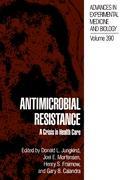
EUR 136,16
Spedizione EUR 48,99
Spedito da Germania a U.S.A.Quantità: Più di 20 disponibili
Aggiungi al carrelloGebunden. Condizione: New. Dieser Artikel ist ein Print on Demand Artikel und wird nach Ihrer Bestellung fuer Sie gedruckt. Development and Implications of Antimicrobial Resistance One of the most ominous trends in the field of antimicrobial chemotherapy over the past decade has been the increasing pace of development of antimicrobial resistance among microbial pathogens. The hy.
-
EUR 136,16
Spedizione EUR 48,99
Spedito da Germania a U.S.A.Quantità: Più di 20 disponibili
Aggiungi al carrelloCondizione: New. Dieser Artikel ist ein Print on Demand Artikel und wird nach Ihrer Bestellung fuer Sie gedruckt. Development and Implications of Antimicrobial Resistance One of the most ominous trends in the field of antimicrobial chemotherapy over the past decade has been the increasing pace of development of antimicrobial resistance among microbial pathogens. The hy.
-

EUR 141,20
Spedizione EUR 70,00
Spedito da Germania a U.S.A.Quantità: 5 disponibili
Aggiungi al carrelloBuch. Condizione: Neu. Antimicrobial Resistance | A Crisis in Health Care | Donald L. Jungkind (u. a.) | Buch | Einband - fest (Hardcover) | Englisch | 1996 | Springer US | EAN 9780306452079 | Verantwortliche Person für die EU: Springer Heidelberg, Tiergartenstr. 17, 69121 Heidelberg, buchhandel-buch[at]springer[dot]com | Anbieter: preigu Print on Demand.
-

Antimicrobial Resistance
Lingua: Inglese
Editore: Springer US, Springer US Feb 1996, 1996
ISBN 10: 0306452073 ISBN 13: 9780306452079
Da: buchversandmimpf2000, Emtmannsberg, BAYE, Germania
Valutazione del venditore 5 su 5 stelle
EUR 160,49
Spedizione EUR 60,00
Spedito da Germania a U.S.A.Quantità: 1 disponibili
Aggiungi al carrelloBuch. Condizione: Neu. This item is printed on demand - Print on Demand Titel. Neuware -Development and Implications of Antimicrobial Resistance One of the most ominous trends in the field of antimicrobial chemotherapy over the past decade has been the increasing pace of development of antimicrobial resistance among microbial pathogens. The hypothesis that man can discover a magic bullet to always cure a particular infection has proved false. Physicians are now seeing and treating patients for which there are few therapeutic alternatives, and in some cases, none at all. Until recently there was little concern that physicians might be losing the war in our ability to compete with the evolving resistance patterns of microbial pathogens. Now the general public is very aware of the threat to them if they become infected, thanks to cover story articles in major magazines such as Time, Newsweek, newspapers, and other news sources. Antimicrobial resistance is not a novel problem. Shortly after the widespread introduction of penicillin in the early 1940s, the first strains of penicillin-resistant staphylococci were described. Today it is an uncommon event for a clinical laboratory to isolate an S. aureus that is sensitive to penicillin. Other gram-positive strains of bacteria have become resistant, including the exquisitely sensitive Streptococcus pneumoniae. Sensitivity to vancomycin was once so uniform that it was used in routine clinical laboratories as a surrogate marker for whether an organism should be classified as a gram-positive. That criterion can no longer be relied upon because of emerging resistance among some species. Gram-negative bacteria, viruses, fungi, and parasites all have succeeded in developing resistance.Springer Verlag GmbH, Tiergartenstr. 17, 69121 Heidelberg 264 pp. Englisch.


