

Importo totale (1 articolo articoli):
Destinazione ordine:

nele wieringen (73 risultati)
Vai alla pagina principale dei risultati di ricerca
Filtri di ricerca
Tipo di articolo
- Tutti i tipi di prodotto
- Libri (73)
- Riviste e Giornali (Nessun altro risultato corrispondente a questo perfezionamento)
- Fumetti (Nessun altro risultato corrispondente a questo perfezionamento)
- Spartiti (Nessun altro risultato corrispondente a questo perfezionamento)
- Arte, Stampe e Poster (Nessun altro risultato corrispondente a questo perfezionamento)
- Fotografie (Nessun altro risultato corrispondente a questo perfezionamento)
- Mappe (Nessun altro risultato corrispondente a questo perfezionamento)
- Manoscritti e Collezionismo cartaceo (Nessun altro risultato corrispondente a questo perfezionamento)
Condizioni Maggiori informazioni
- Nuovo (60)
- Come nuovo, Ottimo o Quasi ottimo (11)
- Molto buono o Buono (Nessun altro risultato corrispondente a questo perfezionamento)
- Discreto o Mediocre (Nessun altro risultato corrispondente a questo perfezionamento)
- Come descritto (2)
Legatura
Ulteriori caratteristiche
- Prima ed. (Nessun altro risultato corrispondente a questo perfezionamento)
- Copia autograf. (Nessun altro risultato corrispondente a questo perfezionamento)
- Sovracoperta (Nessun altro risultato corrispondente a questo perfezionamento)
- Con foto (22)
- Non Print on Demand (71)
Lingua (2)
Spedizione gratuita
Paese del venditore
Valutazione venditore
-

Jan Bontjes Van Beek : Body | Scale | Color
Da: GreatBookPrices, Columbia, MD, U.S.A.
Valutazione del venditore 5 su 5 stelle

Condizione: New.
-

Jan Bontjes van Beek
Da: Rarewaves.com USA, London, LONDO, Regno Unito
Valutazione del venditore 5 su 5 stelle
EUR 29,71
Spedizione gratuita
Spedito da Regno Unito a U.S.A.Quantità: 14 disponibili
Aggiungi al carrelloPaperback. Condizione: New. The moving life of Jan Bontjes van Beek (1899-1969) is closely associated with 20th-century German history. A "strikingly blonde sailor who could dance and play the violin," he joined the Worpswede artist's colony in 1919 and later found a home with the Breling family in Fischerhude, who introduced him to ceramics. With the support of his second wife, the architect Rahel Weißbach, he moved to Berlin in 1933, where his studio became a well-known meeting place for artists. Despite having been arrested by the National Socialists and his daughter Cato executed, he could not endure the GDR's Socialist Unity Party regime either and stepped down from a teaching post at the East Berlin Weißensee art school in 1950. He broke into teaching in West Berlin and, finally, in Hamburg continued his ceramic work, which provided the free thinker with a firm footing. Like no other, he emphasised materiality in form and dynamism in colour. During tumultuous times, he sought out the perfect balance for his vessels, and ultimately for himself.Text in English and German.
-
Jan Bontjes van Beek
Da: PBShop.store US, Wood Dale, IL, U.S.A.
Valutazione del venditore 5 su 5 stelle
PAP. Condizione: New. New Book. Shipped from UK. Established seller since 2000.
-

14th Westerwald Prize 2019: Ceramics of Europe
Da: Revaluation Books, Exeter, Regno Unito
Valutazione del venditore 5 su 5 stelle
EUR 15,87
Spedizione EUR 14,40
Spedito da Regno Unito a U.S.A.Quantità: 1 disponibili
Aggiungi al carrelloHardcover. Condizione: Brand New. bilingual edition. 135 pages. German language. 11.50x8.75x0.75 inches. In Stock.
-
Jan Bontjes Van Beek : Body | Scale | Color
Da: GreatBookPrices, Columbia, MD, U.S.A.
Valutazione del venditore 5 su 5 stelle
Condizione: As New. Unread book in perfect condition.
-
EUR 32,34
Spedizione gratuita
Spedito in U.S.A.Quantità: Più di 20 disponibili
Aggiungi al carrelloCondizione: As New. Unread copy in mint condition.
-
EUR 32,43
Spedizione gratuita
Spedito in U.S.A.Quantità: Più di 20 disponibili
Aggiungi al carrelloCondizione: New. Brand New.
-
Jan Bontjes van Beek
Da: PBShop.store UK, Fairford, GLOS, Regno Unito
Valutazione del venditore 5 su 5 stelle
EUR 27,97
Spedizione EUR 4,79
Spedito da Regno Unito a U.S.A.Quantità: 3 disponibili
Aggiungi al carrelloPAP. Condizione: New. New Book. Shipped from UK. Established seller since 2000.
-

Hans Wewerka ? Draussen : Strassenszenen in Steinzeug
Da: GreatBookPrices, Columbia, MD, U.S.A.
Valutazione del venditore 5 su 5 stelle
Condizione: New.
-
EUR 40,11
Spedizione gratuita
Spedito in U.S.A.Quantità: Più di 20 disponibili
Aggiungi al carrelloCondizione: New.
-
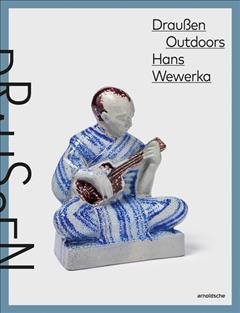
Hans Wewerka ? Draussen : Strassenszenen in Steinzeug
Da: GreatBookPrices, Columbia, MD, U.S.A.
Valutazione del venditore 5 su 5 stelle
Condizione: As New. Unread book in perfect condition.
-
EUR 40,27
Spedizione gratuita
Spedito in U.S.A.Quantità: Più di 20 disponibili
Aggiungi al carrelloCondizione: As New. Unread copy in mint condition.
-
Jan Bontjes van Beek (Paperback)
Da: Grand Eagle Retail, Bensenville, IL, U.S.A.
Valutazione del venditore 5 su 5 stelle
Paperback. Condizione: new. Paperback. The moving life of Jan Bontjes van Beek (1899-1969) is closely associated with 20th-century German history. A 'strikingly blonde sailor who could dance and play the violin', he joined the Worpswede artist's colony in 1919 and later found a home with the Breling family in Fischerhude, who introduced him to ceramics. With the support of his second wife, the architect Rahel Weissbach, he moved to Berlin in 1933, where his studio became a well-known meeting place for artists. Despite having been arrested by the National Socialists and his daughter Cato executed, he could not endure the GDR's Socialist Unity Party regime either and stepped down from a teaching post at the East Berlin Weissensee art school in 1950. He broke into teaching in West Berlin and, finally, in Hamburg continued his ceramic work, which provided the free thinker with a firm footing. Like no other, he emphasised materiality in form and dynamism in colour. During tumultuous times, he sought out the perfect balance for his vessels, and ultimately for himself. Text in English and German. Jan Bontjes van Beek (1899-1969) lived a life intertwined with 20th-century German history. His ceramics, marked by materiality and colour dynamism, reflected his search for balance amid turbulent times. Text in English and German. Shipping may be from multiple locations in the US or from the UK, depending on stock availability.
-

15th Westerwald Prize 2024
Da: GreatBookPrices, Columbia, MD, U.S.A.
Valutazione del venditore 5 su 5 stelle
Condizione: As New. Unread book in perfect condition.
-
EUR 41,68
Spedizione gratuita
Spedito in U.S.A.Quantità: Più di 20 disponibili
Aggiungi al carrelloCondizione: As New. Unread copy in mint condition.
-
15th Westerwald Prize 2024
Da: GreatBookPrices, Columbia, MD, U.S.A.
Valutazione del venditore 5 su 5 stelle
Condizione: New.
-
EUR 41,73
Spedizione gratuita
Spedito in U.S.A.Quantità: Più di 20 disponibili
Aggiungi al carrelloCondizione: New.
-
Hans Wewerka Outdoors Drau?en
Da: PBShop.store UK, Fairford, GLOS, Regno Unito
Valutazione del venditore 5 su 5 stelle
EUR 36,11
Spedizione EUR 5,78
Spedito da Regno Unito a U.S.A.Quantità: 8 disponibili
Aggiungi al carrelloHRD. Condizione: New. New Book. Shipped from UK. Established seller since 2000.
-
Jan Bontjes van Beek: Body | Scale | Color
Da: Books Puddle, New York, NY, U.S.A.
Valutazione del venditore 4 su 5 stelle

Condizione: New.
-
Jan Bontjes van Beek: Body | Scale | Color
Da: Majestic Books, Hounslow, Regno Unito
Valutazione del venditore 4 su 5 stelle
EUR 35,45
Spedizione EUR 7,49
Spedito da Regno Unito a U.S.A.Quantità: 1 disponibili
Aggiungi al carrelloCondizione: New.
-
Hans Wewerka Outdoors Drau?en
Da: PBShop.store US, Wood Dale, IL, U.S.A.
Valutazione del venditore 5 su 5 stelle
HRD. Condizione: New. New Book. Shipped from UK. Established seller since 2000.
-
Jan Bontjes Van Beek : Body | Scale | Color
Da: GreatBookPricesUK, Woodford Green, Regno Unito
Valutazione del venditore 5 su 5 stelle
EUR 26,34
Spedizione EUR 17,28
Spedito da Regno Unito a U.S.A.Quantità: 3 disponibili
Aggiungi al carrelloCondizione: New.
-

15th Westerwald Prize 2024
Da: Rarewaves.com USA, London, LONDO, Regno Unito
Valutazione del venditore 5 su 5 stelle
EUR 45,30
Spedizione gratuita
Spedito da Regno Unito a U.S.A.Quantità: 3 disponibili
Aggiungi al carrelloHardback. Condizione: New. When words are bereft of their power and meaning, art is able to communicate in its stead. It has its own means of visualising multiplicity, commenting on events, or connecting thoughts. This is evidenced in a variety of ways in the 2024 ceramic work honoured with the Westerwald Prize and exhibited as part of the award ceremony. Whereas Irina Razumovskaya (b. 1990, First Prize) illustrates pain and complexity through her emotive surface designs, the sculptural objects by Nora Arrieta (b. 1989, Second Prize) bring forth fairy-tale-like or even apocalyptic visual worlds. Bodil Manz (b. 1943) dominated salt-glaze pottery with her clear, geometric style, winning the Town of Höhr-Grenzhausen Prize, while Beate Gatschelhofer (b. 1994) was awarded the New Talent Prize for her bold, colourful take on ceramics.Text in English and German.
-
Jan Bontjes Van Beek: Body Scale Color
Da: Revaluation Books, Exeter, Regno Unito
Valutazione del venditore 5 su 5 stelle
EUR 33,45
Spedizione EUR 11,52
Spedito da Regno Unito a U.S.A.Quantità: 2 disponibili
Aggiungi al carrelloPaperback. Condizione: Brand New. 80 pages. 9.64x6.69x6.69 inches. In Stock.
-
15th Westerwald Prize 2024
Da: PBShop.store UK, Fairford, GLOS, Regno Unito
Valutazione del venditore 5 su 5 stelle
EUR 42,47
Spedizione EUR 5,78
Spedito da Regno Unito a U.S.A.Quantità: 2 disponibili
Aggiungi al carrelloHRD. Condizione: New. New Book. Shipped from UK. Established seller since 2000.
-

Hans Wewerka Outdoors - Draußen
Da: Rarewaves.com USA, London, LONDO, Regno Unito
Valutazione del venditore 5 su 5 stelle
EUR 49,17
Spedizione gratuita
Spedito da Regno Unito a U.S.A.Quantità: 6 disponibili
Aggiungi al carrelloHardback. Condizione: New. Inspired by the Dutch sculptor Joseph Mendes da Costa (1863-1939) and Ernst Barlach (1870-1938), Hans Wewerka (1888-1915) conquered the realm of figurative sculpture while he was still a student in Höhr, an unusual discipline among the area's vernacular ceramics. He observed society outside [draußen in German], in all realms of public life, with great sensibility: gossip mongers, potato sellers, a dancing couple. Wewerka created likenesses taken from real life. His artistic approach and his acute awareness of form made him an exceptional creator of modern earthenware who had already gained international recognition during his lifetime. This first, comprehensive monograph featuring a catalogue of works documents Hans Wewerka's previously unknown career and traces his connections to modernist art, such as the Berlin Secession and artists like Rudolf Bosselt, Käthe Kollwitz, and Ernst Barlach.Text in English and German.
-
Jan Bontjes Van Beek : Body | Scale | Color
Da: GreatBookPricesUK, Woodford Green, Regno Unito
Valutazione del venditore 5 su 5 stelle
EUR 31,19
Spedizione EUR 17,28
Spedito da Regno Unito a U.S.A.Quantità: 3 disponibili
Aggiungi al carrelloCondizione: As New. Unread book in perfect condition.
-
15th Westerwald Prize 2024 (Hardcover)
Da: Grand Eagle Retail, Bensenville, IL, U.S.A.
Valutazione del venditore 5 su 5 stelle
Hardcover. Condizione: new. Hardcover. When words are bereft of their power and meaning, art is able to communicate in its stead. It has its own means of visualising multiplicity, commenting on events, or connecting thoughts. This is evidenced in a variety of ways in the 2024 ceramic work honoured with the Westerwald Prize and exhibited as part of the award ceremony.Whereas Irina Razumovskaya (b. 1990, First Prize) illustrates pain and complexity through her emotive surface designs, the sculptural objects by Nora Arrieta (b. 1989, Second Prize) bring forth fairy-tale-like or even apocalyptic visual worlds. Bodil Manz (b. 1943) dominated salt-glaze pottery with her clear, geometric style, winning the Town of Hhr-Grenzhausen Prize, while Beate Gatschelhofer (b. 1994) was awarded the New Talent Prize for her bold, colourful take on ceramics.Text in English / German. When words are bereft of their power and meaning, art is able to communicate in its stead. This is evidenced in the 2024 ceramic work honoured with the Westerwald Prize. Text in English and German. Shipping may be from multiple locations in the US or from the UK, depending on stock availability.
-

Jan Bontjes van Beek
Lingua: Inglese
Editore: Arnoldsche Art Publishers Apr 2026, 2026
ISBN 10: 3897907526 ISBN 13: 9783897907522
Da: BuchWeltWeit Ludwig Meier e.K., Bergisch Gladbach, Germania
Valutazione del venditore 5 su 5 stelle
EUR 28,00
Spedizione EUR 23,00
Spedito da Germania a U.S.A.Quantità: 2 disponibili
Aggiungi al carrelloBuch. Condizione: Neu. Neuware -Jan Bontjes van Beek (18991969) lived a life intertwined with 20th-century German history. His ceramics, marked by materiality and color dynamism, reflected his search for balance amid turbulent times. Text in English and German.The moving life of Jan Bontjes van Beek (18991969) is closely associated with 20th-century German history. A "strikingly blond sailor who could dance and play the violin," he joined the Worpswede artist's colony in 1919 and later found a home with the Breling family in Fischerhude, who introduced him to ceramics. With the support of his second wife, the architect Rahel Weißbach, he moved to Berlin in 1933, where his studio became a well-known meeting place for artists. Despite having been arrested by the National Socialists and his daughter Cato executed, he could not endure the GDR's Socialist Unity Party regime either and stepped down from a teaching post at the East Berlin Weißensee art school in 1950. He broke into teaching in West Berlin and, finally, in Hamburg and continued his ceramic work, which provided the free thinker with a firm footing. Like no other, he emphasized materiality in form and dynamism in color. During tumultuous times, he sought out the perfect balance for his vessels, and ultimately for himself. Text in English and German. 80 pp. Englisch, Deutsch.
-

Jan Bontjes van Beek
Lingua: Inglese
Editore: Arnoldsche Art Publishers Apr 2026, 2026
ISBN 10: 3897907526 ISBN 13: 9783897907522
Da: Rheinberg-Buch Andreas Meier eK, Bergisch Gladbach, Germania
Valutazione del venditore 5 su 5 stelle
EUR 28,00
Spedizione EUR 23,00
Spedito da Germania a U.S.A.Quantità: 2 disponibili
Aggiungi al carrelloBuch. Condizione: Neu. Neuware -Jan Bontjes van Beek (18991969) lived a life intertwined with 20th-century German history. His ceramics, marked by materiality and color dynamism, reflected his search for balance amid turbulent times. Text in English and German.The moving life of Jan Bontjes van Beek (18991969) is closely associated with 20th-century German history. A "strikingly blond sailor who could dance and play the violin," he joined the Worpswede artist's colony in 1919 and later found a home with the Breling family in Fischerhude, who introduced him to ceramics. With the support of his second wife, the architect Rahel Weißbach, he moved to Berlin in 1933, where his studio became a well-known meeting place for artists. Despite having been arrested by the National Socialists and his daughter Cato executed, he could not endure the GDR's Socialist Unity Party regime either and stepped down from a teaching post at the East Berlin Weißensee art school in 1950. He broke into teaching in West Berlin and, finally, in Hamburg and continued his ceramic work, which provided the free thinker with a firm footing. Like no other, he emphasized materiality in form and dynamism in color. During tumultuous times, he sought out the perfect balance for his vessels, and ultimately for himself. Text in English and German. 80 pp. Englisch, Deutsch.

