

Importo totale (1 articolo articoli):
Destinazione ordine:

oidtmann max (43 risultati)
Vai alla pagina principale dei risultati di ricerca
Filtri di ricerca
Tipo di articolo
- Tutti i tipi di prodotto
- Libri (43)
- Riviste e Giornali (Nessun altro risultato corrispondente a questo perfezionamento)
- Fumetti (Nessun altro risultato corrispondente a questo perfezionamento)
- Spartiti (Nessun altro risultato corrispondente a questo perfezionamento)
- Arte, Stampe e Poster (Nessun altro risultato corrispondente a questo perfezionamento)
- Fotografie (Nessun altro risultato corrispondente a questo perfezionamento)
- Mappe (Nessun altro risultato corrispondente a questo perfezionamento)
- Manoscritti e Collezionismo cartaceo (Nessun altro risultato corrispondente a questo perfezionamento)
Condizioni Maggiori informazioni
- Nuovo (36)
- Come nuovo, Ottimo o Quasi ottimo (5)
- Molto buono o Buono (1)
- Discreto o Mediocre (Nessun altro risultato corrispondente a questo perfezionamento)
- Come descritto (1)
Legatura
Ulteriori caratteristiche
- Prima ed. (1)
- Copia autograf. (Nessun altro risultato corrispondente a questo perfezionamento)
- Sovracoperta (1)
- Con foto (13)
- Non Print on Demand (41)
Lingua (2)
Spedizione gratuita
Paese del venditore
Valutazione venditore
-

Forging the Golden Urn: The Qing Empire and the Politics of Reincarnation in Tibet (Studies of the Weatherhead East Asian Institute, Columbia University)
Libro 22 di 36: Studies of the Weatherhead East Asian Institute, Columbia UniversityDa: Powell's Bookstores Chicago, ABAA, Chicago, IL, U.S.A.
Membro dell'associazione: ABAA ILAB
Valutazione del venditore 4 su 5 stelle

Prima edizione
hardcover. Condizione: Used-Good. 1st Edition. Cloth, dj. Minor shelf wear. Highlighting on pp. 1-14. Else clean.
-

Forging the Golden Urn : The Qing Empire and the Politics of Reincarnation in Tibet
Libro 22 di 36: Studies of the Weatherhead East Asian Institute, Columbia UniversityDa: GreatBookPrices, Columbia, MD, U.S.A.
Valutazione del venditore 5 su 5 stelle

EUR 31,50
Spedizione EUR 2,29
Spedito in U.S.A.Quantità: Più di 20 disponibili
Aggiungi al carrelloCondizione: New.
-

Forging the Golden Urn (Paperback)
Libro 22 di 36: Studies of the Weatherhead East Asian Institute, Columbia UniversityLingua: Inglese
Editore: Columbia University Press, New York, 2023
ISBN 10: 0231184077 ISBN 13: 9780231184076
Da: Grand Eagle Retail, Bensenville, IL, U.S.A.
Valutazione del venditore 5 su 5 stelle
Paperback. Condizione: new. Paperback. In 1995, the People's Republic of China resurrected a Qing-era law mandating that the reincarnations of prominent Tibetan Buddhist monks be identified by drawing lots from a golden urn. The Chinese Communist Party hoped to limit the ability of the Dalai Lama and the Tibetan government-in-exile to independently identify reincarnations. In so doing, they elevated a long-forgotten ceremony into a controversial symbol of Chinese sovereignty in Tibet.In Forging the Golden Urn, Max Oidtmann ventures into the polyglot world of the Qing empire in search of the origins of the golden urn tradition. He seeks to understand the relationship between the Qing state and its most powerful partner in Inner Asia-the Geluk school of Tibetan Buddhism. Why did the Qianlong emperor invent the golden urn lottery in 1792? What ability did the Qing state have to alter Tibetan religious and political traditions? What did this law mean to Qing rulers, their advisors, and Tibetan Buddhists? Working with both the Manchu-language archives of the empire's colonial bureaucracy and the chronicles of Tibetan elites, Oidtmann traces how a Chinese bureaucratic technology-a lottery for assigning administrative posts-was exported to the Tibetan and Mongolian regions of the Qing empire and transformed into a ritual for identifying and authenticating reincarnations. Forging the Golden Urn sheds new light on how the empire's frontier officers grappled with matters of sovereignty, faith, and law and reveals the role that Tibetan elites played in the production of new religious traditions in the context of Qing rule. A Qing law mandated that the reincarnations of prominent Tibetan Buddhist monks be identified by drawing lots from a golden urn. In Forging the Golden Urn, Max Oidtmann traces how a Chinese bureaucratic technology was exported to the Tibetan and Mongolian regions of the Qing empire and transformed into a ritual for authenticating reincarnations. Shipping may be from multiple locations in the US or from the UK, depending on stock availability.
-
Forging the Golden Urn
Libro 22 di 36: Studies of the Weatherhead East Asian Institute, Columbia UniversityDa: PBShop.store US, Wood Dale, IL, U.S.A.
Valutazione del venditore 5 su 5 stelle
PAP. Condizione: New. New Book. Shipped from UK. Established seller since 2000.
-
Forging the Golden Urn : The Qing Empire and the Politics of Reincarnation in Tibet
Libro 22 di 36: Studies of the Weatherhead East Asian Institute, Columbia UniversityDa: GreatBookPrices, Columbia, MD, U.S.A.
Valutazione del venditore 5 su 5 stelle
EUR 32,47
Spedizione EUR 2,29
Spedito in U.S.A.Quantità: Più di 20 disponibili
Aggiungi al carrelloCondizione: As New. Unread book in perfect condition.
-
Forging the Golden Urn
Libro 22 di 36: Studies of the Weatherhead East Asian Institute, Columbia UniversityDa: PBShop.store UK, Fairford, GLOS, Regno Unito
Valutazione del venditore 5 su 5 stelle
EUR 29,99
Spedizione EUR 5,81
Spedito da Regno Unito a U.S.A.Quantità: 15 disponibili
Aggiungi al carrelloPAP. Condizione: New. New Book. Shipped from UK. Established seller since 2000.
-
Forging the Golden Urn: The Qing Empire and the Politics of Reincarnation in Tibet
Libro 22 di 36: Studies of the Weatherhead East Asian Institute, Columbia UniversityDa: Kennys Bookshop and Art Galleries Ltd., Galway, GY, Irlanda
Valutazione del venditore 5 su 5 stelle
EUR 25,58
Spedizione EUR 10,50
Spedito da Irlanda a U.S.A.Quantità: Più di 20 disponibili
Aggiungi al carrelloCondizione: New. 2023. Paperback. . . . . .
-
Forging the Golden Urn: The Qing Empire and the Politics of Reincarnation in Tibet (Studies of the Weatherhead East Asian Institute, Columbia University)
Libro 22 di 36: Studies of the Weatherhead East Asian Institute, Columbia UniversityDa: Midtown Scholar Bookstore, Harrisburg, PA, U.S.A.
Valutazione del venditore 5 su 5 stelle
Hardcover. Condizione: Good. Good - Bumped and creased book with tears to the extremities, but not affecting the text block, may have remainder mark or previous owner's name - GOOD Standard-sized.
-
Forging the Golden Urn: The Qing Empire and the Politics of Reincarnation in Tibet
Libro 22 di 36: Studies of the Weatherhead East Asian Institute, Columbia UniversityDa: Kennys Bookstore, Olney, MD, U.S.A.
Valutazione del venditore 5 su 5 stelle
EUR 31,20
Spedizione EUR 9,10
Spedito in U.S.A.Quantità: Più di 20 disponibili
Aggiungi al carrelloCondizione: New. 2023. Paperback. . . . . . Books ship from the US and Ireland.
-
Forging the Golden Urn: The Qing Empire and the Politics of Reincarnation in Tibet (eng)
Libro 22 di 36: Studies of the Weatherhead East Asian Institute, Columbia UniversityDa: Brook Bookstore On Demand, Napoli, NA, Italia
Valutazione del venditore 3 su 5 stelle

EUR 33,96
Spedizione EUR 5,50
Spedito da Italia a U.S.A.Quantità: Più di 20 disponibili
Aggiungi al carrelloCondizione: new.
-

Forging the Golden Urn
Libro 22 di 36: Studies of the Weatherhead East Asian Institute, Columbia UniversityLingua: Inglese
Editore: Columbia University Press, US, 2023
ISBN 10: 0231184077 ISBN 13: 9780231184076
EUR 42,75
Spedizione gratuita
Spedito in U.S.A.Quantità: Più di 20 disponibili
Aggiungi al carrelloPaperback. Condizione: New. In 1995, the People's Republic of China resurrected a Qing-era law mandating that the reincarnations of prominent Tibetan Buddhist monks be identified by drawing lots from a golden urn. The Chinese Communist Party hoped to limit the ability of the Dalai Lama and the Tibetan government-in-exile to independently identify reincarnations. In so doing, they elevated a long-forgotten ceremony into a controversial symbol of Chinese sovereignty in Tibet.In Forging the Golden Urn, Max Oidtmann ventures into the polyglot world of the Qing empire in search of the origins of the golden urn tradition. He seeks to understand the relationship between the Qing state and its most powerful partner in Inner Asia-the Geluk school of Tibetan Buddhism. Why did the Qianlong emperor invent the golden urn lottery in 1792? What ability did the Qing state have to alter Tibetan religious and political traditions? What did this law mean to Qing rulers, their advisors, and Tibetan Buddhists? Working with both the Manchu-language archives of the empire's colonial bureaucracy and the chronicles of Tibetan elites, Oidtmann traces how a Chinese bureaucratic technology-a lottery for assigning administrative posts-was exported to the Tibetan and Mongolian regions of the Qing empire and transformed into a ritual for identifying and authenticating reincarnations. Forging the Golden Urn sheds new light on how the empire's frontier officers grappled with matters of sovereignty, faith, and law and reveals the role that Tibetan elites played in the production of new religious traditions in the context of Qing rule.
-
Forging the Golden Urn: The Qing Empire and the Politics of Reincarnation in Tibet
Libro 22 di 36: Studies of the Weatherhead East Asian Institute, Columbia UniversityDa: Majestic Books, Hounslow, Regno Unito
Valutazione del venditore 4 su 5 stelle
EUR 38,68
Spedizione EUR 7,53
Spedito da Regno Unito a U.S.A.Quantità: 3 disponibili
Aggiungi al carrelloCondizione: New.
-
Forging the Golden Urn : The Qing Empire and the Politics of Reincarnation in Tibet
Libro 22 di 36: Studies of the Weatherhead East Asian Institute, Columbia UniversityDa: GreatBookPricesUK, Woodford Green, Regno Unito
Valutazione del venditore 5 su 5 stelle
EUR 29,98
Spedizione EUR 17,38
Spedito da Regno Unito a U.S.A.Quantità: Più di 20 disponibili
Aggiungi al carrelloCondizione: New.
-
Forging the Golden Urn : The Qing Empire and the Politics of Reincarnation in Tibet
Libro 22 di 36: Studies of the Weatherhead East Asian Institute, Columbia UniversityDa: GreatBookPricesUK, Woodford Green, Regno Unito
Valutazione del venditore 5 su 5 stelle
EUR 34,72
Spedizione EUR 17,38
Spedito da Regno Unito a U.S.A.Quantità: Più di 20 disponibili
Aggiungi al carrelloCondizione: As New. Unread book in perfect condition.
-
Forging the Golden Urn: The Qing Empire and the Politics of Reincarnation in Tibet
Libro 22 di 36: Studies of the Weatherhead East Asian Institute, Columbia UniversityDa: Books Puddle, New York, NY, U.S.A.
Valutazione del venditore 4 su 5 stelle
Condizione: New.
-
Forging the Golden Urn: The Qing Empire and the Politics of Reincarnation in Tibet
Libro 22 di 36: Studies of the Weatherhead East Asian Institute, Columbia UniversityDa: THE SAINT BOOKSTORE, Southport, Regno Unito
Valutazione del venditore 5 su 5 stelle
EUR 36,89
Spedizione EUR 18,55
Spedito da Regno Unito a U.S.A.Quantità: Più di 20 disponibili
Aggiungi al carrelloPaperback / softback. Condizione: New. New copy - Usually dispatched within 4 working days.
-
Forging the Golden Urn The Qing Empire and the Politics of Reincarnation in Tibet
Libro 22 di 36: Studies of the Weatherhead East Asian Institute, Columbia UniversityDa: Revaluation Books, Exeter, Regno Unito
Valutazione del venditore 5 su 5 stelle
EUR 58,36
Spedizione EUR 11,58
Spedito da Regno Unito a U.S.A.Quantità: 2 disponibili
Aggiungi al carrelloPaperback. Condizione: Brand New. 352 pages. 9.00x6.00x0.94 inches. In Stock.
-
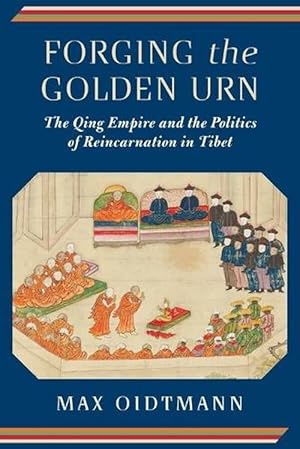
Forging the Golden Urn (Paperback)
Libro 22 di 36: Studies of the Weatherhead East Asian Institute, Columbia UniversityLingua: Inglese
Editore: Columbia University Press, New York, 2023
ISBN 10: 0231184077 ISBN 13: 9780231184076
Da: AussieBookSeller, Truganina, VIC, Australia
Valutazione del venditore 5 su 5 stelle
EUR 41,99
Spedizione EUR 32,08
Spedito da Australia a U.S.A.Quantità: 1 disponibili
Aggiungi al carrelloPaperback. Condizione: new. Paperback. In 1995, the People's Republic of China resurrected a Qing-era law mandating that the reincarnations of prominent Tibetan Buddhist monks be identified by drawing lots from a golden urn. The Chinese Communist Party hoped to limit the ability of the Dalai Lama and the Tibetan government-in-exile to independently identify reincarnations. In so doing, they elevated a long-forgotten ceremony into a controversial symbol of Chinese sovereignty in Tibet.In Forging the Golden Urn, Max Oidtmann ventures into the polyglot world of the Qing empire in search of the origins of the golden urn tradition. He seeks to understand the relationship between the Qing state and its most powerful partner in Inner Asia-the Geluk school of Tibetan Buddhism. Why did the Qianlong emperor invent the golden urn lottery in 1792? What ability did the Qing state have to alter Tibetan religious and political traditions? What did this law mean to Qing rulers, their advisors, and Tibetan Buddhists? Working with both the Manchu-language archives of the empire's colonial bureaucracy and the chronicles of Tibetan elites, Oidtmann traces how a Chinese bureaucratic technology-a lottery for assigning administrative posts-was exported to the Tibetan and Mongolian regions of the Qing empire and transformed into a ritual for identifying and authenticating reincarnations. Forging the Golden Urn sheds new light on how the empire's frontier officers grappled with matters of sovereignty, faith, and law and reveals the role that Tibetan elites played in the production of new religious traditions in the context of Qing rule. A Qing law mandated that the reincarnations of prominent Tibetan Buddhist monks be identified by drawing lots from a golden urn. In Forging the Golden Urn, Max Oidtmann traces how a Chinese bureaucratic technology was exported to the Tibetan and Mongolian regions of the Qing empire and transformed into a ritual for authenticating reincarnations. Shipping may be from our Sydney, NSW warehouse or from our UK or US warehouse, depending on stock availability.
-

Forging the Golden Urn
Libro 22 di 36: Studies of the Weatherhead East Asian Institute, Columbia UniversityLingua: Inglese
Editore: Columbia University Press, US, 2023
ISBN 10: 0231184077 ISBN 13: 9780231184076
Da: Rarewaves USA United, OSWEGO, IL, U.S.A.
Valutazione del venditore 5 su 5 stelle
EUR 44,48
Spedizione EUR 43,35
Spedito in U.S.A.Quantità: Più di 20 disponibili
Aggiungi al carrelloPaperback. Condizione: New. In 1995, the People's Republic of China resurrected a Qing-era law mandating that the reincarnations of prominent Tibetan Buddhist monks be identified by drawing lots from a golden urn. The Chinese Communist Party hoped to limit the ability of the Dalai Lama and the Tibetan government-in-exile to independently identify reincarnations. In so doing, they elevated a long-forgotten ceremony into a controversial symbol of Chinese sovereignty in Tibet.In Forging the Golden Urn, Max Oidtmann ventures into the polyglot world of the Qing empire in search of the origins of the golden urn tradition. He seeks to understand the relationship between the Qing state and its most powerful partner in Inner Asia-the Geluk school of Tibetan Buddhism. Why did the Qianlong emperor invent the golden urn lottery in 1792? What ability did the Qing state have to alter Tibetan religious and political traditions? What did this law mean to Qing rulers, their advisors, and Tibetan Buddhists? Working with both the Manchu-language archives of the empire's colonial bureaucracy and the chronicles of Tibetan elites, Oidtmann traces how a Chinese bureaucratic technology-a lottery for assigning administrative posts-was exported to the Tibetan and Mongolian regions of the Qing empire and transformed into a ritual for identifying and authenticating reincarnations. Forging the Golden Urn sheds new light on how the empire's frontier officers grappled with matters of sovereignty, faith, and law and reveals the role that Tibetan elites played in the production of new religious traditions in the context of Qing rule.
-

Forging the Golden Urn
Libro 22 di 36: Studies of the Weatherhead East Asian Institute, Columbia UniversityEUR 46,08
Spedizione EUR 48,99
Spedito da Germania a U.S.A.Quantità: Più di 20 disponibili
Aggiungi al carrelloKartoniert / Broschiert. Condizione: New. Über den AutorMax Oidtmann is professor of Chinese history at the Institute for Sinology at Ludwig Maximilian University of Munich.
-
Forging the Golden Urn
Libro 22 di 36: Studies of the Weatherhead East Asian Institute, Columbia UniversityDa: PBShop.store UK, Fairford, GLOS, Regno Unito
Valutazione del venditore 5 su 5 stelle
EUR 101,85
Spedizione EUR 5,81
Spedito da Regno Unito a U.S.A.Quantità: 4 disponibili
Aggiungi al carrelloHRD. Condizione: New. New Book. Shipped from UK. Established seller since 2000.
-
Forging the Golden Urn : The Qing Empire and the Politics of Reincarnation in Tibet
Libro 22 di 36: Studies of the Weatherhead East Asian Institute, Columbia UniversityDa: GreatBookPrices, Columbia, MD, U.S.A.
Valutazione del venditore 5 su 5 stelle
Condizione: New.
-
Forging the Golden Urn : The Qing Empire and the Politics of Reincarnation in Tibet
Libro 22 di 36: Studies of the Weatherhead East Asian Institute, Columbia UniversityDa: GreatBookPricesUK, Woodford Green, Regno Unito
Valutazione del venditore 5 su 5 stelle
EUR 101,84
Spedizione EUR 17,38
Spedito da Regno Unito a U.S.A.Quantità: 5 disponibili
Aggiungi al carrelloCondizione: New.
-
Forging the Golden Urn : The Qing Empire and the Politics of Reincarnation in Tibet
Libro 22 di 36: Studies of the Weatherhead East Asian Institute, Columbia UniversityDa: GreatBookPrices, Columbia, MD, U.S.A.
Valutazione del venditore 5 su 5 stelle
Condizione: As New. Unread book in perfect condition.
-

Forging the Golden Urn : The Qing Empire and the Politics of Reincarnation in Tibet
Libro 22 di 36: Studies of the Weatherhead East Asian Institute, Columbia UniversityLingua: Inglese
Editore: Columbia University Press Mär 2023, 2023
ISBN 10: 0231184077 ISBN 13: 9780231184076
EUR 59,71
Spedizione EUR 62,47
Spedito da Germania a U.S.A.Quantità: 2 disponibili
Aggiungi al carrelloTaschenbuch. Condizione: Neu. Neuware - A Qing law mandated that the reincarnations of prominent Tibetan Buddhist monks be identified by drawing lots from a golden urn. In Forging the Golden Urn, Max Oidtmann traces how a Chinese bureaucratic technology was exported to the Tibetan and Mongolian regions of the Qing empire and transformed into a ritual for authenticating reincarnations.
-
Forging the Golden Urn: The Qing Empire and the Politics of Reincarnation in Tibet
Libro 22 di 36: Studies of the Weatherhead East Asian Institute, Columbia UniversityDa: Kennys Bookshop and Art Galleries Ltd., Galway, GY, Irlanda
Valutazione del venditore 5 su 5 stelle
EUR 114,56
Spedizione EUR 10,50
Spedito da Irlanda a U.S.A.Quantità: 1 disponibili
Aggiungi al carrelloCondizione: New. 2018. Hardcover. . . . . .
-
Forging the Golden Urn: The Qing Empire and the Politics of Reincarnation in Tibet (eng)
Libro 22 di 36: Studies of the Weatherhead East Asian Institute, Columbia UniversityDa: Brook Bookstore On Demand, Napoli, NA, Italia
Valutazione del venditore 3 su 5 stelle
EUR 114,41
Spedizione EUR 11,00
Spedito da Italia a U.S.A.Quantità: 4 disponibili
Aggiungi al carrelloCondizione: new.
-
Forging the Golden Urn : The Qing Empire and the Politics of Reincarnation in Tibet
Libro 22 di 36: Studies of the Weatherhead East Asian Institute, Columbia UniversityDa: GreatBookPricesUK, Woodford Green, Regno Unito
Valutazione del venditore 5 su 5 stelle
EUR 121,93
Spedizione EUR 17,38
Spedito da Regno Unito a U.S.A.Quantità: 5 disponibili
Aggiungi al carrelloCondizione: As New. Unread book in perfect condition.
-

Forging the Golden Urn
Libro 22 di 36: Studies of the Weatherhead East Asian Institute, Columbia UniversityLingua: Inglese
Editore: Columbia University Press, US, 2018
ISBN 10: 0231184069 ISBN 13: 9780231184069
Da: Rarewaves.com USA, London, LONDO, Regno Unito
Valutazione del venditore 5 su 5 stelle
EUR 145,13
Spedizione gratuita
Spedito da Regno Unito a U.S.A.Quantità: 2 disponibili
Aggiungi al carrelloHardback. Condizione: New. In 1995, the People's Republic of China resurrected a Qing-era law mandating that the reincarnations of prominent Tibetan Buddhist monks be identified by drawing lots from a golden urn. The Chinese Communist Party hoped to limit the ability of the Dalai Lama and the Tibetan government-in-exile to independently identify reincarnations. In so doing, they elevated a long-forgotten ceremony into a controversial symbol of Chinese sovereignty in Tibet.In Forging the Golden Urn, Max Oidtmann ventures into the polyglot world of the Qing empire in search of the origins of the golden urn tradition. He seeks to understand the relationship between the Qing state and its most powerful partner in Inner Asia-the Geluk school of Tibetan Buddhism. Why did the Qianlong emperor invent the golden urn lottery in 1792? What ability did the Qing state have to alter Tibetan religious and political traditions? What did this law mean to Qing rulers, their advisors, and Tibetan Buddhists? Working with both the Manchu-language archives of the empire's colonial bureaucracy and the chronicles of Tibetan elites, Oidtmann traces how a Chinese bureaucratic technology-a lottery for assigning administrative posts-was exported to the Tibetan and Mongolian regions of the Qing empire and transformed into a ritual for identifying and authenticating reincarnations. Forging the Golden Urn sheds new light on how the empire's frontier officers grappled with matters of sovereignty, faith, and law and reveals the role that Tibetan elites played in the production of new religious traditions in the context of Qing rule.
-
Forging the Golden Urn: The Qing Empire and the Politics of Reincarnation in Tibet
Libro 22 di 36: Studies of the Weatherhead East Asian Institute, Columbia UniversityDa: THE SAINT BOOKSTORE, Southport, Regno Unito
Valutazione del venditore 5 su 5 stelle
EUR 129,18
Spedizione EUR 18,55
Spedito da Regno Unito a U.S.A.Quantità: 4 disponibili
Aggiungi al carrelloHardback. Condizione: New. New copy - Usually dispatched within 4 working days.


