

Importo totale (1 articolo articoli):
Destinazione ordine:

pflueger lloyd (10 risultati)
Vai alla pagina principale dei risultati di ricerca
Filtri di ricerca
Tipo di articolo
- Tutti i tipi di prodotto
- Libri (10)
- Riviste e Giornali (Nessun altro risultato corrispondente a questo perfezionamento)
- Fumetti (Nessun altro risultato corrispondente a questo perfezionamento)
- Spartiti (Nessun altro risultato corrispondente a questo perfezionamento)
- Arte, Stampe e Poster (Nessun altro risultato corrispondente a questo perfezionamento)
- Fotografie (Nessun altro risultato corrispondente a questo perfezionamento)
- Mappe (Nessun altro risultato corrispondente a questo perfezionamento)
- Manoscritti e Collezionismo cartaceo (Nessun altro risultato corrispondente a questo perfezionamento)
Condizioni Maggiori informazioni
- Nuovo (8)
- Come nuovo, Ottimo o Quasi ottimo (2)
- Molto buono o Buono (Nessun altro risultato corrispondente a questo perfezionamento)
- Discreto o Mediocre (Nessun altro risultato corrispondente a questo perfezionamento)
- Come descritto (Nessun altro risultato corrispondente a questo perfezionamento)
Legatura
Ulteriori caratteristiche
- Prima ed. (Nessun altro risultato corrispondente a questo perfezionamento)
- Copia autograf. (Nessun altro risultato corrispondente a questo perfezionamento)
- Sovracoperta (Nessun altro risultato corrispondente a questo perfezionamento)
- Con foto (6)
- Non Print on Demand (6)
Lingua (1)
Prezzo
- Qualsiasi prezzo
- Inferiore a EUR 20 (Nessun altro risultato corrispondente a questo perfezionamento)
- EUR 20 a EUR 45
- Superiore a EUR 45
Spedizione gratuita
- Spedizione gratuita in U.S.A. (Nessun altro risultato corrispondente a questo perfezionamento)
Paese del venditore
Valutazione venditore
-

Isopanisad: The Secret Teaching on the Lord
Da: GreatBookPrices, Columbia, MD, U.S.A.
Valutazione del venditore 5 su 5 stelle

EUR 30,89
Spedizione EUR 2,31
Spedito in U.S.A.Quantità: Più di 20 disponibili
Aggiungi al carrelloCondizione: As New. Unread book in perfect condition.
-

Isopanisad: The Secret Teaching on the Lord
Da: GreatBookPrices, Columbia, MD, U.S.A.
Valutazione del venditore 5 su 5 stelle
EUR 31,99
Spedizione EUR 2,31
Spedito in U.S.A.Quantità: Più di 20 disponibili
Aggiungi al carrelloCondizione: New.
-

Isopanisad: The Secret Teaching on the Lord
Da: GreatBookPricesUK, Woodford Green, Regno Unito
Valutazione del venditore 5 su 5 stelle
EUR 29,89
Spedizione EUR 17,66
Spedito da Regno Unito a U.S.A.Quantità: Più di 20 disponibili
Aggiungi al carrelloCondizione: New.
-

Isopanisad: the Secret Teaching on the Lord
Da: Revaluation Books, Exeter, Regno Unito
Valutazione del venditore 5 su 5 stelle
EUR 32,07
Spedizione EUR 14,72
Spedito da Regno Unito a U.S.A.Quantità: 2 disponibili
Aggiungi al carrelloPaperback. Condizione: Brand New. 216 pages. 11.00x8.50x0.46 inches. In Stock.
-

Isopanisad: The Secret Teaching on the Lord
Da: GreatBookPricesUK, Woodford Green, Regno Unito
Valutazione del venditore 5 su 5 stelle
EUR 33,54
Spedizione EUR 17,66
Spedito da Regno Unito a U.S.A.Quantità: Più di 20 disponibili
Aggiungi al carrelloCondizione: As New. Unread book in perfect condition.
-
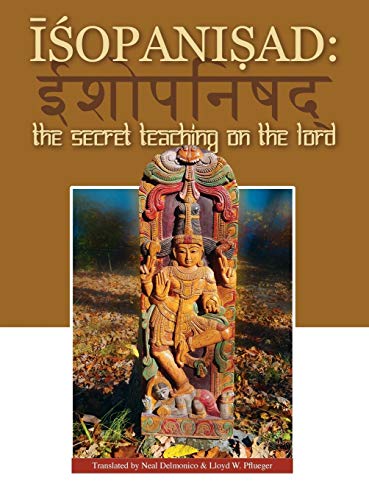
Isopanisad: the Secret Teaching on the Lord
Da: Revaluation Books, Exeter, Regno Unito
Valutazione del venditore 5 su 5 stelle
EUR 45,03
Spedizione EUR 14,72
Spedito da Regno Unito a U.S.A.Quantità: 2 disponibili
Aggiungi al carrelloHardcover. Condizione: Brand New. 216 pages. 11.50x8.86x0.67 inches. In Stock.
-
Isopanisad: The Secret Teaching on the Lord
Da: THE SAINT BOOKSTORE, Southport, Regno Unito
Valutazione del venditore 5 su 5 stelle
EUR 26,25
Spedizione EUR 19,30
Spedito da Regno Unito a U.S.A.Quantità: Più di 20 disponibili
Aggiungi al carrelloPaperback. Condizione: New. This item is printed on demand. New copy - Usually dispatched within 5-9 working days.
-
Isopanisad: The Secret Teaching on the Lord
Da: THE SAINT BOOKSTORE, Southport, Regno Unito
Valutazione del venditore 5 su 5 stelle
EUR 36,27
Spedizione EUR 22,81
Spedito da Regno Unito a U.S.A.Quantità: Più di 20 disponibili
Aggiungi al carrelloHardback. Condizione: New. This item is printed on demand. New copy - Usually dispatched within 5-9 working days.
-

EUR 35,24
Spedizione EUR 62,79
Spedito da Germania a U.S.A.Quantità: 1 disponibili
Aggiungi al carrelloTaschenbuch. Condizione: Neu. nach der Bestellung gedruckt Neuware - Printed after ordering - This is an indepth study and translation of the Isopanisad. The Isopanisad is one of the earliest of the sacred texts of Hinduism called the Upanisads. The Upanisads ushered in a new period (600-200 BCE) in the history of Vedic/Hindu thought, religion, and culture. In the period before (1200-700 BCE) people focused on ritual action, specifically sacrifice, as the best means of achieving the good things of life, both in this world and in the next. The Upanisads, coming at the end of this period, questioned the assumptions behind the earlier practices and beliefs and settled on the pursuit of knowledge as the best means of gaining the highest good, which they envisioned not as goods or life in heaven, but as absolute freedom from suffering and fear.This translation includes word-by-word analysis of this eighteen-mantra Upanisad which presents the essential teachings of Vedanta (the various schools of which attempt to derive unified systems of thought out of the Upanisads). Two native commentaries, that of Sankara (7th cent. CE) and of Madhva (13th cent. CE), are included as well as an introduction, notes, discussions, study questions, a bibliography for further reading, a historical and text-critical essay on the Isopanisad by Croatian scholar, Mislav Jezic, and an introduction to the Sanskrit language of the Upanishad. The full Sanskrit texts of the commentaries of Sankara and Madhva are also included.
-

EUR 43,47
Spedizione EUR 64,08
Spedito da Germania a U.S.A.Quantità: 1 disponibili
Aggiungi al carrelloBuch. Condizione: Neu. nach der Bestellung gedruckt Neuware - Printed after ordering - This is an indepth study and translation of the Isopanisad. The Isopanisad is one of the earliest of the sacred texts of Hinduism called the Upanisads. The Upanisads ushered in a new period (600-200 BCE) in the history of Vedic/Hindu thought, religion, and culture. In the period before (1200-700 BCE) people focused on ritual action, specifically sacrifice, as the best means of achieving the good things of life, both in this world and in the next. The Upanisads, coming at the end of this period, questioned the assumptions behind the earlier practices and beliefs and settled on the pursuit of knowledge as the best means of gaining the highest good, which they envisioned not as goods or life in heaven, but as absolute freedom from suffering and fear.This translation includes word-by-word analysis of this eighteen-mantra Upanisad which presents the essential teachings of Vedanta (the various schools of which attempt to derive unified systems of thought out of the Upanisads). Two native commentaries, that of Sankara (7th cent. CE) and of Madhva (13th cent. CE), are included as well as an introduction, notes, discussions, study questions, a bibliography for further reading, a historical and text-critical essay on the Isopanisad by Croatian scholar, Mislav Jezic, and an introduction to the Sanskrit language of the Upanisad. The full Sanskrit texts of the commentaries of Sankara and Madhva are also included.
