

Importo totale (1 articolo articoli):
Destinazione ordine:

poll richard larson stan (2 risultati)
Vai alla pagina principale dei risultati di ricerca
Filtri di ricerca
Tipo di articolo
- Tutti i tipi di prodotto
- Libri (2)
- Riviste e Giornali (Nessun altro risultato corrispondente a questo perfezionamento)
- Fumetti (Nessun altro risultato corrispondente a questo perfezionamento)
- Spartiti (Nessun altro risultato corrispondente a questo perfezionamento)
- Arte, Stampe e Poster (Nessun altro risultato corrispondente a questo perfezionamento)
- Fotografie (Nessun altro risultato corrispondente a questo perfezionamento)
- Mappe (Nessun altro risultato corrispondente a questo perfezionamento)
- Manoscritti e Collezionismo cartaceo (Nessun altro risultato corrispondente a questo perfezionamento)
Condizioni Maggiori informazioni
- Nuovo (1)
- Come nuovo, Ottimo o Quasi ottimo (1)
- Molto buono o Buono (Nessun altro risultato corrispondente a questo perfezionamento)
- Discreto o Mediocre (Nessun altro risultato corrispondente a questo perfezionamento)
- Come descritto (Nessun altro risultato corrispondente a questo perfezionamento)
Legatura
- Tutte
- Rilegato (2)
- Brossura (Nessun altro risultato corrispondente a questo perfezionamento)
Ulteriori caratteristiche
- Prima ed. (1)
- Copia autograf. (Nessun altro risultato corrispondente a questo perfezionamento)
- Sovracoperta (2)
- Con foto (2)
- Non Print on Demand (2)
Lingua (1)
Prezzo
- Qualsiasi prezzo
- Inferiore a EUR 20
- EUR 20 a EUR 45 (Nessun altro risultato corrispondente a questo perfezionamento)
- Superiore a EUR 45 (Nessun altro risultato corrispondente a questo perfezionamento)
Spedizione gratuita
- Spedizione gratuita in U.S.A. (Nessun altro risultato corrispondente a questo perfezionamento)
Paese del venditore
Valutazione venditore
-

WORKING THE DIVINE MIRACLE - The Life of Apostle Henry D. Moyle
Lingua: Inglese
Editore: Signature Books, Salt Lake City, UT, 1999
ISBN 10: 1560851295 ISBN 13: 9781560851295
Da: Confetti Antiques & Books, Spanish Fork, UT, U.S.A.
Valutazione del venditore 2 su 5 stelle

Hardcover. Condizione: New. Condizione sovraccoperta: New. Brand new hardcover book! Never been read!; Reflecting the optimism of his time, Henry D. Moyle (1889-1963) , counselor in the First Presidency of the LDS church, approached every endeavor on a grand scale. He thought the Church Office Building should be twice its existing twenty-eight stories. As overseer of the Church Building Committee, he spearheaded a bold spend-now, pay-later policy ("Build for the next ten years") on the assumption that larger chapels would attract more converts. As head of the Missionary Committee, he encouraged youth baptisms, creating "concern among those who did not share his optimism, " according to biographer Richard D. Poll, about whether "the tithes of new converts would replenish the diminishing church reserves. " Ultimately these utopian views proved unfeasible. As the church neared bankruptcy, President David O. McKay found it necessary to relieve Moyle of all administrative responsibilities. Even so, Moyle's influence can be seen today. His can-do spirit and aggresiveness left an imprint on the visible church around the world, as well as in the increased pride of its membership. His unyielding commitment to growth and his indomitable confidence in the future attest to his remarkable faith, however unorthodox his methodology was. In Poll's narrative, readers are treated to a rare glimpse of Elder Moyle's life and an understanding of the times, such is seldom afforded modern readers of LDS literature. For instance, in 1909 when young Henry began his three-year mission to Europe, it was at a time when the continent was still ruled largely by monarchs. He saw Kaiser Wilhelm II riding through the street in state and saw King George V arrive at his coronation. Proselyting was illegal in much of Europe, and once the polizei disrupted a church service to escort Henry from the podium. The church was different then. As an example, missionaries had very few guidelinessomething Moyle would later rectify. But as it was, he and the other elders traveled extensively on sight-seeing excursions, spent prolonged periods away from their companions, and attended public dances. Henry spent the last year of his mission stydying engineering at the University of Freiberg. Poll's treatment of this period includes a fascinating look at Moyle's family: Alberta's resistance to being "a general authority's wife, " her musical talent, and her sometimes independent-minded opinions. When the Moyles left Salt Lake City's downtown mansions in favor of the wide-open suburban landscape, they were among the first to do so. For his part, Henry found personal interests in professional boxing, operato which he was exposed in Germanyand other pastimes. While an apostle he sat on corporate boards of Consolidated Freightways, Phillips Petroleum, and other firms. He arranged church travel to coincide with business, and took family members with him to visit friends, to shop, and to attend cultural events. "Convinced of the validity of Mormonism, " writes Poll, "President Moyle left the finer points of theology to others" and "concentrated on making the church an effective force for good in the lives of its members. Quick in sizing up situations and devising solutions, " he was, as one associate observed, "a worker, a mover, who got things that needed doing done. " In his diary, Moyle "spelled out a blend of Protestant ethic and noblesse oblige, " and he spoke of "an enthusiasm and appreciation for the work at hand. " In reality, "his talent and drive carried him to great influence and disappointment, " writes Poll. At his funeral, Apostle Harold B. Lee contrasted Moyle's "deep-seated spirituality" to his "bulldog tenacity. " As the biographer concludes, "President Moyle may sometimes have pushed too aggressively, " but he "pushed mainly in the right direction. ; 6" x 9"; 260 pages.
-
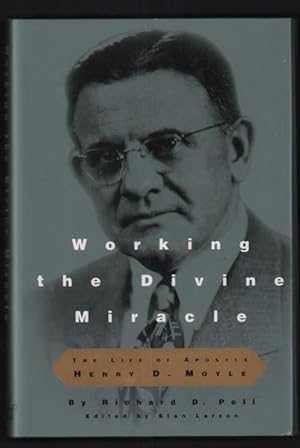
Working the Divine Miracle: The Life of Apostle Henry D. Moyle
Lingua: Inglese
Editore: Signature Books, Salt Lake City, UT, 1999
ISBN 10: 1560851295 ISBN 13: 9781560851295
Da: Ken Sanders Rare Books, ABAA, Salt Lake City, UT, U.S.A.
Membro dell'associazione: ABAA ILAB IOBA RMABA
Valutazione del venditore 5 su 5 stelle

Prima edizione
Hardcover. Condizione: Fine. Condizione sovraccoperta: very good. First edition. 240pp. Octavo [23.5 cm] Sea-green cloth over boards with gilt stamping. In a dust jacket, with light rubbing to the panels. A detailed view of LDS history from the modern period. From the dust jacket- "Reflecting the optimism of his time, Henry D. Moyle (1889-1963), counselor in the First Presidency of the LDS church, approached every endeavor on a grand scale. He thought the Church Office Building should have been twice its existing twenty-eight stories. As overseer of the Church Building Committee, he spearheaded a bold spend-now, pay-later policy ('Build for the next ten years') on the assumption that larger chapels would attract more converts. Ultimately these utopian views proved unfeasible. As the church neared bankruptcy President David O. McKay found it necessary to relieve Moyle of all administrative responsibilities. Even so, Moyle influence can be seen today.".

