

Importo totale (1 articolo articoli):
Destinazione ordine:

prof peeters (20 risultati)
Vai alla pagina principale dei risultati di ricerca
Filtri di ricerca
Tipo di articolo
- Tutti i tipi di prodotto
- Libri (20)
- Riviste e Giornali (Nessun altro risultato corrispondente a questo perfezionamento)
- Fumetti (Nessun altro risultato corrispondente a questo perfezionamento)
- Spartiti (Nessun altro risultato corrispondente a questo perfezionamento)
- Arte, Stampe e Poster (Nessun altro risultato corrispondente a questo perfezionamento)
- Fotografie (Nessun altro risultato corrispondente a questo perfezionamento)
- Mappe (Nessun altro risultato corrispondente a questo perfezionamento)
- Manoscritti e Collezionismo cartaceo (Nessun altro risultato corrispondente a questo perfezionamento)
Condizioni Maggiori informazioni
- Nuovo (12)
- Come nuovo, Ottimo o Quasi ottimo (1)
- Molto buono o Buono (5)
- Discreto o Mediocre (Nessun altro risultato corrispondente a questo perfezionamento)
- Come descritto (2)
Legatura
Ulteriori caratteristiche
- Prima ed. (Nessun altro risultato corrispondente a questo perfezionamento)
- Copia autograf. (Nessun altro risultato corrispondente a questo perfezionamento)
- Sovracoperta (Nessun altro risultato corrispondente a questo perfezionamento)
- Con foto (14)
- Non Print on Demand (11)
Lingua (3)
Spedizione gratuita
- Spedizione gratuita in U.S.A. (Nessun altro risultato corrispondente a questo perfezionamento)
Paese del venditore
Valutazione venditore
-
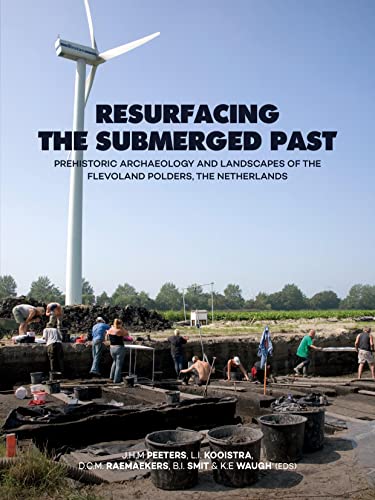
Resurfacing the Submerged Past: Prehistoric Archaeology and Landscapes of the Flevoland Polders, the Netherlands
Da: Books From California, Simi Valley, CA, U.S.A.
Valutazione del venditore 4 su 5 stelle

paperback. Condizione: Very Good. Cover and edges may have some wear. Mild to Moderate creasing / bending to covers and pages. Book is otherwise very clean, unmarked and 100% functional.
-
Resurfacing the Submerged Past: Prehistoric Archaeology and Landscapes of the Flevoland Polders, the Netherlands
Da: Majestic Books, Hounslow, Regno Unito
Valutazione del venditore 4 su 5 stelle
EUR 37,64
Spedizione EUR 7,53
Spedito da Regno Unito a U.S.A.Quantità: 1 disponibili
Aggiungi al carrelloCondizione: New.
-
Resurfacing the Submerged Past: Prehistoric Archaeology and Landscapes of the Flevoland Polders, the Netherlands
Da: Books Puddle, New York, NY, U.S.A.
Valutazione del venditore 4 su 5 stelle
Condizione: New.
-
Resurfacing the Submerged Past: Prehistoric Archaeology and Landscapes of the Flevoland Polders, the Netherlands
Da: Biblios, Frankfurt am main, HESSE, Germania
Valutazione del venditore 4 su 5 stelle
EUR 39,78
Spedizione EUR 9,95
Spedito da Germania a U.S.A.Quantità: 1 disponibili
Aggiungi al carrelloCondizione: New.
-

Schoonheid der Nederlanden. Een cultuurhistorische atlas
Editore: Elsevier 1980, 1980
Da: Antiquariaat Schot, Hendrik-Ido-Ambacht, Paesi Bassi
Valutazione del venditore 5 su 5 stelle

EUR 9,20
Spedizione EUR 25,00
Spedito da Paesi Bassi a U.S.A.Quantità: 1 disponibili
Aggiungi al carrelloGeb., met stofomslag, groot formaat, i.z.g.st., 295 pagina's.
-

Eigen aard. Overzicht van het Vlaamse volksleven.
Editore: De Vlijt
Da: GAMANDER ANTIQUARIAT, Werkendam, Paesi Bassi
Valutazione del venditore 1 su 5 stelle

EUR 20,00
Spedizione EUR 35,00
Spedito da Paesi Bassi a U.S.A.Quantità: 1 disponibili
Aggiungi al carrelloAntwerpen, De Vlijt. 1975. Hardcover. Ill.: Lievens, H. Very Good. l 457 p. Met zeer veel ill., afbeeldingen, foto's en uitklapbare platen. Bijzonder boek met bv. een lijst van spotnamen per regio. Liedjes, versjes, sagen. Volksremedies, klederdrachten, de dialecten. Etc. etc.
-

Resurfacing the Submerged Past: Prehistoric Archaeology and Landscapes of the Flevoland Polders, the Netherlands
Da: Books From California, Simi Valley, CA, U.S.A.
Valutazione del venditore 4 su 5 stelle
hardcover. Condizione: Very Good. Cover and edges may have some wear.
-

EUR 5,59
Spedizione EUR 72,00
Spedito da Belgio a U.S.A.Quantità: 1 disponibili
Aggiungi al carrelloPaperback. Condizione: Good. Op eerste pagina stempel van vorige eigenaar. Dutch.
-

EUR 17,35
Spedizione EUR 72,00
Spedito da Belgio a U.S.A.Quantità: 1 disponibili
Aggiungi al carrelloHardcover. Condizione: Good. Gesigneerd. Dutch. Yes.
-

EUR 30,79
Spedizione EUR 72,00
Spedito da Belgio a U.S.A.Quantità: 1 disponibili
Aggiungi al carrelloHardcover. Condizione: Good. Dutch French German English.
-

EUR 37,24
Spedizione EUR 72,00
Spedito da Belgio a U.S.A.Quantità: 1 disponibili
Aggiungi al carrelloPaperback. Condizione: Fine. XLII, 138 p. ill. 24 cm Dutch.
-

Resurfacing the submerged past
Da: BuchWeltWeit Ludwig Meier e.K., Bergisch Gladbach, Germania
Valutazione del venditore 5 su 5 stelle
EUR 70,00
Spedizione EUR 23,00
Spedito da Germania a U.S.A.Quantità: 2 disponibili
Aggiungi al carrelloTaschenbuch. Condizione: Neu. This item is printed on demand - it takes 3-4 days longer - Neuware -The Netherlands are internationally renowned for the archaeology of its wetland environments. The reclamation of the Flevoland Polders in the early half of the 20th century not only exposed hundreds of shipwrecks, but also remnants of prehistoric landscapes and traces of human occupation dating to Mesolithic and Neolithic times. Ultimately, this led to the 'discovery' of the Swifterbant Culture in the 1960s-1970s, and which was initially seen as a Dutch equivalent of the Ertebølle Culture.Archaeological investigations conducted by the University of Groningen, and later also the University of Amsterdam, delivered important new data on the nature of the Swifterbant Culture. It became key in the discussion about the adoption of crop cultivation and animal husbandry by hunter-gatherers living in wetland environments. Also, the Swifterbant Culture became central in the debate on the meaning of archaeologically defined 'cultures', questioning relationships between social interaction and material culture. With the increase of urbanisation and infrastructural works, alongside changes in the Dutch Monuments Act, dozens of small and large-scale development-led investigations got initiated at the turn of the century.One project involved the construction of the Hanzelijn railway, crossing one of the polders from West to East. Archaeologists became aware that much of what was known - and unknown - about the prehistoric past of the Flevoland Polders, was not easily accessible. It was therefore decided to bring together, as much as possible, all the information from the many scattered sources, and make it accessible to professionals, both inside and outside the Netherlands. The result is this book, which presents an overview of the most important sites and data, and what these learn us about the nature of the archaeological record, landscape change, prehistoric subsistence, ritual behaviour, as well as socio-cultural developments during the Mesolithic and Neolithic.Previously considered an impossibility, 'fossilised' fields, discovered at Swifterbant, demonstrate crop cultivation in wetland environments in an early stage of the Neolithic. In fact, the prehistory of the Flevoland Polders is tightly connected to the dynamic nature of the extended wetlands that characterised the landscape since the end of the last glacial. Although often regarded as the 'margin' of cultural dynamics in the past, we can now see that the Flevoland Polders were right in the centre of fundamental long-term changes in human existence in NW Europe.ContentsChapter 1 Introduction of the Hanzelijn Archaeological Project (K. E. Waugh ( ), W. Hessing and J. Flamman)Chapter 2 The cradle of the Swifterbant culture: 50 years of archaeological investigations in the province of Flevoland (D.C.M Raemaekers and J.H.M. Peeters)Chapter 3 Hidden landscapes: mapping and evaluating deeply buried remains of human activity (J.H.M. Peeters and B.I. Smit)Chapter 4 Exploiting a changing landscape: subsistence, habitation and skills (J.H.M. Peeters, T. ten Anscher, L.I. Kooistra, L. Kubiak-Martens and J. Zeiler)Chapter 5 People, ritual and meaning (D.C.M Raemaekers)Chapter 6 From land to water: geomorphological, hydrological and ecological developments in Flevoland from the Late Glacial to the end of the Subboreal (L.I. Kooistra and J.H.M. Peeters )Chapter 7 Transformations in a forager and farmer landscape: a cultural biography of prehistoric Flevoland (J.H.M. Peeters, L.I. Kooistra and D.C.M. Raemaekers)Site Atlas: Windows of observation: the quality, nature and context of excavated sites in Flevoland (T.Hamburg and B.I. Smit)Bibliography 286 pp. Englisch.
-

EUR 56,71
Spedizione EUR 48,99
Spedito da Germania a U.S.A.Quantità: Più di 20 disponibili
Aggiungi al carrelloCondizione: New. Dieser Artikel ist ein Print on Demand Artikel und wird nach Ihrer Bestellung fuer Sie gedruckt. The Netherlands are internationally renowned for the archaeology of its wetland environments. The reclamation of the Flevoland Polders in the early half of the 20th century not only exposed hundreds of shipwrecks, but also remnants of prehistoric landscapes.
-

EUR 58,85
Spedizione EUR 70,00
Spedito da Germania a U.S.A.Quantità: 5 disponibili
Aggiungi al carrelloTaschenbuch. Condizione: Neu. Resurfacing the submerged past | Hans Peeters (u. a.) | Taschenbuch | Englisch | 2021 | Sidestone Press | EAN 9789464260380 | Verantwortliche Person für die EU: preigu GmbH & Co. KG, Lengericher Landstr. 19, 49078 Osnabrück, mail[at]preigu[dot]de | Anbieter: preigu Print on Demand.
-

Resurfacing the submerged past
Da: buchversandmimpf2000, Emtmannsberg, BAYE, Germania
Valutazione del venditore 5 su 5 stelle
EUR 70,00
Spedizione EUR 60,00
Spedito da Germania a U.S.A.Quantità: 1 disponibili
Aggiungi al carrelloTaschenbuch. Condizione: Neu. This item is printed on demand - Print on Demand Titel. Neuware -The Netherlands are internationally renowned for the archaeology of its wetland environments. The reclamation of the Flevoland Polders in the early half of the 20th century not only exposed hundreds of shipwrecks, but also remnants of prehistoric landscapes and traces of human occupation dating to Mesolithic and Neolithic times. Ultimately, this led to the ¿discovery¿ of the Swifterbant Culture in the 1960s-1970s, and which was initially seen as a Dutch equivalent of the Ertebølle Culture. Archaeological investigations conducted by the University of Groningen, and later also the University of Amsterdam, delivered important new data on the nature of the Swifterbant Culture. It became key in the discussion about the adoption of crop cultivation and animal husbandry by hunter-gatherers living in wetland environments. Also, the Swifterbant Culture became central in the debate on the meaning of archaeologically defined ¿cultures¿, questioning relationships between social interaction and material culture. With the increase of urbanisation and infrastructural works, alongside changes in the Dutch Monuments Act, dozens of small and large-scale development-led investigations got initiated at the turn of the century. One project involved the construction of the Hanzelijn railway, crossing one of the polders from West to East. Archaeologists became aware that much of what was known ¿ and unknown ¿ about the prehistoric past of the Flevoland Polders, was not easily accessible. It was therefore decided to bring together, as much as possible, all the information from the many scattered sources, and make it accessible to professionals, both inside and outside the Netherlands. The result is this book, which presents an overview of the most important sites and data, and what these learn us about the nature of the archaeological record, landscape change, prehistoric subsistence, ritual behaviour, as well as socio-cultural developments during the Mesolithic and Neolithic. Previously considered an impossibility, ¿fossilised¿ fields, discovered at Swifterbant, demonstrate crop cultivation in wetland environments in an early stage of the Neolithic. In fact, the prehistory of the Flevoland Polders is tightly connected to the dynamic nature of the extended wetlands that characterised the landscape since the end of the last glacial. Although often regarded as the ¿margin¿ of cultural dynamics in the past, we can now see that the Flevoland Polders were right in the centre of fundamental long-term changes in human existence in NW Europe. Contents Chapter 1 Introduction of the Hanzelijn Archaeological Project (K. E. Waugh (¿), W. Hessing and J. Flamman) Chapter 2 The cradle of the Swifterbant culture: 50 years of archaeological investigations in the province of Flevoland (D.C.M Raemaekers and J.H.M. Peeters) Chapter 3 Hidden landscapes: mapping and evaluating deeply buried remains of human activity (J.H.M. Peeters and B.I. Smit) Chapter 4 Exploiting a changing landscape: subsistence, habitation and skills (J.H.M. Peeters, T. ten Anscher, L.I. Kooistra, L. Kubiak-Martens and J. Zeiler) Chapter 5 People, ritual and meaning (D.C.M Raemaekers) Chapter 6 From land to water: geomorphological, hydrological and ecological developments in Flevoland from the Late Glacial to the end of the Subboreal (L.I. Kooistra and J.H.M. Peeters ) Chapter 7 Transformations in a forager and farmer landscape: a cultural biography of prehistoric Flevoland (J.H.M. Peeters, L.I. Kooistra and D.C.M. Raemaekers) Site Atlas: Windows of observation: the quality, nature and context of excavated sites in Flevoland (T.Hamburg and B.I. Smit) BibliographyBooks on Demand GmbH, Überseering 33, 22297 Hamburg 286 pp. Englisch.
-

EUR 72,19
Spedizione EUR 65,22
Spedito da Germania a U.S.A.Quantità: 1 disponibili
Aggiungi al carrelloTaschenbuch. Condizione: Neu. nach der Bestellung gedruckt Neuware - Printed after ordering - The Netherlands are internationally renowned for the archaeology of its wetland environments. The reclamation of the Flevoland Polders in the early half of the 20th century not only exposed hundreds of shipwrecks, but also remnants of prehistoric landscapes and traces of human occupation dating to Mesolithic and Neolithic times. Ultimately, this led to the 'discovery' of the Swifterbant Culture in the 1960s-1970s, and which was initially seen as a Dutch equivalent of the Ertebølle Culture.Archaeological investigations conducted by the University of Groningen, and later also the University of Amsterdam, delivered important new data on the nature of the Swifterbant Culture. It became key in the discussion about the adoption of crop cultivation and animal husbandry by hunter-gatherers living in wetland environments. Also, the Swifterbant Culture became central in the debate on the meaning of archaeologically defined 'cultures', questioning relationships between social interaction and material culture. With the increase of urbanisation and infrastructural works, alongside changes in the Dutch Monuments Act, dozens of small and large-scale development-led investigations got initiated at the turn of the century.One project involved the construction of the Hanzelijn railway, crossing one of the polders from West to East. Archaeologists became aware that much of what was known - and unknown - about the prehistoric past of the Flevoland Polders, was not easily accessible. It was therefore decided to bring together, as much as possible, all the information from the many scattered sources, and make it accessible to professionals, both inside and outside the Netherlands. The result is this book, which presents an overview of the most important sites and data, and what these learn us about the nature of the archaeological record, landscape change, prehistoric subsistence, ritual behaviour, as well as socio-cultural developments during the Mesolithic and Neolithic.Previously considered an impossibility, 'fossilised' fields, discovered at Swifterbant, demonstrate crop cultivation in wetland environments in an early stage of the Neolithic. In fact, the prehistory of the Flevoland Polders is tightly connected to the dynamic nature of the extended wetlands that characterised the landscape since the end of the last glacial. Although often regarded as the 'margin' of cultural dynamics in the past, we can now see that the Flevoland Polders were right in the centre of fundamental long-term changes in human existence in NW Europe.ContentsChapter 1 Introduction of the Hanzelijn Archaeological Project (K. E. Waugh ( ), W. Hessing and J. Flamman)Chapter 2 The cradle of the Swifterbant culture: 50 years of archaeological investigations in the province of Flevoland (D.C.M Raemaekers and J.H.M. Peeters)Chapter 3 Hidden landscapes: mapping and evaluating deeply buried remains of human activity (J.H.M. Peeters and B.I. Smit)Chapter 4 Exploiting a changing landscape: subsistence, habitation and skills (J.H.M. Peeters, T. ten Anscher, L.I. Kooistra, L. Kubiak-Martens and J. Zeiler)Chapter 5 People, ritual and meaning (D.C.M Raemaekers)Chapter 6 From land to water: geomorphological, hydrological and ecological developments in Flevoland from the Late Glacial to the end of the Subboreal (L.I. Kooistra and J.H.M. Peeters )Chapter 7 Transformations in a forager and farmer landscape: a cultural biography of prehistoric Flevoland (J.H.M. Peeters, L.I. Kooistra and D.C.M. Raemaekers)Site Atlas: Windows of observation: the quality, nature and context of excavated sites in Flevoland (T.Hamburg and B.I. Smit)Bibliography.
-

EUR 138,76
Spedizione EUR 48,99
Spedito da Germania a U.S.A.Quantità: Più di 20 disponibili
Aggiungi al carrelloCondizione: New. Dieser Artikel ist ein Print on Demand Artikel und wird nach Ihrer Bestellung fuer Sie gedruckt. The Netherlands are internationally renowned for the archaeology of its wetland environments. The reclamation of the Flevoland Polders in the early half of the 20th century not only exposed hundreds of shipwrecks, but also remnants of prehistoric landscapes.
-

EUR 143,90
Spedizione EUR 70,00
Spedito da Germania a U.S.A.Quantità: 5 disponibili
Aggiungi al carrelloBuch. Condizione: Neu. Resurfacing the submerged past | Hans Peeters (u. a.) | Buch | HC gerader Rücken kaschiert | Englisch | 2021 | Sidestone Press | EAN 9789464260397 | Verantwortliche Person für die EU: preigu GmbH & Co. KG, Lengericher Landstr. 19, 49078 Osnabrück, mail[at]preigu[dot]de | Anbieter: preigu Print on Demand.
-

Resurfacing the submerged past
Da: buchversandmimpf2000, Emtmannsberg, BAYE, Germania
Valutazione del venditore 5 su 5 stelle
EUR 180,00
Spedizione EUR 60,00
Spedito da Germania a U.S.A.Quantità: 1 disponibili
Aggiungi al carrelloBuch. Condizione: Neu. This item is printed on demand - Print on Demand Titel. Neuware -The Netherlands are internationally renowned for the archaeology of its wetland environments. The reclamation of the Flevoland Polders in the early half of the 20th century not only exposed hundreds of shipwrecks, but also remnants of prehistoric landscapes and traces of human occupation dating to Mesolithic and Neolithic times. Ultimately, this led to the ¿discovery¿ of the Swifterbant Culture in the 1960s-1970s, and which was initially seen as a Dutch equivalent of the Ertebølle Culture.Archaeological investigations conducted by the University of Groningen, and later also the University of Amsterdam, delivered important new data on the nature of the Swifterbant Culture. It became key in the discussion about the adoption of crop cultivation and animal husbandry by hunter-gatherers living in wetland environments. Also, the Swifterbant Culture became central in the debate on the meaning of archaeologically defined ¿cultures¿, questioning relationships between social interaction and material culture. With the increase of urbanisation and infrastructural works, alongside changes in the Dutch Monuments Act, dozens of small and large-scale development-led investigations got initiated at the turn of the century.One project involved the construction of the Hanzelijn railway, crossing one of the polders from West to East. Archaeologists became aware that much of what was known ¿ and unknown ¿ about the prehistoric past of the Flevoland Polders, was not easily accessible. It was therefore decided to bring together, as much as possible, all the information from the many scattered sources, and make it accessible to professionals, both inside and outside the Netherlands. The result is this book, which presents an overview of the most important sites and data, and what these learn us about the nature of the archaeological record, landscape change, prehistoric subsistence, ritual behaviour, as well as socio-cultural developments during the Mesolithic and Neolithic.Previously considered an impossibility, ¿fossilised¿ fields, discovered at Swifterbant, demonstrate crop cultivation in wetland environments in an early stage of the Neolithic. In fact, the prehistory of the Flevoland Polders is tightly connected to the dynamic nature of the extended wetlands that characterised the landscape since the end of the last glacial. Although often regarded as the ¿margin¿ of cultural dynamics in the past, we can now see that the Flevoland Polders were right in the centre of fundamental long-term changes in human existence in NW Europe.ContentsChapter 1 Introduction of the Hanzelijn Archaeological Project (K. E. Waugh (¿), W. Hessing and J. Flamman)Chapter 2 The cradle of the Swifterbant culture: 50 years of archaeological investigations in the province of Flevoland (D.C.M Raemaekers and J.H.M. Peeters)Chapter 3 Hidden landscapes: mapping and evaluating deeply buried remains of human activity (J.H.M. Peeters and B.I. Smit)Chapter 4 Exploiting a changing landscape: subsistence, habitation and skills (J.H.M. Peeters, T. ten Anscher, L.I. Kooistra, L. Kubiak-Martens and J. Zeiler)Chapter 5 People, ritual and meaning (D.C.M Raemaekers)Chapter 6 From land to water: geomorphological, hydrological and ecological developments in Flevoland from the Late Glacial to the end of the Subboreal (L.I. Kooistra and J.H.M. Peeters )Chapter 7 Transformations in a forager and farmer landscape: a cultural biography of prehistoric Flevoland (J.H.M. Peeters, L.I. Kooistra and D.C.M. Raemaekers)Site Atlas: Windows of observation: the quality, nature and context of excavated sites in Flevoland (T.Hamburg and B.I. Smit)BibliographyBooks on Demand GmbH, Überseering 33, 22297 Hamburg 286 pp. Englisch.
-

EUR 182,16
Spedizione EUR 66,49
Spedito da Germania a U.S.A.Quantità: 1 disponibili
Aggiungi al carrelloBuch. Condizione: Neu. nach der Bestellung gedruckt Neuware - Printed after ordering - The Netherlands are internationally renowned for the archaeology of its wetland environments. The reclamation of the Flevoland Polders in the early half of the 20th century not only exposed hundreds of shipwrecks, but also remnants of prehistoric landscapes and traces of human occupation dating to Mesolithic and Neolithic times. Ultimately, this led to the 'discovery' of the Swifterbant Culture in the 1960s-1970s, and which was initially seen as a Dutch equivalent of the Ertebølle Culture.Archaeological investigations conducted by the University of Groningen, and later also the University of Amsterdam, delivered important new data on the nature of the Swifterbant Culture. It became key in the discussion about the adoption of crop cultivation and animal husbandry by hunter-gatherers living in wetland environments. Also, the Swifterbant Culture became central in the debate on the meaning of archaeologically defined 'cultures', questioning relationships between social interaction and material culture. With the increase of urbanisation and infrastructural works, alongside changes in the Dutch Monuments Act, dozens of small and large-scale development-led investigations got initiated at the turn of the century.One project involved the construction of the Hanzelijn railway, crossing one of the polders from West to East. Archaeologists became aware that much of what was known - and unknown - about the prehistoric past of the Flevoland Polders, was not easily accessible. It was therefore decided to bring together, as much as possible, all the information from the many scattered sources, and make it accessible to professionals, both inside and outside the Netherlands. The result is this book, which presents an overview of the most important sites and data, and what these learn us about the nature of the archaeological record, landscape change, prehistoric subsistence, ritual behaviour, as well as socio-cultural developments during the Mesolithic and Neolithic.Previously considered an impossibility, 'fossilised' fields, discovered at Swifterbant, demonstrate crop cultivation in wetland environments in an early stage of the Neolithic. In fact, the prehistory of the Flevoland Polders is tightly connected to the dynamic nature of the extended wetlands that characterised the landscape since the end of the last glacial. Although often regarded as the 'margin' of cultural dynamics in the past, we can now see that the Flevoland Polders were right in the centre of fundamental long-term changes in human existence in NW Europe.ContentsChapter 1 Introduction of the Hanzelijn Archaeological Project (K. E. Waugh ( ), W. Hessing and J. Flamman)Chapter 2 The cradle of the Swifterbant culture: 50 years of archaeological investigations in the province of Flevoland (D.C.M Raemaekers and J.H.M. Peeters)Chapter 3 Hidden landscapes: mapping and evaluating deeply buried remains of human activity (J.H.M. Peeters and B.I. Smit)Chapter 4 Exploiting a changing landscape: subsistence, habitation and skills (J.H.M. Peeters, T. ten Anscher, L.I. Kooistra, L. Kubiak-Martens and J. Zeiler)Chapter 5 People, ritual and meaning (D.C.M Raemaekers)Chapter 6 From land to water: geomorphological, hydrological and ecological developments in Flevoland from the Late Glacial to the end of the Subboreal (L.I. Kooistra and J.H.M. Peeters )Chapter 7 Transformations in a forager and farmer landscape: a cultural biography of prehistoric Flevoland (J.H.M. Peeters, L.I. Kooistra and D.C.M. Raemaekers)Site Atlas: Windows of observation: the quality, nature and context of excavated sites in Flevoland (T.Hamburg and B.I. Smit)Bibliography.


