Importo totale (1 articolo articoli):
Destinazione ordine:

riccio mario (47 risultati)
Vai alla pagina principale dei risultati di ricerca
Filtri di ricerca
Tipo di articolo
- Tutti i tipi di prodotto
- Libri (47)
- Riviste e Giornali (Nessun altro risultato corrispondente a questo perfezionamento)
- Fumetti (Nessun altro risultato corrispondente a questo perfezionamento)
- Spartiti (Nessun altro risultato corrispondente a questo perfezionamento)
- Arte, Stampe e Poster (Nessun altro risultato corrispondente a questo perfezionamento)
- Fotografie (Nessun altro risultato corrispondente a questo perfezionamento)
- Mappe (Nessun altro risultato corrispondente a questo perfezionamento)
- Manoscritti e Collezionismo cartaceo (Nessun altro risultato corrispondente a questo perfezionamento)
Condizioni Maggiori informazioni
- Nuovo (36)
- Come nuovo, Ottimo o Quasi ottimo (9)
- Molto buono o Buono (2)
- Discreto o Mediocre (Nessun altro risultato corrispondente a questo perfezionamento)
- Come descritto (Nessun altro risultato corrispondente a questo perfezionamento)
Legatura
Ulteriori caratteristiche
- Prima ed. (1)
- Copia autograf. (Nessun altro risultato corrispondente a questo perfezionamento)
- Sovracoperta (1)
- Con foto (25)
- Non Print on Demand (45)
Lingua (3)
Spedizione gratuita
Paese del venditore
Valutazione venditore
-

EUR 4,67
Spedizione EUR 15,00
Spedito da Germania a U.S.A.Quantità: 1 disponibili
Aggiungi al carrelloCondizione: very good. Gut/Very good: Buch bzw. Schutzumschlag mit wenigen Gebrauchsspuren an Einband, Schutzumschlag oder Seiten. / Describes a book or dust jacket that does show some signs of wear on either the binding, dust jacket or pages.
-

Italian Soft-Skinned Vehicles of the Second World War
Da: Rarewaves.com USA, London, LONDO, Regno Unito
Valutazione del venditore 5 su 5 stelle

EUR 39,58
Spedizione gratuita
Spedito da Regno Unito a U.S.A.Quantità: 2 disponibili
Aggiungi al carrelloPaperback. Condizione: New. The importance of land transport vehicles within an armed force is often underestimated by the average reader, attracted by more 'martial' subjects such as tanks and artillery. Nevertheless, it was thanks to motorcycles, cars, trucks and tractors that - since the early years of the twentieth century - men, weapons, ammunition, provisions, fuel, equipment and orders were transported, all elements without which AFVs, guns and infantry are unable to fight. Volume 2 examines medium and heavy trucks, artillery tractors, special purpose vehicles and trailers. The main text is complemented with appendices on vehicle coloring and markings, manufacturers, production facts and further details.It is a common opinion that the Italian Army was beaten above all because of the poor quality of its combat vehicles. Impartial and in-depth studies, made since the end of the war, have revealed that the main problem was the shortage of vehicles, as well as an entirely insufficient logistics chain. The tank crews were able to compensate with bravery and experience for the fact that their tanks were, from a certain point on, inferior to those of their enemies, but the inadequate number of AFVs and other materiel was impossible to remedy. The same problem plagued the entire sector of military soft-skinned vehicles, a sign of Italy's limited industrial capacity (and of procurement of raw materials and components) compared, for example, to its ally Germany. There were too few factories, too few skilled workers, and poor management skills within the armed forces.models of efficient, robust and resistant vehicles were produced, especially in the sector of the so-called 'standardized' motor vehicles. These vehicles allowed the Italian troops to move and fight in the large and difficult territories of North Africa, the Balkans and the Soviet Union and brought home what was left of the defeated soldiers.This is the first English-language study describing the soft-skinned vehicles of the Italian Armed Forces, starting from the 1930s, when Mussolini's Italy faced some colonial conflicts and participated - albeit unofficially - in the Spanish Civil War, and throughout the Second World War. For each vehicle there is a file describing its evolution and the main technical aspects, accompanied by one or more photographs and, for the most significant examples, line drawings. The work is enriched by a historical introduction, various appendices and color profiles. Read more Continue reading Read less ABOUT THE AUTHORRalph Riccio was born in Bridgeport, Connecticut and is a retired US Army officer who has been interested in military history and military equipment since his youth. He has written and co-authored a number of books on Italian small arms, armor and artillery, as well as several books on aspects of Irish military history. He has also written numerous magazine articles both in English and Italian dealing with a broad spectrum of military subjects. He has a native Italian langu.
-

Paperback. Condizione: New. The importance of land transport vehicles within an armed force is often underestimated by the average reader, attracted by more 'martial' subjects such as tanks and artillery. Nevertheless, it was thanks to motorcycles, cars, trucks and tractors that - since the early years of the twentieth century - men, weapons, ammunition, provisions, fuel, equipment and orders were transported, all elements without which AFVs, guns and infantry are unable to fight. Volume 2 examines medium and heavy trucks, artillery tractors, special purpose vehicles and trailers. The main text is complemented with appendices on vehicle coloring and markings, manufacturers, production facts and further details.It is a common opinion that the Italian Army was beaten above all because of the poor quality of its combat vehicles. Impartial and in-depth studies, made since the end of the war, have revealed that the main problem was the shortage of vehicles, as well as an entirely insufficient logistics chain. The tank crews were able to compensate with bravery and experience for the fact that their tanks were, from a certain point on, inferior to those of their enemies, but the inadequate number of AFVs and other materiel was impossible to remedy. The same problem plagued the entire sector of military soft-skinned vehicles, a sign of Italy's limited industrial capacity (and of procurement of raw materials and components) compared, for example, to its ally Germany. There were too few factories, too few skilled workers, and poor management skills within the armed forces.models of efficient, robust and resistant vehicles were produced, especially in the sector of the so-called 'standardized' motor vehicles. These vehicles allowed the Italian troops to move and fight in the large and difficult territories of North Africa, the Balkans and the Soviet Union and brought home what was left of the defeated soldiers.This is the first English-language study describing the soft-skinned vehicles of the Italian Armed Forces, starting from the 1930s, when Mussolini's Italy faced some colonial conflicts and participated - albeit unofficially - in the Spanish Civil War, and throughout the Second World War. For each vehicle there is a file describing its evolution and the main technical aspects, accompanied by one or more photographs and, for the most significant examples, line drawings. The work is enriched by a historical introduction, various appendices and color profiles. Read more Continue reading Read less ABOUT THE AUTHORRalph Riccio was born in Bridgeport, Connecticut and is a retired US Army officer who has been interested in military history and military equipment since his youth. He has written and co-authored a number of books on Italian small arms, armor and artillery, as well as several books on aspects of Irish military history. He has also written numerous magazine articles both in English and Italian dealing with a broad spectrum of military subjects. He has a native Italian langu.
-
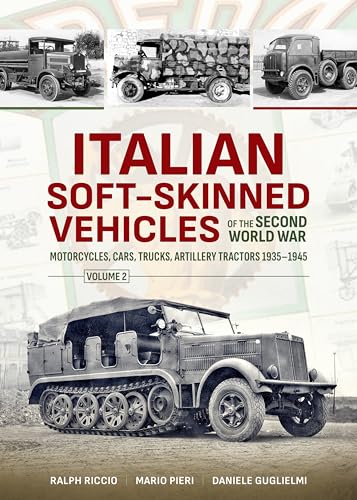
Italian Soft-Skinned Vehicles of the Second World War: Volume 2 - Motorcycles, Cars, Trucks, Artillery Tractors 1935-1945
Da: Ria Christie Collections, Uxbridge, Regno Unito
Valutazione del venditore 5 su 5 stelle
EUR 29,90
Spedizione EUR 13,79
Spedito da Regno Unito a U.S.A.Quantità: 3 disponibili
Aggiungi al carrelloCondizione: New. In.
-

Storia di una morte opportuna.
Editore: Sironi, 2008
Da: LIBET - Libreria del Riacquisto, Milano, MI, Italia
Valutazione del venditore 4 su 5 stelle

EUR 10,00
Spedizione EUR 13,00
Spedito da Italia a U.S.A.Quantità: 1 disponibili
Aggiungi al carrellobrossura. Condizione: ottimo. in 8 pp. 286.
-
Italian Soft-Skinned Vehicles of the Second World War: Volume 2 - Motorcycles, Cars, Trucks, Artillery Tractors 1935-1945
Da: Books Puddle, New York, NY, U.S.A.
Valutazione del venditore 4 su 5 stelle
Condizione: New.
-
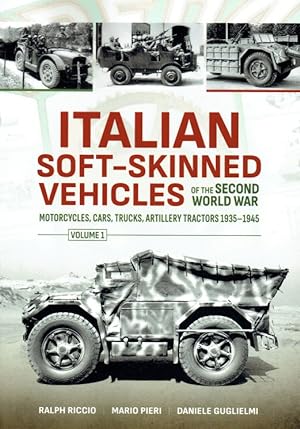
ITALIAN SOFT-SKINNED VEHICLES OF THE SECOND WORLD WAR VOLUME1: MOTORCYCLES, CARS, TRUCKS, ARTILLERY TRACTORS 1935-1945
Da: Paul Meekins Military & History Books, Stratford upon Avon, Regno Unito
Valutazione del venditore 5 su 5 stelle
EUR 17,78
Spedizione EUR 29,92
Spedito da Regno Unito a U.S.A.Quantità: 2 disponibili
Aggiungi al carrelloPaperback. Condizione: New. New paperback copies at a reduced price. ; Pictorial study featuring contemporary b/w photographs and illustrations, with brief background history and data. Includes several pages of colour profiles. ; 146 pages.
-
Italian Soft-skinned Vehicles of the Second World War: Motorcycles, Cars, Trucks, Artillery Tractors 1935-1945: Vol 2 - Motorc
Da: Revaluation Books, Exeter, Regno Unito
Valutazione del venditore 5 su 5 stelle
EUR 34,60
Spedizione EUR 14,38
Spedito da Regno Unito a U.S.A.Quantità: 2 disponibili
Aggiungi al carrelloPaperback. Condizione: Brand New. 226 pages. 11.25x8.00x0.50 inches. In Stock.
-
Italian Soft-Skinned Vehicles of the Second World War: Volume 2 - Motorcycles, Cars, Trucks, Artillery Tractors 1935-1945
Da: Biblios, Frankfurt am main, HESSE, Germania
Valutazione del venditore 4 su 5 stelle
EUR 40,74
Spedizione EUR 9,95
Spedito da Germania a U.S.A.Quantità: 3 disponibili
Aggiungi al carrelloCondizione: New.
-
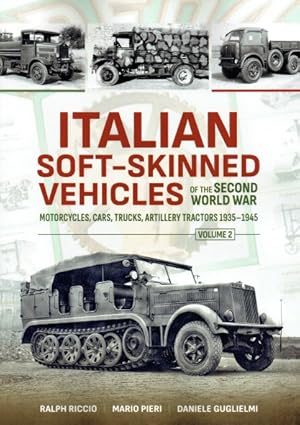
ITALIAN SOFT-SKINNED VEHICLES OF THE SECOND WORLD WAR VOLUME 2: MOTORCYCLES, CARS, TRUCKS, ARTILLERY TRACTORS 1935-1945
Da: Paul Meekins Military & History Books, Stratford upon Avon, Regno Unito
Valutazione del venditore 5 su 5 stelle
EUR 23,69
Spedizione EUR 29,92
Spedito da Regno Unito a U.S.A.Quantità: 1 disponibili
Aggiungi al carrelloPaperback. Condizione: New. New paperback copies at a reduced price. ; Volume 2: includes medium and heavy trucks, artillery tractors, special-purpose vehicles and trailers. Pictorial study featuring contemporary b/w photographs and illustrations, with brief background history and data. Includes several pages of colour profiles. ; 226 pages.
-
Storia di una morte opportuna. Il diario del medico che ha fatto la volontà di Welby
Da: libreriauniversitaria.it, Occhiobello, RO, Italia
Valutazione del venditore 4 su 5 stelle
EUR 17,10
Spedizione EUR 17,95
Spedito da Italia a U.S.A.Quantità: Più di 20 disponibili
Aggiungi al carrelloCondizione: NEW.
-

Geosynthetic Encased Columns for Soft Soil Improvement
Da: GreatBookPrices, Columbia, MD, U.S.A.
Valutazione del venditore 5 su 5 stelle
EUR 63,92
Spedizione EUR 2,23
Spedito in U.S.A.Quantità: Più di 20 disponibili
Aggiungi al carrelloCondizione: As New. Unread book in perfect condition.
-

Geosynthetic Encased Columns for Soft Soil Improvement
Da: GreatBookPrices, Columbia, MD, U.S.A.
Valutazione del venditore 5 su 5 stelle
EUR 65,30
Spedizione EUR 2,23
Spedito in U.S.A.Quantità: Più di 20 disponibili
Aggiungi al carrelloCondizione: New.
-

Geosynthetic Encased Columns for Soft Soil Improvement
Da: Lucky's Textbooks, Dallas, TX, U.S.A.
Valutazione del venditore 5 su 5 stelle
EUR 64,13
Spedizione EUR 3,37
Spedito in U.S.A.Quantità: Più di 20 disponibili
Aggiungi al carrelloCondizione: New.
-
Geosynthetic Encased Columns for Soft Soil Improvement
Da: Books Puddle, New York, NY, U.S.A.
Valutazione del venditore 4 su 5 stelle
Condizione: New. 1st edition NO-PA16APR2015-KAP.
-
Geosynthetic Encased Columns for Soft Soil Improvement
Da: California Books, Miami, FL, U.S.A.
Valutazione del venditore 5 su 5 stelle
EUR 73,15
Spedizione gratuita
Spedito in U.S.A.Quantità: Più di 20 disponibili
Aggiungi al carrelloCondizione: New.
-

Geosynthetic Encased Columns for Soft Soil Improvement
Da: GreatBookPricesUK, Woodford Green, Regno Unito
Valutazione del venditore 5 su 5 stelle
EUR 65,96
Spedizione EUR 17,26
Spedito da Regno Unito a U.S.A.Quantità: Più di 20 disponibili
Aggiungi al carrelloCondizione: New.
-

Geosynthetic Encased Columns for Soft Soil Improvement
Da: GreatBookPricesUK, Woodford Green, Regno Unito
Valutazione del venditore 5 su 5 stelle
EUR 66,90
Spedizione EUR 17,26
Spedito da Regno Unito a U.S.A.Quantità: Più di 20 disponibili
Aggiungi al carrelloCondizione: As New. Unread book in perfect condition.
-
Geosynthetic Encased Columns for Soft Soil Improvement
Da: Ria Christie Collections, Uxbridge, Regno Unito
Valutazione del venditore 5 su 5 stelle
EUR 70,42
Spedizione EUR 13,79
Spedito da Regno Unito a U.S.A.Quantità: Più di 20 disponibili
Aggiungi al carrelloCondizione: New. In.
-

Italian Soft-Skinned Vehicles of the Second World War
Da: Rarewaves USA United, OSWEGO, IL, U.S.A.
Valutazione del venditore 5 su 5 stelle
Paperback. Condizione: New. The importance of land transport vehicles within an armed force is often underestimated by the average reader, attracted by more 'martial' subjects such as tanks and artillery. Nevertheless, it was thanks to motorcycles, cars, trucks and tractors that - since the early years of the twentieth century - men, weapons, ammunition, provisions, fuel, equipment and orders were transported, all elements without which AFVs, guns and infantry are unable to fight. Volume 2 examines medium and heavy trucks, artillery tractors, special purpose vehicles and trailers. The main text is complemented with appendices on vehicle coloring and markings, manufacturers, production facts and further details.It is a common opinion that the Italian Army was beaten above all because of the poor quality of its combat vehicles. Impartial and in-depth studies, made since the end of the war, have revealed that the main problem was the shortage of vehicles, as well as an entirely insufficient logistics chain. The tank crews were able to compensate with bravery and experience for the fact that their tanks were, from a certain point on, inferior to those of their enemies, but the inadequate number of AFVs and other materiel was impossible to remedy. The same problem plagued the entire sector of military soft-skinned vehicles, a sign of Italy's limited industrial capacity (and of procurement of raw materials and components) compared, for example, to its ally Germany. There were too few factories, too few skilled workers, and poor management skills within the armed forces.models of efficient, robust and resistant vehicles were produced, especially in the sector of the so-called 'standardized' motor vehicles. These vehicles allowed the Italian troops to move and fight in the large and difficult territories of North Africa, the Balkans and the Soviet Union and brought home what was left of the defeated soldiers.This is the first English-language study describing the soft-skinned vehicles of the Italian Armed Forces, starting from the 1930s, when Mussolini's Italy faced some colonial conflicts and participated - albeit unofficially - in the Spanish Civil War, and throughout the Second World War. For each vehicle there is a file describing its evolution and the main technical aspects, accompanied by one or more photographs and, for the most significant examples, line drawings. The work is enriched by a historical introduction, various appendices and color profiles. Read more Continue reading Read less ABOUT THE AUTHORRalph Riccio was born in Bridgeport, Connecticut and is a retired US Army officer who has been interested in military history and military equipment since his youth. He has written and co-authored a number of books on Italian small arms, armor and artillery, as well as several books on aspects of Irish military history. He has also written numerous magazine articles both in English and Italian dealing with a broad spectrum of military subjects. He has a native Italian langu.
-
Geosynthetic Encased Columns for Soft Soil Improvement
Da: Chiron Media, Wallingford, Regno Unito
Valutazione del venditore 5 su 5 stelle
EUR 73,26
Spedizione EUR 17,82
Spedito da Regno Unito a U.S.A.Quantità: Più di 20 disponibili
Aggiungi al carrelloPaperback. Condizione: New.
-
Storia di una morte opportuna Il diario del medico che ha fatto la volontà di Welby
Da: Biblioteca di Babele, Tarquinia, VT, Italia
Valutazione del venditore 5 su 5 stelle
AffareEUR 4,00
Spedizione EUR 42,00
Spedito da Italia a U.S.A.Quantità: 1 disponibili
Aggiungi al carrelloCondizione: OTTIMO USATO. IED. Galápagos ITALIANO IL LIBRO È USATO, PERTANTO POTREBBE PRESENTARE LIEVI DIFETTI/IMPERFEZIONI. LA FOTO CORRISPONDE AL LIBRO IN VENDITA. Immobilizzato da anni nel suo letto, incapace di respirare se non grazie a una macchina, nell'autunno 2006 Piergiorgio Welby - malato di distrofia muscolare progressiva - rende pubblica con un appello diretto al presidente della Repubblica la sua richiesta di essere lasciato morire. Il dottor Mario Riccio, anestesista di Cremona, si assume la responsabilità di fare come Welby chiede: dopo averlo sedato, lo distacca dal respiratore artificiale che lo tiene in vita. Questo è il diario che Riccio ha tenuto durante i giorni della morte di Welby, nel dicembre 2006, e poi nei mesi successivi; è il suo punto di vista non solo sulla vicenda strettamente "medica", ma anche sull'aspro confronto che si è sviluppato in Italia fin dall'appello di Welby; ed è il resoconto dell'iter processuale cui Riccio è stato sottoposto, fino alla sentenza di proscioglimento. La giornalista Gianna Milano, dialogando con l'esperienza umana e professionale narrata da Riccio, ha realizzato un ricchissimo commentario al testo, un contrappunto che restituisce lo sfondo degli eventi in un percorso parallelo: la cronaca, il dibattito politico, bioetico e culturale, i documenti giudiziari che hanno contribuito a una maggior chiarezza su accanimento terapeutico, consenso o rifiuto delle terapie, diritto al morire, cure palliative, testamento biologico ed eutanasia. Numero pagine 286. Il copyright dei dati è di Informazioni Editoriali I.E. Srl.
-
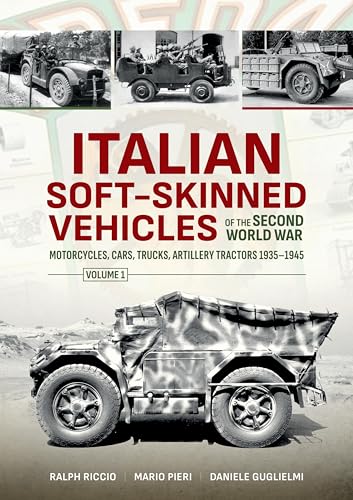
Italian Soft-Skinned Vehicles of the Second World War: Motorcycles, Cars, Trucks, Artillery Tractors, 1935-1945: Vol 1
Da: Revaluation Books, Exeter, Regno Unito
Valutazione del venditore 5 su 5 stelle
EUR 87,84
Spedizione EUR 14,38
Spedito da Regno Unito a U.S.A.Quantità: 1 disponibili
Aggiungi al carrelloPaperback. Condizione: Brand New. 152 pages. 11.70x8.30x0.39 inches. In Stock.
-
Storia di una morte opportuna Il diario del medico che ha fatto la volontà di Welby
Da: Biblioteca di Babele, Tarquinia, VT, Italia
Valutazione del venditore 5 su 5 stelle
AffareEUR 6,40
Spedizione EUR 42,00
Spedito da Italia a U.S.A.Quantità: 1 disponibili
Aggiungi al carrelloCondizione: OTTIMO USATO. IED. Galapagos ITALIANO Dedica con presunta firma autografa al frontespizio. Diario riportato in volume rilegato in brossura patinata lucida con bandelle, ottime le condizioni, nessuna parte mostra danni da manipolazione. Pagine interne perfette, tonalità velate da ossidazione minima, la cerniera è perfettamente stabile. Vol. n. 30 della collana a cura di Martha Fabbri. Tagli in gran parte puliti. N.pag. 286.
-
Italian Soft-skinned Vehicles of the Second World War: Motorcycles, Cars, Trucks, Artillery Tractors 1935-1945: Vol 2 - Motorc
Da: Revaluation Books, Exeter, Regno Unito
Valutazione del venditore 5 su 5 stelle
EUR 90,40
Spedizione EUR 14,38
Spedito da Regno Unito a U.S.A.Quantità: 1 disponibili
Aggiungi al carrelloPaperback. Condizione: Brand New. 226 pages. 11.25x8.00x0.50 inches. In Stock.
-
Geosynthetic Encased Columns for Soft Soil Improvement
Da: Revaluation Books, Exeter, Regno Unito
Valutazione del venditore 5 su 5 stelle
EUR 94,52
Spedizione EUR 11,51
Spedito da Regno Unito a U.S.A.Quantità: 2 disponibili
Aggiungi al carrelloPaperback. Condizione: Brand New. 138 pages. 9.75x6.75x0.50 inches. In Stock.
-

EUR 57,92
Spedizione EUR 48,99
Spedito da Germania a U.S.A.Quantità: Più di 20 disponibili
Aggiungi al carrelloCondizione: New.
-

Storia Di Una Morte Opportuna. Il Diario Del Medico Che Ha Fatto La Volontà Di Welby
Da: Piazza del Libro, Trebaseleghe, PD, Italia
Valutazione del venditore 5 su 5 stelle
EUR 14,00
Spedizione EUR 35,90
Spedito da Italia a U.S.A.Quantità: 1 disponibili
Aggiungi al carrelloCondizione: Ottime condizioni. copertina flessibile con angoli rovinati, nessun segno all'interno Immobilizzato da anni nel suo letto, incapace di respirare se non grazie a una macchina, nell'autunno 2006 Piergiorgio Welby - malato di distrofia muscolare progressiva - rende pubblica con un appello diretto al presidente della Repubblica la sua richiesta di essere lasciato morire. Il dottor Mario Riccio, anestesista di Cremona, si assume la responsabilità di fare come Welby chiede: dopo averlo sedato, lo distacca dal respiratore artificiale che lo tiene in vita. Questo è il diario che Riccio ha tenuto durante i giorni della morte di Welby, nel dicembre 2006, e poi nei mesi successivi, è il suo punto di vista non solo sulla vicenda strettamente medica, ma anche sull'aspro confronto che si è sviluppato in Italia fin dall'appello di Welby, ed è il resoconto dell'iter processuale cui Riccio è stato sottoposto, fino alla sentenza di proscioglimento. La giornalista Gianna Milano, dialogando con l'esperienza umana e professionale narrata da Riccio, ha realizzato un ricchissimo commentario a.
-

Italian Soft-Skinned Vehicles of the Second World War
Da: Rarewaves.com UK, London, Regno Unito
Valutazione del venditore 5 su 5 stelle
EUR 35,85
Spedizione EUR 74,80
Spedito da Regno Unito a U.S.A.Quantità: 2 disponibili
Aggiungi al carrelloPaperback. Condizione: New. The importance of land transport vehicles within an armed force is often underestimated by the average reader, attracted by more 'martial' subjects such as tanks and artillery. Nevertheless, it was thanks to motorcycles, cars, trucks and tractors that - since the early years of the twentieth century - men, weapons, ammunition, provisions, fuel, equipment and orders were transported, all elements without which AFVs, guns and infantry are unable to fight. Volume 2 examines medium and heavy trucks, artillery tractors, special purpose vehicles and trailers. The main text is complemented with appendices on vehicle coloring and markings, manufacturers, production facts and further details.It is a common opinion that the Italian Army was beaten above all because of the poor quality of its combat vehicles. Impartial and in-depth studies, made since the end of the war, have revealed that the main problem was the shortage of vehicles, as well as an entirely insufficient logistics chain. The tank crews were able to compensate with bravery and experience for the fact that their tanks were, from a certain point on, inferior to those of their enemies, but the inadequate number of AFVs and other materiel was impossible to remedy. The same problem plagued the entire sector of military soft-skinned vehicles, a sign of Italy's limited industrial capacity (and of procurement of raw materials and components) compared, for example, to its ally Germany. There were too few factories, too few skilled workers, and poor management skills within the armed forces.models of efficient, robust and resistant vehicles were produced, especially in the sector of the so-called 'standardized' motor vehicles. These vehicles allowed the Italian troops to move and fight in the large and difficult territories of North Africa, the Balkans and the Soviet Union and brought home what was left of the defeated soldiers.This is the first English-language study describing the soft-skinned vehicles of the Italian Armed Forces, starting from the 1930s, when Mussolini's Italy faced some colonial conflicts and participated - albeit unofficially - in the Spanish Civil War, and throughout the Second World War. For each vehicle there is a file describing its evolution and the main technical aspects, accompanied by one or more photographs and, for the most significant examples, line drawings. The work is enriched by a historical introduction, various appendices and color profiles. Read more Continue reading Read less ABOUT THE AUTHORRalph Riccio was born in Bridgeport, Connecticut and is a retired US Army officer who has been interested in military history and military equipment since his youth. He has written and co-authored a number of books on Italian small arms, armor and artillery, as well as several books on aspects of Irish military history. He has also written numerous magazine articles both in English and Italian dealing with a broad spectrum of military subjects. He has a native Italian langu.
-
Storia di una morte opportuna Il diario del medico che ha fatto la volontà di Welby
Da: Biblioteca di Babele, Tarquinia, VT, Italia
Valutazione del venditore 5 su 5 stelle
AffareEUR 9,60
Spedizione EUR 42,00
Spedito da Italia a U.S.A.Quantità: 1 disponibili
Aggiungi al carrelloCondizione: BUONO USATO. IED. Galapagos ITALIANO Brossura con bandelle, usato con conservazione interna prossima al nuovo e tagli puliti, copertina illustrata da composizione grafica, segnata da minime impronte da manipolazione e sfregamento, comuni abrasioni da scaffale. N. pag. 286.