

Importo totale (1 articolo articoli):
Destinazione ordine:

russell bent (6 risultati)
Vai alla pagina principale dei risultati di ricerca
Filtri di ricerca
Tipo di articolo
- Tutti i tipi di prodotto
- Libri (4)
- Riviste e Giornali (2)
- Fumetti (Nessun altro risultato corrispondente a questo perfezionamento)
- Spartiti (Nessun altro risultato corrispondente a questo perfezionamento)
- Arte, Stampe e Poster (Nessun altro risultato corrispondente a questo perfezionamento)
- Fotografie (Nessun altro risultato corrispondente a questo perfezionamento)
- Mappe (Nessun altro risultato corrispondente a questo perfezionamento)
- Manoscritti e Collezionismo cartaceo (Nessun altro risultato corrispondente a questo perfezionamento)
Condizioni Maggiori informazioni
- Nuovo (1)
- Come nuovo, Ottimo o Quasi ottimo (Nessun altro risultato corrispondente a questo perfezionamento)
- Molto buono o Buono (4)
- Discreto o Mediocre (Nessun altro risultato corrispondente a questo perfezionamento)
- Come descritto (1)
Legatura
Ulteriori caratteristiche
- Prima ed. (1)
- Copia autograf. (1)
- Sovracoperta (1)
- Con foto (Nessun altro risultato corrispondente a questo perfezionamento)
- Non Print on Demand (6)
Lingua (2)
Spedizione gratuita
Paese del venditore
Valutazione venditore
-
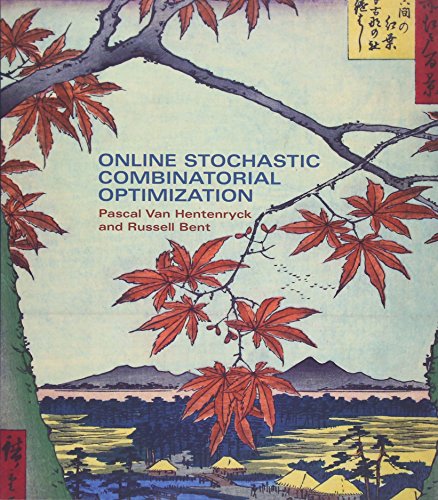
Online Stochastic Combinatorial Optimization (The MIT Press)
Da: Powell's Bookstores Chicago, ABAA, Chicago, IL, U.S.A.
Membro dell'associazione: ABAA ILAB
Valutazione del venditore 5 su 5 stelle

Paperback. Condizione: Used-Very Good. Illustrated. Paper. Some minor shelf wear.
-

NEAT TESTS VS. SAND TESTS FOR PORTLAND CEMENT
Editore: Trans Amer Soc Civil Engr, 1891
Da: Larry W Price Books, Portland, OR, U.S.A.
Valutazione del venditore 5 su 5 stelle
Rivista / Giornale
Pamphlet. Condizione: Very Good. Vol 25, No 499, pp. 295-304+ 5 Illus Plts, Extracted from orig vol, begins with title page, trimmed & stapled, thus is like a pamphlet, VG.
-
EXPERIMENTS WITH A NEW MACHINE FOR TESTING MATERIALS BY IMPACT
Editore: Trans Amer Soc Civil Engr, 1898
Da: Larry W Price Books, Portland, OR, U.S.A.
Valutazione del venditore 5 su 5 stelle
Rivista / Giornale
Pamphlet. Condizione: Very Good. Vol 39, No 826, pp. 237-272+ Photo Plt, Illus, Extracted from orig vol, begins with title page, trimmed & stapled, thus is like a pamphlet else VG.
-
Online Stochastic Combinatorial Optimization
Da: Basi6 International, Irving, TX, U.S.A.
Valutazione del venditore 5 su 5 stelle
Condizione: Brand New. New. US edition. Expediting shipping for all USA and Europe orders excluding PO Box. Excellent Customer Service.
-
TEN THOUSAND DESERT SWORDS
Editore: Little Brown, 1960
Da: Austin Book Shop LLC, Richmond Hill, NY, U.S.A.
Valutazione del venditore 3 su 5 stelle

Prima edizione Copia autografata
Hard Cover. Condizione: Good. Condizione sovraccoperta: Good. Fisher, Leonard Everett (illustratore). First Edition. 155pp Illus "The Epic Story of a Great Bedouin Tribe." Signed by Fisher on half title page. One corner slightly bumped. Signed by Illustrator.
-
"A Thinking Machine, Planning and Theories, Mechanical Reproduction of Mechanical Processes" in Scientific American.
Editore: Scientific American, 1915
Da: JF Ptak Science Books, Hendersonville, NC, U.S.A.
Valutazione del venditore 5 su 5 stelle
Soft cover. Condizione: Good. "Scientific American," 18 September 1915, page 246 (and part of 257) in the full weekly issue of pp 244-262, with a photo and schematic, approximately 2000 words on this tightly-packed page. This is disbound from a larger bound volume, with though it retains the original front pictorial wrapper. There is uneven evidence of removal at spine. This is a GOOD, crisp copy. [++] This article explores the philosophical/logical notion of a thinking machine i.e., a mechanical or machine-based reproduction of mental processes, though it is not a technical article, and Russell did not return to this idea once it was published. The thinking here is interesting, and unusual, though it seems to be obscure and did not make an impact in the early development of AI. I wondered a bit if this usage of the phrase "thinking machine" (as a computer-like calculating and memory device) and it does seem to be very early in the phrase's application. Grant Allen uses the term "Thinking Machine" for what may be the first time the phrase is used in the title of a journal/magazine/book (according to searches in the OED and WorldCat) in his article "A Thinking Machine" in "Popular Science Monthly" 1886 p 596, though not in the same way as Russell does Allen seems to be more "Man-a-Machine" type of thinking machine whereas Russell seems to bethinking out loud about an actual machine to reproduce brain activity. See Anne Stiles, Popular Fiction and Brain Science in the Late 19th Century, Cambridge UP 2012. The use of the phrase describing people as machines that think (one way or the other) goes way back into the late 17th century, though this is not what we're looking for, here. Anyway that's what it looks like from my perspective. The first time that the phrase "Thinking Machine" appears in the title of a book in regards to any aspect of its interpretation seems to be in the detective novel The Thinking Machine by Jacques Futrelle (1907). From the Russell article: "The readers of this journal may remember the description of an apparatus designed by the writer that will perform operations exhibiting memory associations. Such associations constitute a large part of mental processes. Most people, indeed, do not realize how great a factor association is in brain work. There are, however, some forms of behavior that cannot be explained by reference to association alone. Something more must be provided. May we not venture to speculate on possible modifications of the memory machine, above referred to, which would enable it to imitate these more complex forms of behavior. It is the purpose of this article to suggest some such modifications and what they might accomplish.We may observe that every spoken word is a routine series of vocal movements. In a dialogue each speaker makes a series of vocal movements, and gives a starting signal to the other speaker who makes a series in turn. Each vocal movement by means of a nerve impulse excites the next vocal movement. So you see by our first modification of the memory gear we have given it the power of linking responses in series or movement systems. But this is the essential part of language learning, so we have made an important advance, for language is a great factor in mental development. Thinking. Just as vocal movements can be linked together in a routine performance so can incipient vocal movements be linked together, and thus we get a typical train of thought. We have already observed that muscular movements are registered in the nervous system. There is good reason to think that all muscular strains also are registered in the same way, so that in the case of interfering movements, the movements that are incipient only leave fibers. their impress on the nerve To explain more definitely what takes place, the writer would venture to propose two alternative assumptions.[Finishes asking] what mental processes can be imitated by a thinking machine?".


