

Importo totale (1 articolo articoli):
Destinazione ordine:

sanger frederick (26 risultati)
Vai alla pagina principale dei risultati di ricerca
Filtri di ricerca
Tipo di articolo
- Tutti i tipi di prodotto
- Libri (21)
- Riviste e Giornali (Nessun altro risultato corrispondente a questo perfezionamento)
- Fumetti (Nessun altro risultato corrispondente a questo perfezionamento)
- Spartiti (Nessun altro risultato corrispondente a questo perfezionamento)
- Arte, Stampe e Poster (Nessun altro risultato corrispondente a questo perfezionamento)
- Fotografie (2)
- Mappe (Nessun altro risultato corrispondente a questo perfezionamento)
- Manoscritti e Collezionismo cartaceo (3)
Condizioni Maggiori informazioni
Legatura
Ulteriori caratteristiche
- Prima ed. (4)
- Copia autograf. (9)
- Sovracoperta (Nessun altro risultato corrispondente a questo perfezionamento)
- Con foto (13)
- Non Print on Demand (23)
Lingua (4)
Spedizione gratuita
Paese del venditore
Valutazione venditore
-

A Choice of Anglo-Saxon Verse
Lingua: antico inglese (ca. 450-1100)
Editore: Faber, 1970
ISBN 10: 0571087647 ISBN 13: 9780571087648
Da: WorldofBooks, Goring-By-Sea, WS, Regno Unito
Valutazione del venditore 5 su 5 stelle

EUR 7,84
Spedizione EUR 6,45
Spedito da Regno Unito a U.S.A.Quantità: 2 disponibili
Aggiungi al carrelloHardback. Condizione: Fair. A readable copy of the book which may include some defects such as highlighting and notes. Cover and pages may be creased and show discolouration.
-

Permafrost, USSR Contribution, Second International Conference, July 13-28, 1973
Lingua: Inglese
Editore: National Academy of Sciences, Washington, D.C., U.S.A., 1978
ISBN 10: 0309027462 ISBN 13: 9780309027465
Da: Gold Beach Books & Art Gallery LLC, Gold Beach, OR, U.S.A.
Valutazione del venditore 5 su 5 stelle
Soft cover. Condizione: Very Good. No Jacket. NOTE: Oversize, will require additional charges for Priority and international shipping; please inquire prior to ordering. 4to. 866 pages. Some mild spotting to cover, age-toning to spine. A very good copy.
-

Supplementary Lives in Some Manuscripts of the Gilte Legende (Hardcover)
Lingua: Inglese
Editore: Oxford University Press, Oxford, 2000
ISBN 10: 0197223184 ISBN 13: 9780197223185
Da: Grand Eagle Retail, Bensenville, IL, U.S.A.
Valutazione del venditore 5 su 5 stelle
Hardcover. Condizione: new. Hardcover. Gilte Legende is mostly a close translation "drawen out of Frensshe into Englisshe" in 1438, of Jean de Vignay's L gende Dor e of about 1333-40, itself a close translation of Jacobus de Voragine's Legenda Aurea, completed about 1267. Of its eight surviving manuscripts, three contain additions, mostly of Lives of saints from or related to Britain, many of them deversified from the South English Legendary, but with some use of other sources. The twenty-six lives include Thomas Becket, Edmund of Abingdon, Frideswide, Edward the Confessor, Erkenwald, Augustine of Canterbury, Brendan, and Winifred. Also edited are an incomplete tract on "What the church betokenith," explaining some of the symbolism of the church and its services; and another detailing what indulgences were available to pilgrims in each of the churches in Rome. Gilte Legende is mostly a close translation "drawen out of Frensshe into Englisshe" in 1438, of Jean de Vignay's LA(c)gende DorA(c)e of about 1333-40, itself a close translation of Jacobus de Voragine's Legenda Aurea, completed about 1267. Of its eight surviving manuscripts, three contain additions, mostly of Lives of saints from or related to Britain, many of them deversified from the South English Legendary, but with some use of other sources. The twenty-six lives include Thomas Becket, Edmund of Abingdon, Frideswide, Edward the Confessor, Erkenwald, Augustine of Canterbury, Brendan, and Winifred. Also edited are an incomplete tract on "What the church betokenith," explaining some of the symbolism of the church and its services; and another detailing what indulgences were available to pilgrims in each of the churches in Rome. Shipping may be from multiple locations in the US or from the UK, depending on stock availability.
-
Supplementary Lives in Some Manuscripts of the Gilte Legende
Da: Kennys Bookstore, Olney, MD, U.S.A.
Valutazione del venditore 5 su 5 stelle
EUR 136,08
Spedizione EUR 9,16
Spedito in U.S.A.Quantità: Più di 20 disponibili
Aggiungi al carrelloCondizione: New. This volume concerns 26 lives of saints, mainly from the British Isles, or with British connections. Almost all previously unpublished, the Lives were added as supplementary material to the Gilte Legende deriving from the enormously influential Legenda Aurea of Jacobus de Voragine. Editor(s): Hamer, Richard Frederick Sanger; Russell, V.D. Series: Early English Text Society Original Series. Num Pages: 600 pages, 3 black and white, BIC Classification: DN; DSBB; HRCM. Category: (P) Professional & Scholarly. Dimension: 216 x 138 x 51. Weight in Grams: 899. . 2000. Hardback. . . . . Books ship from the US and Ireland.
-
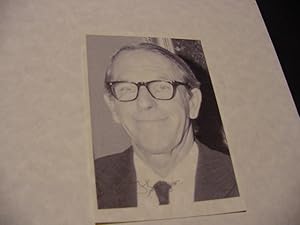
SIGNED PHOTO
Da: Daniel Montemarano, Newfield, NJ, U.S.A.
Valutazione del venditore 5 su 5 stelle
Copia autografata
Unbound. Condizione: Very Good. 5"x 3 1/2" B&W Photo (on bonded paper). SIGNED by famous Nobel Prize winning chemist Frederick Sanger (signature only). Sanger is the fourth and only living person to have been awarded two Nobel Prizes. SIGNED PHOTO.
-
Supplementary Lives in Some Manuscripts of the Gilte Legende
Da: Kennys Bookshop and Art Galleries Ltd., Galway, GY, Irlanda
Valutazione del venditore 5 su 5 stelle
EUR 152,35
Spedizione EUR 10,50
Spedito da Irlanda a U.S.A.Quantità: Più di 20 disponibili
Aggiungi al carrelloCondizione: New. This volume concerns 26 lives of saints, mainly from the British Isles, or with British connections. Almost all previously unpublished, the Lives were added as supplementary material to the Gilte Legende deriving from the enormously influential Legenda Aurea of Jacobus de Voragine. Editor(s): Hamer, Richard Frederick Sanger; Russell, V.D. Series: Early English Text Society Original Series. Num Pages: 600 pages, 3 black and white, BIC Classification: DN; DSBB; HRCM. Category: (P) Professional & Scholarly. Dimension: 216 x 138 x 51. Weight in Grams: 899. . 2000. Hardback. . . . .
-

Selected Papers of Frederick Sanger : (With Commentaries)
Lingua: Inglese
Editore: World Scientific Pub Co Inc, 1996
ISBN 10: 9810224303 ISBN 13: 9789810224301
Da: GreatBookPrices, Columbia, MD, U.S.A.
Valutazione del venditore 5 su 5 stelle
EUR 252,03
Spedizione EUR 2,30
Spedito in U.S.A.Quantità: Più di 20 disponibili
Aggiungi al carrelloCondizione: New.
-

Selected Papers of Frederick Sanger : (With Commentaries)
Lingua: Inglese
Editore: World Scientific Pub Co Inc, 1996
ISBN 10: 9810224303 ISBN 13: 9789810224301
Da: GreatBookPrices, Columbia, MD, U.S.A.
Valutazione del venditore 5 su 5 stelle
EUR 261,86
Spedizione EUR 2,30
Spedito in U.S.A.Quantità: Più di 20 disponibili
Aggiungi al carrelloCondizione: As New. Unread book in perfect condition.
-

Selected Papers of Frederick Sanger : (With Commentaries)
Lingua: Inglese
Editore: World Scientific Pub Co Inc, 1996
ISBN 10: 9810224303 ISBN 13: 9789810224301
Da: GreatBookPricesUK, Woodford Green, Regno Unito
Valutazione del venditore 5 su 5 stelle
EUR 258,77
Spedizione EUR 17,28
Spedito da Regno Unito a U.S.A.Quantità: Più di 20 disponibili
Aggiungi al carrelloCondizione: New.
-

Selected Papers of Frederick Sanger : (With Commentaries)
Lingua: Inglese
Editore: World Scientific Pub Co Inc, 1996
ISBN 10: 9810224303 ISBN 13: 9789810224301
Da: GreatBookPricesUK, Woodford Green, Regno Unito
Valutazione del venditore 5 su 5 stelle
EUR 261,04
Spedizione EUR 17,28
Spedito da Regno Unito a U.S.A.Quantità: Più di 20 disponibili
Aggiungi al carrelloCondizione: As New. Unread book in perfect condition.
-

Selected Papers of Frederick Sanger: (With Commentaries)
Lingua: Inglese
Editore: World Scientific Pub Co Inc, 1996
ISBN 10: 9810224303 ISBN 13: 9789810224301
Da: Revaluation Books, Exeter, Regno Unito
Valutazione del venditore 5 su 5 stelle
EUR 348,34
Spedizione EUR 23,04
Spedito da Regno Unito a U.S.A.Quantità: 2 disponibili
Aggiungi al carrelloHardcover. Condizione: Brand New. 662 pages. 10.75x8.00x1.75 inches. In Stock.
-

SIGNED CARD
Da: Daniel Montemarano, Newfield, NJ, U.S.A.
Valutazione del venditore 5 su 5 stelle
Prima edizione Copia autografata
No Binding. Condizione: Fine. Condition: FINE. 5"x 3" card SIGNED and inscribed by famous Nobel Prize winning chemist Frederick Sanger. Sanger is the fourth and last living person to have been awarded two Nobel Prizes. Lai-in is the original Philadelphia Inquirer obituary for Sanger. SIGNED.
-

kleine Foto - signiert
Editore: 0
Da: Antiquariat Luna, Lüneburg, Germania
Valutazione del venditore 5 su 5 stelle
Fotografia Copia autografata
EUR 50,00
Spedizione EUR 20,00
Spedito da Germania a U.S.A.Quantità: 1 disponibili
Aggiungi al carrelloKein Einband. Condizione: Gut. kleines (Pass?-) Foto signiert von dem amerikanischen Biochemiker und Nobelpreisträger Frederick Sanger (1918-2013) . photo signed by Sander. Vom Wissenschaftler signiert. Photo.
-
Original Autogramm Frederick Sanger (1918-2013) Nobelpreis Chemie 1958 + 1980 /// Autograph signiert signed signee
Lingua: Inglese
Da: Wimbauer Buchversand, Hagen, NRW, Germania
Valutazione del venditore 5 su 5 stelle
Manoscritto / Collezionismo cartaceo Copia autografata
EUR 80,00
Spedizione EUR 15,00
Spedito da Germania a U.S.A.Quantità: 1 disponibili
Aggiungi al carrelloIndex Card. Condizione: Gut. Neonorangene Karteikarte von Frederick Sanger mit blauem Kuli signiert, umseitig aufmontierter code von seinem Briefumschlag /// Autogramm Autograph signiert signed signee /// Frederick Sanger OM, CH, CBE (* 13. August 1918 in Rendcomb, Gloucestershire; ? 19. November 2013 in Cambridge, Cambridgeshire) war ein britischer Biochemiker. Er gehörte zu den wenigen Personen, die zweimal mit dem Nobelpreis geehrt wurden: 1958 erhielt Sanger den Nobelpreis für Chemie (als alleiniger Preisträger) für die Aufklärung der Struktur des Insulins und seine Arbeiten zur Proteinsequenzierung. 1980 wurde er erneut mit dem Nobelpreis für Chemie ausgezeichnet (zusammen mit Paul Berg, geb. 1926, und Walter Gilbert, geb.1932), dieses Mal für Untersuchungen zur Ermittlung der Basensequenz in Nukleinsäuren.[1] Frederick Sanger wurde als zweiter Sohn des Arztes Frederick Sanger senior (1876-1937) und Cicely Sanger (1880-1938) in Rendscomb geboren. Beeinflusst durch den Vater und durch seinen ein Jahr älteren Bruder Theodore entwickelte Sanger schon früh ein Interesse für die Naturwissenschaften. Nach der Schulausbildung an der Bryanston School und ab 1936 am St John?s College in Cambridge wollte er ursprünglich Medizin studieren, entschied sich dann aber für die Biochemie, da er sich als Naturwissenschaftler anders als im Arztberuf stärker auf ein Themengebiet konzentrieren und so vielleicht mehr erreichen könnte. So begann Sanger mit dem Studium der Biochemie am Department of Biochemistry in Cambridge. 1939 erhielt Sanger seinen Abschluss als Bachelor of Arts. Da er aus einer Quäker-Familie kam, lehnte er den Kriegsdienst aus Gewissensgründen ab und arbeitete während des Zweiten Weltkrieges an seiner Doktorarbeit weiter, die er im selben Institut unter der Betreuung von A. Neuberger über den Metabolismus der Aminosäure Lysin anfertigte. 1943 erhielt er den Doktorgrad. Forschungstätigkeit Sangers Arbeit wurde von 1944 bis 1951 durch ein Stipendium des Beit Memorial Fellowship for Medical Research gefördert. 1951 wurde er externer Mitarbeiter des Medical Research Council (MRC). Im Jahr seiner Promotion wurde Albert Chibnall Nachfolger von Frederick Gowland Hopkins als Leiter der Biochemie-Abteilung in Cambridge, und Sanger wurde Mitglied in Chibnalls Forschungsgruppe. Das Hauptinteresse der Gruppe galt der Proteinchemie, insbesondere der des Insulins. Sanger entwickelte 1945 schließlich eine Methode zur Bestimmung der Aminosäuresequenz, mit deren Hilfe er in zwölfjähriger Arbeit die Insulinsequenz vollständig bestimmte. 1955 konnte die Sequenz der 51 kettenförmig angeordneten Aminosäuren im Insulin veröffentlicht werden, wofür Sanger 1958 mit dem Nobelpreis für Chemie ausgezeichnet wurde. In der Folge blieb Sanger in Cambridge und übernahm 1962 die Leitung der Abteilung für Proteinchemie am Laboratory of Molecular Biology (LMB). Dieses Institut war 1962 als neuer Laborkomplex gebaut worden, nachdem das Medical Research Council schon 1947 in Cambridge eine Gruppe zur ?Erforschung der molekularen Struktur biologischer Systeme? eingerichtet hatte. Obwohl Sanger bis dahin kein besonderes Interesse an Nukleinsäuren hatte, erkannte er durch die Diskussion mit Wissenschaftlern wie Francis Crick oder Sydney Brenner die Notwendigkeit, auch die Sequenz dieses anderen Biopolymers zu bestimmen. In den folgenden Jahren widmete sich Sanger daher der Entwicklung einer weiteren Sequenzierungsmethode, die schließlich 1975 zum ?Kettenabbruchverfahren? führte. Damit konnte 1977 erstmals der Weltöffentlichkeit die DNA-Sequenzierung anhand des komplett dechiffrierten Genoms eines Bakteriophagen vorgestellt werden. 1980 wurde Sanger für seine Beiträge zur Sequenzierung von Nukleinsäuren zum zweiten Mal mit dem Nobelpreis für Chemie ausgezeichnet. Etwa um die gleiche Zeit (1976/77) entwickelten Allan Maxam und Walter Gilbert eine andere Methode der DNA-Sequenzierung, die Maxam-Gilbert-Methode, die mit der Methode von Sanger zur ersten Generation der DNA-Sequenzierungsmethode.
-

Epilepsy and the Convulsive State: An Investigation of the Most Recent Advances. Part I.
Editore: The Williams & Wilkins Company, Baltimore, 1931
Da: Between the Covers-Rare Books, Inc. ABAA, Gloucester City, NJ, U.S.A.
Membro dell'associazione: ABAA ESA ILAB IOBA
Valutazione del venditore 5 su 5 stelle
Prima edizione
Hardcover. Condizione: Very Good. First edition. Tall octavo. xvii, 701pp. Illustrated. Owner stamp and signature of a noted American psychologist on the front fly. Ex-Essex County Hospital library with stamps and labels on the endleaves, another owner signature on the front fly, and library stamps on the top and bottom edges of the textblock, otherwise near fine with light wear and the topedge lightly dustsoiled. Part I of the proceedings of a 1922 conference, issued as Association for Research in Nervous and Mental Disease Volume VII. Uncommon.
-
Epilepsy and the Convulsive State: An Investigation of the Most Recent Advances. Part I.
Editore: Williams & Wilkins Company, Baltimore, MD, 1931
Da: Lux Mentis, Booksellers, ABAA/ILAB, Portland, ME, U.S.A.
Membro dell'associazione: ABAA ILAB MABA MBS
Valutazione del venditore 5 su 5 stelle
Prima edizione
Hardcover. Condizione: Very Good+. First Edition. First Edition. Hardcover. Posthumously designed book plate by a friend of Oliver's, incorporating his longstanding love of cephalopods. From the library of Dr. Oliver Sacks, the renowned neurologist, author, and educator. He was, in his life, celebrated for his contributions to the understanding of the human brain and his ability to communicate complex scientific concepts to a broader audience. In doing so, he highlighted the profound impact of neurological disorders on human identity and experience. His library is a reflection of this remarkable polymath's questing mind. Part I of the proceedings of a 1922 conference, issued as Association for Research in Nervous and Mental Disease Volume VII. Light shelfwear, even toned, smudging to ffep, else tight, bright, and unmarred. 8vo. xvii, 701pp. illus (b/w) +index. Dark red cloth with worn spine lettering. Ex-library stamps.
-

Enter spring. Frank Bridge / The British music collection; The British music collection
Da: ABC Versand e.K., Aarbergen, Germania
Valutazione del venditore 5 su 5 stelle
EUR 42,99
Spedizione EUR 43,54
Spedito da Germania a U.S.A.Quantità: 1 disponibili
Aggiungi al carrelloAUDIO CD. Condizione: Neu. 1 Compact Disc + Beih. Hülle mit minimalen Lagerspuren, CD / CDs wie neu H541F2CD6 Sprache: Deutsch Gewicht in Gramm: 505.
-

Music from the Wattstax festival & film
Da: ABC Versand e.K., Aarbergen, Germania
Valutazione del venditore 5 su 5 stelle
EUR 52,99
Spedizione EUR 45,66
Spedito da Germania a U.S.A.Quantità: 1 disponibili
Aggiungi al carrelloAUDIO CD. Condizione: Sehr gut. 3 Compact Discs in Box + Beih. Hülle mit kleinen Lagerspuren, CDs wie neu H544F2CD2 Sprache: Deutsch Gewicht in Gramm: 808.
-
Collected Works on Cardio-Pulmonary Disease. The Heineman Foundation Laboratories Charlotte Memorial Hospital Charlotte, N.C.Volume 1-2
Editore: Charlotte, N.C., 1959
Da: James Cummins Bookseller, ABAA, New York, NY, U.S.A.
Membro dell'associazione: ABAA ILAB
Valutazione del venditore 5 su 5 stelle
Copia autografata
Condizione: Original red cloth. Fine. Illus. Portrait of Dannie Heineman (1872-1962). 654, [2]pp. 4to. Inscribed on the tilte-Page "To Mrs. Dannie Heineman with love and appreciation Francis (Robicek)." 14 papers on cardio-pulmonary diseases. Foreward by Wilburt C. Davison, Dean of Duke Univ. School of Medecine. This copy inscribed to the widow of Dannie Heineman a, North Carolinian by birth and the sponsor of the Heineman Laboratories. Illus. Portrait of Dannie Heineman (1872-1962). 654, [2]pp. 4to. Signed.
-

Frederick Sanger Autograph
Da: Markus Brandes Autographs GmbH, Kesswil, TG, Svizzera
Membro dell'associazione: PADA
Valutazione del venditore 3 su 5 stelle

Fotografia Copia autografata
EUR 72,28
Spedizione EUR 30,00
Spedito da Svizzera a U.S.A.Quantità: 1 disponibili
Aggiungi al carrelloSigned photograph, shows Frederick Sanger in a chest-up portrait, 3,5 x 5 inch, signed in blue ink "F Sanger", in very fine condition.
-

Frederick Sanger Autograph
Da: Markus Brandes Autographs GmbH, Kesswil, TG, Svizzera
Membro dell'associazione: PADA
Valutazione del venditore 3 su 5 stelle
Manoscritto / Collezionismo cartaceo Copia autografata
EUR 111,20
Spedizione EUR 30,00
Spedito da Svizzera a U.S.A.Quantità: 1 disponibili
Aggiungi al carrelloPrinted scientific article signed, 19 pages, 6,75 x 10 inch, scientific article entitled `Determination of a Nucleotide Sequence in Bacteriophage f1 DNA by Primed Synthesis with DNA Polymerase` - reprint from `J. Mol. Biol.` (1974, 90), signed on the title page in dark ink "F. Sanger", with scattered mild signs of wear - in fine to very fine condition.
-

FREDERICK SANGER (1918-2013) Professor Dr.,britischer Biochemiker, NOBELPREIS für Chemie 1958 und 1980
Da: Herbst-Auktionen, Detmold, Germania
Valutazione del venditore 4 su 5 stelle

Manoscritto / Collezionismo cartaceo Copia autografata
EUR 245,00
Spedizione EUR 8,50
Spedito da Germania a U.S.A.Quantità: 1 disponibili
Aggiungi al carrelloE.MANUSKRIPT (Chemie, 2 SS. 4°, eng beschrieben, mit zahlreichen Verbesserungen) mit Empfehlung, Unterschrift am Kopf autograph manuscript written about 1970, signed on head.
-
Two Offprints on the Structure of Insulin; La Structure de l'Insuline [and] The Disulphide Bonds of Insulin
Data di pubblicazione: 1955
Da: Biblioctopus, Los Angeles, CA, U.S.A.
Membro dell'associazione: ABAA ILAB IOBA
Valutazione del venditore 4 su 5 stelle
Prima edizione Copia autografata
First Edition. Sanger received the Nobel Prize in Chemistry in 1958 for determining the complete amino acid sequence of insulin (the first protein ever to have its primary structure fully established) and a second in 1980 for developing methods for sequencing DNA, making him one of only four individuals ever to have received two Nobel Prizes. The two offprints offered here, both signed by Sanger, together constitute the complete published record of that first achievement: a synthetic lecture delivered in Marseille in December 1954 presenting the full sequential strategy by which insulin's structure was approached, and the definitive experimental paper establishing the positions of its three disulphide bridges-the final structural question the sequence work had left open. In demonstrating that a protein possesses a unique, fully definable covalent sequence, Sanger established the conceptual and methodological foundation upon which all subsequent structural biology rests. The principle that biological function is encoded in a specific primary sequence underlies every protein sequenced since, every therapeutic protein produced by recombinant technology, and every drug designed to interact with a defined molecular target; and the sequential degradation strategy Sanger developed for insulin was the direct intellectual precursor of the DNA sequencing methodology for which he received his second Nobel Prize; and which in turn made the Human Genome Project possible. (1) La Structure de l'Insuline; from Bulletin de la Société de Chimie biologique, Tome XXXVII, no. 1, pp.23-35. Paris: Masson et Cie, 1955. Offprint, 8vo (242 x 159mm), pp. 13, [3]. Original blue printed wrappers, staple-bound, some toning and rubbing, else near fine. Signed by Sanger on the front wrapper. A lecture delivered on 13 December 1954 in Marseille, in which Sanger presents a synthetic account of the decade-long experimental program at the Department of Biochemistry, University of Cambridge, that resulted in the complete elucidation of the amino acid sequence of insulin; the first protein ever to have its primary structure fully determined. Setting aside earlier disputed molecular weight values in favor of a minimum covalent unit of 6,000 (later calculated at 5,734), Sanger describes the sequential strategy by which the complete structure was approached: first, the identification of two N-terminal residues (DNP-glycine and DNP-phenylalanine, one equivalent of each) using the fluorodinitrobenzene reagent he had himself introduced in 1945, establishing that insulin comprises two distinct polypeptide chains; then the separation of those chains by performic acid oxidation, which cleaved the cystine disulfide bridges and resolved the molecule into a glycyl chain A of approximately 20 residues and a phenylalanyl chain B of approximately 30; then the stepwise determination of the N-terminal sequences of both chains by partial hydrolysis and partition chromatography, establishing that chain B begins Phe.Val.Asp.Glu and chain A begins Gly.Ileu.Val.Glu.Glu; and finally the mapping of the disulfide bridge positions, including an intrachain ring at positions A6 and A11 whose dimensions Sanger notes are shared by oxytocin and vasopressin, and the two interchain bridges connecting A and B, determined through systematic chymotryptic and peptic hydrolysis under conditions preventing disulfide exchange. The significance of the work extends far beyond insulin: in demonstrating that a protein possesses a unique, fully definable covalent sequence, Sanger established the conceptual and methodological foundation upon which all subsequent structural biology rests, and the principle that biological function is encoded in a specific primary sequence underlies every protein sequenced since, every therapeutic protein produced by recombinant technology, and every drug designed to interact with a defined molecular target. Sanger received the Nobel Prize in Chemistry in 1958 for this work, and a second in 1980 for DNA sequencing, making him one of only four individuals ever to have received two Nobel Prizes. (2) The Disulphide Bonds of Insulin; from The Biochemical Journal, Vol. 60, No. 4, pp. 541-556. London: Portland Press, 1955. Offprint, 8vo (254 x 185mm), pp. 16. String-bound self-wrappers, soft creases, a few scattered spots of soiling, near fine. Signed by Sanger on the front wrapper. Received 26 November 1954 at the Department of Biochemistry, University of Cambridge, this paper by Ryle, Sanger, Smith, and Kitai addresses the final structural question left open by the sequence determinations of the preceding years: the positions of the three disulphide bridges linking its six half-cystine residues. The paper begins by establishing the molecular weight of insulin as 5,734, calculated from the condensation of its constituent amino acids, and confirms that the molecule comprises two polypeptide chains (the glycyl chain A and the phenylalanyl chain B) joined by the disulphide bridges of three cystine residues, with fraction A containing four cysteic acid residues and fraction B two on oxidation. The experimental strategy proceeds in five defined stages: partial hydrolysis of insulin under conditions in which the disulphide bonds remained intact; fractionation of the resulting cystine-containing peptides; oxidation of those peptides to the corresponding cysteic acid peptides; fractionation of the cysteic acid peptides; and identification of their structures from the amino acids produced on hydrolysis. The central technical difficulty throughout was the prevention of disulphide interchange, which occurred readily under neutral conditions catalysed by thiol compounds and could be inhibited by N-ethylmaleimide (NEMI), and more slowly under acid conditions, particularly in H SO rather than HCl. The primary separation method was high-voltage paper ionophoresis in pyridine-acetic acid buffers, which the authors found more reliable than paper chromatography for resolving. Signed.
-
Supplementary Lives in Some Manuscripts of the Gilte Legende
Da: THE SAINT BOOKSTORE, Southport, Regno Unito
Valutazione del venditore 5 su 5 stelle
EUR 79,18
Spedizione EUR 23,09
Spedito da Regno Unito a U.S.A.Quantità: Più di 20 disponibili
Aggiungi al carrelloHardback. Condizione: New. This item is printed on demand. New copy - Usually dispatched within 5-9 working days.
-
Supplementary Lives in Some Manuscripts of the Gilte Legende (Hardcover)
Lingua: Inglese
Editore: Oxford University Press, Oxford, 2000
ISBN 10: 0197223184 ISBN 13: 9780197223185
Da: CitiRetail, Stevenage, Regno Unito
Valutazione del venditore 5 su 5 stelle
EUR 72,97
Spedizione EUR 42,63
Spedito da Regno Unito a U.S.A.Quantità: 1 disponibili
Aggiungi al carrelloHardcover. Condizione: new. Hardcover. Gilte Legende is mostly a close translation "drawen out of Frensshe into Englisshe" in 1438, of Jean de Vignay's L gende Dor e of about 1333-40, itself a close translation of Jacobus de Voragine's Legenda Aurea, completed about 1267. Of its eight surviving manuscripts, three contain additions, mostly of Lives of saints from or related to Britain, many of them deversified from the South English Legendary, but with some use of other sources. The twenty-six lives include Thomas Becket, Edmund of Abingdon, Frideswide, Edward the Confessor, Erkenwald, Augustine of Canterbury, Brendan, and Winifred. Also edited are an incomplete tract on "What the church betokenith," explaining some of the symbolism of the church and its services; and another detailing what indulgences were available to pilgrims in each of the churches in Rome. Gilte Legende is mostly a close translation "drawen out of Frensshe into Englisshe" in 1438, of Jean de Vignay's LA(c)gende DorA(c)e of about 1333-40, itself a close translation of Jacobus de Voragine's Legenda Aurea, completed about 1267. Of its eight surviving manuscripts, three contain additions, mostly of Lives of saints from or related to Britain, many of them deversified from the South English Legendary, but with some use of other sources. The twenty-six lives include Thomas Becket, Edmund of Abingdon, Frideswide, Edward the Confessor, Erkenwald, Augustine of Canterbury, Brendan, and Winifred. Also edited are an incomplete tract on "What the church betokenith," explaining some of the symbolism of the church and its services; and another detailing what indulgences were available to pilgrims in each of the churches in Rome. This item is printed on demand. Shipping may be from our UK warehouse or from our Australian or US warehouses, depending on stock availability.
-

Selected Papers of Frederick Sanger (with Commentaries)
Lingua: Inglese
Editore: WORLD SCIENTIFIC PUB CO INC, 1996
ISBN 10: 9810224303 ISBN 13: 9789810224301
EUR 220,43
Spedizione EUR 48,99
Spedito da Germania a U.S.A.Quantità: Più di 20 disponibili
Aggiungi al carrelloGebunden. Condizione: New. Dieser Artikel ist ein Print on Demand Artikel und wird nach Ihrer Bestellung fuer Sie gedruckt. InhaltsverzeichnisProteins (19 papers, from 1945 to 1961) RNA (eight papers, from 1964 to 1972) DNA (21 papers, fom 1973 to 1988).KlappentextThis important volume is mainly concerned with the development of .


![Immagine del venditore per Two Offprints on the Structure of Insulin; La Structure de l'Insuline [and] The Disulphide Bonds of Insulin venduto da Biblioctopus](https://pictures.abebooks.com/inventory/md/md32421279721.jpg)