Importo totale (1 articolo articoli):
Destinazione ordine:

seigler david (25 risultati)
Vai alla pagina principale dei risultati di ricerca
Filtri di ricerca
Tipo di articolo
- Tutti i tipi di prodotto
- Libri (25)
- Riviste e Giornali (Nessun altro risultato corrispondente a questo perfezionamento)
- Fumetti (Nessun altro risultato corrispondente a questo perfezionamento)
- Spartiti (Nessun altro risultato corrispondente a questo perfezionamento)
- Arte, Stampe e Poster (Nessun altro risultato corrispondente a questo perfezionamento)
- Fotografie (Nessun altro risultato corrispondente a questo perfezionamento)
- Mappe (Nessun altro risultato corrispondente a questo perfezionamento)
- Manoscritti e Collezionismo cartaceo (Nessun altro risultato corrispondente a questo perfezionamento)
Condizioni Maggiori informazioni
- Nuovo (14)
- Come nuovo, Ottimo o Quasi ottimo (3)
- Molto buono o Buono (5)
- Discreto o Mediocre (Nessun altro risultato corrispondente a questo perfezionamento)
- Come descritto (3)
Legatura
Ulteriori caratteristiche
- Prima ed. (Nessun altro risultato corrispondente a questo perfezionamento)
- Copia autograf. (Nessun altro risultato corrispondente a questo perfezionamento)
- Sovracoperta (Nessun altro risultato corrispondente a questo perfezionamento)
- Con foto (13)
- Non Print on Demand (20)
Lingua (2)
Spedizione gratuita
- Spedizione gratuita in U.S.A. (Nessun altro risultato corrispondente a questo perfezionamento)
Paese del venditore
Valutazione venditore
-

Crop Resources: Proceedings of the 17th annual meeting of the Society for Economic Botany, the University of Illinois, Urbana, June 13-17, 1976.
Lingua: Inglese
Editore: New York: Academic Press Inc, 1977
ISBN 10: 0126349509 ISBN 13: 9780126349504
Da: G. & J. CHESTERS, TAMWORTH, Regno Unito
Valutazione del venditore 5 su 5 stelle

EUR 7,29
Spedizione EUR 8,12
Spedito da Regno Unito a U.S.A.Quantità: 1 disponibili
Aggiungi al carrelloHardcover. Condizione: Very Good. 257 pages, a very good plus hardback, publisher's original grey cloth binding with green lettering to the spine and front cover [0126349509]. Ex-library.
-
Crop resources: Proceedings of the 17th annual meeting of the Society for Economic Botany, the University of Illinois, Urbana, June 13-17, 1976
Da: Zubal-Books, Since 1961, Cleveland, OH, U.S.A.
Valutazione del venditore 5 su 5 stelle
Condizione: Very Good. 233 pp., hardcover, very good. - If you are reading this, this item is actually (physically) in our stock and ready for shipment once ordered. We are not bookjackers. Buyer is responsible for any additional duties, taxes, or fees required by recipient's country.
-

Phytochemistry and Angiosperm Phylogeny.
Da: Patrik Andersson, Antikvariat., Lund, Svezia
Membro dell'associazione: ILAB SVAF
Valutazione del venditore 5 su 5 stelle
EUR 16,72
Spedizione EUR 13,00
Spedito da Svezia a U.S.A.Quantità: 1 disponibili
Aggiungi al carrelloNew York; Praeger, 1981. 8:o. [x] + 295, (1 blank) pp. Original green cloth, no dustjacket. Extremities slightly worn. The card in spine is cracked. Corners a bit bumped. Contents are fine. With the bookplate and signature of Rolf Dahlgren (1932-1987, professor of Botany).
-
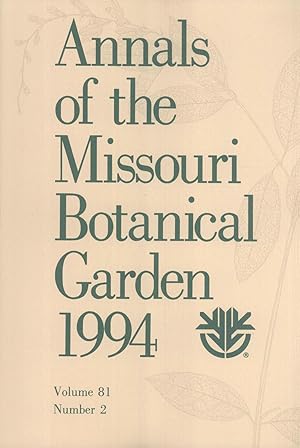
Systematics of Eurphorbiaceae (Annals of the Missouri Botanical Garden, Volume 81, Number 2)
Editore: Missouri Botanical Garden, 1994
Da: Masalai Press, Oakland, CA, U.S.A.
Valutazione del venditore 5 su 5 stelle
Soft cover. Condizione: Fine. pp. 145-401, illustrations, bibliography. Proceedings of the First International Conference on the Systematics of the Euphorbiaceae, held at the Missouri Botanical Garden in St. Louis, 14-16 August 1989. Part 2 of 2 of Systematics of the Euphorbiaceae. The Contribution of Embryology to the Systematics of the Euphorbiaceae. R.N. Kapil & A.K. Bhatnagar; Leguminlike Proteins and the Systematics of the Euphorbiaceae. Uwe Jensen, Ina Vogel-Bauer & Marei Nitschke; Systematic Anatomy of Euphorbiaceae Subfamily Oldfieldioideae. I. Overview. W. John Hayden; Phylogenetic Implications of Pollen Ultrastructure in the Oldfieldioideae (Euphorbiaceae). Geoffrey A. Levin & Michael G. Simpson; Phylogenetic Relationahips of Didymocistus and Hymenocardia (Euphorbiaceae). Geoffrey A. Levin & Michael G. Simpson; A Palynological Study of Crotonoideae (Euphorbiaceae). Joan W. Nowicke; Laticifers in Crotonoideae (Euphorbiaceae) Homology and Evolution. Paula Rudall; The Relationships of the Euphorbieae (Euphorbiaceae). M.G. Gilbert; Patterns of Diversification and Evolution in Phyllanthus odontadenius (Euphorbiaceae). R. Haicour, L. Rossignol, M. Rossignol & C. Gaisne; Early Evolution of Dalechampia (Euphorbiaceae): Insights from Phylogeny, Biogeography, and Comparative Ecology. W. Scott Armbruster; Pollen Morphology and Phylogeny of the Tribe Plukenetieae (Euphorbiaceae). Lynn J. Gillespie; Contributions Toward a Monograph of Neotropical Jatropha: Phenetic and Phylogenetic Analyses. Bijan Dehgan & Bart Schutzman; A Preliminary Classification of Euphorbia Subgenus Euphorbia. Susan Carter; Phytochemistry and Systematics of the Euphorbiaceae. David S. Seigler.
-
Chemical variation in Notholaena Standleyi
Da: Clivia Mueller, Isernhagen, Germania
Valutazione del venditore 5 su 5 stelle
EUR 6,26
Spedizione EUR 24,10
Spedito da Germania a U.S.A.Quantità: 1 disponibili
Aggiungi al carrello(S.A.Amer.J.Bot.70, 5)1983.S.790-798.m.zahlr.Abb.Kopie.br.-2) -Sonderabdruck-.
-

EUR 88,94
Spedizione EUR 11,61
Spedito da Regno Unito a U.S.A.Quantità: 1 disponibili
Aggiungi al carrelloPaperback. Condizione: Brand New. 248 pages. 9.25x6.00x0.56 inches. In Stock.
-

Natural Antioxidants and Biocides from Wild Medicinal Plants
Da: GreatBookPrices, Columbia, MD, U.S.A.
Valutazione del venditore 5 su 5 stelle
Condizione: As New. Unread book in perfect condition.
-

Natural Antioxidants and Biocides from Wild Medicinal Plants
Da: GreatBookPricesUK, Woodford Green, Regno Unito
Valutazione del venditore 5 su 5 stelle
EUR 142,38
Spedizione EUR 17,41
Spedito da Regno Unito a U.S.A.Quantità: 10 disponibili
Aggiungi al carrelloCondizione: As New. Unread book in perfect condition.
-

Natural Antioxidants and Biocides from Wild Medicinal Plants
Da: GreatBookPrices, Columbia, MD, U.S.A.
Valutazione del venditore 5 su 5 stelle
Condizione: New.
-

Natural Antioxidants and Biocides from Wild Medicinal Plants
Da: GreatBookPricesUK, Woodford Green, Regno Unito
Valutazione del venditore 5 su 5 stelle
EUR 155,16
Spedizione EUR 17,41
Spedito da Regno Unito a U.S.A.Quantità: 10 disponibili
Aggiungi al carrelloCondizione: New.
-
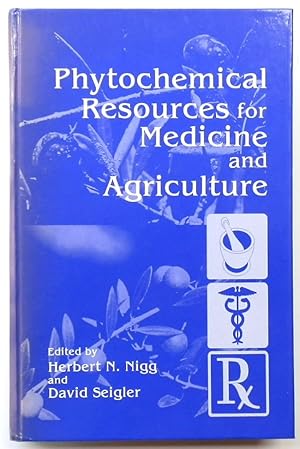
Phytochemical Resources for Medicine and Agriculture
Da: PsychoBabel & Skoob Books, Didcot, Regno Unito
Valutazione del venditore 5 su 5 stelle
EUR 166,16
Spedizione EUR 14,51
Spedito da Regno Unito a U.S.A.Quantità: 1 disponibili
Aggiungi al carrelloHardcover. Condizione: Very Good. Condizione sovraccoperta: No Dust Jacket. Hardcover with printed boards, no dust jacket, in very good condition. From the collection of the late Herbert Baxter, co-editor of The Dictionary of Plant Toxins, whose book label is noted on the FEP. Boards are sunned, and edges and spine ends are slightly bumped. Binding is sound and pages are clear. LW. Used.
-

EUR 209,20
Spedizione EUR 36,44
Spedito da Regno Unito a U.S.A.Quantità: 1 disponibili
Aggiungi al carrelloCondizione: Good. This is an ex-library book and may have the usual library/used-book markings inside.This book has hardback covers. In good all round condition. Please note the Image in this listing is a stock photo and may not match the covers of the actual item,1200grams, ISBN:9780412019814.
-

Phytochemistry and Angiosperm Phylogeny
Da: Stephen White Books, Bradford, Regno Unito
Valutazione del venditore 5 su 5 stelle
EUR 269,40
Spedizione EUR 38,59
Spedito da Regno Unito a U.S.A.Quantità: 1 disponibili
Aggiungi al carrelloHardcover. Condizione: Good. NOT ex-library. Hardback/Hardcover, clean text, sound binding. Quick dispatch from UK seller.
-

EUR 202,83
Spedizione EUR 105,00
Spedito da Germania a U.S.A.Quantità: 1 disponibili
Aggiungi al carrelloCondizione: Hervorragend. Zustand: Hervorragend | Seiten: 772 | Sprache: Englisch | Produktart: Bücher | Life has evolved as a unified system; no organism exists similar role also has been suggested for fatty acids from alone, but each is in intimate contact with other organisms cyanolipids. Nonprotein amino acids, cyanogenic glyco and its environment. Historically, it was easier for workers sides, and the non-fatty-acid portion of cyanolipids also are in various disciplines to delimit artificially their respective incorporated into primary metabolites during germination. areas of research, rather than attempt to understand the entire Secondary metabolites of these structural types are accumu system of living organisms. This was a pragmatic and neces lated in large quantities in the seeds of several plant groups sary way to develop an understanding for the various parts. where they probably fulfill an additional function as deter We are now at a point, however, where we need to investi rents to general predation. gate those things common to the parts and, specifically, those The second type of relationship involves interaction of things that unify the parts. The fundamental aspects of many plants with other organisms and with their environment. Bio of these interactions are chemical in nature. Plants constitute logical interactions must be viewed in the light of evolution an essential part of all life systems; phytochemistry provides ary change and the coadaptation, or perhaps coevolution, of a medium for linking several fields of study.
-
EUR 443,46
Spedizione EUR 48,99
Spedito da Germania a U.S.A.Quantità: Più di 20 disponibili
Aggiungi al carrelloCondizione: New.
-
EUR 443,46
Spedizione EUR 48,99
Spedito da Germania a U.S.A.Quantità: Più di 20 disponibili
Aggiungi al carrelloCondizione: New.
-
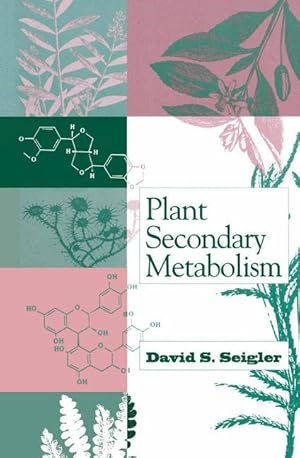
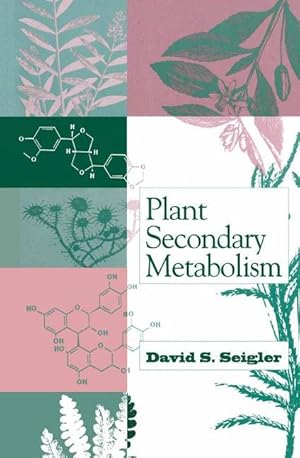
Plant Secondary Metabolism
Da: Ria Christie Collections, Uxbridge, Regno Unito
Valutazione del venditore 5 su 5 stelle
EUR 556,50
Spedizione EUR 13,90
Spedito da Regno Unito a U.S.A.Quantità: Più di 20 disponibili
Aggiungi al carrelloCondizione: New. In.
-
Plant Secondary Metabolism (Volume 0)
Da: Ria Christie Collections, Uxbridge, Regno Unito
Valutazione del venditore 5 su 5 stelle
EUR 556,50
Spedizione EUR 13,90
Spedito da Regno Unito a U.S.A.Quantità: Più di 20 disponibili
Aggiungi al carrelloCondizione: New. In.
-
EUR 551,29
Spedizione EUR 65,74
Spedito da Germania a U.S.A.Quantità: 1 disponibili
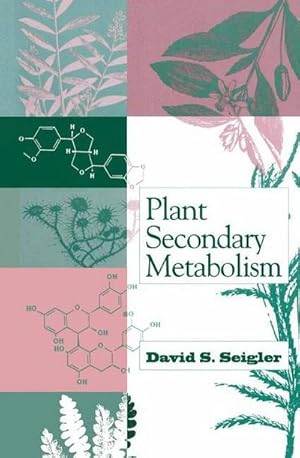
Aggiungi al carrelloTaschenbuch. Condizione: Neu. Druck auf Anfrage Neuware - Printed after ordering - Life has evolved as a unified system; no organism exists similar role also has been suggested for fatty acids from alone, but each is in intimate contact with other organisms cyanolipids. Nonprotein amino acids, cyanogenic glyco and its environment. Historically, it was easier for workers sides, and the non-fatty-acid portion of cyanolipids also are in various disciplines to delimit artificially their respective incorporated into primary metabolites during germination. areas of research, rather than attempt to understand the entire Secondary metabolites of these structural types are accumu system of living organisms. This was a pragmatic and neces lated in large quantities in the seeds of several plant groups sary way to develop an understanding for the various parts. where they probably fulfill an additional function as deter We are now at a point, however, where we need to investi rents to general predation. gate those things common to the parts and, specifically, those The second type of relationship involves interaction of things that unify the parts. The fundamental aspects of many plants with other organisms and with their environment. Bio of these interactions are chemical in nature. Plants constitute logical interactions must be viewed in the light of evolution an essential part of all life systems; phytochemistry provides ary change and the coadaptation, or perhaps coevolution, of a medium for linking several fields of study.
-

EUR 551,29
Spedizione EUR 66,54
Spedito da Germania a U.S.A.Quantità: 1 disponibili
Aggiungi al carrelloBuch. Condizione: Neu. Druck auf Anfrage Neuware - Printed after ordering - Life has evolved as a unified system; no organism exists similar role also has been suggested for fatty acids from alone, but each is in intimate contact with other organisms cyanolipids. Nonprotein amino acids, cyanogenic glyco and its environment. Historically, it was easier for workers sides, and the non-fatty-acid portion of cyanolipids also are in various disciplines to delimit artificially their respective incorporated into primary metabolites during germination. areas of research, rather than attempt to understand the entire Secondary metabolites of these structural types are accumu system of living organisms. This was a pragmatic and neces lated in large quantities in the seeds of several plant groups sary way to develop an understanding for the various parts. where they probably fulfill an additional function as deter We are now at a point, however, where we need to investi rents to general predation. gate those things common to the parts and, specifically, those The second type of relationship involves interaction of things that unify the parts. The fundamental aspects of many plants with other organisms and with their environment. Bio of these interactions are chemical in nature. Plants constitute logical interactions must be viewed in the light of evolution an essential part of all life systems; phytochemistry provides ary change and the coadaptation, or perhaps coevolution, of a medium for linking several fields of study.
-
Plant Secondary Metabolism (eng)
Da: Brook Bookstore On Demand, Napoli, NA, Italia
Valutazione del venditore 5 su 5 stelle
EUR 406,41
Spedizione EUR 11,00
Spedito da Italia a U.S.A.Quantità: Più di 20 disponibili
Aggiungi al carrelloCondizione: new. Questo è un articolo print on demand.
-
Plant Secondary Metabolism
Da: BuchWeltWeit Ludwig Meier e.K., Bergisch Gladbach, Germania
Valutazione del venditore 5 su 5 stelle
EUR 534,99
Spedizione EUR 23,00
Spedito da Germania a U.S.A.Quantità: 2 disponibili
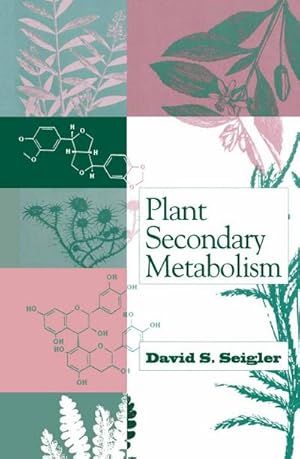
Aggiungi al carrelloBuch. Condizione: Neu. This item is printed on demand - it takes 3-4 days longer - Neuware -Life has evolved as a unified system; no organism exists similar role also has been suggested for fatty acids from alone, but each is in intimate contact with other organisms cyanolipids. Nonprotein amino acids, cyanogenic glyco and its environment. Historically, it was easier for workers sides, and the non-fatty-acid portion of cyanolipids also are in various disciplines to delimit artificially their respective incorporated into primary metabolites during germination. areas of research, rather than attempt to understand the entire Secondary metabolites of these structural types are accumu system of living organisms. This was a pragmatic and neces lated in large quantities in the seeds of several plant groups sary way to develop an understanding for the various parts. where they probably fulfill an additional function as deter We are now at a point, however, where we need to investi rents to general predation. gate those things common to the parts and, specifically, those The second type of relationship involves interaction of things that unify the parts. The fundamental aspects of many plants with other organisms and with their environment. Bio of these interactions are chemical in nature. Plants constitute logical interactions must be viewed in the light of evolution an essential part of all life systems; phytochemistry provides ary change and the coadaptation, or perhaps coevolution, of a medium for linking several fields of study. 772 pp. Englisch.
-
Plant Secondary Metabolism
Da: BuchWeltWeit Ludwig Meier e.K., Bergisch Gladbach, Germania
Valutazione del venditore 5 su 5 stelle
EUR 534,99
Spedizione EUR 23,00
Spedito da Germania a U.S.A.Quantità: 2 disponibili
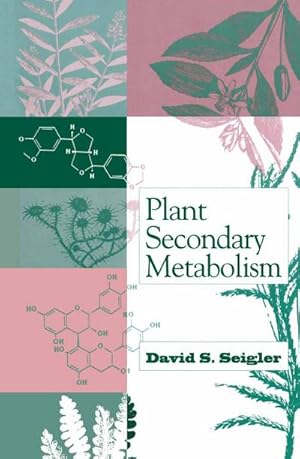
Aggiungi al carrelloTaschenbuch. Condizione: Neu. This item is printed on demand - it takes 3-4 days longer - Neuware -Life has evolved as a unified system; no organism exists similar role also has been suggested for fatty acids from alone, but each is in intimate contact with other organisms cyanolipids. Nonprotein amino acids, cyanogenic glyco and its environment. Historically, it was easier for workers sides, and the non-fatty-acid portion of cyanolipids also are in various disciplines to delimit artificially their respective incorporated into primary metabolites during germination. areas of research, rather than attempt to understand the entire Secondary metabolites of these structural types are accumu system of living organisms. This was a pragmatic and neces lated in large quantities in the seeds of several plant groups sary way to develop an understanding for the various parts. where they probably fulfill an additional function as deter We are now at a point, however, where we need to investi rents to general predation. gate those things common to the parts and, specifically, those The second type of relationship involves interaction of things that unify the parts. The fundamental aspects of many plants with other organisms and with their environment. Bio of these interactions are chemical in nature. Plants constitute logical interactions must be viewed in the light of evolution an essential part of all life systems; phytochemistry provides ary change and the coadaptation, or perhaps coevolution, of a medium for linking several fields of study. 772 pp. Englisch.
-

Plant Secondary Metabolism
Lingua: Inglese
Editore: Springer US, Springer US Dez 1998, 1998
ISBN 10: 0412019817 ISBN 13: 9780412019814
Da: buchversandmimpf2000, Emtmannsberg, BAYE, Germania
Valutazione del venditore 5 su 5 stelle
EUR 534,99
Spedizione EUR 60,00
Spedito da Germania a U.S.A.Quantità: 1 disponibili
Aggiungi al carrelloBuch. Condizione: Neu. This item is printed on demand - Print on Demand Titel. Neuware -Life has evolved as a unified system; no organism exists similar role also has been suggested for fatty acids from alone, but each is in intimate contact with other organisms cyanolipids. Nonprotein amino acids, cyanogenic glyco and its environment. Historically, it was easier for workers sides, and the non-fatty-acid portion of cyanolipids also are in various disciplines to delimit artificially their respective incorporated into primary metabolites during germination. areas of research, rather than attempt to understand the entire Secondary metabolites of these structural types are accumu system of living organisms. This was a pragmatic and neces lated in large quantities in the seeds of several plant groups sary way to develop an understanding for the various parts. where they probably fulfill an additional function as deter We are now at a point, however, where we need to investi rents to general predation. gate those things common to the parts and, specifically, those The second type of relationship involves interaction of things that unify the parts. The fundamental aspects of many plants with other organisms and with their environment. Bio of these interactions are chemical in nature. Plants constitute logical interactions must be viewed in the light of evolution an essential part of all life systems; phytochemistry provides ary change and the coadaptation, or perhaps coevolution, of a medium for linking several fields of study.Springer Verlag GmbH, Tiergartenstr. 17, 69121 Heidelberg 772 pp. Englisch.
-

Plant Secondary Metabolism
Lingua: Inglese
Editore: Springer US, Springer US Dez 2012, 2012
ISBN 10: 1461372283 ISBN 13: 9781461372288
Da: buchversandmimpf2000, Emtmannsberg, BAYE, Germania
Valutazione del venditore 5 su 5 stelle
EUR 534,99
Spedizione EUR 60,00
Spedito da Germania a U.S.A.Quantità: 1 disponibili
Aggiungi al carrelloTaschenbuch. Condizione: Neu. This item is printed on demand - Print on Demand Titel. Neuware -Life has evolved as a unified system; no organism exists similar role also has been suggested for fatty acids from alone, but each is in intimate contact with other organisms cyanolipids. Nonprotein amino acids, cyanogenic glyco and its environment. Historically, it was easier for workers sides, and the non-fatty-acid portion of cyanolipids also are in various disciplines to delimit artificially their respective incorporated into primary metabolites during germination. areas of research, rather than attempt to understand the entire Secondary metabolites of these structural types are accumu system of living organisms. This was a pragmatic and neces lated in large quantities in the seeds of several plant groups sary way to develop an understanding for the various parts. where they probably fulfill an additional function as deter We are now at a point, however, where we need to investi rents to general predation. gate those things common to the parts and, specifically, those The second type of relationship involves interaction of things that unify the parts. The fundamental aspects of many plants with other organisms and with their environment. Bio of these interactions are chemical in nature. Plants constitute logical interactions must be viewed in the light of evolution an essential part of all life systems; phytochemistry provides ary change and the coadaptation, or perhaps coevolution, of a medium for linking several fields of study.Springer Verlag GmbH, Tiergartenstr. 17, 69121 Heidelberg 772 pp. Englisch.